Shop on Lazada
Hugo Boss products
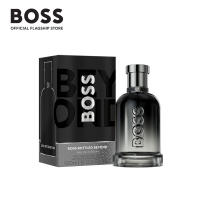
BOSS Bottled Beyond Eau de Parfum for Him 100ml | by HUGO BOSS Fragrances - EDP For Men | Fragrance for Men
₱10,000.00
Buy on Lazada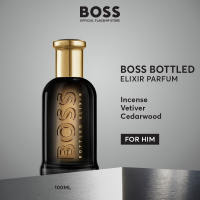
BOSS Bottled Elixir Parfum for Men 100ml - Incense Vetiver Cedarwood - Ambery Woody Perfume | by HUGO BOSS Fragrances - EDP For Men | Fragrance for Men
₱8,160.00₱9,600.00
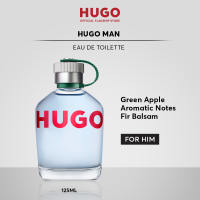
HUGO Man Eau De Toilette For Men 125ml - Green Apple Aromatic Notes Fir Balsam - Aromatic Fruity EDT Perfume | by HUGO BOSS Fragrances - EDT For Men | Fragrance for Men
₱5,100.00₱6,000.00
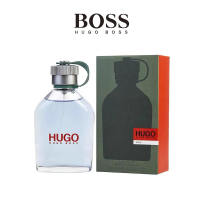
Hugo Boss Man Eau de Toilette 150ml for men
₱2,468.00₱4,288.00
![[6.6 Exclusive - 30% Savings] HUGO BOSS The Best Selling Duo](https://ph-live.slatic.net/p/a0f67d9813184a1a6bc682ee4b164215.png_200x200q80.jpg)
[6.6 Exclusive - 30% Savings] HUGO BOSS The Best Selling Duo
₱13,300.00
Buy on Lazada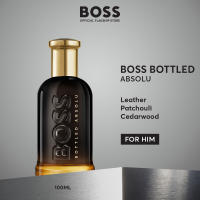
BOSS Bottled Absolu Parfum Intense 100ml - Woody EDT Perfume | by HUGO BOSS Fragrances - EDT For Men | Fragrance for Men
₱9,800.00
Buy on Lazada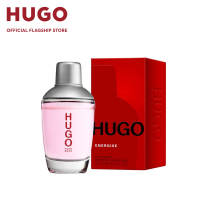
HUGO Energise Eau De Toilette Spray 75ml - Kumquat Juniper Berry Jacaranda Wood | EDT Perfume | by HUGO BOSS Fragrances - EDT For Men | Fragrance for Men
₱4,335.00₱5,100.00
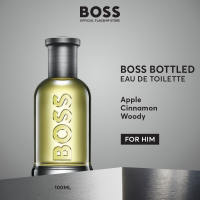
BOSS Bottled Eau de Toilette for Men 100ml - Apple Cinnamon Woods - Fruity Woody EDT Perfume| by HUGO BOSS Fragrances - EDT For Men | Fragrance for Men
₱6,205.00₱7,300.00
About Hugo Boss
HUGO BOSS is a German premium fashion and lifestyle company renowned for its tailoring, menswear, womenswear, accessories, footwear, and fragrances. The group operates two principal brands: BOSS and HUGO. Headquartered in Metzingen, Baden-Württemberg, Germany, the company has established a significant global presence. As of 2025, HUGO BOSS reported sales of approximately €4.27 billion, employed more than 17,500 full-time equivalents, and conducted business in 128 countries.1
It is important to distinguish between the corporate entity and its consumer labels: HUGO BOSS refers to the company itself, while BOSS and HUGO serve as its two distinct fashion brands.
Quick facts
| Category | Information |
|---|---|
| Company name | HUGO BOSS AG |
| Founded | 1924 |
| Founder | Hugo Ferdinand Boss |
| Founded in | Metzingen, Germany |
| Headquarters | Metzingen, Germany |
| Industry | Fashion & lifestyle |
| Market position | Premium |
| Main brands | BOSS, HUGO |
| CEO | Daniel Grieder |
| 2025 sales | €4.27 billion |
| Employees | 17,500+ FTE |
| Countries | 128 |
| Main products | Clothing, footwear, accessories, fragrances, lifestyle products |
| Corporate form | HUGO BOSS AG |
| Major shareholder | Frasers Group, around 25% of voting rights at Dec. 2025 |
| Current strategy | CLAIM 5 TOUCHDOWN, through 2028 |
As of December 2025, the company is publicly traded with approximately 59% of its shares in free float. Frasers Group held around 25% of voting rights, making it the largest single shareholder, while PFC S.p.A./Zignago Holding held approximately 14%.2
Corporate overview
HUGO BOSS originated as a small clothing manufacturer in Germany before evolving into an international fashion group. Today, it positions itself as a premium global fashion and lifestyle company organized around two core brands.
BOSS
BOSS is the larger and more established of the two labels. Its identity centres on modern sophistication, premium tailoring, smart casualwear, and a polished lifestyle aesthetic. The brand encompasses several product lines:
- BOSS Black: Modern tailoring and smart casualwear
- BOSS Camel: Higher-end menswear and tailoring
- BOSS Orange: Casualwear
- BOSS Green: Sportswear, golf, and athleisure
Rather than functioning solely as a suit manufacturer, BOSS has increasingly positioned itself as a comprehensive 24/7 lifestyle brand.1
HUGO
HUGO serves as the younger, more experimental counterpart within the portfolio. Its positioning emphasizes contemporary fashion, youth culture, streetwear, individuality, and unconventional design. Collections are often trend-driven and incorporate gender-fluid or gender-neutral influences. The company describes HUGO as having an authentic and unconventional style that distinguishes it from the polished sophistication of BOSS.1
In summary, BOSS represents confident, premium sophistication and tailoring, while HUGO focuses on youthful, progressive, and expressive individuality.
History
Foundation and early years (1924–1945)
The company traces its origins to 1924, when Hugo Ferdinand Boss established a clothing workshop in Metzingen, Germany. Initially, the firm produced general workwear rather than the sophisticated fashion associated with the modern brand.
The company’s early history is intrinsically linked to Germany’s political landscape during the Nazi period and World War II. An independent historical study commissioned by the company confirms that the factory operated under National Socialist rule and employed 140 forced labourers, predominantly women, alongside 40 French prisoners of war. HUGO BOSS has expressed regret for this suffering and published the study to document this era transparently.2
Post-war transition to menswear
Following World War II, the company refocused on civilian clothing production. In the 1950s, it received its first orders for men’s suits, and by 1960, HUGO BOSS was producing standardized ready-to-wear men’s suits.2 This shift laid the foundation for the company’s modern identity.
The birth of the BOSS brand
A pivotal transformation occurred in the 1970s. The company launched the BOSS brand around 1970, focusing on high-quality men’s fashion and tailoring, and officially registered the name in 1977.2 This era cemented the association between BOSS, suits, German precision, and professional sophistication, linking the brand image with successful professionals and formal menswear.
International expansion
During the 1970s and 1980s, HUGO BOSS expanded beyond traditional manufacturing into licensing and sponsorship. Key milestones included:
- Motorsports sponsorship (early 1970s)
- Fragrance licensing (1984)
- Golf sponsorship (1985)
- Eyewear licensing (1989)
These initiatives were instrumental in transforming BOSS from a domestic menswear label into an international lifestyle brand.2
Brand diversification (1990s–2000s)
In 1993, the company adopted a multi-brand strategy by introducing HUGO and Baldessarini alongside BOSS. Baldessarini was later discontinued in 2006.2 HUGO was created to target younger, fashion-forward consumers. Subsequent expansions included BOSS Orange, BOSS Green, golfwear, footwear, accessories, watches, and fragrances. The first women’s collection under the core BOSS brand debuted in 2000.2
Product portfolio
Historically defined by men’s suits, HUGO BOSS has evolved into a broad lifestyle proposition. The current portfolio includes:
Apparel
Suits, blazers, shirts, T-shirts, knitwear, jeans, trousers, coats, jackets, dresses, sportswear, and casualwear.
Accessories
Bags, belts, wallets, sunglasses, watches, jewellery, hats, and small leather goods.
Footwear
Formal shoes, loafers, sneakers, boots, and casual footwear.
Beauty
Perfumes, fragrances, and personal care products offered through licensing partnerships.
This diversification supports the company’s self-description as a fashion and lifestyle enterprise rather than merely a suit maker.2
Brand identity and market positioning
Tailoring heritage
Tailoring remains the historical cornerstone of the company. The BOSS image emphasizes clean silhouettes, structured construction, precise cuts, neutral colours, modern proportions, and premium fabrics, particularly in menswear.
German heritage
Despite its global reach, the company retains its German origin as a key element of corporate identity and maintains its headquarters in Metzingen.2
Premium positioning
HUGO BOSS occupies the premium segment rather than the ultra-luxury or haute couture tier. It targets customers seeking high-quality, recognizable designer fashion without entering the price territory of houses such as Hermès, Chanel, or Dior. Consequently, it competes with brands like Ralph Lauren, Armani, and other premium contemporary fashion houses.
Comparison: BOSS vs. HUGO
The distinction between the two brands is central to the group’s strategy.
| Feature | BOSS | HUGO |
|---|---|---|
| Core identity | Sophisticated | Progressive |
| Target audience | Broad premium consumer | Younger/fashion-forward consumer |
| Style | Tailored, polished | Experimental, streetwear-influenced |
| Heritage | Strong tailoring | Contemporary fashion |
| Typical image | Business/lifestyle | Youth culture/individuality |
| Colour palette | Often neutral, understated | Often more expressive |
| Product range | Formal + casual + sportswear | Contemporary + casual + streetwear |
| Overall feeling | “Confident sophistication” | “Individual expression” |
While maintaining distinct identities, both brands adhere to similar standards regarding quality, innovation, and sustainability.1
Marketing and sponsorships
Marketing has been crucial in transitioning BOSS from a traditional menswear company to a contemporary global brand. Strategies include celebrity ambassadors, athlete endorsements, influencer partnerships, fashion shows, social media campaigns, and limited-edition collaborations.
Historically, the brand gained recognition through associations with figures such as Michael Jackson and the cast of Miami Vice.2 More recently, the company has emphasized celebrity-driven initiatives; in 2025, for example, the David Beckham × BOSS collections were highlighted as a major campaign.1
Sports involvement
Sports sponsorship has served as a marketing tool for decades, associating the brand with performance, precision, and success. Involvement spans golf, motorsports, Formula 1, tennis, football, and sailing. Major motorsports sponsorships began in the 1970s, followed by golf in 1985.2
HUGO has pursued a separate, youth-oriented sports strategy, including a partnership with the Visa Cash App RB Formula One team starting in 2024.2
Fashion events and collaborations
Aligning with contemporary industry practices, HUGO BOSS utilizes major runway shows, capsule collections, artist collaborations, and digital campaigns. The current strategy explicitly leverages brand events and product-led partnerships to strengthen both BOSS and HUGO.1
Global operations
As of 2025, HUGO BOSS operated in 128 countries with approximately 8,000 points of sale and over 70 digital markets.1 Business activities are organized by region:
- EMEA (Europe, Middle East, and Africa)
- Americas
- Asia/Pacific
- Licensing
Distribution channels include directly operated stores, e-commerce platforms, wholesale partners, department stores, shop-in-shops, outlets, and digital marketplaces.
Financial performance
For the fiscal year 2025, HUGO BOSS reported the following results:
- Revenue: €4.27 billion
- EBIT: €391 million
- Currency-adjusted sales growth: +2%
- Employees: >17,500 FTE
- Countries: 128
BOSS menswear remains the primary revenue driver, generating approximately €3.35 billion in 2025, which accounted for roughly 78% of group sales.1 This underscores the continued dominance of men’s fashion within the portfolio despite expansion into womenswear and lifestyle categories.
Corporate structure and ownership
Legally known as HUGO BOSS AG, the company operates under a German corporate governance model comprising a Managing Board responsible for strategy and a Supervisory Board for oversight. As of 2026, the Managing Board includes:
- Daniel Grieder: CEO
- Yves Müller: CFO/COO
- Oliver Timm: CSO / Deputy CEO
The headquarters remain in Metzingen, where a modern corporate campus is under development. A new office building opened in April 2026 as part of a €100 million investment programme undertaken between 2021 and 2025.2
Shareholder structure
At the end of 2025, ownership was distributed as follows:
- Free float: ~59%
- Frasers Group: ~25%
- PFC S.p.A. / Zignago Holding: ~14%
- Treasury shares: ~2%
Frasers Group is the largest single shareholder.2
Sustainability
Sustainability is integrated into the broader business strategy rather than treated solely as a marketing initiative. Key focus areas include circularity, improved natural materials, recycled synthetic fibres, climate impact reduction, digitization, and responsible production.2
Historical controversy
A comprehensive account of HUGO BOSS must address its relationship with Nazi Germany. Founder Hugo Ferdinand Boss joined the Nazi Party in 1931, and the factory subsequently produced uniforms for Nazi organizations. During World War II, the facility utilized forced labour.
According to an independent historical study covering 1924–1945, 140 forced labourers and 40 French prisoners of war worked at the factory. The company has expressed regret for these events and contributed to the international compensation fund for former forced labourers.2 While the modern brand differs vastly from its wartime predecessor, this chapter remains a documented part of its history.
Current strategy: CLAIM 5 TOUCHDOWN
The company’s strategic framework through 2028, CLAIM 5 TOUCHDOWN, aims to establish HUGO BOSS as a premium, tech-driven, customer-centric global fashion platform. The strategy prioritizes three pillars:
- Brand Excellence: Strengthening and elevating BOSS and HUGO.
- Distribution Excellence: Enhancing physical and digital customer experiences.
- Operational Excellence: Improving efficiency and infrastructure.
For 2026, the company anticipates a challenging environment, projecting currency-adjusted group sales to decline in the mid- to high-single-digit range, with EBIT expected to follow a similar trend.1
Market differentiation
HUGO BOSS occupies a distinct position by combining German heritage, tailoring expertise, premium positioning, mass international distribution, and celebrity marketing. Unlike avant-garde fashion houses, it focuses on commercially scalable, wearable premium fashion. Its historical strength lies not in experimentation but in making tailored, polished fashion accessible to a broad international audience.
Evolution timeline
The company’s transformation from 1924 to 2026 can be summarized as follows:
- 1924: Small German clothing manufacturer
- 1950s–60s: Men’s suits and ready-to-wear
- 1970s: BOSS becomes the central fashion brand
- 1980s: Internationalization, fragrances, and sports sponsorship
- 1990s: Introduction of HUGO and broader portfolio
- 2000s: Womenswear, accessories, and global lifestyle expansion
- 2010s: Digital transformation and retail strengthening
- 2020s: Repositioning of BOSS and HUGO as 24/7 lifestyle brands
- 2026: Premium global fashion platform focused on technology, distribution, and sustainable growth1