Shop on Lazada
Hurom products
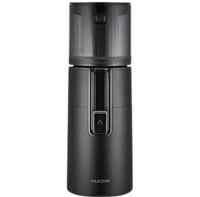
Hurom H400 SLOW JUICER
₱23,100.00₱33,000.00
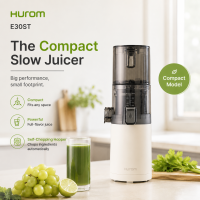
Hurom E30ST Slow Juicer
₱14,000.00₱20,000.00
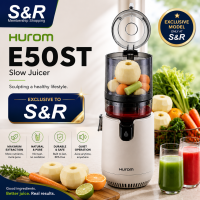
Hurom E50ST Slow Juicer
₱25,000.00
Buy on Lazada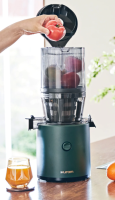
Hurom H320N Slow Juicer
₱21,000.00₱30,000.00
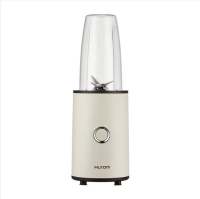
Hurom Personal Blender
₱4,200.00₱6,000.00
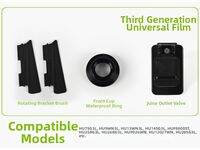
Hurom | Juicer Gasket Waterproof Seal
₱1,423.00₱2,906.00
About Hurom
Brand Overview
Hurom is a South Korean manufacturer of kitchen appliances and health lifestyle products, best known internationally for its slow juicers, also referred to as slow-squeeze or cold-press juicers. Established in 1974, the company built its identity on the premise that kitchen technology should facilitate the daily consumption of nutritious fruits and vegetables.1 Rather than positioning itself solely as a conventional appliance maker, Hurom operates as a health-oriented home-appliance company with juicing technology at its core. The company reports exports to 88 countries and partnerships with 377 global partners, with cumulative sales exceeding 11.7 million units by May 2022.2
Basic Information
| Category | Information |
|---|---|
| Brand | Hurom |
| Origin | South Korea |
| Founded | 1974 |
| Industry | Kitchen appliances / health appliances |
| Best known for | Slow juicers |
| Core technology | Slow Squeeze Technology™ (SST) |
| Founder | Kim Young-ki |
| Headquarters | South Korea |
| Main positioning | Healthy living through nutrition-oriented home appliances |
| Major markets | South Korea, North America, Europe, Asia and other international markets |
| Global exports | 88 countries |
| Brand concept | Health, natural ingredients, nutrition, innovation and everyday wellness |
The corporate history traces the business back to 1974 as a kitchen-appliance company. It subsequently developed various food-processing and juicing appliances before concentrating heavily on slow-juicing technology.3
Name and Philosophy
The name HUROM combines the concepts of “Human” and “benefit” or “goodness.” Corporate materials explain the name as representing a desire to provide people with the specific benefit of health, placing human well-being above the mere sale of electrical appliances.4 This philosophy is summarized as a progression from technology to better nutrition, and ultimately to a healthier everyday life. Consequently, marketing efforts have traditionally focused less on the appliance as a mechanical object and more on the lifestyle surrounding fresh produce and nutrition.
History
Foundation and Early Development
Hurom traces its origins to 1974, when it was founded as a kitchen-appliance manufacturer. Founder Kim Young-ki is described as an entrepreneur and inventor dedicated to developing appliances that support healthier eating habits.5 During its early decades, the company was not exclusively a juicer brand; it developed various kitchen appliances, including food-processing equipment.67
Juicing Technology Milestones
Historical records identify 1993 as a significant milestone, marking the acquisition of an invention patent for an electric vegetable juicing device.8 This period established the technological groundwork for future systems. In 1998, the company launched an electric vegetable juicer named OSCAR, signaling a gradual transition toward specialization in extraction technology.9
2005 is widely regarded as the most pivotal year in the company’s history. Hurom introduced its Slow Squeeze Technology™ (SST) and what it describes as the world’s first true slow juicer.10 Unlike traditional machines relying on high-speed spinning blades, this system uses a slowly rotating auger to crush and squeeze produce. This innovation became the foundation of the brand’s modern identity.
Global Expansion and Recognition
Following the introduction of SST, Hurom focused on improving extraction performance, usability, noise levels, design, and durability. The HH series emerged as one of its early internationally recognized product families.11 International exports began in 2008, leading to the establishment of a global distribution network.12
In 2010, the slow juicer was recognized as a World Class Product by the Korean government, acknowledging its strong position in international markets.13 The company changed its name to HUROM Co., Ltd. in 2011, establishing a Japanese branch and research center in the same period. Manufacturing capabilities expanded with the completion of the Gimhae industrial complex and the establishment of a Chinese branch in 2012.14
Design recognition followed in 2013 with Red Dot Design Award and iF Product Design Award accolades, reinforcing the brand’s commitment to aesthetic appeal alongside functionality. A corporate restructuring in 2019 divided the entity into HUROM Co., Ltd. and HUROM LS Co., Ltd.15 By May 2022, cumulative sales reached approximately 11.787 million units, with historical sources indicating 12 million units by 2023.
Slow Squeeze Technology™
The technology most closely associated with Hurom is Slow Squeeze Technology™ (SST). While traditional centrifugal juicers use rapid rotation to shred produce, SST employs a different mechanical approach:
Fruit / vegetable → crushing → slow squeezing → juice + pulp separation
A rotating auger gradually presses ingredients against a strainer. This slow mechanism is engineered to reduce heat and mechanical agitation compared to high-speed methods.16 The technological philosophy emphasizes extracting juice while maintaining the natural characteristics of ingredients, often described through four key concepts:
- Alive: Preserving the color, taste, and nutritional characteristics of produce.
- Keep: Utilizing nutrients associated with fruits and vegetables.
- One: Combining multiple fruits and vegetables into a single serving.
- Variety: Making different kinds of produce easier to consume.17
The primary engineering distinction is speed; the slower process allows the machine to crush and press rather than aggressively shred. Corporate materials also emphasize low-noise motors, durable auger materials, BPA-free components, improved feeding systems, larger hoppers, and automated operation.
Market Significance
Hurom played a central role in popularizing slow juicing as a distinct category. Before this technology gained prominence, consumers primarily chose between centrifugal juicers (fast, affordable, but noisy and potentially harsh on ingredients) and traditional masticating models. Hurom helped transform the latter into a recognizable premium consumer-appliance segment. Slow juicers offer quieter operation, smoother juice texture, and effective handling of leafy greens and fibrous ingredients, albeit typically at a higher price point and slower processing speed than centrifugal alternatives.
Product Evolution
Product design has evolved substantially across several generations. Early models featured narrow feeding tubes, manual preparation requirements, and separate pulp/juice outlets. Later generations introduced larger hoppers, improved augers, better strainers, and quieter motors.
Recent iterations emphasize convenience and multifunctionality. Technologies highlighted in corporate history include the Mega Hopper, automatic mass feeding, transparent hoppers, multi-screw systems, and dual-motor concepts.18 The product strategy has shifted from simply “making juice slowly” to facilitating easier healthy food preparation overall.
Major Product Families
Specific lineups vary by market and year, but several families are historically significant:
- HH Series: Helped establish the company’s international premium positioning and early global recognition.19
- H-AA: A later generation emphasizing streamlined aesthetics and functionality.
- HZ Series: Positioned slow juicing as a premium kitchen experience with a focus on materials and convenience.
- H200 / H300 / H320: Newer generations emphasizing large feeding systems to reduce preparation time.
- H400: Represents a shift toward larger-capacity, convenient healthy-food preparation appliances.
Model configurations sold in specific regions may differ from those available elsewhere.
Beyond Juicers
While juicers remain the defining product, Hurom has historically marketed other health-oriented kitchen appliances, including blenders, food processors, and vegetable preparation tools. The stated long-term ambition is to become a broader global health-appliance brand rather than solely a juice extractor manufacturer.20 This reflects a strategic evolution from being perceived as a “slow juicer company” to a comprehensive health-oriented kitchen appliance company.
Brand and Design Philosophy
The brand philosophy centers on “health through everyday nutrition,” acknowledging that modern lifestyles can make adequate fruit and vegetable consumption difficult. Rather than demanding complete lifestyle changes, Hurom aims to make healthy consumption more convenient. Core themes include natural ingredients, nutrition, human-centered design, and long-term health.21 The company maintains active research and recipe-development activities to support this mission.22
Design is equally integral to the brand identity. Products are designed to occupy visible positions on kitchen counters, characterized by minimalism, premium materials, rounded forms, and neutral colors. International awards such as Red Dot and iF reinforce this strategy, positioning the products at the intersection of small kitchen appliance, wellness tool, and lifestyle object.23
Global Presence
Hurom has grown from a domestic manufacturer into an international brand. Corporate data indicates exports to 88 countries, collaboration with 377 global partners, and international sales commencing in 2008.24 Headquarters and manufacturing operations remain in South Korea. In the global premium appliance market, Hurom competes alongside brands such as Kuvings, Nama, Omega, and Breville.
Competitive Identity
Hurom distinguishes itself through three layered pillars:
- Technology: Proprietary Slow Squeeze Technology and its continuous evolution.
- Health: Positioning the appliance as a tool for convenient nutrition.
- Lifestyle: Integrating the machine into a broader image of healthy, design-conscious living.
This combination supports a premium market position based on value rather than price competition.
Strengths and Limitations
Strengths
- Technological Identity: Clear association with slow squeezing rather than generic appliances.
- Longevity: Operating since 1974, providing over five decades of history.
- Category Leadership: Strong recognition within the modern slow-juicer category.
- Premium Design: Awards and aesthetics differentiate it from entry-level competitors.
- Coherent Positioning: Consistent narrative connecting products, nutrition, and wellness.
- International Reach: Distribution across dozens of countries exceeds that of many niche manufacturers.
Limitations
- Price: Products are positioned at the premium end of the market.
- Cleaning: Despite improvements, multiple food-contact components still require washing.
- Preparation Time: Even with larger hoppers, slow juicing is generally slower than blending.
- Nutritional Context: Juicing reduces fiber content compared to whole produce; the appliance facilitates one method of consumption but does not substitute for a balanced diet.
Terminology: Cold Press vs. Slow Squeeze
Consumers often use terms like “cold press,” “slow juicer,” and “masticating juicer” interchangeably. Technically, these may describe different mechanisms or marketing categories. Hurom’s proprietary terminology is Slow Squeeze Technology™. When retailers describe Hurom machines as “cold-press juicers,” they are typically referencing the broader category rather than the specific proprietary mechanism name.
Research and Innovation
Hurom places significant emphasis on R&D, covering nutrition, product engineering, ingredient processing, recipe development, consumer convenience, materials science, and safety certification. The development process considers post-purchase usage patterns, consistent with the positioning as a health-and-nutrition company rather than merely an electronics manufacturer.
Brand DNA Summary
| Dimension | Hurom |
|---|---|
| Origin | South Korea |
| Founded | 1974 |
| Hero product | Slow juicer |
| Signature technology | Slow Squeeze Technology™ |
| Core consumer need | Convenient nutrition |
| Brand promise | Healthier everyday living |
| Design language | Premium, minimalist, modern |
| Price positioning | Premium |
| Key differentiation | Slow juicing + health + design |
| Primary category | Health-oriented kitchen appliances |
| Global image | Korean technology / premium wellness appliance |
| Main emotional benefit | Feeling healthier and more intentional about nutrition |
Industry Impact
From an industry perspective, Hurom transformed juicing from a commodity kitchen function into a premium lifestyle category. The company’s approach frames its technology as a means to build healthier daily routines, explaining the integration of nutrition research, recipes, design, and wellness messaging alongside mechanical engineering.
Timeline
- 1974: Founded as a Korean kitchen-appliance company.
- 1979–1998: Development of various kitchen appliances.
- 1993: Early electric vegetable-juicer patent obtained.
- 1998: OSCAR electric vegetable juicer launched.
- 2005: Introduction of Slow Squeeze Technology™ and first slow juicer.
- 2006–2009: Concentration on slow-juicing technology refinement.
- 2008: International export expansion begins.
- 2010: World-Class Product recognition in Korea.
- 2011: Adopted HUROM Co., Ltd. name.
- 2012: Gimhae industrial complex completed; China expansion.
- 2013: Red Dot and iF design recognition received.
- 2019: Corporate division into Hurom and Hurom LS.
- 2022: 11.787 million cumulative units reported; 88 export countries.
- 2023: 12 million cumulative units reported.
- Today: Global health-appliance brand focused on slow juicing and healthy food preparation.
References
- Our History – Hurom UK Official
- Learn More About Us | Hurom
- 휴롬 공식몰, 휴롬샵
- Brand Story – Hurom Slow Juicer
- 휴롬 공식몰, 휴롬샵
- History – Hurom Europe
- Who we are: Hurom, 40 years of innovation in the sector.
- Hurom Corporate | hurom
- 关于惠人-惠人HUROM中国官网
- 휴롬 공식몰, 휴롬샵
- 휴롬 공식몰, 휴롬샵
- Hurom Global
- 휴롬 공식몰, 휴롬샵
- 惠人hurom-惠人HUROM中国官网
- 휴롬 공식몰, 휴롬샵
- Why Choose Hurom – Voted “Best” Slow Juicers | Hurom
- Hurom Official Store | Slow Juicers and Juicing Accessories
- About – 香港 Hurom 冷壓慢磨原汁機 | Slow & Cold Press Juicer
- About Hurom Australia | The Global Leader in Cold Press Juicers
- globalhurom.com
- globalhurom.com
- Learn More About Us | Hurom
- Why Hurom – Hurom Europe
- Giới thiệu – Hurom Việt Nam