Shop on Lazada
Ichiran products
Ichiran Ramen On Hand from Japan Original
₱1,650.00₱2,400.00
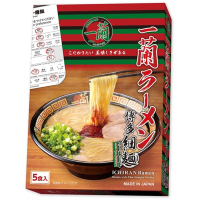
ICHIRAN Ramen Hakata Style Thin Noodle / Chirimen Noodle Meal Kit
₱1,894.00₱3,595.00
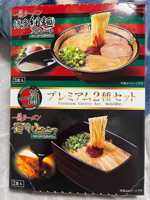
ICHIRAN RAMEN (NEW) 2 Flavors Premium Variety Set Limited-Edition Product (June 24 2027 Expiration Date)
₱1,390.00₱1,450.00
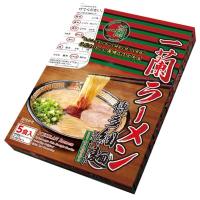
JAPAN ICHIRAN PREMIUM RAMEN Thin straight Noodles Original Spicy Red Seasoning ( 5 Servings )
₱1,449.00₱2,999.00
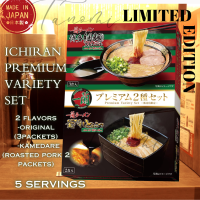
Japan Ichiran Ramen Hakata Style Straight Noodles Good for 5 Servings - Original Red Dry Sauce
₱1,350.00₱2,300.00
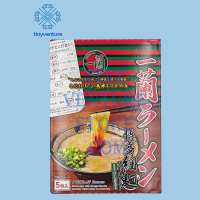
Ichiran Ramen Straight Noodles (On Hand) Original Red Dry Sauce Most Popular Same Day Delivery
₱1,550.00₱2,400.00
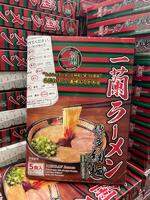
Ichiran Ramen Noodles (Straight) 5 sets in a box
₱3,899.00₱4,999.00
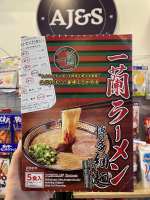
JAPAN ICHIRAN PREMIUM RAMEN Thin straight Noodles Original Spicy Red Seasoning ( 5 Servings )
₱1,750.00
Buy on LazadaAbout Ichiran
Overview
ICHIRAN INC., commonly known as Ichiran (一蘭), is a Japanese restaurant company specialising in tonkotsu ramen, a style defined by its rich pork-bone broth. Established in 1960 in Fukuoka, Japan, the business has grown from a local ramen shop into an international brand recognised for its individual dining booths, highly customisable bowls, and signature spicy red sauce.1
| Field | Information |
|---|---|
| Japanese name | 一蘭 |
| Romanized name | Ichiran |
| English name | ICHIRAN |
| Industry | Food & beverage / restaurants |
| Specialty | Tonkotsu ramen |
| Founded | 1960 |
| Corporate establishment | May 25, 1993 |
| Headquarters | Hakata, Fukuoka, Japan |
| President & CEO | Manabu Yoshitomi |
| Current company | ICHIRAN INC. |
| Restaurants | 93 as of June 2026 |
| Japan / overseas | 85 / 8 locations as of June 2026 |
| 2025 annual sales | ¥47.71 billion |
| Signature concept | Individual ramen booths and focused dining |
The figures above are derived from Ichiran’s official company profile and reflect the dates specified by the company.1
History
Origins: 1960
Ichiran traces its roots to 1960, when the original business opened in Fukuoka. As one of Japan’s most significant ramen cities, Fukuoka is closely associated with Hakata-style tonkotsu ramen. Rather than operating as a general Japanese restaurant, Ichiran built its identity around a singular focus on tonkotsu ramen, a tradition the company states dates back to its founding year.1
Expansion in Fukuoka
The 1990s marked a pivotal stage in Ichiran’s development. The company expanded across Fukuoka, opening outlets in Nanokawa (1993), Odo (1994), Tenjin (1995), Canal City Hakata (1996), and both Hakata and Kokura (1997). Although the brand’s history began in 1960, the corporate entity Ichiran Inc. was formally established on May 25, 1993.1
National expansion
In the late 1990s and 2000s, Ichiran moved beyond its home region. Its first Tokyo location opened in Roppongi in 2001, followed by branches in Ueno, Yokohama, Tokyo Dome City, Shibuya, Ikebukuro, and other major cities. This national growth transformed Ichiran from a regional Fukuoka specialist into a widely recognised Japanese ramen chain.1
International expansion
Ichiran subsequently extended its presence outside Japan. Key milestones in this expansion include:
- 2015: Tsim Sha Tsui, Hong Kong
- 2016: Brooklyn, New York
- 2017: Taipei
- 2018: Midtown West, New York
- 2019: Times Square, New York
- 2021: Taichung, Taiwan
- 2023: Mong Kok, Hong Kong
As of June 2026, Ichiran officially lists 8 overseas restaurants across the United States, Hong Kong, and Taiwan.1
Distinctive dining concept
Ichiran is distinguished not merely by its food but by its creation of a highly controlled, individualised ramen-eating experience.
The “Ramen Focus Booth”
The individual dining booth is one of Ichiran’s most recognisable features. Instead of communal tables, customers dine in semi-enclosed personal spaces designed to minimise distractions and direct attention entirely to the bowl of ramen. This system aligns with the brand’s philosophy of focused dining and is particularly well-suited to solo diners, though some locations accommodate groups.1
Customisation
Rather than serving a fixed dish, Ichiran allows customers to tailor their ramen to specific preferences. Typical customisation options include:
- Noodle firmness
- Amount of garlic
- Amount of green onion
- Amount of pork
- Spiciness of the red sauce
- Richness of the broth
- Other seasoning preferences
This approach ensures each bowl is prepared according to the individual diner’s taste.2
The ramen
Tonkotsu
Ichiran’s core product is tonkotsu ramen. The term “tonkotsu” refers to pork bones, and the style is characterised by a cloudy, pork-based broth produced through a precise cooking process. Ichiran designates its primary offering as Classic Tonkotsu Ramen, which comprises three essential elements:
- Tonkotsu broth
- Thin noodles
- Hiden no Tare, the signature spicy red sauce
The company maintains that it has remained dedicated exclusively to tonkotsu ramen since 1960.12
The broth
The broth is crafted to be creamy and rich without being excessively heavy. Ichiran treats its preparation methods as proprietary knowledge, prioritising consistency across all locations. The resulting bowl is identifiable by its pale, cloudy broth and relatively thin noodles.2
Thin noodles
Ichiran uses thin noodles typical of Hakata-style ramen. The company states these noodles are made fresh daily in-house, with flour blends and production conditions such as temperature and humidity strictly controlled. Thin noodles cook quickly, allowing freshly prepared bowls to be served without delay, which complements the Hakata style.2
Hiden no Tare
A defining component of Ichiran’s ramen is Hiden no Tare, known in English as the Spicy Red Sauce. Placed directly in the centre of the bowl, this sauce is integral to the dining experience rather than a side condiment. As it gradually dissolves into the broth, it alters the flavour profile and intensity of the soup.
According to Ichiran, the recipe balances 30 spices, with the complete formula known only to four selected individuals. The company also claims to be the creator and first restaurant to place this type of spicy red sauce directly in the centre of its ramen. The visual contrast of the red sauce against the white broth has become a strong brand identifier.12
Brand philosophy
Ichiran positions itself as more than a restaurant chain. Its stated corporate philosophy emphasises kindness, consideration, humility, sincerity, and courage. Safety, security, and health are also cited as foundational principles for its food and operations.1
Culinary-wise, the brand adheres to a philosophy of specialisation over diversification. Rather than expanding its menu, Ichiran focuses on mastering a single category: tonkotsu ramen. The company describes its mission as continuously researching tonkotsu ramen to preserve authentic flavours while pursuing improvement.1
Brand identity
Ichiran has cultivated a distinct visual and experiential identity.
Red, white and black
Restaurants and packaging consistently feature a bold combination of red, white, and black, mirroring the appearance of the signature ramen.
The “one-person” experience
The restaurant design reinforces the concept of ramen as an individual experience. Unlike establishments where social atmosphere is paramount, Ichiran makes the food itself the centre of attention.
Japanese authenticity
Ichiran strongly associates itself with Fukuoka/Hakata tonkotsu ramen rather than presenting as a generic Japanese eatery. For international customers, this distinction offers a highly standardised interpretation of a specific regional Japanese ramen tradition.1
Business and scale
Ichiran remains headquartered in Hakata, Fukuoka, specifically in Nakasu, a major entertainment and dining district. According to its official company profile:
- Founded: 1960
- Corporation established: 1993
- Capital: ¥40 million
- 2025 annual sales: ¥47.71 billion
- Restaurants: 93
- Japan: 85 restaurants
- Overseas: 8 restaurants
- Employees: 802 full-time employees and 10,846 part-time employees (as of February 2026)
These figures indicate that Ichiran operates as a large-scale Japanese food-service company built around a narrowly defined core product.1
International presence
Compared to other major Japanese restaurant chains, Ichiran’s overseas footprint is relatively concentrated. As of the latest store information, international locations include:
United States
- New York — Times Square
- New York — Midtown West
- New York — Brooklyn
Hong Kong
- Tsim Sha Tsui
- Causeway Bay
- Mong Kok
Taiwan
- Taipei Flagship
- Taipei Mitsukoshi Place A11
- Taichung Chaofu
The selective nature of this network suggests a measured approach to international expansion relative to its extensive domestic presence.1
Factors behind Ichiran’s popularity
Ichiran’s fame stems from a combination of factors beyond the ramen itself:
- Distinctive food: Hakata-style thin noodles, cloudy tonkotsu broth, and the signature red sauce create an immediately recognisable product.
- Unique dining experience: Individual booths are unusual enough to serve as an attraction in their own right.
- Personal ownership through customisation: Customers construct their own bowl rather than simply ordering a standard dish.
- Consistency: A standardised system ensures a broadly similar experience across different locations.
- Visual memorability: The booth design, ordering process, bowl presentation, and red sauce contribute to a cohesive and recognisable “Ichiran experience.”
Cultural significance
Ichiran serves as a notable case study in Japanese restaurant branding. While traditional ramen shops are often hyper-local businesses tied to specific neighbourhoods, owners, and recipes, Ichiran adapted these elements into a scalable branded experience. The brand effectively transformed Fukuoka tonkotsu ramen into a standardised recipe, a customisable product, a distinctive restaurant environment, and ultimately a global brand. This evolution has made Ichiran highly recognisable to international tourists and enthusiasts of Japanese cuisine.1
Comparison with typical ramen shops
| Feature | Typical ramen shop | Ichiran |
|---|---|---|
| Core product | Often several ramen styles | Strong focus on tonkotsu |
| Seating | Communal tables/counter | Individual-focused booths |
| Customization | Varies | Extensive |
| Brand identity | Often local | Highly standardized |
| Signature sauce | Varies | Hiden no Tare |
| Geographic identity | Varies | Strong Fukuoka/Hakata association |
| International presence | Usually limited | International locations |
| Dining experience | Food + social environment | Food-focused individual experience |
Timeline
- 1960: Ichiran is founded in Fukuoka.1
- 1993: ICHIRAN INC. is formally established; expansion of the Fukuoka network begins.1
- 1990s: Multiple Fukuoka locations open, establishing the company as a regional brand.1
- 2001: Significant expansion into Tokyo begins.1
- 2000s–2010s: The chain expands throughout Japan.
- 2015: First overseas location opens in Hong Kong.1
- 2016: Brooklyn, New York location opens.1
- 2017: Taipei location opens.1
- 2019: Times Square location opens in New York.1
- 2020s: Continued expansion in Japan, Hong Kong, and Taiwan.
- June 2026: Ichiran reports 93 restaurants worldwide, comprising 85 in Japan and 8 overseas.1