Shop on Lazada
Injinji products
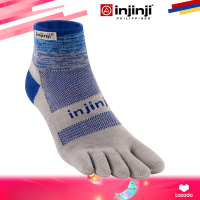
Injinji Unisex Trail Mid-Weight Mini Crew
₱990.00
Buy on Lazada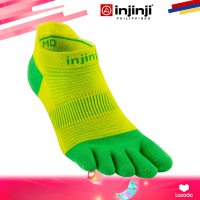
Injinji Unisex Run Light-Weight No Show
₱738.00₱820.00
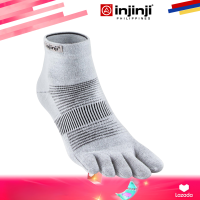
Injinji Unisex Run Light-Weight Mini Crew
₱765.00₱850.00
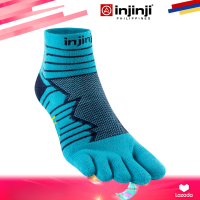
Injinji Unisex Ultra Run Mid-Weight Mini Crew
₱1,017.00₱1,130.00
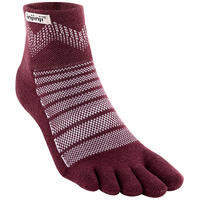
Injinji | Five-finger Merino Wool Mid-calf Thickened Socks
₱2,208.16₱2,321.27
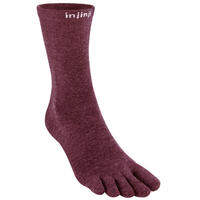
Injinji | Five-Finger Inner Liner Socks Merino Wool Long Tube
₱1,346.59
Buy on Lazada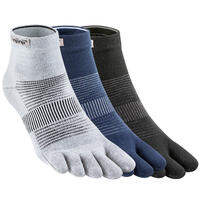
Injinji | Medium-Cut Running Socks Lightweight Coolmax Anti-Blister Quick-Dry
₱3,437.95
Buy on Lazada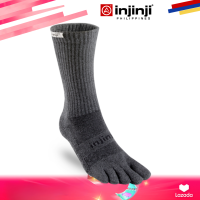
Injinji Unisex Trail Mid-Weight Crew
₱927.00₱1,030.00
About Injinji
Brand overview
Injinji is an American performance-sock brand best known for its five-toe “toesocks,” in which each toe is enclosed separately rather than sharing a single compartment. Founded in 1999 in Southern California, Injinji built its identity around the concept that separating the toes can reduce friction, allow more natural toe movement, and improve comfort during activities such as running, hiking, and other sports 1. The company describes itself as focused on the health and performance of feet, with a product range that has expanded beyond running into hiking, cycling, gym fitness, workwear, and everyday use 1.
| Feature | Details |
|---|---|
| Founded | 1999 |
| Origin | Southern California, USA |
| Category | Performance socks / athletic apparel |
| Signature product | Five-toe performance socks (“toesocks”) |
| Core markets | Running, trail running, hiking, outdoor, fitness, everyday wear |
| Key proposition | Toe separation, moisture management, friction/blister reduction |
| Notable technology | Anatomical five-toe sleeve design |
| Major materials | COOLMAX®, COOLMAX® EcoMade, Merino wool, LYCRA® and other technical fibers |
| Best known for | Running and ultrarunning socks |
History and development
Injinji states that the company was born “by the ocean” in Southern California in 1999, originating with the idea of changing how athletes thought about socks and running footwear 1. The original concept was essentially a five-toe sleeve, anti-friction, seamless sock designed to give individual toes their own space while allowing them to move and splay more naturally 1. This approach treated the foot anatomically, assigning five individual compartments to the five toes, contrasting with conventional socks that treat the forefoot as a single unit.
Timeline
- 1999: Injinji was founded.
- 2004: Patent concept developed around an anatomical, dry athletic toesock designed to function almost like a second skin.
- 2008: The company moved from its original beachside location to Sorrento Valley, allowing it to expand operations.
- 2013: Run & Trail product lines were revamped with improved knitting technology and the introduction of COOLMAX XtraLife.
- Present: The brand offers socks across running, hiking, fitness, work, and lifestyle categories.
Although Injinji is now strongly associated with ultrarunning, its original objective was broader: to redesign the sock around the anatomy of the human foot.
Design philosophy and technology
The defining feature of Injinji products is the individual toe sleeve. While traditional socks enclose all five toes in one fabric compartment, Injinji toesocks provide a separate sleeve for each toe. This structural change serves as the foundation for the brand’s performance claims, including reduced skin-on-skin friction, blister and hotspot prevention, moisture management, natural toe splay, greater toe independence, and a more anatomical fit 1.
Total Foot Utilization
Injinji operates on the philosophy that the foot should not be treated as a rigid object. The company refers to its approach as “Total Foot Utilization,” explaining that separating, aligning, and allowing the toes to splay can distribute weight across the foot and allow it to be more fully engaged during activity. Rather than compressing toes into one compartment, the design intends to work with the natural anatomy of the foot.
Anti-blister and moisture management
Blister prevention is a primary commercial selling point for the brand. Blisters often develop through friction between adjacent toes; Injinji addresses this by placing fabric between each toe to eliminate or substantially reduce skin-on-skin friction 1. This construction is considered particularly relevant for marathon running, ultramarathons, trail running, long-distance hiking, backpacking, and hot-weather exercise.
Moisture management serves as the second pillar of the brand’s performance identity. Injinji uses technical fibers designed to move moisture away from the skin to prevent the cycle of sweat leading to wetter skin, increased friction, and discomfort. The combination of individual toe sleeves and moisture-wicking fabric is central to this function.
Materials and construction
Injinji utilises several technical fibres depending on the specific product line:
- COOLMAX®: A moisture-management polyester fibre used in many performance socks.
- COOLMAX® EcoMade: A version made from recycled resources intended to retain the moisture-management characteristics of standard COOLMAX while incorporating sustainable materials.
- Merino wool: Used for its natural temperature regulation and moisture/odour management characteristics, making it suitable for hiking and variable environments. Injinji states that its premium Merino wool is mulesing-free.
- LYCRA®: Incorporated for stretch and shape retention. Socks featuring compression utilise a higher amount of LYCRA to support the compression construction.
Product categories
Injinji has expanded considerably beyond its original running concept to address various activities and needs.
Running
Running remains the core of the brand. Products are divided broadly into Run (road running, training, racing), Trail (additional cushioning and protection for off-road running), and Ultra Run (thicker cushioning designed for long-distance comfort). The range includes variations in height, cushion level, thickness, material, and fit 1.
Hiking and outdoor
The brand offers hiking-specific socks and combinations such as the Hiker + Liner concept. These products address common hiking issues like heat, sweat, repetitive movement, and friction, helping Injinji transition from a niche running product to the broader outdoor market.
Fitness and everyday use
Injinji explicitly states that one does not have to be a runner to use its products 1. The current range includes items intended for gym workouts, cross-training, yoga, everyday walking, work, casual wear, and recovery. The brand also produces split-toe products designed specifically for use with sandals, slides, and similar footwear.
Women’s-specific fit
While many products are unisex, Injinji produces women’s-specific versions described as having a narrower fit and shorter toe sleeves to better accommodate the female foot 1. Proper sizing is considered critical for five-toe socks to avoid discomfort caused by toe sleeves that are too long or too short.
Market positioning and culture
Ultrarunning and endurance
Injinji has become strongly associated with ultrarunning and endurance racing. The company states that its socks have been the #1 sock worn at the Western States 100-Mile Endurance Run from 2014 onward. This association provides significant credibility, suggesting that if the product performs in 100-mile races, it is suitable for ordinary running distances.
Athletes and visual identity
The brand’s marketing is deeply connected to outdoor and endurance culture. It works with athletes and has developed signature products such as the Courtney Crew, associated with ultrarunner Courtney Dauwalter and positioned towards trail running and hiking 1. Visually, Injinji socks are immediately recognisable due to their five individual toe compartments, making the product silhouette itself a branding device. The brand also embraces colourful designs and limited-edition patterns rather than treating performance socks as purely utilitarian equipment 1.
Business positioning
Injinji occupies a position between athletic apparel, running accessories, outdoor equipment, foot health, and lifestyle socks. Its competitive proposition applies athletic performance thinking to the specific category of socks. The company uses the term “Original Performance Toesock” to frame itself as an innovator of the category rather than merely a manufacturer of novelty items.
Comparison with conventional socks
| Feature | Conventional athletic sock | Injinji toesock |
|---|---|---|
| Toe compartments | One | Five |
| Toe separation | Limited | Individual sleeves |
| Skin-on-skin toe friction | Possible | Designed to minimise it |
| Moisture management | Depends on fabric | Major design priority |
| Natural toe movement | Depends on fit | Core design objective |
| Ease of putting on | Very easy | More involved |
| Initial feel | Familiar | Unusual for new users |
| Main identity | General-purpose sock | Anatomical performance sock |
| Strongest niche | Broad | Running/outdoor/endurance |
Considerations and limitations
While Injinji has a dedicated following, the five-toe design presents specific considerations for users:
- Sensation: Wearing five separate fabric tubes can initially feel strange to those accustomed to conventional socks.
- Donning time: Positioning five individual toe sleeves takes longer than pulling on a standard tube sock.
- Fit complexity: Each toe must sit properly inside its sleeve; incorrect sizing can cause bunching or excess fabric.
- Shoe compatibility: The additional material between toes may make very snug shoes feel tighter.
- Cost: As a technical performance brand, Injinji socks are priced higher than basic commodity socks.
- Individual results: Blister prevention and comfort depend on foot shape, shoe fit, running technique, climate, and individual skin characteristics.
Injinji is best understood as a specialised design philosophy rather than a universally superior replacement for every conventional sock. Its evolution from a 1999 invention to a recognised performance brand reflects a focus on adapting the sock to the anatomy and movement of the foot, summarised by the equation: five toes + less friction + moisture control + natural movement + endurance-oriented performance 1.