Shop on Lazada
IRC products
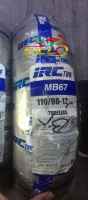
IRC MB 100/90 110/90 12 for Mio GRAVIS Honda ZOOMER Tire from IRC Indonesia
₱2,100.00
Buy on Lazada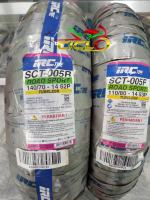
IRC Tire 14 110/80 140/70 14 AEROX Pair
₱5,350.00
Buy on Lazada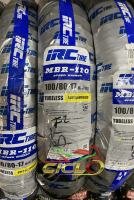
IRC SPEED WINNER MBR110 17 70/90 80/80 80/90 90/80 100/80 17 F/R
₱2,750.00
Buy on Lazada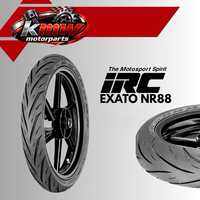
IRC TIRE EXATO NR88 (TUBELESS)
₱3,799.00
Buy on Lazada
IRC EXATO NR88 17 110/70 120/70 130/70 140/70 150/60 17 F/R
₱4,400.00
Buy on Lazada
IRC Tire 110/70 130/70 13 Pair for NMAX
₱4,650.00
Buy on Lazada
IRC Tires for NMAX
₱2,200.00₱2,345.00
IRC MB 100/90 110/90 12 PAIR for Mio GRAVIS Honda ZOOMER Tire from IRC Indonesia
₱3,950.00
Buy on LazadaAbout IRC
Brand overview
IRC is a Japanese tyre brand specialising primarily in two-wheel applications, particularly motorcycle and bicycle tyres. The brand is operated by Inoue Rubber Co., Ltd., a company established in Nagoya, Japan, in 1926 1. Originally a bicycle tyre manufacturer, IRC has evolved into an international specialist with manufacturing and business operations across Asia and other global markets 5.
In Southeast Asian markets such as the Philippines, IRC is widely recognised as a motorcycle tyre brand. While the brand maintains its Japanese heritage and technology, regional production often occurs through partnerships with local manufacturers to serve specific market needs 2.
| Category | Information |
|---|---|
| Brand | IRC / IRC Tire |
| Full name | Inoue Rubber Company |
| Japanese company | Inoue Rubber Co., Ltd. |
| Origin | Japan |
| Founded | 1926 |
| Headquarters | Nagoya, Aichi, Japan |
| Parent group | INOAC |
| Main industry | Tyre and rubber products |
| Core products | Motorcycle, bicycle and wheelchair tyres |
| Major market | Two-wheel vehicles |
| Indonesia presence | Yes |
| Indonesian manufacturing partner | PT Gajah Tunggal Tbk / PT IRC Gajah Tunggal Manufacturing |
| Main positioning | Japanese tyre technology, two-wheel specialisation and performance |
The abbreviation IRC stands for “Inoue Rubber Company”, with Inoue being the family name of the company’s original founder 3.
History
The history of IRC dates back to 1926, when the predecessor to Inoue Rubber was established in Nagoya, Japan, to produce bicycle tyres and inner tubes 5. The company subsequently expanded internationally and diversified into motorcycle tyres.
Major milestones
- 1926: The predecessor organisation was established in Nagoya, commencing manufacturing of bicycle tyres and tubes 5.
- 1930s: IRC began exporting bicycle tyres and tubes, establishing an early international presence 8.
- 1952: A significant turning point occurred when the company began manufacturing motorcycle tyres and tubes, which eventually became one of its principal areas of expertise 7.
- 1959: The first overseas joint venture was established in Sri Lanka for bicycle tyre production 8.
- 1969: Motorcycle tyre production commenced in Thailand. This operation later became Inoue Rubber (Thailand) Public Company Limited, manufacturing motorcycle tyres, tubes and other rubber products 7.
- 1988: Indonesian operations were established, initially producing bicycle tyres before expanding to motorcycle tyres and tubes 10.
- 1990: The broader corporate group adopted the name INOAC Corporation, integrating Inoue Rubber into the INOAC group structure 6.
- 1997: Production of motorcycle tyres and tubes began in Vietnam, with bicycle tyre production added subsequently 15.
- 2018: The Kamino R&D Center opened in Japan, reinforcing the company’s focus on tyre research and development 4.
Product portfolio
IRC operates as a specialist tyre manufacturer rather than a general automotive brand. Its global product portfolio encompasses several distinct categories.
Motorcycle tyres
Motorcycle tyres represent one of IRC’s most critical categories. Products are designed for various applications including:
- Scooters
- Underbone and automatic motorcycles
- Commuter motorcycles
- Sport motorcycles
- Sport-touring motorcycles
- Racing and competition applications
- Various OEM fitments
Bicycle tyres
The company maintains a substantial bicycle tyre business covering multiple disciplines:
- Road
- Gravel
- MTB
- Cyclocross
- BMX
- Commuter bicycles
Wheelchair tyres
IRC also produces tyres for wheelchairs. This specialisation extends beyond conventional motor vehicles, distinguishing the brand from many generalist tyre manufacturers 12.
Relationship with INOAC
Inoue Rubber Co., Ltd. is part of the INOAC group, a Japanese materials and manufacturing conglomerate with activities spanning rubber, polyurethane, plastics and composite materials 6. This relationship provides IRC access to a broader industrial technology base.
INOAC’s business interests include automotive components, industrial materials, rubber products, polyurethane, plastics, tyres, housing and construction materials, furniture and bedding, and other specialised products. Despite this diversification, the tyre business remains the primary domain associated with the IRC brand 6.
Manufacturing and regional presence
IRC has developed a significant international manufacturing network. Corporate records identify production activities in Japan, Thailand, Indonesia, Vietnam, China-related operations, North America and other locations 14. The company states it operates seven manufacturing facilities worldwide producing tyres for bicycles, motorcycles and wheelchairs 8. Consequently, while IRC is a Japanese brand, physical manufacturing location depends on the specific product and target market.
Presence in Indonesia
Indonesia serves as a strategically important market due to its status as one of the world’s largest motorcycle markets. IRC has maintained a manufacturing presence there for decades through PT Gajah Tunggal Tbk, which produces IRC motorcycle tyres under licence with technical support from Inoue Rubber Japan 2. More recently, PT IRC Gajah Tunggal Manufacturing was established as a joint venture to produce higher-performance motorcycle tyres 13.
This operational structure comprises three elements: IRC Japan providing technology and brand heritage; Gajah Tunggal Indonesia handling local manufacturing and distribution; and IRC Tire Indonesia serving as the consumer-facing entity 10. Although tyres sold in this region may be manufactured locally using Japanese technology, IRC retains its identity as a Japanese-origin brand 3.
Product philosophy and technology
IRC’s identity is strongly connected to specialisation in two-wheel tyres. Rather than competing across all vehicle categories, the company focuses on understanding the specific requirements of motorcycles and bicycles. This specialisation informs product development regarding tyre construction, rubber compounds, tread patterns, wet-weather performance, cornering characteristics, durability, rolling resistance and high-speed stability 11.
The parent company describes its business as designing and manufacturing tyres and tubes for global motorcycle and bicycle manufacturers as well as the replacement market 11.
Performance-oriented products
The brand offers products positioned above standard commuter specifications. Notable examples include:
- IRC RX-02: A high-performance bias tyre introduced in 2021 with an H speed rating corresponding to a maximum rated speed of 210 km/h under applicable conditions. This model was previously available in Japan and Thailand 9.
- RMC 810: A radial motorcycle tyre introduced in 2017 for sport motorcycles, with initial sizes including 110/70 R17, 140/70 R17 and 150/60 R17 4.
These offerings demonstrate positioning across multiple segments of the motorcycle market rather than exclusively within the basic commuter category 9.
Market channels
IRC participates in both major tyre distribution channels.
OEM
Original Equipment Manufacturer (OEM) supply involves providing tyres for motorcycles during initial assembly. This channel allows manufacturers to work directly with motorcycle makers to meet specific technical requirements. IRC has historically supplied the motorcycle industry in Japan and Indonesia, and continues to produce tyres for global manufacturers 11.
Replacement market
Replacement tyres are sold to consumers after original equipment wears out. This segment is typically accessed through tyre shops, motorcycle workshops and online retailers.
Motorsport involvement
IRC maintains an active presence in motorcycle racing and performance riding to validate product capabilities. Racing environments provide testing grounds for grip, cornering stability, temperature behaviour, wear characteristics and wet/dry performance. Partnerships and activities have included organisations and events such as Yamaha Race Club, Yamaha Endurance Race, Yamaha Sunday Race, Sumatera Cup Prix, Motoprix and Power Track 13. However, racing-oriented tyres are not automatically suitable for everyday road use; selection must account for the specific motorcycle, riding conditions and intended application.
Brand positioning
IRC is broadly positioned between mass-market commuter tyres and specialised performance products. Key characteristics defining the brand include:
- Japanese heritage: History dating back to 1926 in Nagoya 11.
- Two-wheel specialisation: Decades of focus on motorcycle and bicycle tyres 11.
- Manufacturing experience: Motorcycle tyre production since 1952 7.
- Asian presence: Significant manufacturing history in Japan, Thailand, Indonesia and Vietnam 16.
- OEM involvement: Experience supplying major manufacturers 11.
- Performance portfolio: Range extending from commuter to radial and high-performance products 9.
As of 2026, IRC remains an active brand under Inoue Rubber and INOAC, marketing motorcycle, bicycle and related products internationally 11. The brand is best understood as a Japanese two-wheel tyre specialist with deep roots in Asian manufacturing and OEM supply, rather than merely a budget motorcycle tyre label.
References
- About – IRCbike.com
- ABOUT | アイ・アール・シー 井上ゴム工業株式会社
- IRCTire Indonesia
- IRCTire IRC TIRE LUNCURKAN RMC 810, BAN RADIAL UNTUK PENGGUNA MOTOR SPORT
- F.A.Q. – IRCbike.com
- INOUE RUBBER CO., LTD. | INOAC for polyurethane, rubber, plastics and composites(INOAC CORPORATION)
- About Us – IRC TIRE THAILAND
- Home – IRCbike.com
- IRCTire IRC Luncurkan IRC RX-02, Ban Performa Tinggi Generasi Terbaru
- IRCTire Indonesia
- アイ・アール・シー 井上ゴム工業株式会社 | 1926年設立の二輪車用タイヤ・チューブの専門メーカー
- IRCTire Indonesia
- IRCTire IRC di Media 2021
- IRC TIRE GLOBAL SITE
- About us
- ภาพรวมธุรกิจและพัฒนาการที่สำคัญ – IRC