Shop on Lazada
Jim Beam products
Jim Beam White Bourbon Whisky 1 Liter
₱973.75₱1,025.00
Jim Beam Kentucky Straight Bourbon Whiskey 1L
₱1,060.00
Buy on Lazada
Jim Beam Original Kentucky Straight Bourbon Whisky 1L
₱12,499.00₱16,794.00
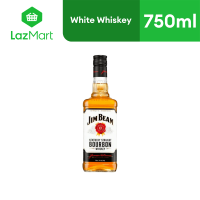
Jim Beam White Bourbon Whisky 750ml
₱759.00₱825.00
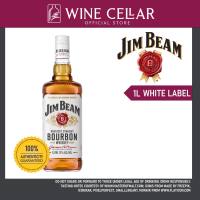
Jim Beam White Label Bourbon Whiskey 1L
₱1,060.00₱1,682.10
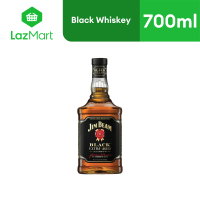
Jim Beam Black Bourbon Whisky 700ml
₱1,160.10₱1,289.00
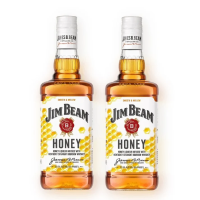
Buy 1 Take 1 Promo: Jim Beam Honey Bourbon Liqueur 700ml (Total 2 Bottles)
₱1,599.00
Buy on Lazada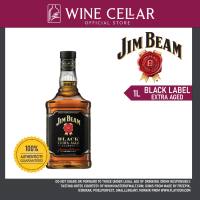
Jim Beam Black Extra-Aged Bourbon Whiskey 1L
₱1,850.00₱2,796.82
About Jim Beam
Overview
Jim Beam is an American bourbon whiskey brand with origins tracing back to 1795, when Jacob Beam sold his first batch of whiskey in Kentucky. Recognised globally as one of the most prominent bourbon labels, it is currently produced by Suntory Global Spirits. The brand remains intrinsically linked to Kentucky, the multi-generational distilling heritage of the Beam family, and broader American bourbon culture.1
| Attribute | Details |
|---|---|
| Brand | Jim Beam |
| Category | Bourbon whiskey |
| Origin | Kentucky, United States |
| Founded | 1795 |
| Founder / pioneer | Jacob Beam |
| Named after | James B. “Jim” Beam |
| Core product | Jim Beam Kentucky Straight Bourbon Whiskey |
| Current owner | Suntory Global Spirits |
| Key distilling site | James B. Beam Distilling Co., Clermont, Kentucky |
| Family tradition | Seven generations of Beam-family distilling, followed by the Noe generation |
| Signature characteristics | Corn-forward bourbon, caramel, vanilla, oak and spice |
| Flagship aging | 4 years for Jim Beam Original |
| Famous associations | Kentucky bourbon, American whiskey, cocktails, bourbon culture |
History
Origins: 1795
The history of Jim Beam began with Jacob Beam, a farmer and grain miller from the Beam family. After relocating to Kentucky in the late 18th century, he utilised surplus corn from his farm to produce whiskey.
In 1795, Beam sold his inaugural batch, originally marketed as Old Jake Beam Sour Mash. This event is widely acknowledged by the brand as the foundation of the Jim Beam bourbon legacy.1
Kentucky’s environment proved ideal for bourbon production; corn was abundant, and the region’s limestone-filtered water provided an excellent source for distilling.3
The Beam family expands
Jacob Beam eventually transferred the distilling operations to his son, David Beam. Throughout the 19th century, the family expanded production capacity and adopted newer distilling technologies.
The whiskey became known as Old Tub, and improvements in transport infrastructure—particularly the expanding railroad network—enabled the Beam family’s bourbon to reach markets well beyond Kentucky.31
James B. “Jim” Beam
The individual whose name ultimately became synonymous with the brand was James Beauregard Beam, commonly referred to as Jim Beam.
He assumed control of the family distilling business in the late 19th century and became a pivotal figure in its history. However, his career was disrupted by one of the most significant crises in the American whiskey industry: Prohibition.3
Prohibition and rebuilding
From 1920 to 1933, the United States prohibited the production and sale of most alcoholic beverages.
Consequently, the Beam family’s distilling business was forced to cease normal bourbon production. Following the repeal of Prohibition in 1933, the then 70-year-old Jim Beam rebuilt the family distillery in Clermont, Kentucky.
According to company records, the distillery was reconstructed remarkably quickly—in approximately 120 days—with the first post-Prohibition production occurring in the mid-1930s.31
A critical component of this reconstruction was the preservation of the family’s yeast culture. Jim Beam reportedly recreated and safeguarded the proprietary yeast strain after Prohibition ended, establishing continuity between pre-Prohibition and modern bourbon.1
The modern Jim Beam name emerged during this post-Prohibition era.4
What exactly is bourbon?
Jim Beam is classified specifically as Kentucky Straight Bourbon Whiskey.
Bourbon is a distinct type of American whiskey subject to several legal requirements. Among these, it must:
- Be produced in the United States.
- Use a mash bill containing at least 51% corn.
- Be aged in new, charred oak containers.
- Meet specific requirements governing distillation and bottling strength.
- For the designation straight bourbon, be aged for a minimum of two years.
Jim Beam’s flagship bourbon is aged for four years, which is double the minimum aging period required for straight bourbon.1
How Jim Beam is made
The production of Jim Beam combines traditional bourbon-making methods with the scale necessary for a major international brand.
1. Grains
Corn serves as the primary grain in bourbon. Additional grains are incorporated into the mash to achieve the desired flavour profile.
Jim Beam describes its house style as producing a bourbon with a relatively bold and sweet character, derived from natural ingredients and the family’s traditional production process.3
2. Limestone-filtered water
Kentucky’s limestone geology plays a vital role in the Beam story. The distillery utilises water sourced from the region’s limestone-filtered aquifers.1
3. Yeast
One of Jim Beam’s most distinctive elements is its family yeast strain.
The company states that the yeast culture recreated by Jim Beam following Prohibition continues to play a central role in bourbon production. This yeast is considered essential to maintaining the brand’s consistent flavour profile.1
4. Distillation
The fermented mash is distilled to concentrate the alcohol and develop the whiskey’s character.
5. New charred oak barrels
The bourbon is placed into newly charred American oak barrels. During maturation, the whiskey interacts with the wood, extracting compounds that contribute to its characteristic vanilla, caramel, oak and spice notes.4
6. Aging
Jim Beam Original is aged for four years.
The interaction between the bourbon and oak during this period is crucial to the final flavour. The company describes the resulting spirit as mellow and medium-bodied, featuring caramel and vanilla alongside oak and spice.4
Jim Beam Original
The flagship expression is commonly identified as Jim Beam Original, historically associated with its familiar white-label presentation.
According to Jim Beam, its tasting profile includes:
- Aroma: oaky vanilla with a spicy background
- Flavor: caramel and vanilla with a medium-bodied, mellow character
- Finish: oak and spice with the recognizable bourbon character4
It can be consumed neat or over ice but is also widely used as a cocktail ingredient.
Major Jim Beam products
Jim Beam has developed considerably beyond its flagship bourbon.
Its broader bourbon family includes products such as:
- Jim Beam Original
- Jim Beam Black
- Jim Beam Rye
- Jim Beam Single Barrel
- Jim Beam Double Oak
- Jim Beam Devil’s Cut
- Jim Beam flavored whiskey expressions
The wider Beam distilling portfolio also includes premium and small-batch brands such as Booker’s, Knob Creek, Basil Hayden, and Baker’s.4
It is important to distinguish these products from the Jim Beam brand itself: some are separate brands within the broader Beam bourbon portfolio rather than different Jim Beam labels.
The Beam–Noe family legacy
One of Jim Beam’s strongest brand assets is its family history.
The company describes its distilling tradition as spanning multiple generations. Following the Beam family line, the Noe family became particularly significant.
Booker Noe
Frederick Booker Noe II, better known as Booker Noe, was one of the most influential figures in modern Beam bourbon.
He experimented extensively with bourbon production and barrel selection. His work eventually led to the development of the Small Batch Bourbon Collection, which includes Booker’s, Baker’s, Basil Hayden and Knob Creek.31
Booker’s contributions were significant because they helped popularise the concept of small-batch bourbon at a time when the category was struggling to compete with other spirits.
Fred Noe
Booker’s son, Fred Noe, subsequently became an important ambassador and master distiller for the Beam family tradition. The company identifies Fred as the seventh-generation master distiller.1
The company now also identifies Freddie Noe as the eighth-generation master distiller, continuing the family’s direct involvement in bourbon production.
Ownership
Jim Beam is currently part of Suntory Global Spirits, an international spirits company with a portfolio spanning bourbon, American whiskey, Scotch, Japanese whisky, tequila, cognac and other categories.
A major corporate milestone occurred in 2014, when Japan’s Suntory Holdings acquired Beam Inc. This acquisition created the entity formerly known as Beam Suntory, which now operates as Suntory Global Spirits.
Importantly, corporate ownership did not eliminate the Beam family’s role in the brand’s identity. The company continues to emphasise the Beam and Noe family heritage as central to the Jim Beam story.1
Brand identity
Jim Beam’s brand identity is built around several key themes.
American heritage
Jim Beam presents itself as an expression of American bourbon culture, with Kentucky at the centre of its identity.
Family
Rather than presenting bourbon purely as an industrial product, Jim Beam emphasises the idea of a family tradition passed from generation to generation.3
Authenticity
The brand heavily emphasises traditional bourbon-making methods, including its family yeast, Kentucky water, new charred oak barrels and established recipes.
Accessibility
Historically, Jim Beam positioned itself as a bourbon accessible to a broad audience rather than exclusively targeting luxury spirits consumers. Its relatively accessible flagship bourbon helped make the brand one of the most recognisable names in American whiskey.
Sociability
Jim Beam has also cultivated an identity around casual drinking, cocktails, music, nightlife and social occasions. This distinguishes it from certain bourbon brands that focus exclusively on premium, collector-oriented or connoisseur positioning.
Jim Beam and American popular culture
Over its long history, Jim Beam has become more than simply a whiskey label; the name is closely associated with American bourbon culture.
Its recognisable bottle, white-label branding and association with Kentucky have made it one of the most identifiable American whiskey brands internationally.
The brand has also benefited from the growth of bourbon cocktails, including classics such as the Old Fashioned, as well as simpler mixed drinks and highballs. Jim Beam itself promotes both straight-drinking and cocktail applications.4
Global presence
Although Jim Beam’s historical home is Kentucky, it has evolved into a truly international bourbon brand.
Its expansion beyond the United States was aided by postwar distribution networks and growing international demand for American whiskey. The company describes Jim Beam as the world’s No. 1 bourbon by sales.41
Today, Jim Beam is sold in numerous markets globally, making the brand one of the most recognisable ambassadors for American bourbon outside the United States.
The James B. Beam Distilling Co.
The James B. Beam Distilling Co. is the historic home associated with the Beam family’s bourbon-making tradition in Clermont, Kentucky.
The site represents far more than a production facility; it functions as a physical embodiment of the family’s history and is also associated with the broader Beam bourbon portfolio.1
The company describes Clermont as the birthplace and home of Jim Beam and continues to utilise the site as a vital component of its visitor and brand experience.
Why Jim Beam is important to bourbon history
Jim Beam’s significance extends beyond its status as an old whiskey brand.
Its historical importance stems from several factors:
- Its origins date to 1795, placing it among America’s historic whiskey-making traditions.
- The Beam family maintained a multigenerational distilling tradition.
- The brand survived Prohibition, with Jim Beam personally rebuilding the distillery afterwards.31
- Its production became highly recognizable internationally, helping establish bourbon as a major American spirits category.
- Booker Noe helped popularize small-batch bourbon, contributing to the modern premium-bourbon movement.31
- Its flagship bourbon occupies an important position between mass-market accessibility and traditional bourbon craftsmanship.
Jim Beam’s place in the bourbon market
A useful way to understand Jim Beam is to view it as a heritage mass-market bourbon brand rather than a niche craft distillery.
Its flagship product is designed to be approachable, recognisable and versatile. Simultaneously, the company operates a much larger family of premium and experimental bourbon brands.
This creates a distinct hierarchy:
Jim Beam Original → premium Jim Beam expressions → Beam small-batch brands → limited/experimental releases
The result is a portfolio capable of appealing to casual whiskey drinkers as well as experienced bourbon enthusiasts.4
Brand symbolism
The name “Jim Beam” is itself integral to the brand’s storytelling.
It does not merely describe a distillery; it evokes a particular person—James B. Beam—whose post-Prohibition rebuilding of the family business became one of the defining narratives of the brand.
The brand therefore combines:
Jim Beam the person → Beam family → Kentucky → bourbon → American heritage → global whiskey brand
That chain is fundamental to its marketing and identity.
In popular shorthand
If one were to summarise Jim Beam concisely, the brand could be characterised as:
Kentucky heritage + family tradition + approachable bourbon + American identity + global scale
Its strongest differentiator is arguably the combination of extraordinary historical continuity and mass-market accessibility. While many bourbon brands possess heritage, relatively few have a story reaching back to 1795 while simultaneously operating as one of the world’s most recognisable bourbon brands.
Official resources
For authoritative brand information, Jim Beam’s own history pages serve as primary references:
- Jim Beam — Official History
- Jim Beam — Original Bourbon
- James B. Beam Distilling Co. — About Us
- Beam Family History
- Suntory Global Spirits — About Us
In one sentence: Jim Beam is a Kentucky bourbon brand whose roots trace to Jacob Beam’s first whiskey in 1795, whose modern identity was established by James B. “Jim” Beam after Prohibition, and whose seven-generation family legacy helped make it one of the world’s most recognizable bourbon names.1