Shop on Lazada
Johnson products

Combantrin Suspension 10ml : for deworming
₱277.00₱291.00
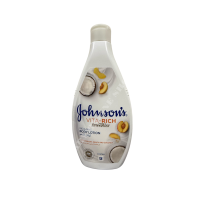
Johnson’s Vita-Rich Body Lotions (400ml)
₱310.00₱350.00
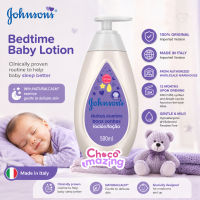
Johnsons Baby Bedtime Lotion 500ml
₱309.00₱499.00
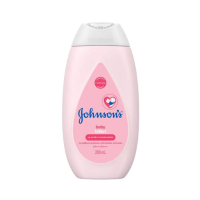
Johnson’s Baby Lotion 200ml – Gentle Daily Moisturizer for Soft Smooth Baby-Fresh Skin
₱114.00₱300.00
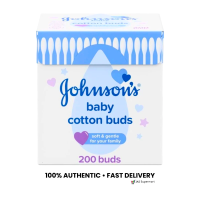
Johnsons Baby Cotton Buds Soft & Gentle 200pcs
₱249.00₱289.00

Lower Suspension Arm Left Side Toyota Vios 2007-2012 Johnson of Nagoya Japan
₱2,250.00
Buy on Lazada
Lower Suspension Arm Right Side Toyota Vios 2007-2012 Johnson of Nagoya Japan
₱2,250.00
Buy on Lazada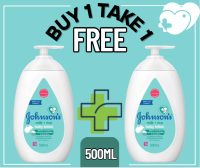
Baby Johnsons Lotion 500g Promo BUY 1 TAKE 1 FREE(ORDER NOT MORE THAN 20KG)
₱395.00
Buy on LazadaAbout Johnson
Overview
Johnson’s® is a globally recognised personal-care brand best known for products designed for babies and young children, including baby shampoo, baby powder, lotion, body wash, oils, and other skin- and hair-care items. While historically linked to the healthcare company Johnson & Johnson, which began developing products for mothers and infants in the late 19th century, the brand is now part of Kenvue Inc. 1. Kenvue became an independent publicly traded company in August 2023, following the separation of Johnson & Johnson’s consumer-health business.
In the Philippines, Johnson’s is widely available through supermarkets, pharmacies, and e-commerce platforms, maintaining its position as a familiar household name in infant and family hygiene.
Quick facts
| Category | Information |
|---|---|
| Brand | Johnson’s® |
| Best known for | Baby and family personal care |
| Origin | United States |
| Historical parent | Johnson & Johnson |
| Current owner | Kenvue Inc. |
| Origins of baby business | 1890s |
| Famous products | Baby Shampoo, Baby Powder, Baby Lotion, Baby Oil |
| Major markets | Global |
| Industry | Personal care / consumer health |
| Brand positioning | Gentle, mild, trusted baby care |
History
Origins: Johnson & Johnson
The origins of Johnson’s lie with Johnson & Johnson, founded in 1886 in New Brunswick, New Jersey, by brothers Robert Wood Johnson, James Wood Johnson, and Edward Mead Johnson. The company was established after Robert Wood Johnson became interested in Joseph Lister’s antiseptic approach to surgery, becoming an early pioneer in mass-producing sterile surgical supplies. 4
Although Johnson & Johnson initially concentrated on medical products rather than cosmetics or baby care, it gradually expanded into products for mothers, infants, and families.
Birth of Johnson’s Baby
A significant milestone occurred in 1894 when Johnson & Johnson introduced Maternity Kits and Johnson’s Baby Powder. The powder proved particularly important to the development of the company’s baby-care business. 2
According to corporate records, the Johnson’s Baby line developed partly from efforts to address skin irritation associated with medicated plasters. Scientific Director Fred Kilmer worked on a solution to alleviate diaper rash, contributing to the emergence of the dedicated product range. 3 This established a long-term association between the Johnson’s name and infant skin care.
Expansion of the baby-care range
Throughout the 20th century, Johnson’s expanded beyond baby powder into a broader collection of products. One of its most recognisable developments was Johnson’s Baby Shampoo. In 1954, the company introduced its No More Tears® formula, marketed as a mild, soap-free shampoo intended to be gentle on babies’ eyes. 5
Over subsequent decades, the brand developed a comprehensive portfolio including:
- Baby shampoo
- Baby wash
- Baby lotion
- Baby oil
- Baby powder
- Diaper-care products
- Hair-care products
- Moisturizers
- Cleansing products
- Products for mothers and families
Product assortment varies considerably by country, with formulations and packaging often adapted to local regulations and consumer preferences.
Brand identity
Johnson’s has historically built its identity around gentleness and care. Rather than positioning itself primarily as a luxury beauty brand, it developed a mass-market identity associated with the progression from baby care to gentle family hygiene and trust.
Distinctive packaging, a recognisable logo, and a characteristic fragrance have contributed to strong brand recognition across generations. Visual and advertising language has traditionally emphasised babies, parents, softness, cleanliness, and affectionate family relationships.
Products
Johnson’s is particularly noted for its baby-care portfolio.
Baby Shampoo
Baby shampoo is among the brand’s most recognisable products. The No More Tears® concept, introduced in 1954, became a central element of the Johnson’s brand identity. 5
Baby Powder
Baby powder holds a significant place in the company’s history; Johnson’s Baby Powder was introduced in 1894, making it one of the earliest products associated with the baby-care business. 6
Baby Lotion
Johnson’s baby lotion is marketed for moisturising and caring for delicate skin and has become one of the brand’s internationally recognisable staples.
Baby Oil
Baby oil is another longstanding category associated with Johnson’s, traditionally marketed for moisturising and massage.
Baby Wash and Cleansers
The brand has expanded into liquid cleansers and washes, offering alternatives to traditional soap-based products.
Global presence
Johnson’s evolved from an American healthcare-company product line into an internationally recognised consumer brand. Its products are marketed in numerous countries, including the Philippines, where formulations, packaging, and product names may differ according to local regulations and consumer preferences.
Kenvue describes Johnson’s Baby as a brand with more than a century of experience in baby skincare. 7
Ownership and corporate changes
A pivotal development in the modern history of Johnson’s was the separation of Johnson & Johnson’s consumer-health business. Historically, Johnson’s was part of the Johnson & Johnson Consumer portfolio alongside brands such as Tylenol, Neutrogena, Listerine, and Band-Aid.
Johnson & Johnson announced Kenvue as the name for its planned consumer-health company in 2022. 2 In August 2023, Kenvue became an independent publicly traded company. Consequently, Johnson’s Baby is now a Kenvue brand rather than a brand operated directly by Johnson & Johnson. 11
Modern Johnson & Johnson now focuses on Innovative Medicine and MedTech rather than consumer products. 8
Corporate relationship timeline
- 1886: Johnson & Johnson founded
- 1894: Johnson’s Baby Powder introduced
- 20th century: Johnson’s expands into global baby care
- 1954: Johnson’s Baby Shampoo with No More Tears® introduced
- 2022: Kenvue name announced
- 2023: Kenvue becomes an independent company
- Today: Johnson’s is part of Kenvue’s consumer-health portfolio
Brand positioning
Johnson’s occupies a distinct position in the personal-care market as both a baby-care specialist and a mass-market consumer brand. Its traditional competitive advantages include:
- Long history: The brand traces its baby-care roots to the 1890s.
- High recognition: Johnson’s is recognisable across many international markets.
- Baby-care specialization: Its identity is strongly connected to infant skincare.
- Parent trust: The brand has historically emphasised safety, gentleness, and care.
- Broad distribution: Products are available through supermarkets, pharmacies, retailers, and online channels in many markets.
- Iconic products: Baby Shampoo, Baby Powder, Baby Lotion, and Baby Oil are particularly recognisable.
Distinction from Johnson & Johnson
Confusion often arises regarding the relationship between the brand and the corporation.
Johnson & Johnson is the healthcare corporation founded in 1886 that currently focuses primarily on innovative medicines and medical technology. 8
Johnson’s® is the consumer brand historically associated with Johnson & Johnson’s baby-care business but is now owned by Kenvue.
While the names are historically connected, they do not represent the same corporate entity today.
Cultural significance
Johnson’s has become more than a product manufacturer; for many consumers, particularly parents, the brand is associated with the broader cultural concept of babyhood. Its recognisable fragrance, pastel-coloured packaging, and baby-focused advertising have made products such as Johnson’s Baby Shampoo and Baby Powder familiar household items.
The brand’s longevity is notable, with Kenvue describing Johnson’s Baby as having established itself in baby skincare for more than a century. 9
Controversies and changing consumer expectations
Like many large consumer-health brands with extensive histories, Johnson’s has faced scrutiny regarding specific ingredients, formulations, marketing claims, and product safety.
Consumer expectations have shifted substantially over recent decades. Parents increasingly seek products described as hypoallergenic, fragrance-free, plant-derived, dermatologist-tested, or free from particular ingredients. Johnson’s and other major baby-care brands have adapted portions of their portfolios and formulations to meet these evolving market expectations.
For any specific Johnson’s product, ingredients and safety characteristics should be evaluated based on current product labelling and local regulatory information rather than assumed solely from the brand name.
Current status
Johnson’s remains one of the best-known names in baby personal care. Under Kenvue, the brand continues to focus on products intended for babies’ skin and hair while maintaining a broader family-care presence in some markets. Kenvue states that its Johnson’s Baby business is supported by extensive baby-skincare research and safety standards. 10
References
- 5 things you might not know about Johnson’s® – A new view of care
- Johnson & Johnson Announces Kenvue as the Name for Planned New Consumer Health Company
- Key milestones in the history of Johnson & Johnson
- Johnson & Johnson’s Origin: Pioneering Healthcare Since 1886
- Our Brands | Kenvue
- Johnson’s Baby: Infant Skin Products & HCP Resources
- Our company | Johnson & Johnson
- Johnson & Johnson Marks New Era as Global Healthcare Company With Updated Visual Identity | Johnson & Johnson
- Our history
- Our heritage | Johnson & Johnson
- Kenvue Inc. – Investor Relations