Shop on Lazada
Joolz products
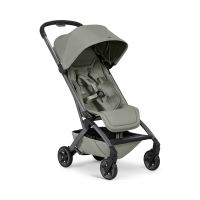
Joolz Aer2 Travel Stroller
₱33,999.00
Buy on Lazada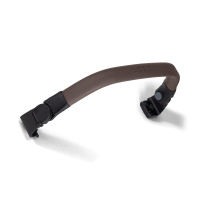
Joolz Aer2 Foldable Bumper Bar
₱4,299.00
Buy on Lazada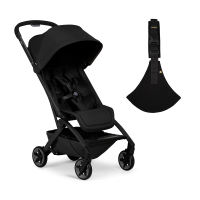
Joolz Aer2 Buggy w/ Wildride Toddler Carrier - Space Black
₱36,999.00
Buy on Lazada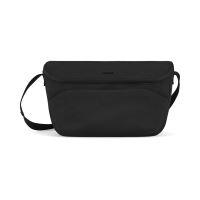
Joolz Stroller Organizer
₱4,699.00
Buy on Lazada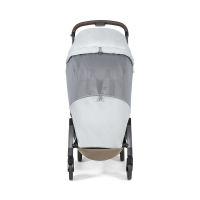
Joolz Aer+/2 2-in-1 Mosquito & Sun Cover
₱2,399.00
Buy on Lazada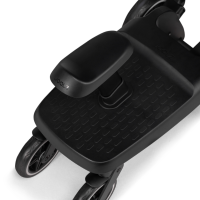
Joolz Aer+ Footboard
₱4,450.00₱8,899.00
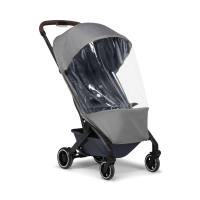
Joolz Aer+ Buggy Raincover
₱1,750.00₱3,499.00
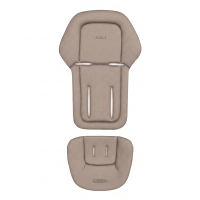
Joolz Aer Newborn Insert
₱3,699.00
Buy on LazadaAbout Joolz
Joolz is a Dutch premium baby-products brand best known for its strollers, pushchairs, compact travel buggies, and related parenting accessories. Founded in the Netherlands in 2004, the company positioned itself around a combination of ergonomic design, contemporary aesthetics, product quality, and sustainability.12
Joolz describes its design philosophy as “Positive Design,” an approach intended to make products better for parents, children, and the environment. Its products are designed to be practical for everyday parenting while maintaining a strong emphasis on appearance and materials.2
As of 2025, Joolz operates as part of Bugaboo, following Bugaboo’s acquisition of Joolz from investment company Gimv and Joolz’s founding shareholders. The two brands continue to operate separately in the marketplace.3
Company overview
| Category | Information |
|---|---|
| Brand | Joolz |
| Industry | Baby products / juvenile products |
| Main category | Premium strollers and pushchairs |
| Founded | 2004 |
| Country of origin | Netherlands |
| Headquarters | Amsterdam, Netherlands |
| Founder | Emile Kuenen |
| Design philosophy | Positive Design |
| Known for | Premium strollers, ergonomic design, sustainability |
| Current parent company | Bugaboo |
| Global presence | More than 60 countries |
| Website | joolz.com |
Joolz was established in Amsterdam and developed into an internationally distributed premium stroller brand. By 2025, the company reported sales in more than 60 countries, with established markets in Europe, Asia-Pacific and the United States.3
History
Foundation
Joolz was founded in the Netherlands in 2004 by Emile Kuenen. The company was created with the intention of bringing a more design-oriented and premium proposition to the stroller market.
The brand emerged from Kuenen’s observation that there was an opportunity in the higher-end stroller segment. Joolz subsequently developed its identity around modern design, ergonomics and functionality, rather than treating a stroller simply as a utilitarian baby product.4
From its early years, Joolz emphasized the idea that products for parents should work well for both the child and the person pushing the stroller. This became an important part of the company’s ergonomic approach.
Growth
During the 2010s, Joolz expanded from being a Dutch stroller company into an international premium brand. Its products began appearing in markets across Europe and other regions.
One of the company’s important design successes was the Joolz Geo, which received the Red Dot Award: Best of the Best in 2015.1
In 2016, Belgian investment company Gimv acquired a 40% stake in Joolz. The remaining shares were retained by founder Emile Kuenen and managing director Stan Vermeulen at the time. Gimv’s investment was intended to support Joolz’s expansion in Europe and internationally and the development of new products.1
Acquisition by Bugaboo
A major development in Joolz’s corporate history occurred in 2025.
On May 27, 2025, Gimv announced that it, together with Joolz’s founding shareholders, had sold its stake in Joolz to Bugaboo. The transaction brought two prominent Dutch stroller brands under the same corporate ownership.3
The acquisition was presented as a way to combine the companies’ international resources and accelerate growth in the global stroller market.
Importantly, Joolz and Bugaboo continue to operate as separate brands rather than becoming a single consumer brand. Their combined portfolio covers premium strollers and parenting products while allowing each brand to maintain its own identity.3
The combined company was reported to have approximately 1,200 employees, with its headquarters in Amsterdam.3
Products
Joolz’s primary business is the design and sale of premium strollers and pushchairs. The company’s product portfolio has included full-size family strollers, urban strollers and lightweight travel buggies.
Current and recent Joolz product families include:
- Joolz Day — the brand’s full-size, design-oriented stroller line.
- Joolz Geo — an adaptable stroller designed for family use and capable of accommodating a second child.
- Joolz Hub — a more compact stroller aimed particularly at urban environments.
- Joolz Aer — a lightweight, compact travel stroller.
- Joolz Aer² — a newer generation of the Aer compact stroller.
- Joolz Hub² — the newer generation of the Hub.
- Joolz accessories — including products intended to complement Joolz strollers.
- Joolz car seats and other baby products — depending on the market and product generation.2
Joolz’s current product positioning emphasizes comfort, portability, ergonomics, ease of use and durability. Its Aer line, for example, focuses particularly on lightweight construction and compact folding for travel.2
Major product lines
Joolz Day
The Day is Joolz’s traditional full-size stroller platform. It is designed as a premium everyday stroller, combining a larger chassis with an emphasis on comfort and ergonomic use.
The Day family has evolved through multiple generations, including models such as the Day+, Day³ and newer variants. Joolz positions the Day as a versatile stroller for everyday family life.2
Joolz Geo
The Geo is designed around flexibility for growing families.
One of its distinguishing characteristics is its ability to adapt for a second child, making it substantially different from a simple single-child stroller. It is also designed for all-terrain use and larger family loads.2
The Geo became particularly significant to the brand after the original model received the Red Dot Best of the Best design award in 2015.1
Joolz Hub
The Hub was developed with urban living in mind.
Compared with Joolz’s larger family-oriented strollers, the Hub emphasizes a more compact footprint while retaining features associated with full-size strollers. Joolz describes the line as combining a compact design with comfort and functionality.2
Joolz Aer
The Aer represents Joolz’s move into the lightweight travel-stroller segment.
Its key characteristics include:
- Lightweight construction
- Compact folding
- One-handed folding
- Travel-oriented dimensions
- A focus on comfort despite its smaller size
The original Aer was listed by Joolz at approximately 6 kg / 13.4 lb, depending on market specifications.2
Design philosophy
One of Joolz’s strongest distinguishing characteristics is its focus on design.
Rather than positioning strollers purely as functional childcare equipment, Joolz treats them as consumer-design products. Its philosophy combines ergonomics, aesthetics, functionality, durability and sustainability.
The company calls this approach “Positive Design.” Joolz describes Positive Design as an effort to create products that make parents’ and children’s lives easier while considering environmental impact.2
Ergonomics are particularly important. Joolz designs its strollers around the interaction between parent, child and stroller, including considerations such as seating position, handling, folding and everyday usability.
The company has also emphasized independent product testing and states that its products are tested through organizations including SGS, Intertek and TÜV, alongside internal testing procedures.2
Sustainability
Sustainability is a major component of Joolz’s modern brand identity.
The company has developed several initiatives intended to reduce the environmental impact of its products and packaging.
Joolz Birth Forest
One of Joolz’s best-known sustainability initiatives is its Birth Forest.
Under the company’s “one stroller, one tree” concept, Joolz plants a tree for each stroller sold. The company has described this initiative as part of its broader effort to create a positive environmental impact.2
The number of trees reported on Joolz’s website varies by regional page and has increased over time, so individual figures should be treated as date-specific rather than a permanent company statistic.2
Reusable packaging
Joolz has also become known for its reusable stroller packaging.
Instead of treating the box purely as disposable packaging, Joolz designed its packaging so that it can be transformed into objects such as a birdhouse, lamp or children’s furniture/toy-related items, depending on the particular package.2
This idea became one of the more recognizable expressions of the company’s Positive Design philosophy.
Recycled and sustainable materials
Joolz uses recycled materials in some fabrics, including fabrics made from recycled plastic bottles. Its Essentials collection has also included organic cotton products.2
The company frames durability itself as a sustainability strategy: if products remain useful for longer and can be passed between families, fewer products need to be discarded and replaced.2
Warranty and durability
Joolz has historically placed considerable emphasis on product longevity.
Its current international messaging highlights a 10-year transferable warranty, while older Joolz materials and some regional product pages refer to a lifetime warranty for certain pushchair generations or policies. This means warranty terms can depend on the product, purchase date and market.2
The transferable aspect of the newer warranty is particularly relevant to Joolz’s sustainability positioning because it supports the idea of products being passed from one family to another.
Brand identity
Joolz’s branding is strongly associated with several characteristics:
- Dutch design
- Premium positioning
- Minimalist aesthetics
- Ergonomics
- Parent-focused functionality
- Urban lifestyle
- Sustainability
- Long-term product use
The company deliberately targets parents who want baby products that fit into an existing lifestyle rather than visually or functionally dominating it.
This is particularly evident in the contrast between its product families: the Geo emphasizes family expansion and versatility, the Hub focuses on city living, and the Aer focuses on portability and travel.2
Headquarters
Joolz is a Dutch company with its roots and headquarters in Amsterdam, Netherlands.
The company has described its Amsterdam office as being located in a sustainably renovated former factory. Joolz says the facility incorporates features such as greenhouses and energy-efficient/energy-neutral solutions as part of its broader sustainability philosophy.2
Amsterdam is also significant to the brand’s identity: Dutch urban life, cycling, walking and relatively compact city environments provide a natural context for products designed around mobility and everyday family transportation.
Market position
Joolz occupies the premium segment of the stroller market.
Its principal competitive characteristics are not based on being the cheapest option. Instead, the company competes through:
- Design
- Build quality
- Ergonomics
- Brand identity
- Sustainability
- Product longevity
- Premium materials and finishes
This places Joolz in the same broad premium category as other high-end European stroller manufacturers, including its current sister brand Bugaboo.
Gimv described Joolz in 2016 as a rapidly growing premium stroller company distinguished by quality, ergonomic design and its modern brand culture. By the time of the 2025 acquisition, Joolz had expanded to more than 60 countries.1
Joolz and Bugaboo
The relationship between Joolz and Bugaboo is particularly important today.
Both are Dutch-founded premium stroller brands, but they historically developed independently.
After Bugaboo acquired Joolz in 2025, the companies became part of the same broader organization. However, the acquisition announcement specifically stated that the Joolz and Bugaboo brands would continue operating separately.3
In simplified terms:
- Bugaboo → parent company / group
- Bugaboo brand
- Joolz brand
This gives the combined company multiple premium stroller propositions while allowing Joolz to retain its own visual identity and product philosophy.
Distinctive characteristics
Joolz’s identity can essentially be summarized by the idea of “premium parenting products with positive design.”
Unlike a stroller company focused solely on technical specifications, Joolz attempts to combine the emotional and lifestyle aspects of parenting with practical product engineering.
Its core proposition is roughly:
A stroller should be comfortable and safe for the child, convenient and ergonomic for the parent, attractive enough to fit modern lifestyles, durable enough to last, and designed with environmental considerations in mind.
That philosophy has remained relatively consistent from the company’s early development through its expansion into a global brand.
Timeline
| Year | Event |
|---|---|
| 2004 | Joolz founded in the Netherlands by Emile Kuenen. |
| 2015 | Joolz Geo receives Red Dot Best of the Best design recognition. |
| 2016 | Gimv acquires a 40% stake in Joolz to support international expansion. |
| 2010s | Joolz expands its portfolio with Day, Geo, Hub and other stroller platforms. |
| 2020 | Joolz Aer expands the company’s presence in lightweight/travel strollers. |
| 2025 | Gimv and Joolz’s founding shareholders sell Joolz to Bugaboo. |
| 2025–present | Joolz continues operating as a distinct brand within the Bugaboo organization. |
The 2025 acquisition is the most significant recent corporate milestone.1