Shop on Lazada
JT-COM products
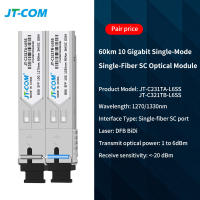
JT-COM a Pair 10G SC SFP Single Mode Simplex SFP+ Module 10KM/20KM/40KM/60KM 1330/1270nm Compatible With Ruijie,Ubiquiti ,Mikrotik ,TP-LINKCisco Switch
₱6,109.00₱12,034.00
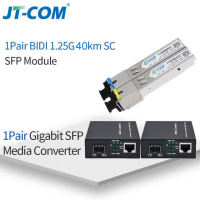
JT-COM 1 Pair Gigabit Fiber Optical Media Converter Transceiver with SFP Module 3KM/5KM/20KM/40KM 1000Mbps Fast Ethernet SFP to RJ45 switch 2 port SC/LC Single Mode
₱3,810.00₱6,860.00
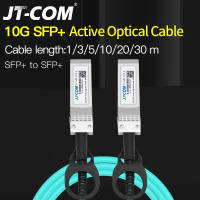
10G AOC Cable SFP+ Module 1m/3m/5m/10m/30m Active Optical Cable Compatible with Cisco/mikrotik Network Switch
₱2,432.00₱4,864.00
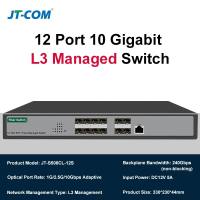
JT-COM 8-port Managed Switch 10G SFP+ Layer 3 Fiber Optical Switch with Console Support DHCP VLAN LACP
₱18,599.00₱31,222.00
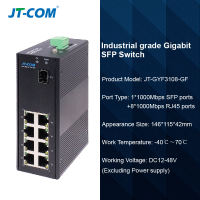
JT-COM industrial grade 1000Mbps Gigabit 1 SFP 8 RJ45 Network switch Home Lab Hub Internet Splitter Plug and Play (1 fiber sfp 8 copper ports)
₱3,419.99₱7,755.00
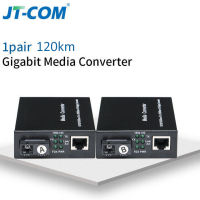
JT-COM 1Pair Media Converter Single Mode Single Fiber 3km/20km/40km/60km/80km/120km Fiber Converter10/1000M A/BFiber Transceiver Ethernet Switch
₱7,147.00₱13,849.00
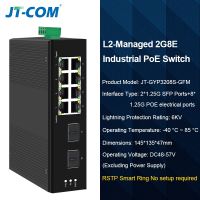
JT-COM Industrial 8-Port Gigabit Managed PoE Switch 4/8 Port 10/100/1000Mbps + 2 Port Gigabit SFP Slots DIN-Rail IP40 Standard IEEE802.3af/at
₱6,739.00₱9,947.00
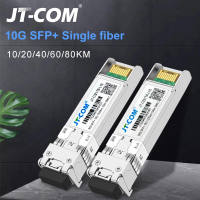
JT-COM SFP+ Module 10G LC BIDI 1270/1330nm Single Mode Single Fiber Optic module 10/20/40/60/80KM Compatible with Cisco/mikrotik/TP-link Switch ect
₱9,690.00₱17,450.00
About JT-COM
JT-COM is a networking and telecommunications equipment brand associated primarily with fibre-optic connectivity, Ethernet networking, optical transceivers, network switches and related installation and test equipment. Based on publicly available product listings, the brand targets network infrastructure applications ranging from small installations and CCTV systems to industrial Ethernet and higher-speed fibre and data-centre networking.
Important note: Multiple businesses appear to use the name “JT-COM” or “JT COM”. The information below refers primarily to the JT-COM networking-equipment brand whose products are sold through online marketplaces, rather than attributing information from similarly named companies to the brand.
Overview
| Field | Information |
|---|---|
| Brand | JT-COM |
| Industry | Networking & telecommunications |
| Primary products | Ethernet switches, fibre-optic modules, media converters, fibre accessories, network tools |
| Networking technologies | Ethernet, Gigabit Ethernet, 2.5G, 10G, 25G, 40G, 100G |
| Fibre products | SFP/SFP+/SFP28/QSFP+/QSFP28, fibre switches, transceivers, adapters |
| Applications | Enterprise networking, FTTH, CCTV/IP surveillance, industrial networking, telecom, data centres |
| Market positioning | Broad compatibility and relatively cost-conscious networking hardware |
| Common compatibility claims | Cisco, MikroTik, TP-Link and other network equipment |
Public marketplace listings show a particularly broad JT-COM portfolio, including 1G/2.5G/10G switches, industrial Ethernet equipment, optical modules, media converters and fibre accessories.
History and corporate identity
Publicly available information about the corporate history of the JT-COM networking brand is relatively sparse. Consequently, no specific founding year, headquarters, founder or manufacturing company can be stated as fact without a primary JT-COM corporate source.
There is a separate Malaysian company called JT COM Sdn. Bhd., incorporated in 2010 and registered in Selangor. Its reported business involves installation services relating to telecommunications equipment and security systems 1. However, this company should not automatically be treated as the corporate owner or manufacturer of the networking-products brand merely because the names are similar.
Likewise, an older Malaysian brochure identifies JT COM Sdn Bhd as a company involved in CCTV, alarm systems, access control, fibre-optic solutions and ELV projects. A reliable encyclopedia-style profile must therefore distinguish between JT-COM as a product brand and similarly named companies.
Products and product categories
Ethernet switches
Switches are one of JT-COM’s most prominent product categories. The current product range advertised online includes:
- Gigabit Ethernet switches
- 2.5GbE switches
- 10GbE switches
- Managed Layer 2/L2+ switches
- Layer 3 switches
- PoE and PoE+ switches
- Industrial Ethernet switches
- Fibre-optic switches
- SFP/SFP+ aggregation switches
Listings include an 8-port 10G SFP+ switch, an 8-port 2.5G managed switch with 10G SFP+ uplink, and managed Gigabit fibre switches. This gives JT-COM a product range extending considerably beyond basic home networking.
Industrial Ethernet
JT-COM also markets switches designed for industrial environments. Examples include ruggedised Gigabit switches with:
- DIN-rail mounting
- RJ45 copper Ethernet ports
- SFP fibre ports
- Wide operating-temperature specifications
- Industrial enclosure designs
One listed model is specified for operation from approximately −40°C to 85°C, illustrating the brand’s positioning towards harsh-environment networking. These products are relevant to applications such as industrial automation, CCTV, transportation systems, outdoor networking, factory networks, utility infrastructure and building-management systems.
Optical transceivers
Pluggable optical networking modules form another major JT-COM category. The catalogue includes:
- SFP
- SFP+
- SFP28
- QSFP+
- QSFP28
- BiDi optical modules
- Single-mode modules
- Multimode modules
- Various wavelength configurations
Advertised examples include 10G SFP+ BiDi modules, 25G SFP28 modules and 40G QSFP+ modules. Some products are marketed as compatible with equipment from brands such as Cisco, MikroTik and TP-Link, allowing JT-COM modules to function as third-party optical transceivers rather than requiring operators to purchase optics directly from the switch manufacturer.
Fibre-optic networking
Fibre connectivity is a distinctive part of the JT-COM product portfolio. The catalogue includes:
- Fibre switches
- Fibre media converters
- Fibre transceivers
- Fibre adapters
- Couplers
- Fibre protection components
- Optical modules
- Fibre testing equipment
JT-COM sells SC-based Gigabit media converters and multi-port SC fibre switches, as well as passive components such as LC UPC fibre-optic coupler adapters and fibre-protection boxes. The brand therefore covers portions of the network stack ranging from the physical fibre connection through to active Ethernet equipment.
Media converters
JT-COM offers media converters that translate between copper Ethernet and fibre. These devices allow fibre links to be integrated into existing copper Ethernet networks without replacing every network device. For example, a JT-COM SC Gigabit media converter is listed as incorporating a 1Gb multimode SC transceiver.
PoE networking
The brand also sells Power over Ethernet (PoE) switches designed for devices such as IP cameras, wireless access points, VoIP equipment and other PoE-enabled network devices. The catalogue includes managed PoE switches supporting functions such as VLAN, QoS and redundant or ring networking features. This makes the brand particularly relevant to CCTV and IP-surveillance installations where network connectivity and device power are delivered through the same Ethernet cable.
Networking technologies
The JT-COM catalogue spans several generations of Ethernet technology.
1 GbE
Gigabit Ethernet products form a substantial part of the range, including conventional copper switches, fibre switches and media converters.
2.5 GbE
The company markets 2.5G Ethernet switches, which are increasingly useful for modern Wi-Fi access points, NAS systems, workstations and upgraded LAN infrastructure.
10 GbE
JT-COM has a substantial 10GbE offering, including 10G SFP+ switches, 10G optical modules, 10G fibre media converters, 10G uplinks and 10G PoE-related switches.
25/40/100 GbE
The catalogue extends into higher-speed infrastructure. Current listings include 25G SFP28 modules, 40G QSFP+ modules and 100G QSFP28 active optical cables. This suggests JT-COM is not limited to consumer-grade networking and has products aimed at high-bandwidth aggregation and data-centre environments.
Compatibility
A notable feature of JT-COM’s product marketing is third-party equipment compatibility. Listings explicitly advertise products as compatible with equipment from manufacturers such as:
- Cisco
- MikroTik
- TP-Link
- Ubiquiti
- Zyxel
- D-Link
For example, a JT-COM fibre-optic testing product lists compatibility with Cisco, MikroTik, Ubiquiti, Zyxel, TP-Link and D-Link equipment 2. This is significant because network operators frequently purchase optical modules independently of their switch manufacturer. However, “compatible with” should not be interpreted as equivalent to being officially certified or endorsed by those manufacturers unless explicitly confirmed.
Management features
Higher-end JT-COM switches advertise conventional enterprise-network functions including:
- VLAN
- QoS
- ACL
- Link aggregation/LACP
- Web management
- Layer-2 management
- Layer-3 switching/routing
- RSTP
- ERPS
- Ring-network functionality
For example, a listed 8-port 10G switch advertises VLAN, QoS, ACL, routing and link aggregation capabilities. These features make the managed-switch range potentially suitable for more sophisticated networks than simple plug-and-play home LANs.
Industrial networking
The industrial segment distinguishes JT-COM from ordinary consumer networking brands. Industrial JT-COM switches are marketed with features such as rugged construction, DIN-rail mounting, wide temperature ranges, fibre uplinks, multiple Ethernet interfaces and managed-network functionality on some models. These characteristics are designed for installations where equipment may experience significantly harsher environmental conditions than those found in a conventional office.
Fibre-optic ecosystem
The JT-COM catalogue covers both active and passive fibre infrastructure. A simplified ecosystem comprises:
- Fibre cable
- Connectors, adapters and couplers
- Optical transceivers
- Media converters and fibre switches
- Ethernet switches
- IP cameras, computers, servers and access points
This breadth allows installers to source many components for the same fibre-network deployment from a single brand.
Typical applications
Enterprise LANs
Managed Gigabit, 2.5G and 10G switches can be used for office networks, server rooms and network aggregation.
CCTV and IP surveillance
PoE switches, industrial switches and fibre equipment are particularly relevant to surveillance deployments. Long-distance CCTV installations, for example, can use fibre between buildings while using PoE copper connections locally for IP cameras.
Fibre-to-the-home and telecom
Optical modules, adapters, couplers and media-conversion equipment can be used in fibre infrastructure and FTTH-related installations.
Industrial networks
Rugged switches with wide temperature specifications and DIN-rail mounting are designed for industrial environments.
Data centres
The availability of 10G, 25G, 40G and 100G optical products means some JT-COM equipment is positioned for higher-bandwidth server and aggregation environments.
Market positioning
Based on its publicly visible catalogue, JT-COM occupies a broad, value-oriented networking-equipment segment. Rather than concentrating on one narrow product category, the brand offers everything from inexpensive fibre accessories and cable-testing equipment to industrial switches and high-speed optical modules.
Its marketplace presence suggests an emphasis on online and direct distribution. One JT-COM store listing currently displays more than 180 products and a high store rating. This should not, however, be confused with evidence of the brand’s global market share or corporate scale.
Brand strengths
Based on the publicly observable product portfolio, JT-COM’s main strengths appear to be:
- Broad product coverage: From passive fibre accessories to 100G optical products.
- Wide speed range: 1G through 100G products are represented.
- Fibre specialisation: Particularly extensive optical-module and fibre-network offerings.
- Industrial options: Including rugged DIN-rail Ethernet switches.
- Third-party compatibility: Products are marketed for use with equipment from several major networking vendors.
- PoE availability: Useful for CCTV and wireless-network installations.
- Competitive positioning: Marketplace listings generally position products below the pricing of many major networking brands.
These conclusions are drawn from the product range and market listings rather than official claims about JT-COM’s corporate strategy.
Limitations and verification
For professional deployments, buyers should evaluate individual JT-COM models rather than assuming every product has identical capabilities. Key specifications to verify include:
- Exact optical wavelength
- Single-mode vs multimode fibre
- Transmission distance
- Connector type
- DOM/DDM support
- PoE budget
- Switching capacity
- Packet-forwarding rate
- VLAN/ACL capabilities
- Management interface
- Firmware support
- Operating temperature
- Warranty
- Regulatory certifications
- Compatibility with the specific switch or router being used
This is especially important for SFP/SFP+/SFP28/QSFP modules, because nominally identical modules can differ in coding, EEPROM configuration, wavelength, optical budget and interoperability.
Comparison with major networking brands
JT-COM is best understood as a third-party or value networking brand, rather than being placed in exactly the same category as established enterprise vendors such as Cisco, HPE Aruba or Juniper. Its value proposition is closely associated with broad specifications, interoperability and relatively low acquisition cost. In contrast, major enterprise vendors generally provide a larger ecosystem encompassing hardware, proprietary software, centralised management, enterprise support and long-term lifecycle programmes.
JT-COM can therefore be attractive when hardware cost and flexible component selection are priorities, while enterprise vendors may be preferable when formal vendor support, certifications, ecosystem integration and long product lifecycles are critical.
Online presence
The most visible current public presence for the networking brand is through marketplace stores rather than a clearly documented corporate website. The JT-COM marketplace catalogue includes hundreds of networking-related listings, including optical modules, Ethernet switches, media converters, fibre accessories and industrial networking equipment.
There is also a historical web presence under the name JT COM Sdn Bhd associated with Malaysian security, telecommunications and ELV services 1, but this entity should be kept separate from the networking-product brand unless corporate ownership can be independently established.
Summary
JT-COM is a networking and telecommunications equipment brand with a strong emphasis on fibre-optic and Ethernet infrastructure. Its publicly listed portfolio ranges from basic fibre adapters and cable-testing tools to Gigabit and 2.5G switches, managed PoE equipment, industrial Ethernet switches, 10G/25G/40G optical modules and 100G active optical cables.
The brand’s niche is cost-conscious network infrastructure with broad interoperability, particularly for fibre, CCTV, industrial Ethernet and small-to-medium enterprise networking. Its catalogue is considerably broader than that of a typical consumer networking brand, although publicly available information about its corporate ownership, founding history, manufacturing operations and global organisation is comparatively limited.