Shop on Lazada
Karcher products
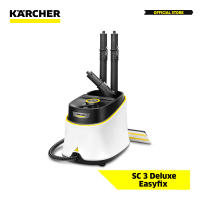
Karcher SC 3 Deluxe Easyfix Steam Mop Kills Virus Bacteria Floor Glass Metal Cleaner Steamer
₱16,141.00₱16,990.00
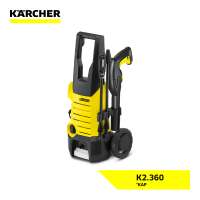
Karcher Pressure Washer K 2.360 *KAP 120 Bar With Wheels Detergent Tank Wash Brush High Pressure Gun Garden Furniture Bikes Car Cleaning
₱8,411.00₱9,895.00
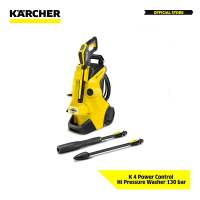
K 4 Power Control Hi Pressure Washer 130 bar
₱20,392.00₱23,990.00
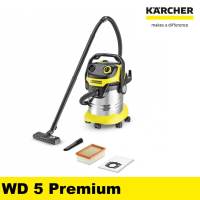
Karcher WD5 Premium Wet and Dry Vacuum Cleaner
₱11,847.00₱19,745.00
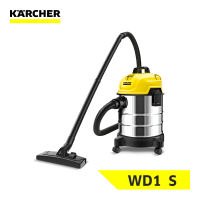
Karcher Wet and Dry Vacuum Cleaner WD 1S Classic stainless steel powerful 18L strong 200 watts suction power Outdoor
₱6,371.00₱7,495.00
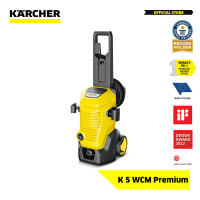
K 5 WCM Premium K5 High Water Pressure Washer Heavy Duty Motor Europe Germany Garden Car Motorcycle
₱34,191.00₱37,990.00
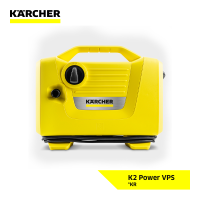
Karcher PressureWasher K 2 Power VPS * KR Aircon Cleaning Induction Motor Heavy Duty Quiet Motor
₱11,997.00₱15,995.00
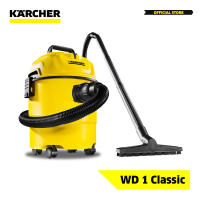
Karcher Wet and Dry Vacuum Cleaner WD 1 Classic 15L Strong 200 watts Suction Power Outdoor Cleaning
₱5,011.00₱5,895.00
About Karcher
Karcher (officially Alfred Kärcher SE & Co. KG) is a German family-owned manufacturer of cleaning technology and one of the world’s most recognized brands in pressure washers and professional cleaning equipment. Founded in 1935 by engineer and inventor Alfred Kärcher, the company originally focused on heating technology before establishing itself as a specialist in cleaning systems. Today, Karcher develops products for both household/Home & Garden users and professional, industrial, and municipal customers.1
Basic Information
| Item | Information |
|---|---|
| Brand name | Karcher |
| Legal name | Alfred Kärcher SE & Co. KG |
| Founded | 2 January 1935 |
| Founder | Alfred Kärcher |
| Origin | Stuttgart, Germany |
| Headquarters | Winnenden, Germany |
| Ownership | Family-owned |
| Industry | Cleaning technology |
| Best known for | High-pressure cleaners / pressure washers |
| Main markets | Home & Garden, professional, industrial and municipal cleaning |
| 2025 sales | €3.483 billion |
| Employees (2025) | Around 17,000 |
| Global presence (2025) | 170 companies in 87 countries |
| Global service network | More than 50,000 service centres |
The 2025 figures represent the latest published company data for Karcher.6
History
Foundation and Early Years
Karcher was established on 2 January 1935 by Alfred Kärcher in Stuttgart, Germany. Contrary to its modern association with pressure washing, the company initially developed and sold products related to heating technology. The early business was grounded in engineering, experimentation, and practical technical solutions.8
The 1950 Turning Point
A significant transformation occurred in 1950 when Karcher developed Europe’s first hot-water high-pressure cleaner. This invention defined the company’s identity as a cleaning-technology specialist. By combining water pressure, heat, and cleaning agents, high-pressure technology allowed users to remove dirt far more efficiently than manual methods permitted.2 This innovation became the foundation of the modern Karcher brand.
Leadership Transition
Following the death of Alfred Kärcher in 1959, his wife, Irene Kärcher, assumed leadership of the company. She maintained family ownership and managed operations until her passing in 1989.2
International Expansion and Cultural Sponsorship
From the 1980s onward, Karcher expanded beyond Germany, establishing a global network of subsidiaries, manufacturing facilities, sales organizations, and service centers. Concurrently, the company diversified its portfolio beyond high-pressure cleaners.
Since 1980, Karcher has also maintained a distinctive cultural sponsorship program, participating in the cleaning and preservation of historic monuments and cultural heritage sites. The company reports that more than 300 monuments worldwide have been cleaned or restored through this initiative.11
90th Anniversary
In 2025, Karcher celebrated its 90th anniversary, marking its evolution from a small engineering workshop into a global cleaning-technology enterprise. The company reported that its turnover had increased by more than 340% over the preceding two decades.10
Product Portfolio
Karcher’s offerings extend well beyond pressure washers, broadly categorized into Home & Garden and Professional segments.
Home & Garden
The consumer portfolio comprises equipment commonly used in residential settings:7
- High-pressure cleaners
- Wet-and-dry vacuum cleaners
- Household vacuum cleaners
- Steam cleaners
- Window vacuum cleaners
- Floor cleaners
- Spray-extraction cleaners
- Cordless cleaning equipment
- Pumps
- Air-treatment products
- Watering systems
- Cleaning chemicals
- Accessories
Despite this breadth, Karcher remains most strongly associated with pressure washers in the consumer market.
Pressure Washers
The high-pressure cleaner is Karcher’s most iconic product category. The technology operates by pressurizing water via a pump and expelling it through a specialized nozzle at high velocity to remove dirt, mud, algae, grease, and other contaminants. Current consumer models are segmented into categories such as Classic, Standard, and Power Control, addressing varying needs for portability and performance.2 Some units feature water-cooled motors, and the company manufactures its own pumps.3
Typical applications include:
- Washing cars, motorcycles, and bicycles
- Cleaning patios, driveways, walls, and fences
- Maintaining garden furniture and outdoor tiles
- Cleaning building exteriors and agricultural equipment
The company has dedicated over seven decades to refining high-pressure cleaning technology.3
Professional Equipment
Karcher maintains a substantial B2B division serving sectors such as factories, warehouses, hotels, airports, hospitals, construction, agriculture, automotive, transportation, municipal services, and facility management.3
The professional portfolio includes:3
- Professional high-pressure cleaners
- Industrial vacuum cleaners and wet-and-dry vacuums
- Floor scrubbers and scrubber dryers
- Sweepers and carpet cleaners
- Steam cleaners and cleaning robots
- Vehicle-wash systems
- Dry-ice cleaning systems
- Municipal equipment
- Manual cleaning equipment
- Industrial dust-extraction systems
This segment underscores Karcher’s identity as an industrial and professional cleaning-technology provider rather than solely a consumer appliance brand.
Cleaning System Philosophy
Karcher positions its machines as components of a broader system comprising machine, accessory, detergent, and application knowledge. For example, a professional floor-cleaning solution integrates a scrubber, specific brushes or pads, formulated detergents, and standardized procedures. Consequently, the company sells accessories, detergents, and complete cleaning solutions alongside hardware,11 creating a comprehensive cleaning ecosystem.
Brand Positioning
Karcher’s market positioning rests on several core pillars:
- Innovation: Products are engineered to solve practical problems, guided by the philosophy that innovation should benefit people.11
- Performance: Emphasis is placed on cleaning effectiveness through high water pressure, pump technology, specialized nozzles, heat, detergents, automation, and accessories.
- Quality: The brand targets the premium segment of the cleaning-technology market.
- Ease of Use: Modern products prioritize ergonomics, portability, quick connections, accessory storage, and digital assistance.
- Sustainability: Technologies aim to reduce consumption of water, energy, and cleaning chemicals while extending product life and adhering to circular-economy principles.5
Visual Identity
Karcher is distinguished by its yellow-and-black visual identity. This color scheme ensures high visibility and recognition for its equipment, particularly pressure washers and professional machines. The combination of a yellow body, black components, and the Karcher logo allows consumers to identify the brand from a distance without reading text, distinguishing it from generic machinery competitors.
Reputation
Karcher is widely regarded as a premium, technically focused cleaning brand. Key associations include German engineering, high pressure, cleaning performance, durability, innovation, professional-grade equipment, premium pricing, a vast accessory ecosystem, and robust after-sales support. In many markets, the name “Karcher” is nearly synonymous with high-pressure cleaning.
However, brand reputation differs from individual product performance. As Karcher offers products across various price and performance tiers, entry-level consumer models like the K2 differ significantly from heavy-duty professional machines.
Innovation and Patents
Proprietary engineering is central to Karcher’s business, with the company holding more than 1,300 patents and utility models.5 Development areas include high-pressure pumps, nozzle technology, water heating, vacuum systems, floor-cleaning systems, steam technology, robotics, cleaning chemicals, digital controls, and resource-efficient cleaning. The company has increasingly shifted toward smart and automated cleaning solutions.
Cleaning Robots
The KIRA intelligent robotic cleaning platform exemplifies this shift toward automation. Designed for professional environments, KIRA robots automate repetitive tasks to address labor shortages and complex cleaning requirements, allowing human workers to focus on higher-value activities.13 This reflects Karcher’s evolution from a traditional equipment manufacturer to a broader cleaning-technology and automation company.
Global Scale and Ownership
Operations in Malaysia
While serving the broader Southeast Asian region, Karcher maintains an established operation in neighboring Malaysia through Karcher Cleaning Systems Sdn Bhd. Based in Hicom-Glenmarie Industrial Park, Shah Alam, Selangor, this entity provides sales, warranty, repair, and technical support for both consumer and professional customers.9 The Malaysian consumer range includes pressure washers, vacuum cleaners, steam cleaners, and window vacuums, while professional clients access the full commercial and industrial portfolio.9
Business Model
Karcher’s business model follows a cycle of R&D → Machine → Accessories → Detergents → Service → Customer relationship. A customer purchasing a pressure washer may subsequently acquire spray lances, brushes, surface cleaners, foam equipment, hoses, replacement parts, detergents, or additional machines. Professional customers often purchase complete cleaning systems and maintenance services. This ecosystem fosters repeat purchases and long-term customer relationships rather than single transactional sales.
Market Distinction
Karcher is best described as a specialized global cleaning-technology company that is particularly famous for pressure washers. Its operations span:
- Consumer cleaning: Homes and gardens
- Professional cleaning: Businesses and facilities
- Industrial cleaning: Factories and demanding applications
- Municipal cleaning: Streets and public infrastructure
- Automation: Robotic cleaning
- Cleaning chemistry: Detergents and care products
- Service: Maintenance, repairs, and support
This breadth distinguishes Karcher from generic pressure-washer manufacturers.
Strengths and Weaknesses
Major Strengths
- Strong Brand Recognition: The yellow design is immediately identifiable.
- Technical Expertise: Over 90 years of engineering history and 70+ years in high-pressure cleaning.5
- Broad Portfolio: Serves both ordinary households and large industrial clients.
- Global Service Network: Extensive international infrastructure supports professional users.12
- Ecosystem Approach: Integrated machine, accessory, and detergent systems.
- Innovation: Continued investment in automation, robotics, digital tech, and sustainability.
- Family Ownership: Provides long-term strategic stability compared to publicly traded competitors.
Potential Weaknesses
- Higher Prices: Positioned above entry-level generic brands; costs reflect engineering, accessories, and service.
- Product Complexity: The extensive range can be confusing for first-time buyers.
- Varied Duty Cycles: Not all yellow machines are designed for industrial use; consumers must distinguish between domestic and professional grades.
- Accessory Costs: Proprietary consumables and attachments can increase total cost of ownership.
Evolution Timeline
- 1935: Engineering and heating technology
- 1950: Europe’s first hot-water high-pressure cleaner
- 1960s–1980s: Expansion of professional cleaning technology
- 1980 onward: International expansion and cultural sponsorship
- 1990s–2000s: Growth in consumer/Home & Garden products
- 2010s: Broader professional, industrial, and digital solutions
- 2020s: Robotics, smart cleaning, resource efficiency, and automation
- 2025: 90th anniversary; €3.483 billion sales and ~17,000 employees globally10
Summary
Karcher is a German family-owned cleaning-technology company founded by Alfred Kärcher in 1935. Originally involved in heating technology, the company transformed itself after developing Europe’s first hot-water high-pressure cleaner in 1950. It subsequently became one of the world’s leading manufacturers of cleaning equipment, with products ranging from household pressure washers, steam cleaners, and vacuum cleaners to professional floor scrubbers, industrial vacuum systems, municipal equipment, and autonomous cleaning robots. The brand is particularly recognizable for its yellow-and-black products and is strongly associated with engineering, cleaning performance, and innovation. As of 2025, Karcher reported €3.483 billion in sales, approximately 17,000 employees, 170 companies, and operations in 87 countries, while remaining family-owned.10
References
- Company Profile | Kärcher
- Pressure washers (EN) | Kärcher
- Professional Cleaning Machines & Equipment Supplier In Malaysia | Kärcher
- Imprint
- Sustainability in numbers – Kärcher
- Company | Kärcher Limited
- Products | Kärcher
- About Kärcher | Kärcher Limited
- Contact | Kärcher
- Company Information – Our Brands, About, News – Kärcher
- About Kärcher – Kärcher
- Home | Kärcher
- About us and our history | Kärcher Futuretech | Kärcher Futuretech