Shop on Lazada
Kelme products
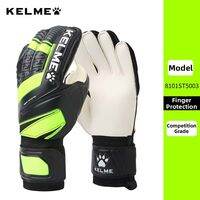
Kelme | Finger Protector Goalkeeper Gloves
₱3,490.52
Buy on Lazada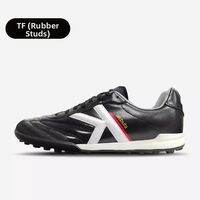
Kelme | Professional Nebula Kangaroo Leather Football Shoes
₱6,849.23
Buy on Lazada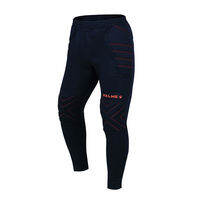
Kelme | Winter Thickened Goalkeeper Pants
₱1,982.12
Buy on Lazada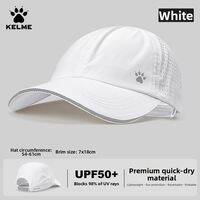
Kelme | Sun-Proof Quick-Dry Breathable Cap
₱580.56₱614.21
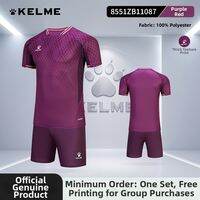
Kelme | Adult Short Sleeve Customizable Training and Team Soccer Uniforms
₱1,967.70
Buy on Lazada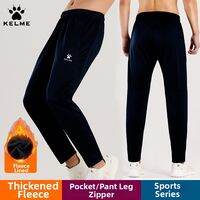
Kelme | Thermal Elastic Mens Jogger Pants
₱2,513.57
Buy on Lazada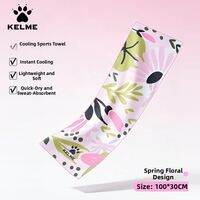
Kelme | Antibacterial Cooling Quick-Dry Sports Towel
₱403.43₱480.45
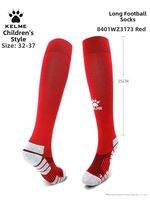
Kelme | Non-slip Kids Long Tube Football Socks
₱500.72
Buy on LazadaAbout Kelme
KELME (Chinese: 卡尔美) is a sportswear and sporting-goods brand of Spanish origin, best known for its focus on football, futsal, footwear, teamwear and sports apparel. With a history spanning more than six decades, the company has evolved from a footwear manufacturer in Elche, Spain, into an international sports brand with particular strength in football and futsal.1
A defining aspect of KELME’s modern identity is its relationship with China. The brand entered the Chinese market in 2014, and in 2018 its Chinese partner acquired controlling ownership of the global business. Consequently, KELME is now understood as a Spanish-founded brand with Chinese ownership and a global commercial and manufacturing footprint, rather than a conventional Spanish sports company.2
Basic information
| KELME | |
|---|---|
| Brand name | KELME |
| Chinese name | 卡尔美 |
| Origin | Elche, Alicante, Spain |
| Industry | Sportswear and sporting goods |
| Founded / roots | 1960 |
| Brand/logo established | 1977 |
| Founders | Quiles brothers |
| Main sports | Football, futsal, basketball, running, cycling and general sports |
| Core products | Football boots, futsal shoes, jerseys, teamwear, training apparel, sneakers and accessories |
| Famous for | Football/futsal and team sponsorship |
| Brand philosophy | “Leave Your Mark” |
| International presence | 40+ countries according to KELME |
| Current ownership | Chinese-controlled |
| Major Asian base | Jinjiang, Fujian, China |
KELME traces its roots to 1960, while its Chinese corporate history identifies 1977 as the year the KELME brand and its distinctive claw logo were formally established. Different sources may cite 1960, 1963 or 1977 when discussing the brand’s founding, reflecting different milestones in its early development.4
Origins in Elche, Spain
KELME’s story begins in Elche (Elx), Alicante, a city in southeastern Spain renowned for its footwear industry. The Quiles family began manufacturing footwear in 1960, and from these origins the business gradually shifted towards sporting products. Corporate histories identify the Quiles brothers as the founders and describe Elche as the birthplace of the brand.3
The distinction between the company’s early history and the later KELME brand is significant:
- 1960: Footwear-business roots in Elche.
- 1970s: The company increasingly developed a sports identity.
- 1977: The KELME brand and logo were formally established.
- Late 1970s onward: KELME began expanding internationally.
- 1980s: Football became an increasingly important part of the brand.
- 1990s: KELME achieved greater visibility through elite football, tennis, athletics and cycling.4
The KELME logo
One of the most recognisable elements of KELME is its paw or claw logo. The brand states that the design was inspired by the claw of a lynx or bear-like animal, representing an attitude of moving forward, climbing and leaving a trace behind. This imagery connects directly with the brand’s slogan, “Leave Your Mark”, conveying the idea that an athlete should not merely participate but make a lasting impression.5
Development into a sports brand
During the 1970s and 1980s, KELME transitioned from being solely a footwear manufacturer to a comprehensive sports brand. According to historical materials, the company developed its first professional football shoe in 1982. From that period onward, it began supplying football footwear to professional players and became increasingly associated with the sport.6
Notable footballers historically associated with the brand include Míchel González, Gaizka Mendieta, Andoni Zubizarreta and Iván Zamorano. These partnerships helped establish KELME as a genuine performance-sports brand rather than merely a fashion sneaker company.7
Cycling heritage
While football is KELME’s strongest modern identity, cycling was historically extremely important to the brand. KELME operated and sponsored a professional cycling team that became one of the notable Spanish teams of its era, competing at the highest level and providing substantial visibility across Europe.8
The brand also had associations with major cycling events, including the Tour de France. This period helped KELME establish an image centred on endurance, professional sport, technical clothing and athletic performance within Spanish sporting culture. This era is sometimes overlooked because modern consumers associate the brand primarily with football and futsal.
The 1990s: Golden visibility period
The 1990s were arguably the most important period for KELME’s international sporting profile.
Barcelona 1992 Olympics
KELME served as the official technical sponsor of the Spanish Olympic Team at the Barcelona 1992 Olympic Games. As the Olympics were held in Spain, this partnership generated massive domestic and international attention.9
Tennis
The brand sponsored Spanish tennis star Conchita Martínez. In 1994, Martínez won Wimbledon, becoming the first Spanish woman to win the singles title, while wearing KELME.10
Athletics and basketball
The company supported elite athletes including Fermín Cacho and Said Aouita. In basketball, KELME developed relationships with prominent Spanish players such as Jordi Villacampa, demonstrating a sporting portfolio that extended well beyond football.11
Real Madrid partnership
One of KELME’s most famous sponsorship relationships was with Real Madrid, which the brand supplied during the 1994–1998 period.12
This partnership is particularly memorable because the 1990s were a significant era for the club. In 1998, Real Madrid won the European Cup/UEFA Champions League and the Intercontinental Cup while wearing KELME equipment. As a result, vintage KELME Real Madrid products from this decade remain highly recognisable among football-shirt collectors.
Football as core identity
Although KELME has participated in numerous sports, football gradually became the centre of its international identity. The company has sponsored or supplied numerous Spanish clubs, including Real Madrid, RCD Espanyol, Deportivo Alavés, Levante UD, Villarreal CF, Rayo Vallecano, Málaga CF and Elche CF.13
KELME’s official history highlights its involvement with Spanish professional football and describes itself today as a leader in both outdoor football and indoor futsal.
Futsal specialisation
Futsal is an area where KELME has developed a particularly strong specialist reputation. The brand has invested heavily in futsal shoes, jerseys, professional teamwear, match balls, indoor-court equipment, player sponsorships, and club and competition partnerships. It describes itself as a leader in indoor soccer and futsal, with footwear designed for durability, low weight, flexibility and performance.14
In July 2026, for example, KELME announced a new technical-sponsorship agreement with Jaén Paraíso Interior FS, a prominent Spanish futsal club.15 This specialisation means KELME can be more visible among serious futsal players than its overall global market share might suggest.
Entry into China
A major turning point occurred in 2014 when KELME officially entered the Chinese market through Jinjiang Yuanxiang Garments Weaving Co., Ltd., based in Jinjiang, Fujian, one of China’s most important sportswear and footwear manufacturing centres.18
Rather than competing immediately with Nike or Adidas at the top of the global market, KELME’s Chinese operation built its business through professional football, lower-level leagues, youth and school football, grassroots programmes, football associations and teamwear. This strategy helped the brand establish a substantial presence in China’s football ecosystem.16
Ownership structure
KELME’s modern ownership story is the reverse of the typical sports-brand globalisation narrative. A Chinese company involved in manufacturing and distribution first obtained the brand’s Chinese business in 2014. Then, in 2018, the same company acquired controlling shares in the original Spanish sportswear company, with Xinhua reporting the transaction at approximately 300 million yuan.17
Corporate histories describe this as the point at which the Spanish-origin brand became controlled by Chinese capital and manufacturing.18 The brand therefore retains its Spanish sporting heritage while its modern business infrastructure is strongly connected to China.
Product range
Today KELME sells a broad range of sports products.
Football
Products include football boots, jerseys, shorts, socks, goalkeeper equipment, training clothing, footballs, club merchandise and teamwear.
Futsal
The futsal range comprises indoor football shoes, kits, balls, training apparel and specialist footwear.
Basketball, running and training
KELME produces basketball shoes and apparel, and has historically sponsored basketball players and teams. The running and training category includes running shoes, training shoes, sports clothing, tracksuits, shorts and jackets.
Lifestyle
The brand has expanded beyond competitive sport into casual sneakers, T-shirts, sweatshirts, everyday clothing, bags, caps and accessories. Its international store categorises products into football, indoor soccer, casual, children’s, women’s and accessories.9
Footwear technology
Footwear remains particularly important to the brand. KELME emphasises three characteristics in its football and futsal footwear:
- Lightweight construction: Designed to avoid unnecessary weight.
- Flexibility: Essential for indoor football, where players make rapid changes of direction.
- Durability: Important for the repeated impact and abrasion associated with football and futsal.
The company invests in new materials and works with institutions including the Valencia Institute of Biomechanics (IBV) and INESCOP, a Spanish footwear research organisation, as part of its product-development efforts.19
Teamwear and sponsorship model
Team sponsorship is central to KELME’s business model. Rather than relying exclusively on celebrity athletes, the company builds visibility by supplying entire teams and competitions. Examples over the years include professional football clubs, national teams, futsal clubs, youth teams, football associations, referees and grassroots competitions. This approach makes KELME particularly recognisable in markets where football teamwear is significant.23
Asian Football Confederation partnership
KELME’s international expansion accelerated significantly in Asia through a partnership with the Asian Football Confederation (AFC) beginning in 2021. The partnership was subsequently extended through 2029.20
Under the expanded agreement, KELME became an official technical sponsor associated with major AFC competitions, including the AFC Asian Cup, AFC Women’s Asian Cup, AFC U23 Asian Cup, AFC Futsal Asian Cup, AFC Champions League Elite, AFC Women’s Champions League and AFC Champions League Two. The brand is also set to provide official match balls for several AFC competitions.17
Expansion in Indonesia
KELME’s Asian expansion continued in 2026. In January 2026, the brand announced that it had become the official technical sponsor of Indonesia’s national football and futsal teams, working with the country’s governing organisations.14
The agreement covers men’s and women’s national teams, youth teams, referees and grassroots competitions. This move aligns with KELME’s strategy of using football and futsal as primary vehicles for international expansion in Asia.
Current positioning
As of 2026, KELME continues to position itself primarily as a football- and futsal-oriented global sports brand. Recent developments include continued expansion of football team sponsorships, the extended AFC partnership through 2029, Indonesian national-team sponsorship, new Spanish futsal partnerships, continued involvement with RCD Espanyol, expansion of international teamwear and ongoing development of football and futsal footwear.25
Notable teams and sporting properties
| Team / athlete | Sport | Significance |
|---|---|---|
| Real Madrid | Football | 1994–98 sponsorship |
| RCD Espanyol | Football | Long-running technical relationship |
| Watford FC | Football | Modern international Premier League connection |
| AFC competitions | Football | Official technical partnership through 2029 |
| Indonesia national teams | Football/Futsal | Major 2026 Asian expansion |
| Jaén Paraíso Interior FS | Futsal | New Spanish futsal partnership |
| Spanish Olympic Team | Multi-sport | Barcelona 1992 |
| Conchita Martínez | Tennis | Wimbledon champion |
| Jordi Villacampa | Basketball | Spanish basketball star |
| KELME cycling team | Cycling | Important part of KELME’s historic identity |
Market positioning
KELME occupies a distinct position in the sportswear market. Unlike Nike, Adidas or Puma, which operate at enormous global scale across virtually every major sporting category, KELME is considerably more specialised. Its strongest identity lies in football, futsal, teamwear and performance footwear.
This specialisation is arguably one of its biggest advantages. While a consumer may not immediately think of KELME for basketball or running equipment, the brand has considerably stronger recognition among football and especially futsal players.
Comparison with peers
| Brand | Core identity | KELME’s position |
|---|---|---|
| Nike | Global sports/lifestyle | Much larger and more diversified |
| Adidas | Football + global sports/lifestyle | Much larger, especially globally |
| Puma | Football + sports/lifestyle | Much larger global scale |
| New Balance | Running + football + lifestyle | Larger global footprint |
| Joma | Football, futsal, running | One of KELME’s closest comparisons |
| KELME | Football + futsal + teamwear | More specialized/niche |
Joma is perhaps the most useful comparison, as both are Spanish-origin brands with strong football and futsal identities. KELME’s differentiation is particularly strong in futsal and teamwear.
Spanish heritage versus Chinese ownership
KELME is accurately described as a Spanish-founded, Chinese-controlled international sports brand. Its heritage is Spanish, encompassing footwear roots in Elche, Spanish founders, and a history in Spanish football, cycling and Olympic sports. However, its modern ownership and manufacturing structure are heavily Chinese, with the Chinese company entering the business in 2014, acquiring controlling ownership in 2018, and establishing major operations in Jinjiang.18
The brand continues to market its Spanish heritage prominently while its corporate history reflects the Chinese ownership transition.
International presence
KELME states it has a presence in more than 40 countries, spanning markets across Europe, Asia, the Americas, Africa and Oceania.21 Its international expansion has been especially connected to football.
Markets and regions associated with the brand include Spain, China, Japan, South Korea, Indonesia, Malaysia, India, the United Arab Emirates, Australia, the United States, Brazil, Colombia, Chile, Argentina, Mexico and various European countries. The precise retail and distribution footprint changes over time, so the 40+ country figure is best treated as the company’s current statement rather than a fixed global-store count.22
Research and innovation
KELME emphasises research and development and sports technology as important parts of its modern identity. The company supervises manufacturing and invests in technology, materials and product development, working with Spanish technical institutions including the Instituto de Biomecánica de Valencia (IBV) and INESCOP. The objective is to improve footwear performance, materials, flexibility, weight and durability, which is particularly relevant for football and futsal products where small differences can influence player performance.19
Brand philosophy
The phrase “Leave Your Mark” summarises KELME’s branding philosophy. The concept combines ambition, persistence, individuality, performance, courage and determination, reinforced visually by the claw-mark logo. Rather than presenting sport simply as winning, the philosophy emphasises making an impact and leaving something behind through performance and attitude.23
Significance
KELME is notable for several reasons. It possesses unusually deep Spanish sporting heritage encompassing football, futsal, cycling, tennis, athletics, basketball and the Olympics. Few international sports brands have built as much of their identity around indoor football as KELME has. Its ownership history is also distinctive, transitioning from a Spanish footwear and sports company to one controlled by a Chinese firm that originally entered through the Chinese market.24
Football remains its strategic engine, with the brand continuing to use the sport and team sponsorship as primary mechanisms for international growth rather than becoming a generic fashion label. The AFC partnership and Indonesian national-team agreement demonstrate the increasing importance of Asian football to KELME’s current strategy.25
Timeline
- 1960: KELME’s footwear roots begin in Elche, Spain.
- 1977: KELME brand identity and logo formally established.
- 1979: KELME cycling team established.
- 1982: KELME develops its first professional football shoe.
- 1992: Official technical sponsorship of the Spanish Olympic Team at Barcelona Olympics.
- 1994: Conchita Martínez wins Wimbledon while sponsored by KELME.
- 1994–1998: KELME sponsors Real Madrid.
- 1998: Real Madrid wins the European Cup while wearing KELME equipment.
- 2010: KELME becomes official sponsor of Spain’s indoor futsal league.
- 2012: Sponsorship of Levante UD.
- 2013: Sponsorship of Elche CF.
- 2014: KELME enters China through Jinjiang Yuanxiang.
- 2015: KELME China becomes established and expands aggressively into Chinese football.
- 2018: Chinese ownership acquires controlling interest in KELME.
- 2021: KELME begins major partnership with the AFC.
- 2024: AFC partnership extended through 2029.
- 2026: KELME becomes technical sponsor of Indonesia’s football and futsal national teams; continues expansion in European football and Spanish futsal.26
Overall assessment
KELME is best described as a historic Spanish sports brand that has reinvented itself as a Chinese-controlled global football and futsal company. The brand began with Spanish footwear craftsmanship, established itself through cycling and multiple Olympic sports, gained major international recognition through Real Madrid and elite athletes, and eventually found one of its strongest niches in football and futsal.
The 2014–2018 transition to Chinese ownership fundamentally changed its corporate structure. Rather than diminishing its Spanish identity, KELME has continued to use its heritage as part of its international brand story while leveraging China’s manufacturing base and football market. Today, its strategic identity combines Spanish heritage, Chinese ownership and manufacturing, football and futsal specialisation, and international team sponsorship. This combination makes KELME one of the more distinctive second-tier global sports brands, with a particularly deep and credible connection to football, futsal and team sports.27
References
- About KELME
- 我的网站
- 卡尔美
- 卡尔美简介 – 我的网站
- About Kelme
- Kelme Spain | Official Store of Sportswear, Footwear, and Accessories
- KELME, NUEVO SPONSOR TÉCNICO DE JAÉN PARAÍSO INTERIOR FS
- O F F I C I A L G LO B A L S U P P O RT E R
- Collections
- KELME AND THE ASIAN FOOTBALL CONFEDERATION EXTEND THEIR PARTNERSHIP AGREEMENT FOR FOUR MORE YEARS
- KELME BECOMES THE OFFICIAL TECHNICAL SPONSOR OF THE INDONESIAN FOOTBAL
- Football
- 当耐克和阿迪达斯下沉,卡尔美慌了吗?|卡尔美(KELME)|运动时尚|足球|赛事|赞助商_手机新浪网
- KELME SE CONVIERTE EN EL PATROCINADOR TÉCNICO OFICIAL DE LA ASOCIACIÓN
- KELME AND INDUSTRIAS SANTA COLOMA RENEW THEIR AGREEMENT FOR THREE SEAS
- AW25 INTERNATIONAL TEAMWEAR CONVENTION
- KELME E A CONFEDERAÇÃO ASIÁTICA DE FUTEBOL ESTENDEM SEU ACORDO DE PARCERIA POR MAIS QUATRO ANOS
- 卡尔美_360百科
- 卡尔美简介 – 我的网站
- Sportswear brand Kelme announces new global partnership with AFC – China.org.cn
- Sobre KELME
- Kelme Spain | Official Store of Sportswear, Footwear, and Accessories
- Loyalty and References
- Kelme España | Tienda Oficial de Ropa, Calzado y Accesorios Deportivos
- News
- Legal notice
- Legal notice