Shop on Lazada
Keychron products
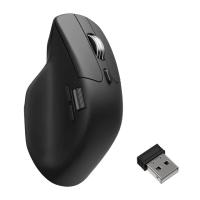
Keychron M6 8K Ultra-light Wireless Optical Mouse PixArt 3950 86g 30000 DPI
₱5,390.00₱6,990.00
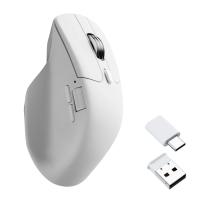
Keychron M6 Lite Ultra-light Wireless Optical Mouse PixArt 3311 86g 12000 DPI
₱3,390.00₱4,490.00
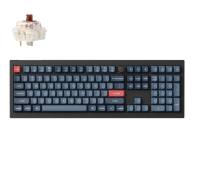
Keychron V6 Max QMK Mechanical Keyboard Carbon Black Full Wired RGB Hot-Swap QMK VIA
₱6,690.00₱11,990.00
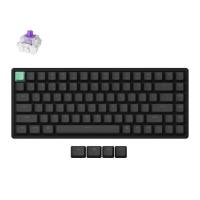
Keychron K2 HE Magnetic Keyboard 75% Tri-mode RGB LED QMK/Launcher Hotswap
₱8,090.00₱15,990.00
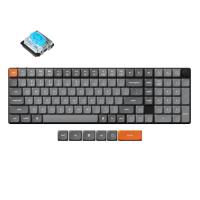
Keychron K17 Max QMK Mechanical Keyboard96% layout Tri-mode White LED QMK/Launcher Non-Hotswap
₱6,090.00₱10,990.00
Keychron V5 Max Knob QMK Mechanical Keyboard Carbon Black 96% Layout Tri-mode RGB Hot-Swap QMK
₱6,690.00₱11,990.00
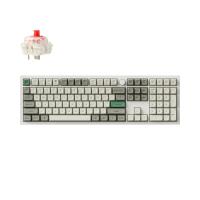
Keychron Q6 Max QMK/VIA Mechanical Keyboard Shell White Full Tri-mode RGB Aluminum Hot-Swap
₱14,590.00₱23,990.00
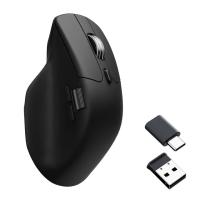
Keychron M6 Ultra-light Wireless Optical Mouse PixArt 3395 86g 26000 DPI
₱3,690.00₱4,990.00
About Keychron
Keychron is a consumer electronics brand best known for its range of mechanical, low-profile, custom, wireless, and gaming keyboards. The company has expanded from its initial focus on Mac-compatible mechanical keyboards to a broader keyboard ecosystem that includes enthusiast custom boards, productivity models, low-profile options, Hall Effect/magnetic-switch gaming keyboards, mice, and related accessories. Keychron currently reports having more than 40 keyboard models covering various functions and form factors.
Brand Overview
| Category | Details |
|---|---|
| Industry | Consumer electronics / computer peripherals |
| Best Known For | Mechanical and custom keyboards |
| Major Products | Mechanical keyboards, low-profile keyboards, gaming/Hall Effect keyboards, mice |
| Primary Audiences | Mac/Windows users, programmers, office workers, keyboard enthusiasts, gamers |
| Key Characteristics | Mechanical switches, wireless connectivity, hot-swappable PCBs, QMK/VIA support, Mac compatibility |
| Major Keyboard Families | K, K Pro, K Max, Q, Q Pro, Q Max, V, V Max, S, C, HE/magnetic-switch lines |
| Connectivity | USB-C, Bluetooth, 2.4 GHz wireless (varies by model) |
| Firmware/Software | QMK, ZMK (on select products), VIA, Keychron Launcher |
| Website | Keychron.com |
A defining characteristic of Keychron is its positioning between mainstream consumer keyboards and enthusiast custom keyboards. Its products are generally ready to use out of the box, yet many models offer enthusiast-grade features such as hot-swappable switches, programmable firmware, gasket mounting, multiple layout options, and customizable keycaps.
Origins and Early Identity
Keychron’s original proposition was straightforward: create a mechanical keyboard that worked particularly well with Apple’s Mac ecosystem while retaining compatibility with Windows. This distinction was significant because mechanical keyboards had traditionally been strongly associated with Windows/PC enthusiasts. Keychron positioned its products as modern, relatively minimalist keyboards capable of moving between Mac, Windows, iOS, and Android devices.
The company’s early K-series products established much of the brand’s identity, featuring:
- Compact mechanical layouts;
- Bluetooth wireless connectivity;
- USB-C wired operation;
- Mac and Windows compatibility;
- Dedicated Mac/Windows switching;
- Relatively affordable pricing;
- Optional RGB lighting;
- Hot-swappable versions on various models.
This combination helped Keychron become particularly recognizable among Mac users seeking something more customizable and tactile than standard Apple keyboard offerings. Keychron describes itself as being founded by keyboard enthusiasts with experience in manufacturing and design, with an initial mission centered on creating mechanical keyboards optimized for Mac users while retaining Windows compatibility. 1
The K Series
The K Series is arguably the product family most responsible for making Keychron widely recognizable. The basic philosophy behind the K series is: Affordable + wireless + mechanical + Mac-friendly + compact.
Models have appeared in numerous layouts, including:
- K1 — Low-profile tenkeyless-style keyboard
- K2 — 75%
- K3 — Low-profile 75%
- K4 — 96% / compact full-size
- K5 — Low-profile full-size
- K6 — 65%
- K7 — Low-profile 65%
- K8 — Tenkeyless
- Numerous later revisions and variants.
The K family generally emphasizes portability and wireless connectivity over the heavy enthusiast construction found in the Q family. Keychron describes the K line as lighter and more affordable, with Bluetooth and wired connectivity and support for multiple devices. A typical K-series keyboard is intended to be something you can buy → connect → type → customize later, making it attractive to people who want a mechanical keyboard without building one from individual components.
Low-Profile Keyboards
One of Keychron’s important contributions to the mainstream mechanical-keyboard market has been its emphasis on low-profile mechanical keyboards. Instead of using the tall construction associated with traditional mechanical keyboards, these models use shorter switches and keycaps. Important families include the K1, K3, K5, K7, K3 Pro, and S1.
Keychron differentiates these families according to construction, firmware, connectivity, and customization. For example, K-series low-profile models typically use Bluetooth and wired connections, while K Pro and S-series low-profile boards add QMK/VIA functionality. The low-profile concept appeals to users looking for something between a laptop keyboard and a traditional mechanical keyboard, rather than opting for a tall enthusiast board.
The Q Series
The Q Series marked a major shift in Keychron’s positioning. The original Q1 was introduced in 2021 as Keychron’s first QMK-compatible keyboard. Unlike the consumer-oriented K series, the Q1 was designed specifically for the custom-keyboard enthusiast market. It introduced a combination of features previously common only in enthusiast-built keyboards:
- CNC-machined aluminum construction
- Gasket mounting
- Hot-swappable switches
- QMK firmware
- VIA customization
- Screw-in stabilizers
- South-facing RGB
- Sound-dampening materials
- Multiple layouts
- Extensive key-remapping capability.
This allowed Keychron to move beyond simply offering “a good wireless mechanical keyboard” to providing “a keyboard that you can customize like an enthusiast custom board.”
Q, Q Pro, and Q Max
The Q family subsequently developed into multiple generations:
- Q Series: Emphasized a premium wired custom-keyboard experience with full aluminum construction, gasket mounting, hot-swappable switches, QMK/VIA, premium stabilizers, acoustic tuning, and customizable layouts.
- Q Pro: Added wireless functionality, particularly Bluetooth, while retaining much of the Q-series enthusiast philosophy.
- Q Max: Combined wired USB-C, Bluetooth, 2.4 GHz wireless, QMK/VIA, premium aluminum construction, gasket/double-gasket structures, and acoustic tuning. Keychron describes the Q Max as an evolution of the Q Pro that adds 2.4 GHz wireless connectivity and additional internal acoustic treatment.
This progression illustrates Keychron’s strategy of taking an enthusiast keyboard, adding wireless connectivity, and making it usable as an everyday product.
The V Series
The V Series is positioned below the Q family. Its basic philosophy is to provide custom-keyboard functionality without requiring the price or weight of a premium full-aluminum Q keyboard. V-series boards typically retain important enthusiast features such as:
- QMK/VIA support
- Hot-swappable switches
- Customizable layouts
- Mechanical switches
- RGB lighting
- Gasket-style construction on applicable generations.
The V series occupies a middle ground between the mainstream/portable K Series and the premium enthusiast Q Series, effectively serving as the “affordable enthusiast” tier.
K Pro and K Max Generations
Keychron has progressively upgraded its original K concept.
K Pro
The K Pro series takes the K concept and adds more enthusiast functionality. Compared with the original K line, K Pro models can offer QMK/VIA, gasket mounting, improved switches, improved keycaps, greater programmability, and continued wired/Bluetooth connectivity. Keychron describes the K Pro as an upgrade over the original K, particularly in mounting design and QMK/VIA support. 2
K Max
The K Max generation adds 2.4 GHz wireless to the K-family concept. This is significant because 2.4 GHz wireless is generally more appropriate for users who want lower latency than conventional Bluetooth, particularly for gaming. The progression from K → K Pro → K Max represents increasing levels of customization, performance, and wireless capability.
Gaming and Hall Effect Keyboards
Keychron has increasingly moved into gaming keyboards through magnetic/Hall Effect switches. Traditional mechanical switches rely on physical electrical contacts, whereas Hall Effect keyboards measure changes in a magnetic field to determine key position more precisely. This enables features such as adjustable actuation, Rapid Trigger, very short actuation distances, dynamic key behavior, and high polling rates.
Keychron’s current product catalog includes Hall Effect/magnetic-switch models marketed toward competitive gaming, with some models offering polling rates as high as 8,000 Hz. 3 This evolution signifies that Keychron is no longer solely competing in the enthusiast typing market but also against gaming-oriented brands.
Wireless Technology
Wireless connectivity is a longstanding strength for Keychron. Depending on the model, keyboards can support:
- Bluetooth: Useful for laptops, tablets, phones, office environments, and multi-device setups. Many Keychron keyboards can switch between multiple Bluetooth devices, with the K family traditionally emphasizing this feature. 4
- 2.4 GHz: Used in newer Max and gaming-oriented models. The major advantage is lower latency compared with conventional Bluetooth, making it more attractive for gaming.
- USB-C: Almost all modern Keychron families retain wired USB-C operation.
Many newer boards offer three modes: USB-C + Bluetooth + 2.4 GHz, which has become a major selling point of the newer Max-generation keyboards.
Mac Compatibility
Mac compatibility remains one of Keychron’s most recognizable characteristics. Many keyboards provide macOS key mappings, Windows key mappings, Mac/Windows switching, Mac-specific modifier keycaps, and compatibility with iOS and Android. This allows a single keyboard to function across multiple operating systems (e.g., MacBook, Windows PC, iPad) without needing separate devices. Keychron explicitly describes its keyboards as supporting Mac and Windows, with many current products extending compatibility to iOS and Android. 5
Hot-Swappable Switches
Another major feature is the availability of hot-swappable PCBs. While conventional mechanical keyboards may require soldering to replace switches, hot-swappable keyboards allow users to pull switches out and install different compatible switches without soldering. This enables owners to experiment with linear, tactile, or clicky switches, different spring weights, and different manufacturers. Since switch preference is subjective, two people can own the same Keychron keyboard but create completely different typing experiences simply by installing different switches.
Design Philosophy
Keychron’s design language combines several elements:
- Minimalism: Restrained industrial designs rather than aggressive gaming styling.
- Enthusiast Construction: Higher-end models incorporate CNC aluminum, gasket mounts, PBT keycaps, screw-in stabilizers, internal foam, and acoustic tuning.
- Cross-Platform Functionality: Emphasis on Mac and Windows support throughout the ecosystem.
- Modularity: Hot-swappable switches and programmable firmware encourage modification.
- Wireless Convenience: Bluetooth and 2.4 GHz wireless allow products to function as everyday productivity devices as well as enthusiast keyboards.
Open-Source Philosophy
Keychron places strong emphasis on open-source firmware. The company states that most of its keyboards are open source, allowing users to inspect the source code. It claims to have been the first to introduce Bluetooth, 2.4 GHz, and Hall Effect functionality into QMK open-source firmware and to help bring ZMK firmware into mass production. This approach helps establish credibility within the mechanical-keyboard community by ensuring keyboards are not closed appliances; users and developers can inspect firmware, modify behavior, contribute improvements, create custom configurations, and integrate the hardware into open-source tooling.
Keychron Launcher
Keychron developed its own web-based keyboard configuration software, known as Keychron Launcher. It operates through a web browser rather than requiring a downloadable application. Keychron states that this software requires no downloads or updates and works across Mac and Windows. 6 Users can utilize it for key remapping, layers, macros, keyboard configuration, lighting customization, and firmware-related functions, further aiming to make enthusiast-level customization accessible to ordinary users.
Product Ecosystem
Keychron’s ecosystem extends beyond keyboards to include:
- Keyboards: Traditional mechanical, low-profile, custom, wireless, gaming, Hall Effect, split, Alice-style, full-size, compact, and numpads.
- Mice: Computer mice that extend the brand into broader desktop peripherals. 7
- Accessories: Switches, keycaps, wrist rests, cables, keyboard accessories, and replacement components.
This allows Keychron to sell not only finished keyboards but also parts for modifying and maintaining them.
Major Product Families at a Glance
| Series | General Position | Typical Strengths |
|---|---|---|
| K | Mainstream / Affordable | Wireless, compact, Mac-friendly |
| K Pro | Upgraded K | QMK/VIA + wireless |
| K Max | Performance Wireless | 2.4 GHz + Bluetooth + customization |
| Q | Premium Enthusiast | Aluminum, gasket, QMK/VIA |
| Q Pro | Premium Wireless | Q-series construction + Bluetooth |
| Q Max | Premium Wireless/Performance | Q construction + 2.4 GHz |
| V | Affordable Enthusiast | QMK/VIA + customization |
| S | Low-Profile Enthusiast | Slim design + customization |
| HE / Magnetic | Gaming | Hall Effect switches, Rapid Trigger |
| C / Entry-Level | Budget | Simpler mechanical keyboards |
The exact lineup changes frequently, and Keychron lists hundreds of individual products and variants across its store, so distinctions between generations and variants can sometimes be complex. 8
Market Position
Keychron sits between several categories in the keyboard market:
- Traditional Mainstream Companies (e.g., Logitech, Microsoft, Apple): Prioritize simplicity and mass-market usability.
- Gaming Companies (e.g., Razer, Corsair, SteelSeries): Prioritize gaming performance, software ecosystems, RGB, and aesthetics.
- Enthusiast Keyboard Companies: Prioritize build quality, customization, switches, acoustics, firmware, and layouts.
Keychron’s strategy blends mainstream usability + enthusiast customization + wireless convenience + competitive pricing. This hybrid approach is central to the brand’s prominence.
Factors Contributing to Popularity
Several factors explain Keychron’s success:
- Identifying Underserved Markets: Mac users historically had fewer choices for mechanical keyboards. Keychron made Mac compatibility a central feature rather than an afterthought.
- Accessible Wireless Mechanics: The K series made Bluetooth mechanical keyboards more approachable.
- Democratizing Enthusiast Features: QMK, VIA, hot-swapping, gasket mounting, and aluminum construction became available without requiring a custom build.
- Layout Variety: Options include 60%, 65%, 75%, 80%/TKL, 96%, 100%, Alice, split, low-profile, and other unusual layouts.
- Price Range Coverage: From inexpensive K-series models to premium Q-series boards, catering to both newcomers and enthusiasts.
Keychron vs. Custom Keyboards
Many Keychron products blur the distinction between commercial and custom keyboards. A traditional custom keyboard might require purchasing case, PCB, plate, switches, stabilizers, keycaps, foam, firmware, and assembly separately. A Keychron Q/V-series keyboard provides many of these enthusiast characteristics as a ready-to-use product, allowing users to customize switches, keycaps, firmware, sound, and layout without building the entire keyboard from scratch. This positions Keychron as a gateway from mainstream mechanical keyboards into the enthusiast hobby.
Importance in the Mechanical Keyboard Market
Keychron’s broader significance lies in helping bring enthusiast mechanical-keyboard characteristics into a much larger consumer market. Features once associated primarily with hobbyists—such as hot-swappable switches, QMK, VIA, gasket mounting, PBT keycaps, CNC aluminum cases, multiple layouts, and wireless custom keyboards—became much more accessible through a major consumer-facing brand. Its current portfolio continues this strategy by combining custom-keyboard construction with wireless connectivity and gaming technologies like Hall Effect switches.
Evolution Timeline
A simplified history of Keychron looks like this:
Early Keychron
↓
Focus on Mac-compatible wireless mechanical keyboards
↓
K Series becomes the core mainstream product family
↓
Expansion into low-profile keyboards
↓
Q1 / Q Series brings Keychron into the enthusiast custom-keyboard market
↓
Expansion of QMK/VIA customization
↓
V / K Pro families broaden enthusiast features into lower price tiers
↓
Q Pro / K Max / Q Max introduce increasingly sophisticated wireless configurations
↓
Expansion into Hall Effect / magnetic gaming keyboards
↓
Current Keychron ecosystem spanning productivity + enthusiast + wireless + gaming + peripherals
What Keychron Represents Today
As of 2026, Keychron can be characterized less as simply a “mechanical keyboard brand” and more as a keyboard ecosystem company. Its identity overlaps across several user groups:
- For ordinary users: A good-looking wireless mechanical keyboard for Mac or Windows.
- For programmers: A comfortable, programmable keyboard with customizable layouts.
- For keyboard enthusiasts: An accessible entry into QMK/VIA, hot-swapping, gasket mounting, and custom builds.
- For gamers: Wireless, high-polling-rate, and Hall Effect/magnetic-switch keyboards.
- For Mac users: One of the brands most strongly associated with mechanical keyboards designed around the Mac experience.
- For the open-source community: A commercial manufacturer with a relatively strong commitment to open-source keyboard firmware.
References
- About Us | Keychron
- Keychron – EverybodyWiki Bios & Wiki
- Category:Keychron – Wikimedia Commons
- The Evolution of the Keyboard: From Typewriters to Keychron – Keychron Australia
- Keychron launches crowdfunding campaign for world’s first low profile wireless QMK keyboard
- About Our Brand Name + Giveaway! – Keychron Australia
- About us – Keychron Philippines
- Keychron Philippines | Custom Keyboards for Mac, Windows and Phones