Shop on Lazada
Korg products
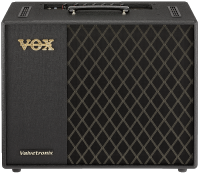
Vox VTX - Valvetronix Modeling Amplifier (VT40X / VT100X)
₱32,888.00
Buy on Lazada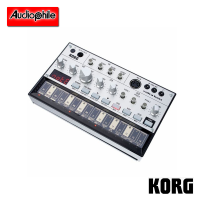
Korg Volca Bass - Volca Series Analog Bass Machine Synthesizer
₱10,488.00
Buy on Lazada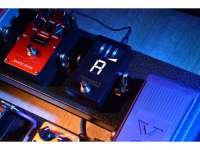
KORG Pitchblack Custom Chromatic Pedal Tuner | Ultra-High Brightness Display | True Bypass | ±0.1 Cent Accuracy | Guitar & Bass Tuner
₱4,888.00
Buy on Lazada
KORG electronic piano digital piano keyboard synthesizer KA320 power cord adapter 12V3.5A
₱1,759.70₱2,099.00
About Korg
Korg Inc. (Japanese: 株式会社コルグ, Kabushiki-gaisha Korugu), commonly known as KORG, is a Japanese manufacturer of electronic musical instruments and music technology. The company is widely recognised for its synthesizers, electronic keyboards, music workstations, digital pianos, effects processors, tuners, drum machines, and music-production software.
Founded in Japan in 1963, Korg has established itself as one of the most influential names in the electronic instrument industry. Its history is intrinsically linked to the development of the modern synthesizer and workstation, with instruments such as the MS-20, Polysix, M1, Wavestation, Trinity, Triton, microKORG, Kronos, Minilogue, and Volca series achieving significant cultural and technical impact 1.
Basic information
| Official name | KORG INC. |
| Brand | KORG |
| Founded | 1963 |
| Country | Japan |
| Industry | Musical instruments / music technology |
| Headquarters | Tokyo, Japan |
| Founder | Tsutomu Katoh |
| Major products | Synthesizers, keyboards, workstations, digital pianos, effects, tuners, software |
| Known for | Electronic instruments and synthesizers |
| Related brands/products | VOX, ARP-related instruments, Nu:Tekt and others |
| Official website | KORG.com |
According to its corporate profile, Korg was established on August 28, 1963, and formally registered on January 10, 1964. Its primary business activities encompass electronic musical instruments, synthesizers, digital pianos, signal processors, tuners, recording equipment, and related products 2.
Origins
The origins of Korg can be traced to Tsutomu Katoh, an entrepreneur with a keen interest in musical technology, and Tadashi Osanai, an accordionist and engineer. The company originally operated under the name Keio Electronic Laboratories, focusing initially on electronic rhythm and keyboard instruments.
One of the company’s earliest breakthroughs was the Donca-Matic, an early electronic rhythm machine described by Korg as Japan’s first disc-based rhythm machine. The success of this technology helped establish the company’s enduring philosophy of developing innovative electronic tools for musicians 3.
The name Korg eventually emerged from the company’s work with electronic organs and keyboards. Early products were sometimes marketed under the Keio name before the Korg identity became dominant 4.
Early keyboard development
During the late 1960s and early 1970s, Korg increasingly concentrated on electronic keyboards. A pivotal early instrument was the miniKORG 700, followed by the miniKORG 700S.
The 700S was particularly significant as it established characteristics that would later define Korg synthesizers: unique sound design, distinctive filtering, and an emphasis on making electronic instruments expressive rather than merely imitative of conventional acoustic sounds. Released in 1974, the miniKORG 700S is now regarded as a landmark early Japanese analog synthesizer and is described by Korg as its first mass-produced analog model 5.
The analog synthesizer era
The 1970s proved to be a crucial period for Korg. As synthesizers gained prominence in progressive rock, electronic music, funk, experimental music, and pop, the company developed a series of increasingly sophisticated analog instruments.
Major examples
- miniKORG 700 / 700S
- Korg 770
- Korg MS-20
- Korg MS-10
- Korg PS-3100
- Korg PS-3200
- Korg PS-3300
Among these, the MS-20, introduced in 1978, became one of Korg’s most renowned instruments. It was a semi-modular monophonic synthesizer featuring a distinctive filter section and extensive patching capabilities; its aggressive and occasionally unstable character contributed significantly to its appeal.
Conversely, the PS-3300, introduced in 1977, represented the opposite end of the spectrum: an enormous polyphonic analog synthesizer designed as a highly sophisticated performance and sound-design instrument. Korg considers it one of its historic masterpieces 6.
These instruments helped establish the classic perception of the Korg sound: powerful, slightly unusual, highly programmable, and strongly oriented toward synthesis rather than simple keyboard imitation.
The 1980s: Digital technology
The 1980s brought major technological shifts as digital synthesis, sampling, and MIDI began transforming the keyboard industry. Korg responded by developing instruments based on digital sound generation alongside its existing analog products.
Important instruments from this era included:
- Polysix
- Mono/Poly
- DW-6000
- DW-8000
- Poly-800
- DS-8
- SG-1
- M1
The Polysix, introduced in 1981, became another classic Korg analog synthesizer. The Mono/Poly, also released in 1981, was particularly notable for its four-VCO architecture, which allowed it to operate in ways that blurred the distinction between monophonic and polyphonic synthesis 7.
The Korg M1 revolution
Perhaps the single most important Korg instrument is the Korg M1, released in 1988. The M1 was not merely a synthesizer; it integrated digital sound generation, sampled PCM sounds, effects, sequencing, keyboard performance, and multitimbral operation into a single workstation.
This integration was transformative, allowing musicians to create substantial amounts of music using one keyboard rather than a collection of separate synthesizers, samplers, sequencers, and effects units. Korg describes the M1 as a multi-purpose workstation that transformed the musical environment and became one of the most successful synthesizers of all time 8.
Cultural impact of the M1
The M1 became particularly prominent in pop, dance music, house, techno, R&B, film and television scoring, and commercial production. Its factory sounds became instantly recognisable; the famous M1 piano, organs, strings, synths, and drums were ubiquitous in late-1980s and 1990s productions. Consequently, the phrase “Korg M1 sound” became almost synonymous with a particular generation of digital music production.
Workstation dominance in the 1990s
Korg continued the workstation concept with the T Series, 01/W, and eventually the Trinity.
Korg Trinity
Released in 1995, the Korg Trinity was another landmark instrument. It featured high-quality PCM synthesis, extensive sequencing, sophisticated effects, expansion capabilities, a large graphical interface, and TouchView touchscreen operation.
The touchscreen was particularly striking at the time. Korg describes the Trinity as the company’s breakthrough workstation of the 1990s, noting its pioneering touchscreen-based interface 9. This model established a design philosophy that would continue into later Korg flagship workstations.
The Triton era
In 1999, Korg introduced the Triton. This instrument further developed the workstation concept by combining a powerful sound engine, sequencing, sampling, effects, and a large library of sounds. The Triton family eventually included numerous versions and expansions, including the TRITON, TRITON Pro, TRITON ProX, TRITON Rack, TRITON Studio, TRITON Extreme, and later software versions.
Korg’s own history of the Triton explains that the instrument evolved directly from the Trinity workstation concept 7. The Triton became enormously important in 2000s pop, hip-hop, R&B, electronic music, film scoring, and television production, representing the classic early-2000s workstation sound for many producers.
The microKORG
Another extremely significant product was the microKORG, introduced in 2002. Unlike large workstation keyboards, the microKORG was compact and relatively accessible. It combined a synthesizer engine with a vocoder and became particularly popular among electronic musicians, bands, indie artists, pop producers, beginners, and live performers.
Its small size, distinctive appearance, and recognisable sounds made it one of Korg’s most culturally identifiable products. The microKORG eventually became important enough that Korg included it among the company’s historical instruments recreated in the modern KORG Collection software range 10.
Effects and the KAOSS philosophy
Korg is not solely a synthesizer manufacturer; the company also became highly influential in effects and performance interfaces. The KAOSS Pad, introduced in the late 1990s, was particularly notable. Instead of relying entirely on conventional knobs and switches, it used a touch-sensitive interface that allowed performers to manipulate effects dynamically.
This helped establish the broader KAOSS design philosophy: music technology should encourage physical interaction and experimentation. Korg subsequently developed products such as the KAOSS Pad, KAOSSILATOR, KAOSS Pad mixers, performance effects, and DJ-oriented equipment. The current product portfolio continues to include effects, DJ/production tools, mixers, recording products, and related equipment 11.
High-end workstations: OASYS and KRONOS
Korg continued developing high-end workstation technology throughout the 2000s.
OASYS
The Korg OASYS was a major flagship workstation that introduced an exceptionally sophisticated software-based architecture. Rather than being limited to one synthesis method, it could combine multiple sound-generation technologies. This philosophy eventually led toward the KRONOS.
KRONOS
The Korg KRONOS became one of Korg’s best-known modern flagship workstations. It combined multiple synthesis and sound-generation engines into one instrument, allowing musicians to cover acoustic pianos, electric pianos, organs, analog synthesis, physical modeling, sample-based sounds, orchestral sounds, sequencing, and effects. The KRONOS became especially popular with professional touring musicians because a single keyboard could replace a large collection of specialised instruments.
The return of analog synthesis
While Korg became famous for digital workstations, it never abandoned synthesis. In the 2010s, the company participated strongly in the renewed interest in analog synthesizers.
Minilogue and Monologue
The Minilogue became one of Korg’s most influential modern analog synthesizers, offering genuine analog synthesis in a relatively compact and affordable format while providing features normally associated with larger instruments. The Monologue provided a smaller monophonic alternative with a distinctive bass-oriented character.
MS-20 Mini
Korg also recreated the legendary MS-20 in a smaller format, making one of its most famous historical synthesizers accessible to a new generation.
Volca series
The Volca family became particularly important for affordable electronic music hardware. The range expanded into different types of synthesis and rhythm production, including Volca Keys, Volca Bass, Volca Beats, Volca Kick, Volca FM, Volca Modular, Volca Drum, and Volca Sample. Korg’s current catalogue still contains a large Volca ecosystem alongside its larger synthesizers 12.
Modern digital synthesis
Korg’s modern synthesizer range is not limited to analog instruments. Its current lineup includes several different digital synthesis approaches.
- wavestate: Develops the idea of wave sequencing, a technique associated with Korg’s earlier Wavestation.
- opsix: Focuses on advanced FM synthesis while attempting to make FM sound design more accessible and flexible.
- modwave: Centred around wavetable synthesis and extensive modulation.
- multi/poly: Combines analog-modeling concepts with sophisticated digital control and modulation.
Korg’s current Malaysian catalogue lists digital synthesizers, analog-modeling synthesizers, and analog synthesizers as separate categories, illustrating how broad the company’s synthesis technology has become 13.
Digital pianos
Korg is also a significant digital piano manufacturer. Its piano range includes home digital pianos, portable digital pianos, stage pianos, performance pianos, and ensemble pianos. Examples include the B Series, C Series, G Series, D Series, LP Series, SV Series, and Grandstage.
The current piano range emphasises piano sound, keyboard action, portability, connectivity, and performance features. Some higher-end models are designed and crafted in Japan 14. This makes Korg distinct from companies that focus exclusively on synthesizers, as its product ecosystem covers both electronic music production and traditional keyboard performance.
Software
Korg has increasingly expanded into software. Its ecosystem includes virtual synthesizers, virtual workstations, iOS music apps, music-production software, effects, and sound libraries.
One of the most significant projects is KORG Collection, which recreates many famous Korg instruments as software. The collection includes software versions of instruments such as the MS-20, Polysix, Mono/Poly, M1, Wavestation, Triton, Trinity, Prophecy, and microKORG. It also includes recreations of instruments from ARP and VOX 15. This reflects a key part of Korg’s modern strategy: ensuring its historical hardware is not simply preserved in museums but is also integrated into contemporary computer-based production.
Relationship with ARP Instruments
Korg maintains an important relationship with the history of ARP Instruments, the American synthesizer manufacturer responsible for legendary instruments such as the ARP 2600 and ARP Odyssey. Korg subsequently produced modern versions of these instruments and currently lists ARP-related instruments among its synthesizer products, including software versions in KORG Collection 16. This has positioned Korg as a bridge between classic American synthesizer history and modern Japanese electronic-instrument design.
Relationship with VOX
Korg is also associated with the VOX brand, famous for guitar amplifiers and other musical equipment. VOX has a strong historical connection with electric guitar culture, most famously through products such as the AC30 amplifier. Korg’s modern product ecosystem therefore extends beyond keyboards and synthesizers into amplification and other musical equipment. The Korg software collection also includes the VOX Super Continental 17.
Product categories today
Korg’s modern portfolio is unusually broad. According to its current product catalogue, the company covers the following categories 18:
Keyboards and synthesizers
- Analog synthesizers
- Digital synthesizers
- Analog-modeling synthesizers
- Workstations
- Stage keyboards
- Arranger keyboards
- Keytars
Pianos
- Digital pianos
- Stage pianos
- Home pianos
- Portable pianos
- Ensemble pianos
Rhythm and percussion
- Drum machines
- Digital percussion
- Rhythm instruments
Music production
- Effects
- Mixers
- Recorders
- DJ equipment
- Controllers
- Production tools
Audio
- Audio equipment
- Amplifiers
- Speakers
- Monitoring-related products
Utility equipment
- Tuners
- Metronomes
- Accessories
- Signal processors
Software
- Virtual instruments
- Music-production software
- iOS applications
- Sound libraries
Most important product families
If Korg’s history were condensed into key product families, the following would be considered particularly important:
| Era | Product/family | Importance |
|---|---|---|
| 1960s | Donca-Matic | Early electronic rhythm technology |
| 1970s | miniKORG | Early Korg synthesizers |
| 1970s | PS series | Advanced polyphonic analog synthesis |
| 1970s | MS series | Distinctive analog synthesis |
| 1980s | Polysix | Classic programmable analog poly synth |
| 1980s | Mono/Poly | Innovative multi-oscillator design |
| 1988 | M1 | Major digital workstation breakthrough |
| 1990s | Trinity | Advanced workstation + touchscreen |
| 1999 | Triton | Dominant 2000s workstation |
| 2002 | microKORG | Compact synth/vocoder icon |
| Late 1990s–2000s | KAOSS | Touch-based performance/effects |
| 2000s | OASYS | Advanced workstation architecture |
| 2010s | KRONOS | Flagship multi-engine workstation |
| 2010s | Volca | Affordable compact electronic instruments |
| 2010s | Minilogue | Modern analog-synth revival |
| 2020s | wavestate / opsix / modwave | Modern digital synthesis |
| 2020s | multi/poly | Modern analog-modeling synthesis |
Distinctive sonic characteristics
Defining a single “Korg sound” is difficult given the vast range of technologies the company has produced. Nevertheless, several characteristics appear repeatedly.
Emphasis on synthesis
Korg has historically treated synthesizers as instruments for sound design, not merely electronic versions of acoustic instruments.
Unusual interfaces
From the MS-20’s patch panel to the Trinity touchscreen and KAOSS touch interface, Korg frequently experiments with how musicians interact with technology.
Large sonic palettes
Korg workstations traditionally offer enormous numbers of sounds and combinations, making them particularly useful for performers who need one instrument to cover many musical roles.
Combination of old and new
Korg frequently revisits historical technology while incorporating modern features. The current catalogue simultaneously contains instruments inspired by classic analog designs and sophisticated modern digital synthesis systems.
Influence on popular music
Korg’s influence extends far beyond synthesizer enthusiasts. Its instruments have been used across electronic music, pop, rock, progressive rock, hip-hop, R&B, dance music, house, techno, film scoring, television, video-game music, experimental music, worship music, and live touring.
The M1 and Triton in particular became deeply embedded in commercial music production. Meanwhile, instruments such as the MS-20, Mono/Poly, Polysix, and Minilogue have been especially important to synthesizer-oriented musicians and sound designers.
Design philosophy
Korg’s stated philosophy centres on creating new experiences in music and performance. The company states that since its foundation, it has sought to create innovative instruments that combine high quality with accessibility, rather than restricting sophisticated technology to professional musicians 19.
This philosophy explains why Korg’s catalogue can appear unusual compared with a conventional piano manufacturer. It produces professional concert pianos, giant synthesizers, tiny battery-powered synths, workstations, tuners, touch-based effects controllers, and smartphone music applications. All of these fit into Korg’s broader concept of music technology as an instrument.
Position among Japanese manufacturers
Korg belongs to the group of Japanese companies that fundamentally shaped modern electronic music, alongside Yamaha, Roland, Casio, Akai, and Suzuki. However, Korg developed a particularly strong identity around synthesis and electronic performance.
While Yamaha is often associated with both acoustic and electronic instruments, and Roland is strongly associated with synthesizers, drum machines, and electronic music technology, Korg occupies a distinctive space combining synthesizers, workstations, keyboards, digital pianos, performance interfaces, and music software.
Current status
As of 2026, Korg remains an active manufacturer rather than simply a heritage brand. Its current lineup includes modern versions of classic technologies as well as new instruments such as the KRONOS, Grandstage X, SV-2, microKORG2, KingKORG Neo, minilogue xd, multi/poly, wavestate, modwave, opsix, volca, NTS-1, NTS-2, digital pianos, professional arrangers, and music software.
Regional catalogues, such as those for Malaysia, currently separate instruments into synthesizers/keyboards, DJ and production tools, software, drums/percussion, digital pianos, effects, tuners, amplifiers, audio, and accessories 20. Korg therefore remains an active technology company in the musical-instrument industry, not merely a manufacturer trading on its historical reputation.
Legacy
Korg’s legacy can be summarised through several major contributions:
- 1960s (Electronic rhythm): Helped establish Japan as an important producer of electronic musical instruments.
- 1970s (Analog synthesis): The MS series and PS series became important parts of synthesizer history.
- 1980s (Digital synthesis and workstations): The M1 helped redefine what a keyboard workstation could do.
- 1990s (Touchscreen workstations): The Trinity pushed sophisticated user interfaces into mainstream professional keyboards.
- 2000s (Production workstations): The Triton became one of the defining keyboard instruments of the era.
- 2000s–2010s (Performance interfaces): KAOSS products encouraged a more physical and interactive approach to electronic performance.
- 2010s (Analog revival): The Minilogue, Monologue, MS-20 Mini, and Volca families helped bring hardware synthesis to a new generation.
- 2020s (Hybrid digital synthesis): wavestate, opsix, modwave, and multi/poly demonstrate continued interest in new synthesis architectures.
- Present (Hardware + software): Increasingly treats hardware, software instruments, and mobile music applications as parts of the same ecosystem 21.
Korg is a Japanese electronic-instrument company founded in 1963 that helped shape the history of synthesizers, digital workstations, and electronic performance, evolving from early rhythm machines and analog synthesizers into one of the world’s major manufacturers of keyboards, synthesizers, digital pianos, effects, and music-production technology 22.
References
- About KORG | KORG (USA)
- KORG Collection 6 for Mac/PC – SOFTWARE INSTRUMENTS | KORG (USA)
- English Information | KORG (Japan)
- miniKORG 700Sm – SYNTHESIZER | KORG (Malaysia)
- TRINITY for Mac/PC – MUSIC WORKSTATION DRS | KORG (USA)
- Collection | KORG Collection 6 for Mac/PC – SOFTWARE INSTRUMENTS | KORG (U.K.)
- History | TRITON / TRITON Extreme for Mac/Win – MUSIC WORKSTATION | KORG (Japan)
- Products | KORG (Malaysia)
- Synthesizers / Keyboards | KORG (Malaysia)
- Korg Digital Pianos
- News | KORG Collection 6 – The ultimate synthesizer suite, three newly added legendary instruments are now available. Limited time sale! | KORG (USA)
- News | KORG Collection 5 – The software collection for the ages now with three legendary instruments added. Limited Time Sale! | KORG (Malaysia)
- Products | KORG (USA)
- Perfil corporativo | KORG (Peru)
- 会社概要 | KORG (Japan)
- News | KORG announces new products at The NAMM Show 2026. | KORG (Hong Kong)
- News | KORG announces new products at The NAMM Show 2026. | KORG (U.K.)
- Nieuws | KORG kondigt nieuwe producten aan op de NAMM Show 2026. | KORG (The Netherlands)
- News | KORG Collection 6 – The ultimate synthesizer suite, three newly added legendary instruments are now available. Limited time sale! | KORG (Sweden)
- Bedrijfsprofiel | KORG (The Netherlands)
- News | Passing of Our President and Representative Director, Seiki Kato | KORG (Singapore)
- News | KORG at The NAMM Show 2025: A Celebration of Innovation | KORG (Malaysia)