Shop on Lazada
Krizia products
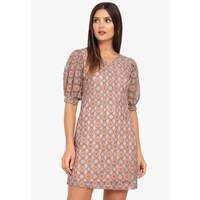
Krizia Puff Sleeve Lace Shift Dress Formal Party Casual Occasion Baptism Graduation
₱855.00₱2,599.00
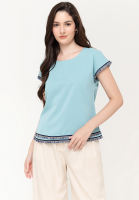
Krizia Tassel Fringe Buttoned Back Top
₱855.00₱1,499.00
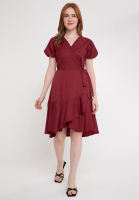
Krizia Puff Sleeve Wrap Flounce Hem Dress
₱855.00₱2,499.00
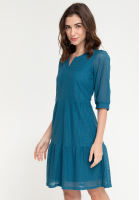
Krizia Cotton Lace Quarter Sleeves Tiered Shift Dress Formal Casual Party Business Work Office Events
₱855.00₱2,599.00
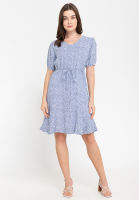
Krizia Cotton Printed V Neck Flounce Hem Shift Dress
₱495.00₱2,199.00
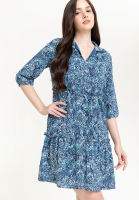
Krizia Puffed Sleeves Button Down Tier Dress
₱855.00₱2,499.00
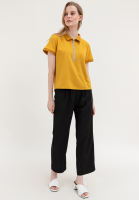
Krizia Zip Up Polo Shirt Blouse Top
₱855.00₱1,499.00
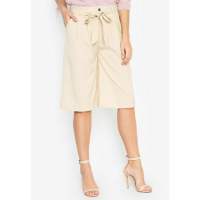
Krizia High Waist Cotton Blend Culottes Wide Leg Square Pants Detachable Tie Waist Band Side Pockets - Work Office Casual Lounge Korean Style
₱405.00₱1,299.00
About Krizia
Krizia is an Italian fashion house established in Milan in 1954 by designer and entrepreneur Mariuccia Mandelli (1925–2015). The label emerged as a significant name in Italian prêt-à-porter, particularly during the 1970s, 1980s, and 1990s. Krizia is recognised for its experimental silhouettes, sculptural pleating, geometric construction, innovative use of materials, animal motifs, and a playful sensibility within high fashion.1
The name Krizia derives from Critias (Crizia in Italian), a dialogue by Plato. Mandelli selected the name for its association with themes of vanity and luxury, altering the spelling to establish a distinct brand identity.2
Basic information
| Brand | Krizia |
| Founded | 1954 |
| Founder | Mariuccia Mandelli |
| Founder’s professional name | Krizia |
| Origin | Milan, Italy |
| Industry | Fashion / luxury goods |
| Main categories | Womenswear, knitwear, menswear, accessories, leather goods, footwear, fragrances |
| Known for | Pleating, geometric forms, animal motifs, experimental materials and Italian prêt-à-porter |
| Historic headquarters / flagship | Via della Spiga, Milan |
| Acquired | 2014 |
| Acquirer | Shenzhen Marisfrolg Fashion / Marisfrolg Group, associated with entrepreneur Zhu Chongyun |
History
Foundation
The history of Krizia is intrinsically linked to Mariuccia Mandelli, who was born in Bergamo in 1925. Although she initially trained and worked as a primary school teacher, she possessed a strong interest in dressmaking and fashion. In the early 1950s, she left the teaching profession to develop clothing designs alongside her friend Flora Dolci. The company was formally established in 1954.4
Mandelli’s early production consisted of relatively simple skirts and dresses. Historical accounts indicate that she personally promoted her designs by carrying samples to various shops. This initial approach combined practical clothing with unconventional visual concepts, a duality that would become characteristic of the Krizia aesthetic.5
The company presented its debut collection at the SAMIA clothing fair in Turin in 1957. Early signatures included the use of large, imaginative prints, such as fruit-inspired designs.6
Breakthrough in the 1960s
Krizia achieved a major breakthrough in 1964 when Mandelli presented a black-and-white collection at Palazzo Pitti in Florence. This collection was awarded the prestigious Critica della Moda prize, helping to establish Krizia as a serious force within the emerging Italian ready-to-wear movement.7
The 1960s marked a pivotal period for Italian prêt-à-porter as designers moved beyond traditional haute couture to develop sophisticated ready-to-wear collections. Krizia was integral to this transformation, with Mandelli prioritising experimentation over conventional notions of feminine elegance.
The “Crazy Krizia” identity
Mandelli developed a reputation for being unconventional and fearless. Fashion observers occasionally referred to her as “Crazy Krizia”, a moniker reflecting the eccentricity and experimental nature of her work.8
Her designs frequently juxtaposed seemingly contradictory qualities:
- Classical tailoring paired with humorous details
- Simple silhouettes combined with exaggerated proportions
- Luxurious fabrics mixed with synthetic or unconventional materials
- Feminine clothing featuring architectural construction
- Sophisticated fashion incorporating playful animal and nature imagery
This synthesis became a central characteristic of the Krizia aesthetic.
Innovation and the 1970s
Krizia gained recognition for pushing the boundaries of women’s clothing. In 1971, the house presented extremely short shorts that are frequently cited as an early example of what became known as hot pants.9
Mandelli also cultivated a distinctive language of animal motifs. Birds and animals appeared in knitwear and other garments, often evolving from season to season. These motifs imbued Krizia clothing with a sense of humour and fantasy while remaining grounded in a sophisticated Italian fashion context.10
In 1967, the company introduced Kriziamaglia, a line dedicated to knitwear. Knitwear became a vital component of the Krizia business and aesthetic, leveraging Italy’s advanced knitting industry to allow Mandelli to experiment with colour, texture, and three-dimensional forms.11
Design style
Krizia’s design philosophy is closely associated with experimentation, geometry, and material innovation.
Pleating
One of the most recognisable techniques associated with Krizia is architectural pleating. Rather than treating pleats merely as decorative details, Mandelli utilised them to construct volume and alter the silhouette of the body.
The Metropolitan Museum of Art, for instance, holds a Krizia dress from the Fall/Winter 1987–88 “Freedom of Choice” collection featuring gold-lacquered polyester gauze and extensive pleating. This garment exemplifies Mandelli’s use of pleating as a sculptural design element.18
Geometric silhouettes
Krizia frequently employed:
- Strong shoulders
- Angular shapes
- Asymmetric construction
- Oversized proportions
- Sculptural sleeves
- Sharply defined waistlines
- Geometric patterns
- Three-dimensional pleats
These characteristics were particularly prominent during the 1980s, a decade when exaggerated silhouettes and architectural fashion held significant influence.12
Materials
Material experimentation was another crucial aspect of Mandelli’s work. She explored both natural and synthetic fabrics, metallic surfaces, unusual textiles, and technical processes. Her work has been described as combining Milanese tailoring with a keen interest in new materials and construction techniques.13
Expansion of the Krizia brand
Krizia eventually expanded beyond its original womenswear focus. The company developed various lines, including:
- Kriziamaglia (knitwear)
- Menswear
- Children’s clothing
- Accessories
- Handbags
- Footwear
- Jewellery
- Fragrances
- Licensed products
A men’s line was introduced during the late 1980s, while the brand also grew through licensing and international distribution.14
At its peak, Krizia was not merely a clothing label but a comprehensive fashion and lifestyle business. During the 1990s, the company was reported to have reached approximately US$500 million in annual business.15
Spazio Krizia
An essential component of Krizia’s cultural identity was Spazio Krizia, a cultural and events venue in Milan. Established by Mandelli in the 1980s, the space hosted exhibitions, fashion events, concerts, literary gatherings, and other cultural activities. This initiative reflected Mandelli’s desire to position fashion within a broader artistic and cultural environment rather than viewing it solely as apparel.
The venue was later reopened following the company’s change of ownership.16
Krizia and other designers
Over the decades, Krizia collaborated with or provided opportunities for several significant figures in Italian and international fashion. Notable associates of the house included:
- Karl Lagerfeld
- Walter Albini
- Gianfranco Ferré
Lagerfeld, in particular, worked with Krizia during the company’s expansion phase in the 1960s. The house’s willingness to engage with emerging creative talent contributed significantly to its experimental character.17
The 1980s and 1990s
The 1980s were arguably Krizia’s most visually distinct period. As Milan solidified its status as a global fashion capital, Krizia’s dramatic silhouettes aligned perfectly with the era’s aesthetic.
The house became synonymous with bold colours, strong shoulders, metallic fabrics, sculptural pleating, geometric construction, and playful motifs.
Mandelli’s work also developed a particularly strong presence in Japan, where the sophisticated construction and technical approach of Krizia’s clothing found a receptive market.18
During the 1990s, Krizia remained a significant Italian fashion company despite a rapidly changing landscape. The firm continued to expand its product lines and international activities while maintaining Mandelli’s recognisable aesthetic.19
Decline and transition
Following its peak in the 1980s and 1990s, Krizia became less prominent internationally as the fashion industry evolved and newer luxury brands garnered greater attention. Vogue later characterised the label as having receded into the background after its dominant role in previous decades.
Nevertheless, the house remains a vital part of Italian ready-to-wear history due to Mandelli’s contribution to Milan’s development as a fashion centre and her enduring influence on experimental Italian womenswear.
Acquisition by Marisfrolg
A significant turning point occurred in 2014 when Krizia was acquired by Shenzhen Marisfrolg Fashion, a Chinese fashion company associated with entrepreneur and designer Zhu Chongyun. Mandelli subsequently stepped away from control of the company.3
This acquisition marked a transition from the founder-controlled era to a new phase with stronger connections to the Chinese and Asian luxury fashion markets. Following the acquisition, efforts were made to develop Krizia’s presence in China, including the opening of new boutiques and renewed activity around its Milan cultural space.16
Mariuccia Mandelli
Mariuccia Mandelli, whose professional identity was virtually synonymous with the brand, died in Milan in December 2015 at the age of 90.
Her importance to Krizia is inseparable from the company’s history. Unlike many fashion houses whose identities rely on a succession of creative directors, Krizia was for decades essentially an extension of Mandelli’s personality and creative philosophy.
She helped establish a distinctly Milanese approach to ready-to-wear: intelligent tailoring, practicality, and wearability combined with humour, experimentation, and technical innovation.
Legacy
Krizia occupies an important position in the history of Italian fashion and prêt-à-porter. Its historical significance stems from several key areas:
Italian ready-to-wear
Mandelli was part of the generation that helped establish Italian ready-to-wear as a major international fashion force.
Experimental design
Krizia demonstrated that commercially viable clothing could also be highly experimental, particularly in its use of shapes, pleats, materials, and graphics.
Knitwear
The house made sophisticated knitwear a significant component of its identity through Kriziamaglia.
Fashion and architecture
Krizia’s use of pleating and structured construction blurred the boundary between clothing and architecture, creating garments that functioned almost like sculptures.
Playfulness
Animal imagery, fruit motifs, and unusual details gave the brand a recognisable sense of humour that distinguished it from more conventionally elegant Italian houses.
Influence on later Italian designers
Mandelli’s combination of intellectual experimentation and commercially practical clothing influenced the broader development of Italian fashion. The Guardian, for example, noted her influence on Miuccia Prada.
Aesthetic summary
If the Krizia aesthetic were to be summarised in a single phrase, it would be: experimental Milanese elegance that is architectural, intelligent, playful, and unapologetically unconventional.
Rather than relying solely on traditional ideas of luxury, Krizia made construction, proportion, material, and wit central to the identity of the garment.
Historical importance
Krizia represents a critical chapter in the transformation of Italian fashion from a largely couture-oriented industry into the internationally influential Italian prêt-à-porter system of the late 20th century.
Its founder, Mariuccia Mandelli, demonstrated that a female designer could build a major independent fashion business around a highly individual creative language. Her use of experimental fabrics, architectural pleating, strong silhouettes, and humorous motifs made Krizia recognisable across several decades.
Today, Krizia is of particular interest to fashion historians and collectors because its archive captures several major trends in postwar fashion: the rise of Milan, the development of Italian ready-to-wear, the experimentation of the 1960s and 1970s, the powerful silhouettes of the 1980s, and the globalisation of luxury fashion in the 1990s and 2000s.
In essence, Krizia is defined by the convergence of Mariuccia Mandelli’s vision, Milanese prêt-à-porter, architectural pleating, experimental materials, geometric silhouettes, animal imagery, and fashion infused with humour. It remains one of the more distinctive, and sometimes underrated, historic names in Italian fashion.
References
- Krizia – Archivio Fondazione Fiera Milano
- Krizia – Enciclopedia – Treccani
- Krizia Resort 2018 Collection | Vogue
- Krizia
- Krizia (Mandelli, Maria) – Archivio Fondazione Fiera Milano
- Mariuccia Mandelli
- Biografia di Krizia, vita e storia
- Krizia – Dress – Italian – The Metropolitan Museum of Art
- Krizia su Enciclopedia | Sapere.it
- Mariuccia Mandelli. Krizia – Una donna al giorno
- Krizia an Italian Fashion Design Firm – Encyclopedia of Design
- Krizia, 60 anni di eleganza – Rai News
- Taking Flight on ‘Pure, Clean’ Lines : Mariuccia Mandelli Emphasizes Wildlife Theme for Fall – Los Angeles Times
- Krizia, Fashion Brand – Guide to Value, Marks, History | WorthPoint Dictionary
- Krizia – Wikidata
- Krizia International | LinkedIn
- Krizia International | LinkedIn
- Krizia – Dress – Italian – The Metropolitan Museum of Art
- Archivio Carlo Orsi – Krizia