Shop on Lazada
L’Oréal Paris products
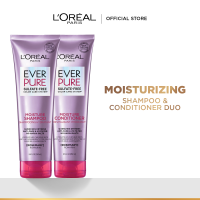
LOreal Paris Ever Pure Moisture Shampoo and Conditioner Set (250mL) - Hair Care Hair Treatment Sulfate Free Moisturizing for Bleached and Colored Hair
₱1,198.00
Buy on Lazada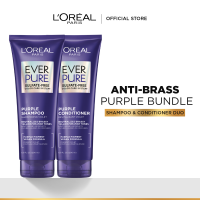
LOreal Paris Ever Pure Purple Shampoo and Conditioner Set (200mL) - Hair Care Hair Treatment Sulfate Free Anti-Brass for Bleached and Colored Hair
₱1,198.00
Buy on Lazada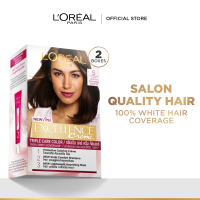
LOreal Paris Excellence Creme Triple Care Hair Color (Set of 2) - Gray Hair Full Coverage Hair Dye Permanent
₱948.00₱998.00
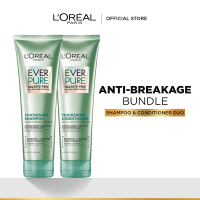
LOreal Paris Ever Strong Thickening Shampoo and Conditioner Set (250mL) - Hair Care Hair Treatment Sulfate Free Strengthening Bleached and Colored Hair
₱1,198.00
Buy on Lazada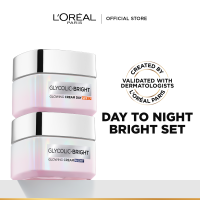
LOreal Paris Glycolic Bright Glowing Day and Night Cream Skincare Set (15mL / 50mL) - Brightening Dark Spots Dull Skin Glowing Skin
₱2,398.00
Buy on Lazada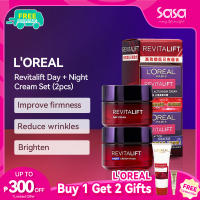
LOREAL Paris Revitalift Day + Night Cream Set (2pcs)
₱3,407.61₱7,728.00
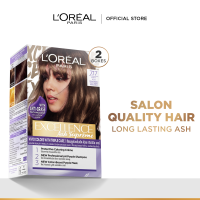
LOreal Paris Excellence Ash Supreme Set of 2 - Hair Color Set with Anti-Brass Purple Shampoo Hair Dye Permanent
₱961.00₱1,018.00
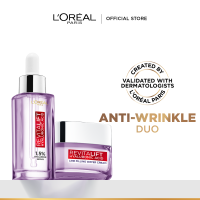
LOreal Paris Revitalift Hyaluronic Acid Plumping Duo Skincare Set: Day Cream (15mL / 50mL) and Serum (15mL / 30mL) - Facial Moisturizer Glass Skin Anti-Aging
₱2,798.00
Buy on LazadaAbout L’Oréal Paris
L’Oréal Paris is a French-origin global beauty brand owned by L’Oréal Groupe. Recognised as one of the world’s most prominent mass-market beauty brands, it offers an extensive portfolio spanning skincare, makeup, haircare, hair colour, and men’s grooming. The brand strategically combines the prestige of French beauty heritage with mass-market accessibility, positioning itself at the intersection of everyday cosmetics and luxury-inspired formulations.1
Basic information
| Category | Information |
|---|---|
| Brand | L’Oréal Paris |
| Parent company | L’Oréal Groupe |
| Country of origin | France |
| Industry | Cosmetics and personal care |
| Main categories | Skincare, makeup, haircare, hair colour, men’s grooming |
| Distribution | Mass-market, drugstores, supermarkets, specialty retailers, e-commerce and other channels |
| Global presence | Around 150 countries |
| Famous slogan | “Because You’re Worth It” / “Because I’m Worth It” |
| Original slogan | Created in 1971 |
| Current global president | Laetitia Toupet |
| Parent-group division | Consumer Products Division |
| Brand positioning | Accessible/luxury-inspired beauty driven by science and innovation |
L’Oréal describes L’Oréal Paris as the No. 1 beauty brand in the world, although this designation is a corporate claim rather than an independent third-party ranking.2
Origins
The history of L’Oréal Paris is intrinsically linked to that of L’Oréal Groupe, which traces its roots to French chemist Eugène Schueller. In 1909, Schueller established the enterprise that would eventually become L’Oréal. His initial breakthrough was a scientifically formulated hair colour designed to offer a safer alternative to existing dyes, making hair colouring a foundational pillar of the business.3
This scientific heritage remains central to the identity L’Oréal Paris emphasises today: beauty products developed through rigorous research, formulation expertise, and technological innovation. It is important to distinguish between L’Oréal as the corporate group and L’Oréal Paris as a consumer brand. While the group’s history dates to 1909, the modern L’Oréal Paris identity and its distinct consumer positioning evolved progressively throughout the 20th century.
Development of the L’Oréal Paris brand
During the mid-20th century, L’Oréal expanded beyond professional hair colour into products intended for a broader consumer market. The 1960s and 1970s were particularly transformative periods; shifting hairstyles and evolving social expectations regarding women influenced both product development and advertising strategies. The introduction and expansion of home hair-colour products facilitated the transition of sophisticated beauty technology from salons to consumers’ homes.4
A pivotal product in this era was Préférence, a home hair-colour line that served as the catalyst for what would become L’Oréal Paris’s most iconic brand communication.
“Because You’re Worth It”
The phrase “Because I’m Worth It” is widely considered the defining element of L’Oréal Paris’s identity. Created in 1971 by Ilon Specht, a 23-year-old copywriter at the McCann advertising agency in Manhattan, the line was originally developed for the Préférence hair-colour campaign.5
At the time, beauty advertising frequently framed women’s appearance in terms of attracting or pleasing others. Specht’s concept instead presented a woman making a beauty choice for herself. This distinction rendered the advertising historically significant, and L’Oréal Paris subsequently adopted the phrase as a central expression of female self-confidence and empowerment.
The slogan has since been translated into approximately 40 languages and adapted for various markets.6 Regional variations include:
- “Because I’m Worth It”
- “Because You’re Worth It”
- French: “Parce que je le vaux bien” / “Parce que vous le valez bien”
- Indonesian: “Karena Anda begitu berharga”
Today, the company regards “Worth It” not merely as an advertising tagline but as a core component of the brand’s mission.7
Expansion beyond hair colour
Although hair colour was fundamental to L’Oréal’s origins, L’Oréal Paris gradually evolved into a comprehensive beauty brand. By the 1980s and 1990s, the portfolio had expanded significantly across multiple categories.
Skincare
Products were developed to address concerns such as hydration, anti-ageing, wrinkles, firmness, pigmentation, sun protection, cleansing, and skin renewal.
Makeup
The makeup portfolio grew to encompass foundation, concealer, mascara, eyeliner, lipstick, lip gloss, blush, and other complexion and eye products.
Haircare
L’Oréal Paris introduced shampoos, conditioners, treatments, and styling products tailored to diverse hair types and specific concerns.
Hair colour
Remaining a historically vital category, hair colour evolved from traditional permanent dyes to products addressing grey coverage, highlights, gloss, and other at-home colouring needs.
Men’s grooming
The brand also developed skincare and grooming products specifically marketed towards men.
The company states that its current portfolio spans makeup, skincare, haircare, hair colour, and men’s grooming.8
Brand philosophy
The identity of L’Oréal Paris can be understood through three interconnected pillars:
Beauty
The brand offers beauty products intended to make advanced cosmetic and personal-care technologies accessible to everyday consumers.
Science
L’Oréal Paris emphasises its connection to L’Oréal’s research and development infrastructure. The company notes that its scientific heritage spans over a century, with products developed using advanced research, active ingredients, green chemistry, and biotechnology.
Self-worth
The “Worth It” philosophy frames beauty as a matter of personal confidence rather than solely physical attractiveness. This creates a distinctive positioning where the brand sells commercial beauty products while simultaneously presenting beauty as a form of personal empowerment.
Science and innovation
Scientific research underpins the brand’s market positioning. L’Oréal Paris states that its products are supported by the broader L’Oréal research organisation, which comprises 4,200 researchers across 21 research centres and holds access to 18,000 active patents. These figures reflect the wider scientific resources available to the brand and L’Oréal, rather than indicating that every product is developed independently by a separate L’Oréal Paris laboratory.
Key technologies and ingredients associated with L’Oréal Paris include:
- Pro-Xylane in anti-ageing skincare
- Mexoryl UV-filter technology
- Ceramide-based technologies in haircare
- Advanced hair-colour chemistry
- Reconstructed-skin research through Episkin
The company also states that Episkin enabled it to pioneer alternative approaches to animal testing beginning in 1989, well ahead of regulatory requirements in certain markets.
Major product families
L’Oréal Paris maintains numerous product lines, with exact portfolios varying by country. Internationally recognisable families include:
Revitalift
A major skincare range focused on anti-ageing and skin firmness, often incorporating technologies such as Pro-Xylane and other active ingredients.
Glycolic Bright / brightening skincare
Products aimed at improving the appearance of uneven skin tone and pigmentation.
Age Perfect
A skincare and makeup-oriented range designed specifically for mature consumers.
Elseve / Elvive
Haircare products including shampoo, conditioner, masks, and treatments. The name varies by market: Elseve is used in many countries, while Elvive is used in others.
Préférence
One of the most historically significant L’Oréal Paris hair-colour lines and the product family associated with the origin of the “Because I’m Worth It” campaign.
Excellence
A prominent at-home hair-colour range.
True Match
A makeup range particularly associated with foundation and complexion matching.
Infallible
A makeup family emphasising long wear and durability.
Telescopic
A well-known mascara line.
Lash Paradise
A major mascara franchise marketed around fuller-looking lashes.
Men Expert
The men’s grooming and skincare range.
Availability and specific formulations for these ranges vary considerably between markets.
Global identity
A key strength of L’Oréal Paris is its ability to combine French heritage with international marketing. The word “Paris” is integral to the brand image, communicating associations with French beauty, fashion, sophistication, cosmetics expertise, elegance, and modern femininity.
However, L’Oréal Paris is not marketed simply as a domestic French cosmetics brand. It has been developed into a global consumer brand with products and communications adapted for different countries and consumer groups. L’Oréal states that the brand operates across approximately 150 countries.9
Diversity and representation
Representation is a major component of the modern L’Oréal Paris strategy. The company states that the brand develops products for people across different ages, skin tones, ethnic backgrounds, hair types, and cultural backgrounds.
Consequently, advertising campaigns feature a wide range of celebrities and public figures rather than relying on a single conventional image of beauty.10 This approach is particularly relevant for makeup and skincare, given the diverse characteristics and needs of consumers. Current messaging attempts to combine the traditional image of French beauty with a broader concept of inclusive beauty.
Brand ambassadors
L’Oréal Paris has historically relied heavily on high-profile ambassadors to communicate its identity, drawing from film, music, fashion, and television. Current and recent representatives cited by the brand include:
- Viola Davis
- Helen Mirren
- Kate Winslet
- Eva Longoria
- Camila Cabello
- Andie MacDowell
- Elle Fanning
- Aja Naomi King
- Katherine Langford
The company describes these ambassadors as representing different generations, cultures, and backgrounds.10 This strategy is significant because L’Oréal Paris sells not only functional product benefits but also an identity and attitude towards beauty.
Women’s empowerment
Women’s empowerment has emerged as one of the brand’s most distinctive corporate-social themes. Rooted in the “Worth It” philosophy established in 1971, L’Oréal Paris states that it aims to encourage women to define their identities and ambitions for themselves.
One contemporary initiative is Stand Up, a programme addressing street harassment. The brand presents this as part of its broader effort to support women and challenge barriers to societal participation.11 This represents an evolution in the brand’s history:
1970s: “Because I’m Worth It” as an advertising breakthrough
Today: “Worth It” as a broader brand mission encompassing confidence, representation, and women’s empowerment.
Sustainability
L’Oréal Paris has integrated sustainability into its brand strategy, covering areas such as product formulation, packaging, responsible sourcing, environmental impact reduction, green science, circular-economy principles, and social initiatives.
The brand’s sustainability programme aligns with the wider L’Oréal for the Future framework. L’Oréal Paris describes its approach as integrating sustainability throughout the product lifecycle, from design through distribution and consumer use.12 As with any large cosmetics company, sustainability claims are best understood as an ongoing set of targets and initiatives rather than evidence that the entire product portfolio is environmentally neutral.
Relationship with L’Oréal Groupe
L’Oréal Paris is not an independent corporation; it belongs to L’Oréal Groupe, the multinational beauty company whose portfolio also includes Lancôme, Maybelline New York, Garnier, Kérastase, La Roche-Posay, CeraVe, NYX Professional Makeup, and others.
L’Oréal Paris sits within the group’s Consumer Products Division alongside other large consumer-facing beauty brands. In L’Oréal’s 2025 reporting, the Consumer Products Division generated €16.1 billion in sales, while L’Oréal Groupe as a whole reported €44.05 billion in 2025 sales.12 Importantly, these are L’Oréal Groupe/division figures, not sales figures for L’Oréal Paris alone.
Market positioning
L’Oréal Paris occupies a distinct position in the beauty market, being essentially mass-market in distribution but premium-inspired in image.
- Luxury beauty: High price, selective distribution, prestige.
- L’Oréal Paris: Relatively accessible price + sophisticated branding + scientific positioning.
- Basic mass-market beauty: Lower price + highly functional/basic positioning.
This positioning enables the brand to compete simultaneously on accessibility, innovation, and perceived quality. L’Oréal describes the brand as making “luxury beauty” accessible to everyone.13
Advertising and cultural influence
L’Oréal Paris holds particular significance in advertising history due to the influence of “Because I’m Worth It.” The line helped shift beauty advertising from the notion that one should look beautiful for someone else towards the idea that one can choose beauty for oneself.
Used for more than five decades, the slogan is now deeply associated with the brand’s identity. L’Oréal describes it as a cultural and feminist manifesto rather than merely a conventional advertising tagline.14 In 2025, L’Oréal Paris released The Final Copy of Ilon Specht, a documentary centred on the creator of the original phrase and its cultural impact.
L’Oréal Paris in the 2020s
The modern L’Oréal Paris strategy integrates several previously separate aspects of the brand: French beauty heritage, scientific research, accessible products, digital and social-media marketing, diversity and representation, women’s empowerment, and sustainability.
The result is a brand significantly broader than its historical association with hair dye. L’Oréal’s 2025 results reported that L’Oréal Paris was one of the four global brands in the Consumer Products Division and had another strong year, with growth particularly supported by innovation in categories including haircare and makeup.
Leadership
As of 2026, Laetitia Toupet is identified by L’Oréal as the Global President of L’Oréal Paris. The company describes her role as leading the brand’s global mission around beauty, innovation, and women’s empowerment. This should not be confused with the leadership of L’Oréal Groupe, which is the parent corporation.
Significance
L’Oréal Paris is significant for several reasons:
- Democratisation of beauty technology: Products once primarily associated with salons became available for home use.
- Transformation of beauty advertising: “Because I’m Worth It” became one of the most recognisable advertising lines in modern history.
- Connection of science with consumer beauty: The brand leverages L’Oréal’s scientific capabilities as a key credibility marker.
- Creation of a globally recognisable beauty identity: The combination of Paris + science + accessibility + empowerment provides distinctive global positioning.
- Evolution beyond a cosmetics brand: The “Worth It” platform allows L’Oréal Paris to participate in conversations about confidence, women’s empowerment, representation, and social issues.
Timeline
| Year | Event |
|---|---|
| 1909 | Eugène Schueller establishes the company that becomes L’Oréal, beginning with innovative hair-colour chemistry. |
| 20th century | L’Oréal expands from hair colour into broader cosmetics and beauty products. |
| 1960s–70s | Changing beauty trends drive further product and hair-colour innovation. |
| 1971 | Ilon Specht creates “Because I’m Worth It” for Préférence hair colour. |
| 1980s–90s | L’Oréal Paris expands substantially into makeup and skincare. |
| 1989 | L’Oréal begins using alternative methods to animal testing through scientific research, including Episkin. |
| 2000s | The brand accelerates international expansion and digital engagement. |
| 2010s | Diversity, digital beauty, and broader consumer engagement become increasingly important. |
| 2021 | “Because I’m Worth It” reaches its 50th anniversary. |
| 2025 | L’Oréal Paris continues global expansion, innovation, and its “Worth It” platform; The Final Copy of Ilon Specht revisits the slogan’s origins. |
| 2026 | L’Oréal Paris remains a flagship brand within L’Oréal Groupe’s Consumer Products Division. |
References
- L’ORÉAL PARIS
- Tentang L’Oréal Paris – L’Oréal Paris
- Our History – L’Oréal Paris
- Sejarah Kami – L’Oréal Paris
- Because You’re Worth It – L’Oréal Paris
- 50 Tahun Merayakan Perempuan – L’Oréal Paris
- About us – L’Oréal Paris
- INSIDE THE WORLD OF L’ORÉAL PARIS – L’Oréal Paris
- About us – L’Oréal Paris
- Ilon Specht: Because I’m Worth It | L’Oréal Paris
- L’Oréal Paris Celebrates 50th Anniversary Of “Because You’re Worth It” Slogan – L’Oréal Paris
- About Us – A century of history & committments | L’Oréal Paris UK
- Venez vite découvrir nos exclusivités : 50 ans auprès des femmes
- L’ORÉAL PARIS