Shop on Lazada
L’Oréal products
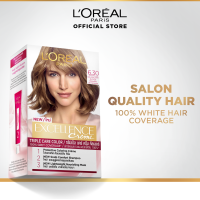
LOreal Paris Excellence Creme Triple Care Hair Color - Gray Hair Retouch Full Coverage Hair Dye Permanent
₱499.00
Buy on Lazada![LOréal Paris Glycolic Bright 8% [Melasyl + Glycolic + Niacinamide] - Anti-Dark Spot Brightening Face Serum (30ml/15ml)](https://ph-live.slatic.net/p/afe9216b34e30d1004c0169dd64f2e56.png_200x200q80.jpg)
LOréal Paris Glycolic Bright 8% [Melasyl + Glycolic + Niacinamide] - Anti-Dark Spot Brightening Face Serum (30ml/15ml)
₱699.00
Buy on Lazada
NEW LOreal Paris Infallible Matte Resistance 16HR Liquid Lipstick – Matte Non Drying Lightweight
₱699.00
Buy on Lazada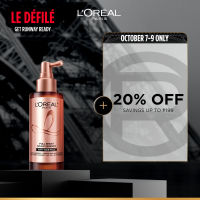
NEW LOreal Paris Full Resist Anti Hair Fall Scalp Essence Spray Strengthens Hair Roots for Anti Hair Fall
₱899.00₱999.00
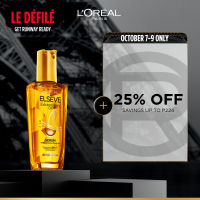
L’Oréal Paris Elseve Extraordinary Oil Hair Serum With 6 Precious Floral Oils Multi-benefit Leave-in Hair Oil Treatment Nourishes for Moisture Shine and Softness 30ml/100ml
₱774.00₱899.00
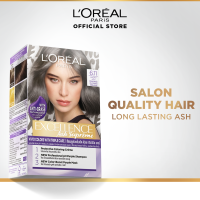
LOreal Paris Excellence Ash Supreme Hair Color with Anti-Brass Purple Shampoo Hair Dye Permanent
₱509.00
Buy on Lazada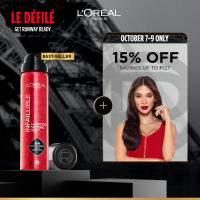
NEW LOreal Paris Infallible 3-Second Setting Mist - Locks makeup for 36h of long wear with no transfer no marks no stickiness
₱801.00₱849.00
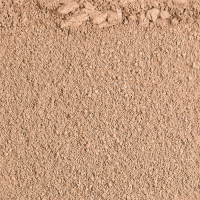
NEW LOreal Paris Infallible 24H Fresh Wear Foundation In a Powder – Full Matte Coverage Long Lasting Weightless
₱699.00₱899.00
About L’Oréal
L’Oréal is a French multinational beauty and cosmetics group headquartered in Clichy, France. Recognised as one of the world’s largest companies dedicated exclusively to the beauty sector, it was founded in 1909 by chemist Eugène Schueller. Originally focused on hair dye, the company has since expanded into haircare, skincare, makeup, fragrance, professional beauty, and dermatological products. Today, L’Oréal operates more than 40 international brands across over 150 countries and describes itself as the world’s number one beauty group.1
Note: The term “L’Oréal” may refer to either the L’Oréal Group (the parent conglomerate) or the L’Oréal Paris consumer brand. These are distinct entities; L’Oréal Paris is merely one of the many brands owned by the Group.
Basic Information
| Item | Information |
|---|---|
| Full Name | L’Oréal S.A. / L’Oréal Groupe |
| Founded | 1909 |
| Founder | Eugène Schueller |
| Origin | France |
| Headquarters | Clichy, France |
| Industry | Beauty, cosmetics, personal care |
| Main Businesses | Haircare, skincare, makeup, fragrance, professional beauty, dermatological beauty |
| International Brands | 40 |
| Countries/Markets | 150+ |
| Employees | 94,610 (as of 31 December 2025) |
| 2025 Sales | €44.05 billion |
| CEO | Nicolas Hieronimus |
| Chairman | Jean-Paul Agon |
| Stock Listing | Euronext Paris |
| Major Divisions | Consumer Products, L’Oréal Luxe, Dermatological Beauty, Professional Products |
According to the 2025 annual report, the Group employed 94,610 people and recorded sales of €44.05 billion.2
Corporate Structure and Strategy
L’Oréal functions as a beauty conglomerate rather than a single cosmetics manufacturer. Its core strategy involves owning and developing a diverse portfolio of brands positioned across varying price points, consumer demographics, product categories, and distribution channels.
Key examples of this segmentation include:
- Mass-market beauty: L’Oréal Paris, Garnier, Maybelline New York
- Professional haircare: Kérastase, Redken, Matrix
- Luxury beauty: Lancôme, Yves Saint Laurent Beauty, Armani Beauty, Prada Beauty
- Dermatological skincare: La Roche-Posay, CeraVe, Vichy
- Specialist/niche beauty: Aesop, SkinCeuticals, Medik8
This multi-brand approach enables L’Oréal to compete simultaneously across supermarkets, drugstores, pharmacies, salons, department stores, luxury boutiques, e-commerce platforms, and travel retail outlets.3
History
Founding and Early Years
The origins of L’Oréal lie with Eugène Schueller, a young French chemist and entrepreneur. In 1909, he established the Société Française des Teintures Inoffensives pour Cheveux (French Society for Safe Hair Dyes), producing hair dyes specifically for Parisian hairdressers. His foundational innovation was rooted in the principle that beauty products should be developed through chemistry and scientific research, a characteristic that continues to define the company.
The firm’s first hair colour product was named L’Auréale, referencing a fashionable hairstyle of the era and golden hair tones. This name eventually evolved into Oréal and subsequently L’Oréal.4
Expansion Beyond Hair Dye
During the 1930s, the company diversified beyond professional hair colouring. Significant innovations included DOP (1934), described as its first soap-free shampoo, and Ambre Solaire (1935), an early sun protection product that established L’Oréal in the skincare and sun care sectors. In 1939, the company officially adopted the name L’Oréal and relocated to 14 Rue Royale in Paris.5
Post-War International Growth
Following World War II, L’Oréal entered a significant expansion phase under chairman François Dalle. The company increasingly leveraged scientific research, international expansion, advertising, acquisitions, and new brand development. L’Oréal went public in 1963 and acquired or developed major brands including Lancôme, Biotherm, Mixa, and Garnier, while launching Kérastase.6 This period cemented the modern corporate formula: building a portfolio of distinct brands for different consumers rather than relying on a single identity.
Business Model
The modern L’Oréal business model rests on four primary pillars.
Research and Science
Science has been integral to the company since its inception. L’Oréal currently employs more than 4,000 scientists and operates 22 research centres within a global research-and-innovation network.7 Research areas encompass skin biology, hair and scalp science, cosmetic chemistry, formulation, dermatology, biotechnology, packaging, sustainability, and digital technology including AI. This scientific positioning is particularly critical in skincare and haircare, where efficacy claims serve as key differentiators.
Brand Portfolio Management
Rather than using a single brand for all consumers, L’Oréal maintains a portfolio with distinct identities:
- L’Oréal Paris: Accessible, mainstream beauty
- Garnier: Accessible skincare and haircare
- Maybelline: Mass-market makeup
- Lancôme: Luxury skincare, makeup, and fragrance
- Kérastase: Premium professional haircare
- La Roche-Posay: Dermatological skincare
- CeraVe: Dermatologist-oriented skincare
- Aesop: Premium niche skincare
This structure allows the Group to address a vast range of consumer segments without diluting individual brand equity.
Global Distribution
L’Oréal utilises nearly every major beauty distribution channel, including supermarkets, drugstores, pharmacies, beauty retailers, department stores, salons, luxury stores, e-commerce, and travel retail. This extensive reach provides access to consumers ranging from those seeking affordable daily essentials to high-end luxury buyers.8
Strategic Acquisitions
Acquisitions are central to L’Oréal’s growth strategy. Instead of developing every new category internally, the Group frequently acquires or invests in brands to secure new consumers, geographic markets, technologies, product categories, premium positioning, and emerging trends. Consequently, L’Oréal operates more as a portfolio of beauty companies than a single cosmetics manufacturer.
Operating Divisions
L’Oréal organises its global portfolio into four distinct divisions.9
Consumer Products
With the mission of “democratizing the best of beauty,” this division targets the broadest consumer market. Major brands include L’Oréal Paris, Garnier, Maybelline New York, NYX Professional Makeup, 3CE, Essie, Mixa, and Dr.G. In 2025, Consumer Products generated approximately €16.1 billion, representing about 36.5% of Group sales.10
L’Oréal Luxe
This division focuses on premium and luxury beauty, featuring brands such as Lancôme, Yves Saint Laurent Beauty, Armani Beauty, Kiehl’s, Helena Rubinstein, Valentino Beauty, Aesop, Prada Beauty, Biotherm, Shu Uemura, IT Cosmetics, Urban Decay, Mugler, Maison Margiela, and Ralph Lauren fragrances. Luxe generated approximately €15.6 billion in 2025, accounting for roughly 35.4% of Group sales.11 This division is strategically vital for participation in the high-margin luxury beauty and fragrance markets.
Dermatological Beauty
Focusing on skincare with strong dermatological and scientific positioning, this division includes La Roche-Posay, CeraVe, Vichy, SkinCeuticals, and Skinbetter science. In 2025, the division achieved sales of around €7.2 billion, growing 5.5% on a like-for-like basis.11 It has become a key growth driver as consumers increasingly view skincare through the lens of dermatology and skin health.
Professional Products
Serving beauty professionals, particularly hair salons, this division comprises L’Oréal Professionnel, Kérastase, Redken, Matrix, Pureology, and Biolage. It generated approximately €5.2 billion in 2025 and recorded 7.5% like-for-like growth.12
Brand Portfolio Overview
L’Oréal’s portfolio is deliberately diverse rather than homogeneous.13
| Segment | Examples |
|---|---|
| Mass Beauty | L’Oréal Paris, Garnier, Maybelline |
| Makeup | Maybelline, NYX, Lancôme, Urban Decay, IT Cosmetics |
| Skincare | CeraVe, La Roche-Posay, Vichy, Kiehl’s, SkinCeuticals |
| Haircare | L’Oréal Paris, Garnier, Kérastase, Redken, Matrix |
| Professional Hair | Kérastase, Redken, L’Oréal Professionnel |
| Luxury | Lancôme, YSL Beauty, Armani Beauty, Prada Beauty |
| Fragrance | Armani, YSL, Prada, Valentino, Mugler, Ralph Lauren |
| Niche/Premium | Aesop, Medik8, Skinbetter science |
Distinction Between L’Oréal Paris and L’Oréal Group
It is essential to distinguish between the parent company and its consumer brand. L’Oréal Group is the conglomerate that owns or operates dozens of international beauty brands. L’Oréal Paris is a specific consumer brand within the Group, positioned around accessible beauty with products spanning hair colour, haircare, skincare, makeup, and men’s grooming. While L’Oréal Group owns brands like Lancôme and Garnier, L’Oréal Paris is simply one entity within that broader portfolio.
Financial Performance
For the fiscal year 2025, L’Oréal reported sales of €44.05 billion, representing +4.0% like-for-like growth. The Group employed 94,610 people, managed 40 international brands, and operated in over 150 countries.14
Sales by division were distributed as follows:
| Division | 2025 Sales |
|---|---|
| Consumer Products | €16.1 billion |
| L’Oréal Luxe | €15.6 billion |
| Dermatological Beauty | €7.2 billion |
| Professional Products | €5.2 billion |
| Total | €44.05 billion |
By product category, skincare was the largest segment, accounting for roughly 37% of sales, followed by makeup, haircare, and fragrances.14
Research and Innovation
Research remains central to L’Oréal’s corporate identity. Having begun as a scientific hair-dye business, the company has maintained this focus for over a century. Current research spans chemistry, biology, dermatology, formulation, digital technology, and AI. L’Oréal states it employs more than 4,000 scientists alongside over 8,000 Digital, Tech, and Data specialists.15 The company is also heavily investing in Beauty Tech, utilising AI and digital personalisation to transform how consumers discover, test, and purchase products.16
Marketing and Advertising
L’Oréal’s historical success stems from understanding that beauty products convey attractiveness, confidence, identity, social status, and self-expression beyond mere functionality. This insight drove significant investment in advertising, celebrities, fashion, entertainment, and social media. The slogan “Because You’re Worth It” became synonymous with L’Oréal Paris, marking a shift in beauty advertising towards emphasising self-worth and personal empowerment rather than just aesthetic enhancement.
Global Operations
As a fundamentally global company selling in over 150 countries, L’Oréal adapts to local market differences rather than offering identical products everywhere. Variations in skin tone, hair texture, climate, cultural standards, preferred ingredients, purchasing power, and routines necessitate a strategy combining global brands with local adaptation. In 2025, sales were distributed across Europe, North America, North Asia, SAPMENA-SSA, and Latin America.17
Sustainability
Through its L’Oréal for the Future programme, the Group has prioritised sustainability across greenhouse gas reduction, renewable energy, sustainable sourcing, water management, packaging circularity, biodiversity, social inclusion, and community investment. According to 2025 reporting, L’Oréal achieved 100% renewable energy and continued progress on environmental and social goals.18 The company also reported receiving a triple-A CDP rating for ten consecutive years.19 As with any major multinational, these claims and performance metrics are subject to independent evaluation.
Corporate Leadership
As of 2026, Nicolas Hieronimus serves as Chief Executive Officer, having assumed the role in 2021 after a long career within the company. Jean-Paul Agon serves as Chairman of the Board, having previously held the CEO position. Both roles are confirmed in L’Oréal’s 2025 Annual Report.20
Competitive Advantage
L’Oréal’s success derives from multiple reinforcing factors:
- Scientific Expertise: Continuous investment in beauty research since foundation.
- Brand Portfolio Breadth: Simultaneous service to mass, premium, professional, luxury, and dermatological consumers.
- Distribution Strength: Access through nearly every major beauty channel.
- Global Scale: Ability to spread R&D, manufacturing, marketing, and technology costs internationally.
- Acquisition Strategy: Entry into new categories via established brands.
- Marketing Capability: Historical strength in building recognisable global brands.
- Continuous Innovation: Regular introduction of new formulations, ingredients, and technologies.
- Consumer Segmentation: Ownership of brands with distinct personalities rather than a monolithic identity.
Ultimately, L’Oréal’s competitive advantage lies not merely in manufacturing cosmetics but in building, managing, and scaling beauty brands.
Market Position
L’Oréal competes with Estée Lauder Companies, Shiseido, Procter & Gamble, Unilever, Coty, Beiersdorf, Kao, and Puig. However, its structure is distinctive due to portfolio breadth. A single group participates in drugstore beauty, pharmacy skincare, salon haircare, prestige cosmetics, luxury fragrance, and niche skincare, providing unusually broad exposure to the entire beauty industry.
Strategic Direction
As of 2026, several strategic themes are paramount.
Beauty Tech and AI
Technology is increasingly viewed as part of the beauty experience. AI supports product recommendations, personalised routines, virtual try-ons, consumer insights, marketing, product development, and employee productivity. In 2025, more than 65,000 employees were upskilled in generative AI.21
Dermatological Beauty
Brands like CeraVe and La Roche-Posay provide exposure to the rapidly growing intersection of beauty, skincare, and dermatology.
Luxury Beauty
Luxury remains a major growth engine driven by brands such as Lancôme, YSL Beauty, Armani Beauty, Prada Beauty, and Aesop.
Emerging Markets
L’Oréal pursues growth in emerging markets where rising incomes and expanding beauty consumption create opportunities. 2025 results highlighted continued efforts in markets including Brazil, Mexico, GCC nations, and Vietnam.21
Summary
L’Oréal can be defined as a French beauty conglomerate founded in 1909 that has grown from a hair-dye company into the world’s largest beauty group by combining scientific research, global distribution, powerful marketing, strategic acquisitions, and a portfolio of more than 40 international brands.22 Its core capability is transforming science, consumer insight, branding, and distribution into scalable beauty businesses, explaining its ownership of diverse brands ranging from Maybelline to Aesop. The company’s history essentially mirrors the industrialisation and globalisation of modern beauty, evolving from a Parisian chemist’s workshop in 1909 to a €44.05-billion global ecosystem over a century later.22
References
- Discover L’Oréal Groupe
- L’Oréal Group : Culture & Heritage
- L’Oréal Annual Report 2025 | L’Oréal Finance
- 5.6 Notes to the Consolidated Financial Statements – Page 302 | L’Oréal – 2025 Universal Registration Document
- L’Oréal Group : Our Global Brands Portfolio
- 1. Presentation of the Group – Integrated Report – Page 5 | L’Oréal – 2025 Universal Registration Document
- L’Oréal’s history: the adventure of beauty – L’Oréal
- L’Oréal’s history: the adventure of beauty
- 2025 Annual Results | L’Oréal Finance
- Financial Performance & Key Figures | L’Oréal Finance
- L’Oréal completes the acquisition of Kering Beauté within the framework of its strategic alliance with Kering
- Dive into the beauty of performance with the 2025 Annual Report | L’Oréal Finance
- Annual Report | L’Oréal Finance
- Strategy L’Oréal | L’Oréal Finance
- Introduction – Page 308 | L’Oréal – 2025 Universal Registration Document
- 6.5 Notes to the financial statements of L’Oréal SA – Page 364 | L’Oréal – 2025 Universal Registration Document
- People L’Oréal | L’Oréal Finance
- 6.5 Notes to the financial statements of L’Oréal SA – Page 363 | L’Oréal – 2025 Universal Registration Document
- 1.1 L’Oréal Groupe fundamentals – Page 13 | L’Oréal – 2025 Universal Registration Document
- Rapport Annuel | L’Oréal Finance
- L’Oréal Group – Documents
- Découvrez le Groupe L’Oréal