Shop on Lazada
La Mer products
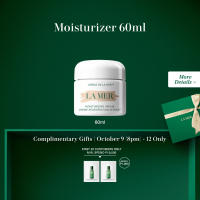
La Mer Moisturizing Fresh Cream Creme de la Mer | Moisturizer Anti-aging Wrinkle Fine Lines Hydrating
₱39,900.00
Buy on Lazada![[NEW] La Mer The Concentrate | Serum & Essence Reduce Redness Irritation Inflammation Soothing Post Aesthetic Treatment](https://ph-live.slatic.net/p/1b233b96166f33efbf7e9edd01bbad85.jpg_200x200q80.jpg)
[NEW] La Mer The Concentrate | Serum & Essence Reduce Redness Irritation Inflammation Soothing Post Aesthetic Treatment
₱29,800.00
Buy on Lazada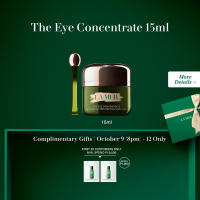
La Mer The Eye Concentrate | Anti-aging Dark Circles Depuff Wrinkles Fine Lines Brighten Hydrating Firming
₱18,500.00
Buy on Lazada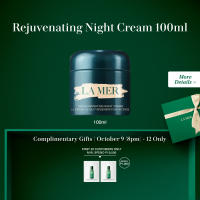
La Mer The Rejuvenating Night Cream| Anti-aging for sensitive skin fine lines radiance firmness wrinkles
₱46,300.00
Buy on Lazada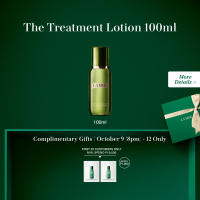
La Mer The Treatment Lotion | Toner Anti-aging Wrinkle Fine Lines Youthful Radiant Hydration Sebum Reduction
₱8,100.00
Buy on Lazada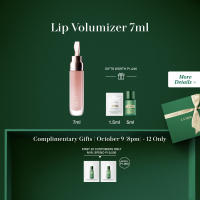
La Mer | The Lip Volumizer | Lip Gloss Plumping High-shine Nourishing Healthy Reduce Lips Lines Healing Treatment Moisturize | Lipcare | 7ml
₱7,745.00
Buy on Lazada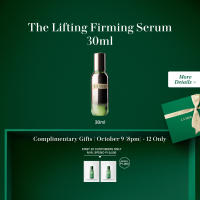
La Mer | The Lifting Firming Serum | Best Seller Facial Serum & Essence Anti-aging Fine Lines Wrinkle Contouring Hyaluronic Acid Hydrate | Skincare all skin types | 15ml 30ml
₱30,100.00
Buy on Lazada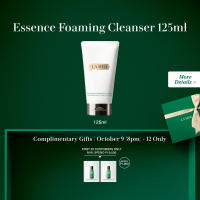
La Mer The Essence Foaming Cleanser | Sulfate-Free Remove Dirt Irritants Pore Cleansing Skin Softening Face
₱7,500.00
Buy on LazadaAbout La Mer
La Mer is a luxury skincare brand best known for its signature moisturizer, Crème de la Mer, and for its use of a proprietary marine-based fermentation complex called Miracle Broth™. Today, La Mer is part of The Estée Lauder Companies (ELC) and occupies the group’s ultra-luxury skincare segment.1
The brand’s identity is built around three core concepts: the sea, scientific discovery, and renewal. Its mythology centres on Dr. Max Huber, an aerospace physicist whose search for a way to soothe the appearance of his skin eventually led to the development of Miracle Broth™.2
Basic information
| Category | Information |
|---|---|
| Brand | La Mer |
| Industry | Luxury cosmetics / skincare |
| Parent company | The Estée Lauder Companies |
| Founder / originator | Dr. Max Huber |
| Signature product | Crème de la Mer |
| Signature technology/ingredient | Miracle Broth™ |
| Key natural inspiration | Giant Sea Kelp |
| Core positioning | Ultra-luxury, high-performance skincare |
| Brand philosophy | Science, craftsmanship, renewal |
| Parent-company acquisition | Joined Estée Lauder Companies in 1995 |
| Major category | Prestige skincare |
While La Mer is sometimes described simply as a luxury beauty brand, its more precise positioning within the Philippine and global market is prestige and ultra-luxury skincare, rather than that of a broad cosmetics house.3
Origin story
Dr. Max Huber
The La Mer story begins with Dr. Max Huber, an aerospace physicist working in California.
According to La Mer’s official history, Huber suffered serious burns in a laboratory accident. This experience motivated him to investigate ways of improving the appearance and condition of his own skin. He turned his attention towards the ocean, specifically focusing on marine organisms and the regenerative qualities he associated with them.4
Huber’s particular fascination became Giant Sea Kelp. Rather than simply incorporating seaweed into a cream, he developed a lengthy fermentation process designed to transform marine ingredients into what La Mer calls Miracle Broth™. According to the brand, this research took 12 years and more than 6,000 experiments.5
This origin story is fundamental to the brand’s identity, as La Mer presents itself not merely as a cosmetics company but as the continuation of a scientist’s personal quest for renewal.
The birth of Crème de la Mer
The breakthrough product was Crème de la Mer, which became the foundation of the entire brand and eventually gave the company its identity. The name literally translates to “cream of the sea”.
The original concept was distinctive for luxury skincare: it combined an exclusive cream with a proprietary marine fermentation technology, surrounded by a narrative of scientific discovery, craftsmanship, and the regenerative power of the ocean. Over time, Crème de la Mer evolved beyond a simple moisturizer to become a luxury beauty icon and the product most strongly associated with the brand.
La Mer describes Crème de la Mer as its “original moisture miracle” and identifies it as the moisturizer that started the brand.6
Miracle Broth™
Miracle Broth™ is arguably the most critical element of La Mer’s brand identity. It is a proprietary fermented ingredient complex developed from Giant Sea Kelp and other ingredients.
La Mer states that its process involves a specialized form of bio-fermentation that takes several months to complete. The brand describes the resulting ingredient as the central elixir running through its skincare products.7
A key distinction made by the brand is that Miracle Broth™ is not simply “seaweed extract”; it is presented as a proprietary preparation created through a specific fermentation process. According to La Mer, the Giant Sea Kelp used is hand-harvested from waters off Vancouver Island, with the company emphasizing sustainability alongside the kelp’s rapid growth and regenerative characteristics.8
Furthermore, La Mer states that each new batch of Miracle Broth™ is infused with drops from the previous batch, creating what the company describes as a continuous link to the original formulation.9
Significance of the sea
For La Mer, the sea is not merely an ingredient source but the central symbol of the brand. The brand’s storytelling repeatedly connects a linear narrative: Ocean → Giant Sea Kelp → Fermentation → Miracle Broth™ → Skin renewal.
This provides a distinctive narrative compared to conventional dermatological skincare. Instead of emphasizing only clinical ingredients such as retinoids, peptides, or acids, La Mer combines marine science, fermentation, luxury craftsmanship, sensory experience, exclusivity, scientific mythology, and ocean conservation. The result is a brand universe in which the ocean itself becomes part of the luxury proposition.
Relationship with The Estée Lauder Companies
A major turning point occurred in 1995, when La Mer joined The Estée Lauder Companies.10 This acquisition was crucial for the brand’s global development.
Estée Lauder already possessed extensive expertise in prestige beauty distribution, marketing, and international expansion. Under ELC, La Mer developed from a cult luxury moisturizer into a much broader global skincare brand. The parent company now places La Mer among its portfolio of prestige and luxury beauty brands alongside names such as Estée Lauder, Clinique, Jo Malone London, and Tom Ford.11
Brand evolution
La Mer’s evolution can be categorized into several distinct stages:
Stage 1: Scientific experiment
The story began with Max Huber’s laboratory research and his search for ways to improve the appearance of his skin.
Stage 2: The cult moisturizer
The original cream, Crème de la Mer, became the core product and developed a reputation as an exceptionally luxurious moisturizer.
Stage 3: Global luxury brand
Following its acquisition by Estée Lauder in 1995, La Mer gained the infrastructure and distribution necessary for international expansion.
Stage 4: Complete skincare system
The brand expanded beyond a single cream into a broader regimen covering cleansing and preparation, lotions, serums, eye care, moisturizers, treatments, and body care.
Stage 5: Science and research
La Mer continues to invest in research through its Max Huber Research Labs, where the company studies fermentation, delivery systems, and potential applications of Miracle Broth™.12
Major products
Although the brand now maintains an extensive portfolio available in Philippine luxury retail channels, several products remain particularly significant.
Crème de la Mer
As the brand’s flagship moisturizer, this product established La Mer’s reputation. It is positioned as a rich, luxurious moisturizer suited to consumers seeking intensive hydration and a highly sensorial skincare experience.12
The Treatment Lotion
This lightweight hydrating treatment is used during the preparation stage of a La Mer regimen. The brand positions it as a product that hydrates and prepares the skin for subsequent treatments.
The Concentrate
A concentrated treatment designed around skin soothing, barrier support, and the brand’s signature Miracle Broth™ technology. It occupies a treatment-oriented position within the La Mer routine.
The Eye Concentrate
An eye treatment targeting concerns such as dark circles, lines, and wrinkles, extending La Mer’s luxury treatment philosophy into specialized eye care.
Serums and other treatments
La Mer has progressively expanded into sophisticated treatment products, including serums designed for hydration, renewal, firmness, and skin-barrier support. This expansion is strategically important as it ensures La Mer is no longer dependent on a single hero cream, even though Crème de la Mer remains its defining product.
Product philosophy
The brand’s philosophy is anchored in three foundational principles explicitly identified by La Mer:13
- Science: Emphasizing Huber’s scientific background, fermentation, and ongoing research.
- Craftsmanship: Presenting formulas as carefully developed, time-intensive creations rather than mass-market cosmetics.
- Renewal: Using “renewal” as central brand language to refer to the appearance of rejuvenated, energized skin.
Luxury positioning
La Mer occupies the very high end of the skincare market. Its luxury positioning is constructed through several simultaneous components:
- High prices: Products command prices substantially above ordinary skincare and generally above many prestige competitors.
- Proprietary technology: Miracle Broth™ provides a unique technological story rather than relying exclusively on generic ingredients.
- Hero-product strategy: Crème de la Mer functions similarly to a luxury fashion house’s iconic handbag, serving as a recognizable product that communicates the entire brand’s identity.
- Packaging: Minimalist packaging, particularly the white-and-sea-green/blue visual language, communicates purity, sophistication, and a connection to the ocean.
- Scarcity and exclusivity: Historically, the brand has been distributed through selective luxury beauty channels rather than being positioned as an everyday mass-market product.
Brand psychology
From a branding perspective, La Mer sells more than functional skincare. Its proposition operates on multiple layers:
- Functional layer: Moisturization, skin comfort, and barrier support.
- Technological layer: Miracle Broth™, fermentation, and research.
- Emotional layer: Healing, renewal, transformation, and connection with the sea.
- Luxury layer: Rarity, craftsmanship, high price, and exclusivity.
- Mythological layer: The narrative of a scientist spending 12 years and thousands of experiments pursuing a personal breakthrough.
The La Mer ritual
La Mer encourages consumers to view skincare as a ritual rather than the simple application of functional products. The classic experience follows the sequence: Prepare → Treat → Moisturize → Renew.
Products are designed to function as a complete luxury skincare regimen, with Miracle Broth™ acting as the technological thread connecting the range.14 This aligns with classic luxury strategy, where the consumer purchases an experience and ritual alongside the physical product.
Scientific identity
La Mer’s scientific identity sits between cosmetic science and luxury storytelling. The company emphasizes fermentation, marine biology, physics, energy, skin renewal, formulation research, and delivery systems.
The Estée Lauder Companies states that the Max Huber Research Labs continues to investigate Miracle Broth™ and new methods for incorporating and delivering it in skincare formulations.15 However, marketing terms such as “healing” or “renewal” are part of La Mer’s proprietary narrative and do not indicate that Crème de la Mer is a medical treatment.
Sustainability and the ocean
Environmental stewardship is integral to the brand’s corporate storytelling due to the ocean’s centrality to its identity. La Mer operates the La Mer Blue Heart initiative, which supports ocean-related conservation efforts as part of its commitment to protecting its source of inspiration.16
The company also emphasizes the sourcing of Giant Sea Kelp, stating that it hand-harvests the kelp in a manner intended to support sustainability.17
Brand identity
La Mer’s brand identity can be summarized as Oceanic, Scientific, Exclusive, Sensory, and Timeless. Its visual and verbal identity avoids the aggressive, clinical aesthetic associated with some modern skincare brands.
Instead, La Mer cultivates an atmosphere of deep ocean, tranquility, purity, transformation, luxury, discovery, and craftsmanship. This allows the brand to command luxury prices despite operating in a category where many competing products focus on cheaper individual active ingredients.
Target customer
The typical La Mer customer seeks more than basic moisturization. The brand targets consumers who value luxury beauty, premium skincare rituals, brand heritage, exclusivity, sophisticated packaging, sensory textures, prestige ingredients, anti-aging positioning, and high-end retail experiences.
Consequently, La Mer competes partly on product performance and partly on symbolic value. Consumers may purchase La Mer because the experience represents luxury, status, ritual, and discovery, distinct from purely functional hydration.
Cultural significance of Crème de la Mer
The fame of Crème de la Mer stems from a specific combination of factors:
- A dramatic origin story: A scientist suffering an accident and spending years pursuing a solution.
- A proprietary ingredient: Miracle Broth™.
- A luxury price: Positioning far above mainstream moisturizers.
- Distinctive packaging: Visually recognizable design.
- Celebrity and luxury culture: Association with high-end beauty consumers.
- Strong sensory experience: Texture, application ritual, and fragrance.
- Simple hero-product proposition: One famous cream communicating the entire brand.
Comparison with mainstream skincare
| Mainstream skincare | La Mer |
|---|---|
| Ingredient-focused | Brand + technology + ritual |
| Low to moderate price | Ultra-premium |
| Functional moisturizer | Luxury skincare experience |
| Clinical/functional language | Scientific + poetic language |
| Many interchangeable products | Strong hero-product identity |
| Mass distribution | Selective prestige distribution |
| Price/value emphasis | Experience/status/value |
| “What ingredients are inside?” | “What is the La Mer experience?” |
La Mer’s value proposition is fundamentally different from mainstream skincare, prioritizing experience and status alongside efficacy.
Competitive position
La Mer competes in the upper tier of prestige skincare alongside luxury and high-performance brands such as:
- Clé de Peau Beauté
- SK-II
- Augustinus Bader
- Sisley Paris
- Valmont
- Guerlain
- Dior skincare
- Chanel skincare
- Shiseido premium lines
Its closest conceptual competitors are brands that similarly combine high prices, proprietary technologies, strong heritage, and luxury storytelling. La Mer’s primary point of differentiation remains its marine origin story, Miracle Broth™, and Crème de la Mer combination.
Business strategy within The Estée Lauder Companies
From a corporate perspective, La Mer represents the ultra-luxury end of ELC’s skincare portfolio. The brand provides access to consumers willing to spend significantly more on skincare and creates a halo effect around the company’s prestige beauty portfolio.
The strategy follows a path of: Hero product → brand mythology → complete regimen → global luxury distribution → high customer lifetime value. Rather than competing primarily on volume, La Mer relies on premium pricing, brand desirability, and customer loyalty.
Competitive advantage
Few skincare brands have created such a recognizable mythology around a single ingredient complex. La Mer’s competitive moat is the combination of Max Huber, Giant Sea Kelp, 12 years of research, 6,000 experiments, Miracle Broth™, Crème de la Mer, ocean mythology, and luxury positioning.
Even if another company could replicate the functional ingredients, reproducing the entire La Mer brand universe would be significantly more difficult. This intangible asset is the essence of its luxury branding.
Naming clarification
It should be noted that the name “La Mer” is not unique to The Estée Lauder Companies. There is a separate German skincare company called La mer, founded in 1981, whose products are based on sea silt. This entity is unrelated to Estée Lauder’s luxury La Mer brand. The German company explicitly notes that Estée Lauder also owns a cosmetics brand called LA MER and that the two operate under a coexistence agreement.18
When discussing the luxury skincare brand available in Philippine prestige retailers, the relevant corporate identity is: LA MER → The Estée Lauder Companies → Dr. Max Huber → Miracle Broth™ → Crème de la Mer.
Timeline
1950s
Dr. Max Huber establishes his laboratory in California and begins his scientific work.19
1950s–1970s
Huber conducts thousands of experiments exploring marine ingredients and fermentation.
Post-experimentation phase
After more than 6,000 experiments spanning 12 years, Huber develops the fermentation process associated with Miracle Broth™.
Launch
The resulting moisturizer, Crème de la Mer, becomes the foundation of the La Mer brand.
1995
La Mer joins The Estée Lauder Companies.
2000s–2020s
La Mer expands from its original cream into a comprehensive luxury skincare portfolio.
Present day
La Mer continues to position itself around Miracle Broth™, marine science, fermentation, research, and luxury skincare, while supporting ocean-conservation initiatives.20
Summary
La Mer is an ultra-luxury skincare brand owned by The Estée Lauder Companies, founded around the work of aerospace physicist Dr. Max Huber. After suffering burns in a laboratory accident, Huber embarked on a 12-year, more-than-6,000-experiment search involving Giant Sea Kelp and fermentation, ultimately developing Miracle Broth™, the proprietary marine-derived complex that remains central to the brand. Crème de la Mer, the original moisturizer built around this technology, became an iconic luxury skincare product and the foundation for a broader range of treatments. Since joining Estée Lauder in 1995, La Mer has developed into a global prestige skincare house whose identity combines marine inspiration, scientific research, craftsmanship, sensory luxury, exclusivity, and the idea of skin renewal.20
Brand DNA summary
For those analysing La Mer from a business or marketing perspective, the brand’s core elements are distilled below:
- Brand essence: Luxury renewal inspired by the sea
- Hero product: Crème de la Mer
- Hero technology: Miracle Broth™
- Founder mythology: Dr. Max Huber’s 12-year scientific quest
- Core ingredient story: Giant Sea Kelp
- Brand pillars: Science, Craftsmanship, Renewal
- Emotional promise: Transformative, rejuvenated-looking skin
- Functional promise: Hydration, nourishment, and skin-care treatment
- Luxury codes: Exclusivity, craftsmanship, high price, ritual, heritage
- Visual world: Ocean, white, sea green/blue, minimalism, serenity
- Corporate owner: The Estée Lauder Companies
- Primary brand asset: The mythology surrounding Miracle Broth™ and Crème de la Mer
- Strategic strength: Transformation of a moisturizer into an entire luxury universe
References
- La Mer – The Estée Lauder Companies Inc.
- Our Legacy: The History of La Mer | La Mer Official
- La Mer Skin Care Research Published in Peer-Reviewed Journal – The Estée Lauder Companies Inc.
- Our Legacy: The History of La Mer | La Mer Official
- Our Legacy: The History of La Mer | La Mer Official
- Brand Story | Crème de la Mer
- Brand Story | La Mer Europe
- Clinique and La Mer Elevate Dermatological Science at SCALE Conference – The Estée Lauder Companies Inc.
- La Mer Neuroscientist to Reveal New Insights Into Skin-Sensory Neuron Inflammation at Neuroscience 2024 – The Estée Lauder Companies Inc.
- Company
- FAQ
- La Mer Recherche sur les soins de la peau publiée dans un journal à comité de lecture – The Estée Lauder Companies Inc.
- La Mer – The Estée Lauder Companies Inc.
- La Mer – The Estée Lauder Companies Inc.
- La Mer – The Estée Lauder Companies Inc.
- La Mer – Las Empresas Estée Lauder Inc.
- ラ・メール – ザ エスティ ローダー カンパニーズInc.
- Nuestro Legado: La Historia de La Mer | La Mer Oficial
- Our Legacy: The History of La Mer | La Mer Official
- La Mer – The Estée Lauder Companies Inc.