Shop on Lazada
Leap Frog products
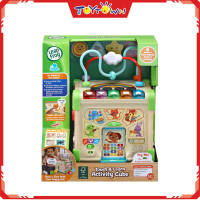
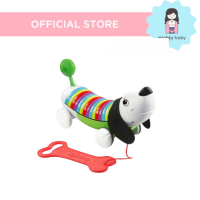
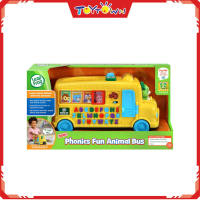
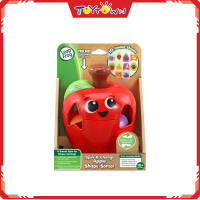
About Leap Frog
Leap Frog is an American educational technology and toy brand best known for creating interactive learning products for babies, toddlers, preschoolers, and young children. The brand combines education, technology, and play, with products designed to help children develop skills such as reading, writing, mathematics, language, problem-solving, and early cognitive development. Today, Leap Frog is part of VTech Holdings Limited, following VTech’s acquisition of LeapFrog Enterprises in 2016.12
Overview
| Category | Information |
|---|---|
| Brand name | Leap Frog |
| Former company | LeapFrog Enterprises, Inc. |
| Founded | 1995 |
| Founder | Michael Wood |
| Headquarters | Emeryville, California, United States |
| Industry | Educational toys, children’s technology, educational entertainment |
| Parent company | VTech Holdings Limited |
| Current status | Active brand |
| Main market | Children from infancy through early school years |
| Known for | Educational toys, learning systems, interactive books, tablets and digital learning products |
| Official website | leapfrog.com |
Leap Frog describes its mission as encouraging children’s curiosity and love of learning by combining educational expertise, technology, and engaging play.2
History
Founding
The origins of Leap Frog date back to the mid-1990s when founder Michael Wood sought a more effective way to help his child learn to read. Wood believed that learning could be significantly improved if it were both enjoyable and interactive.
In 1995, Leap Frog was launched with an initial focus on technology-based approaches to early reading. One of its earliest major products was the LeapPad, an interactive reading system designed to make books more engaging for children.2
This founding concept established the core identity of the Leap Frog brand: children can acquire important academic and developmental skills through play and interaction rather than relying solely on conventional instruction.
Expansion into educational technology
During the late 1990s and 2000s, Leap Frog expanded beyond early reading products into a broader educational technology ecosystem. Its product portfolio eventually included:
- Interactive reading systems
- Electronic books
- Learning games
- Educational handheld devices
- Interactive learning toys
- Mathematics and literacy products
- Preschool developmental toys
- Learning tablets
- Digital content and software
Earlier product platforms included the LeapPad Learning System, Leapster, Tag reading system, ClickStart, and Didj, all supported by a substantial library of interactive educational software.3
The LeapPad
The LeapPad is arguably the product most closely associated with the early success of Leap Frog. Introduced as an interactive reading system, it combined physical books with electronic interaction. Rather than simply asking children to read a conventional book, the system allowed them to interact with words, letters, pictures, and sounds.
This approach became central to the brand’s identity, positioning technology as a tool to make traditional learning activities more interactive. Company history describes the first LeapPad as a system that helped bring books to life.2
Educational philosophy
A defining characteristic of Leap Frog is its emphasis on learning through play. Instead of positioning educational products as miniature versions of school textbooks, the brand generally aims to make learning feel like an activity or game.
Products are designed around several key concepts:
- Curiosity — encouraging children to explore.
- Engagement — making educational activities entertaining.
- Repetition — allowing children to practice skills repeatedly.
- Interactive feedback — responding to actions with sounds, visuals, or other feedback.
- Age-appropriate development — tailoring products to specific developmental stages.
- Confidence — helping children experience small successes as they learn.
Leap Frog states that its products are intended to encourage and excite children while building their confidence and supporting their development.2
Major product categories
Learning tablets
Leap Frog became particularly well known for children’s tablets. Unlike general-purpose tablets, these devices were developed specifically around children’s learning and entertainment. They typically combined educational applications, games, videos, digital books, parental controls, age-appropriate content, and touchscreen interaction. This focus allowed Leap Frog to compete effectively in the growing digital learning market for children.
Reading and literacy products
Reading has historically been at the heart of the Leap Frog brand. Literacy products have included systems designed to teach alphabet recognition, phonics, vocabulary, word recognition, reading comprehension, writing, and early spelling. The company’s historical portfolio included more than 150 interactive software titles covering areas such as phonics, reading, writing, and mathematics.3
Interactive books
Leap Frog has developed electronic and interactive book systems designed to make reading more participatory. These products provide audio, pronunciation assistance, questions, games, and other forms of feedback as children interact with the books.
Preschool learning toys
The brand also produces traditional-looking toys that incorporate educational functions. Examples include products focused on numbers, letters, music, colors, shapes, language, motor skills, and social-emotional development. This category allows Leap Frog to reach children before they are old enough for tablets or more sophisticated electronic learning systems.
Learning games
Games are another major component of the Leap Frog philosophy. The objective is to incorporate educational concepts into activities that resemble ordinary children’s games. Depending on the product, children may practice mathematics, spelling, vocabulary, problem-solving, or other skills while playing.
Leap Frog and technology
Technology has always been central to the identity of Leap Frog. The company historically described itself as developing technology-based learning platforms and related proprietary content for children.3 This distinguishes it from conventional toy companies that primarily manufacture physical toys.
Its approach can be summarized as: Educational content + technology + play = interactive learning. This combination has allowed Leap Frog to occupy a unique space between the traditional toy industry and the children’s educational technology sector.
Acquisition by VTech
One of the most significant events in the corporate history of Leap Frog occurred in 2016. On February 5, 2016, VTech Holdings Limited announced an agreement to acquire LeapFrog Enterprises. VTech proposed an all-cash transaction valued at approximately US$72 million.1
The acquisition was completed on April 4, 2016, making Leap Frog an indirect wholly owned subsidiary of VTech.1 The deal brought together two major names in children’s electronic learning:
- VTech — particularly strong in electronic learning products and engineering/manufacturing.
- Leap Frog — particularly strong in educational content, learning platforms, and its established U.S. brand.
VTech described the two businesses as complementary, noting that Leap Frog had strengths in content development and educational expertise while VTech possessed strong technology, engineering, and manufacturing capabilities.1
Leap Frog under VTech
Following the acquisition, Leap Frog continued operating as a recognizable consumer brand rather than being absorbed entirely into VTech. The official website now identifies the company as “a member of VTech Group.”2
The two organizations have collaborated on educational and technology-based products since the acquisition. VTech states that the combination has allowed it to broaden its portfolio of electronic learning products.2 Consequently, modern Leap Frog products are generally branded items within the wider VTech corporate group.
Target audience
Leap Frog primarily targets young children and their parents. Its products cover a broad developmental range, from infancy through preschool and into early elementary school ages.
Children
For children, the emphasis is on fun, games, exploration, characters, sounds and music, interactive activities, and rewards.
Parents
For parents, the emphasis is on educational value, age-appropriate content, developmental skills, reading and mathematics, safe technology, parental controls, and activities that support learning at home.
Leap Frog explicitly describes parents as important partners in a child’s learning journey and provides resources such as the LeapFrog Learning Path, printables, and home activities.2
Brand positioning
Leap Frog is positioned as premium mainstream educational children’s technology. It is neither solely a toy company nor a conventional education company. Instead, it sits at the intersection of the toy industry, educational products, children’s technology, and digital learning. Its competitive identity has historically been based on making educational concepts more entertaining and accessible.
International presence
Leap Frog has developed into an international children’s brand. The company has stated that its products have reached more than 150 million children in more than 16 countries.2
Historically, products were distributed through retailers, distributors, its own online store, and educational channels, with availability in multiple languages.3 Under VTech, the brand benefits from the parent company’s international distribution and manufacturing infrastructure.
Notable characteristics
Several characteristics distinguish Leap Frog from ordinary children’s toy brands:
- Education-first identity: Learning is central to the brand proposition rather than an additional feature.
- Technology integration: The brand has historically been an early adopter of electronic learning technology, from talking books to children’s tablets.
- Learning through play: Educational activities are designed to be enjoyable rather than purely instructional.
- Parent involvement: Many products and services are designed to involve parents in monitoring or supporting progress.
- Developmental focus: Products are organized around developmental stages and skills rather than treating all children’s products as interchangeable.
Corporate structure today
Today, Leap Frog is a brand and business unit within VTech Holdings Limited rather than an independent publicly traded company. Before the acquisition, LeapFrog Enterprises, Inc. was publicly traded on the New York Stock Exchange under the ticker LF. VTech’s acquisition ended its status as an independent public entity.12
Timeline
| Year | Event |
|---|---|
| 1995 | Leap Frog is founded by Michael Wood. |
| 1995 | The original LeapPad interactive reading system is launched. |
| Late 1990s–2000s | Expansion into educational games, reading systems, and electronic learning toys. |
| 2000s | Products such as Leapster and Tag broaden the educational technology portfolio. |
| 2010s | Significant expansion into children’s tablets and digital learning. |
| 2016 | VTech announces agreement to acquire Leap Frog. |
| April 4, 2016 | VTech completes the acquisition; Leap Frog becomes an indirect wholly owned subsidiary.1 |
| 2017 | UK competition authorities give final unconditional approval for the acquisition.1 |
| Today | Continues as a children’s educational brand within the VTech Group.2 |
Brand significance
Leap Frog is significant for helping to popularize the idea that consumer electronics could be deliberately designed around children’s education. Before tablets and educational apps became commonplace, products such as LeapPad and Leapster demonstrated how technology could be incorporated into everyday learning.
Its broader contribution to the children’s product industry has been the combination of traditional toys, educational methodology, interactive electronics, digital content, and play. This formula became increasingly important as children’s entertainment shifted from purely physical toys toward connected and digital experiences.