Shop on Lazada
LIQUI MOLY products
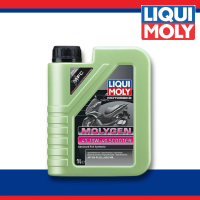
LIQUI MOLY MOTORBIKE MOLYGEN 4T 10W-40 SCOOTER
₱775.00
Buy on Lazada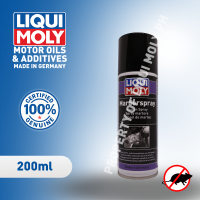
LIQUI MOLY Marten Spray - 200ML : 1515
₱773.14₱1,246.15
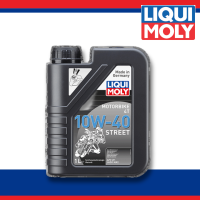
LIQUI MOLY MOTORBIKE 4T SAE 10W-40 STREET 1 LITER
₱595.00
Buy on Lazada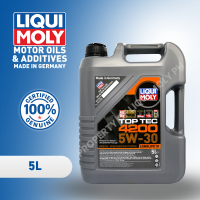
LIQUI MOLY Top Tec 4200 5W-30 New Generation - 5L : 8973
₱6,730.95₱10,738.46
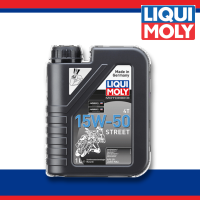
LIQUI MOLY MOTORBIKE 4T 15W-50 STREET 1 LITER
₱680.00
Buy on Lazada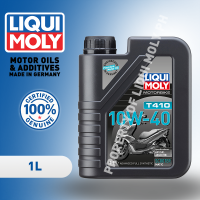
LIQUI MOLY 10W-40 Scooter Motorbike T410 - 1L : 48332
₱658.60₱1,061.54
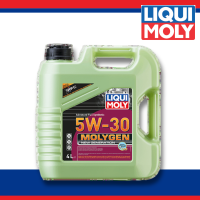
LIQUI MOLY MOLYGEN NEW GENERATION 5W-30 DPF
₱3,660.00
Buy on Lazada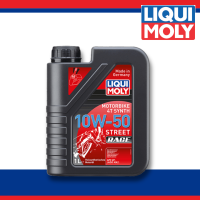
LIQUI MOLY MOTORBIKE 4T 10W-50 STREET RACE 1LITER
₱775.00
Buy on LazadaAbout LIQUI MOLY
Overview
LIQUI MOLY GmbH is a German manufacturer of automotive chemicals and lubricants, headquartered in Ulm, Baden-Württemberg, Germany. Founded in 1957, the company has evolved from a specialist in molybdenum-disulfide additives into a global brand with more than 4,000 products sold in over 150 countries. Its portfolio includes motor oils, oil and fuel additives, transmission fluids, greases, vehicle-care products, workshop chemicals, and service solutions.1
Today, LIQUI MOLY operates as part of the Würth Group. As of December 31, 2025, the company reported approximately €1 billion in turnover and employed about 1,200 people.2 The brand maintains production sites in Ulm and Saarlouis, Germany, with additional regional manufacturing capabilities, including operations in Thailand.
Company Profile
| Item | Information |
|---|---|
| Full name | LIQUI MOLY GmbH |
| Founded | 1957 |
| Founder | Hans Henle |
| Headquarters | Ulm, Germany |
| Industry | Automotive chemicals, lubricants, vehicle maintenance |
| Parent group | Würth Group |
| Key products | Motor oils, additives, gear oils, greases, car-care and workshop products |
| Product range | 4,000+ products |
| Countries served | 150+ |
| Employees | ~1,200 (2025) |
| Turnover | ~€1 billion (2025) |
| Production sites | Ulm and Saarlouis, Germany; Thailand |
| Current management | Günter Hiermaier, Dr. Uli Weller, Salvatore Coniglio |
The figures above are based primarily on LIQUI MOLY’s current corporate information.
Name Origin
The name “LIQUI MOLY” derives directly from the company’s original technology. “LIQUI” refers to the liquid form of the additive, while “MOLY” stands for molybdenum disulfide (MoS₂), a solid lubricant known for reducing friction and wear. The first product was an oil additive containing this compound, which became the foundation of the business when it was established in 1957.
Foundation (1957)
LIQUI MOLY was founded in Ulm, Germany, by Hans Henle. Henle acquired the rights to the name and a patent for an oil additive based on molybdenum disulfide. The initial product range focused on protecting engines under severe lubrication stress and included:
- Oil additives
- Gear-oil additives
- Multipurpose grease
- Assembly paste
Expansion and Diversification (1970s)
In the early 1970s, the company began expanding internationally, entering markets such as Austria, Switzerland, Hungary, and Yugoslavia. A major strategic shift occurred toward the end of the decade when LIQUI MOLY entered the motor-oil business, transforming from an additive specialist into a broader lubricant manufacturer. During this period, the company adopted its recognizable blue, white, and red corporate colors.
In-House Production (1978)
In 1978, LIQUI MOLY decided to manufacture its own additives rather than outsourcing. Headquarters and production moved from central Ulm to Ulm-Lehr, where manufacturing activities remain based today. This move emphasized control over production quality, becoming a core part of the company’s identity.
Brand Development (1980s)
The 1980s saw significant brand strengthening. In 1982, LIQUI MOLY entered Formula 1 sponsorship through the ATS team, establishing an early link with international motorsport. By 1986, the company introduced customer-oriented services around oil changes, including used-oil collection. In 1987, it launched its distinctive motor-oil container design, which remains a key element of its visual identity.
The Meguin Connection
In the early 1990s, LIQUI MOLY began cooperating with Meguin, a lubricant producer based in Saarland, Germany. In 2006, Meguin became a 100% subsidiary of LIQUI MOLY, providing additional manufacturing capacity. In 2026, Meguin GmbH & Co. KG Mineralölwerke was renamed LIQUI MOLY Produktions GmbH & Co. KG, reflecting a change in corporate name rather than ownership.
Ernst Prost Era
Ernst Prost joined the company in 1990 in marketing and sales. Between 1996 and 1998, he acquired all shares from the founding Henle family, becoming managing shareholder. Under his leadership, the company pursued aggressive expansion and internationalization, positioning itself as a complete automotive-chemicals supplier rather than just an oil manufacturer.
Würth Group Ownership
A significant milestone occurred in 2018 when Ernst Prost sold his shares to the Würth Group. This transition brought LIQUI MOLY under the ownership of a larger multinational group specializing in fastening technology and assembly products. The stated objective was to secure the long-term future of LIQUI MOLY and Meguin while allowing them to continue operating with considerable independence. Consequently, LIQUI MOLY is no longer an independent family-owned company but a distinct brand within the Würth Group.
International Presence
LIQUI MOLY’s global growth accelerated from the 2000s onward. The company established subsidiaries in markets including South Africa, Portugal/Spain, the United States, Italy, France, Australia, the United Kingdom, Austria, and Switzerland. Today, its products are distributed in more than 150 countries.3
Product Portfolio
LIQUI MOLY offers one of the broadest ranges in the industry, with over 4,000 products.
Motor Oils
Motor oil remains a primary category. The company produces oils for:
- Passenger cars (gasoline and diesel)
- Motorcycles
- Commercial vehicles and heavy-duty trucks
- Classic cars
- Agricultural equipment and construction machinery
- Specialized applications
Formulations meet specific viscosity requirements and manufacturer specifications.
Additives
Additives are central to the brand’s heritage. Products include treatments for engine oil, gasoline, diesel fuel, cooling systems, fuel injection systems, and transmission systems. The original molybdenum-disulfide additive remains in the modern portfolio in updated forms.
Transmission and Gear Oils
The range includes manual-transmission oils, automatic-transmission fluids, gear oils, differential oils, and hydraulic fluids designed for various mechanical applications.
Greases and Pastes
Specialized lubricating products include greases, assembly pastes, copper-containing pastes, ceramic products, high-temperature lubricants, and workshop-specific lubricants.
Car-Care Products
The company has expanded into vehicle appearance and maintenance with interior cleaners, exterior cleaners, glass cleaners, polishes, wax products, cockpit-care items, wheel cleaners, and detailing products.
Workshop Products
Targeted at professional workshops, these include cleaning chemicals, repair products, sealants, adhesives, service products, and workshop equipment solutions.
Manufacturing and “Made in Germany”
Historically, LIQUI MOLY emphasized that its motor oils and additives were produced in Germany, with R&D centered there. The company states that it develops its formulations in Germany and emphasizes German quality control.4
However, recent developments have shifted this narrative slightly. In 2025, LIQUI MOLY announced local production of certain motor oils in Thailand for Asian markets. This move was intended to shorten supply chains and respond more quickly to demand in Asia. The company notes that locally produced oils use the same recipes and raw-material requirements to maintain quality standards.5 In April 2026, LIQUI MOLY Thailand officially introduced its locally produced T-Series motor oils.
Thus, while LIQUI MOLY retains its status as a German brand with major German production and R&D, selected products are increasingly manufactured regionally.
Research and Development
R&D is central to the company’s positioning. It operates an in-house laboratory in Germany to develop lubricants and chemical products for specific technical requirements. Modern engine oil development involves balancing properties such as wear protection, oxidation stability, viscosity behavior, fuel efficiency, deposit control, cold-start performance, high-temperature stability, and compatibility with emission-control systems and seals.
Motorsport
Motorsport is a key component of LIQUI MOLY’s marketing strategy, dating back to its entry into Formula 1 sponsorship in 1982.
Formula 1
LIQUI MOLY became an official sponsor in 2019 and an Official Partner of Formula 1 from the 2023 season. Its agreement runs through the end of the 2026 season.
MotoGP
The brand has a strong presence in motorcycle racing, including series sponsorship, title sponsorship of the event at Sachsenring, and sponsorship of the LIQUI MOLY Dynavolt Intact GP team in Moto2 and Moto3. Racing serves as a development environment for motorcycle products.
Other Racing
LIQUI MOLY is involved in various other series, including DTM, MXGP, FIA European Truck Racing Championship, IMSA, British Touring Car Championship, and Canadian Superbike Championship.
Brand Identity
LIQUI MOLY utilizes a classic blue, white, and red packaging scheme combined with a distinctive metal-style oil canister design. The company positions itself not just as an industrial chemical manufacturer but as a brand for automotive enthusiasts. Current branding uses the slogan “FOR THE DRIVERS.”
Business Philosophy
The company’s stated values include:
- Excellence: Emphasis on quality, innovation, and precision.
- Integrity: Focus on reliability, honesty, and keeping commitments.
- Respect: Promotion of trust and cooperation among employees and partners.
Managing director Günter Hiermaier has summarized the premium positioning with the statement: “We want to be the best, not the cheapest.”
Financial Development
LIQUI MOLY has experienced substantial growth:
- 2017: Monthly sales exceeded €50 million for the first time; employee count surpassed 800.
- 2021: Employee count passed 1,000.
- 2024: Annual sales exceeded €1 billion for the first time.
- 2025: Sales increased by approximately 8%, with two-thirds generated outside Germany.
As of December 31, 2025, the company reports approximately €1 billion turnover and 1,200 employees.
Management
As of 2026, the management team consists of:
- Günter Hiermaier: Associated with the company since 1990; sole managing director following Ernst Prost’s retirement in 2022.
- Dr. Uli Weller: Joined management in 2023.
- Salvatore Coniglio: Added to management in 2024.
Global Positioning and Competition
LIQUI MOLY competes globally against major lubricant companies such as Shell, Mobil, Castrol, TotalEnergies, Motul, Valvoline, Ravenol, Fuchs, Petronas, Gulf, and Rowe. Its differentiation relies on combining German engineering, a broad product range, additives expertise, motorsport marketing, and workshop support, rather than competing solely on price.
Regional Strategy: Thailand and Asia
Thailand has become a critical hub for LIQUI MOLY’s Asian strategy. Following the announcement of local production in 2025, the company launched the T-Series oils in 2026. This indicates a shift from viewing Thailand merely as a sales market to integrating it into regional manufacturing and distribution strategies, aimed at reducing long-distance ocean transportation and associated emissions.
Sustainability
The company emphasizes resource efficiency and reduced transport distances. Regional manufacturing in Thailand supports this goal. Historically, LIQUI MOLY introduced reusable oil-container concepts for workshops to reduce disposable packaging waste. It also develops products using renewable raw materials.
Timeline
| Year | Major Event |
|---|---|
| 1957 | LIQUI MOLY founded in Ulm by Hans Henle |
| 1970s | International expansion begins |
| Late 1970s | Entry into motor-oil business |
| 1978 | In-house additive production begins; HQ moves to Ulm-Lehr |
| 1982 | First Formula 1 involvement (ATS team) |
| 1986 | Expanded oil-service and workshop concepts |
| 1987 | Distinctive oil canister design introduced |
| 1990 | Ernst Prost joins; cooperation with Meguin begins |
| 1996–98 | Ernst Prost acquires full ownership |
| 2006 | Meguin becomes 100% subsidiary |
| 2007–08 | Subsidiaries expand, including USA |
| 2017 | €50m monthly sales milestone; 800+ employees |
| 2018 | Würth Group acquires LIQUI MOLY |
| 2019 | Becomes Formula 1 Official Sponsor |
| 2021 | 1,000th employee hired |
| 2022 | Ernst Prost retires; Günter Hiermaier becomes sole MD |
| 2023 | Uli Weller joins management; F1 status becomes Official Partner |
| 2024 | Annual sales exceed €1 billion |
| 2025 | Sales grow 8%; local production starts in Thailand |
| 2026 | Meguin renamed LIQUI MOLY Produktions; Thai T-Series launched |
Current Status
As of 2026, LIQUI MOLY is a German automotive-chemicals company owned by the Würth Group, headquartered in Ulm. It is recognized globally for its extensive range of motor oils, additives, and maintenance products. With over 4,000 products available in more than 150 countries, approximately 1,200 employees, and €1 billion in annual turnover, the brand combines a strong “Made in Germany” heritage with growing regional manufacturing capabilities, particularly in Asia.