Shop on Lazada
Loacker products
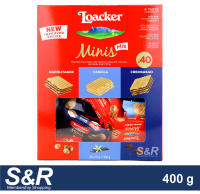
Loacker Minis Mix 400g
₱519.00
Buy on Lazada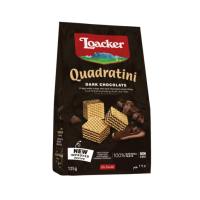
Loacker Quadratini Dark Chocolate Wafer 125g
₱153.00₱156.70
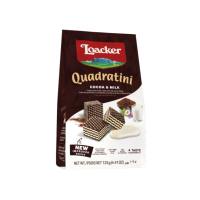
Loacker Quad Cocoa & Milk 125g
₱153.00₱156.70
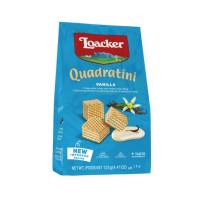
Loacker Quadratini Vanilla Wafer 125g
₱149.00₱156.70
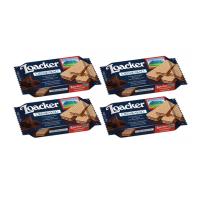
Loacker Cremkakao Chocolate Wafer 45g - pack of 4
₱210.00₱214.40
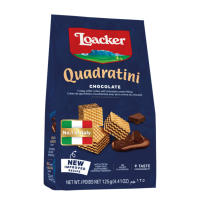
Loacker Quadratini Chocolate Wafer 4.41oz (125g)
₱145.00₱147.80
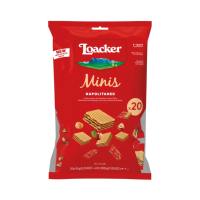
Loacker Minis Napolitaner Wafer 200g
₱311.00₱317.20
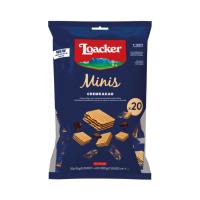
Loacker Minis Kakao Wafer 200g
₱301.00₱317.20
About Loacker
Overview
Loacker is an Italian confectionery manufacturer best known internationally for its thin, crisp wafer biscuits filled with cream, as well as chocolate and other wafer-based specialties. Founded in 1925 in Bolzano, South Tyrol, by pastry chef Alfons Loacker, the company has remained family-owned across three generations. Its corporate identity is closely tied to its Alpine origins, traditional craftsmanship, carefully selected ingredients, and specialized expertise in wafer production 1.
Today, Loacker operates as a global food brand with products available in more than 110 countries. In 2025, marking its centenary year, the Loacker Group reported €488 million in turnover, produced approximately 1.05 billion individual items, and sold about 37,510 tonnes of product 2.
Corporate profile
| Category | Information |
|---|---|
| Brand | Loacker |
| Company | A. Loacker AG / Loacker Group |
| Founded | 1925 |
| Founder | Alfons Loacker |
| Place of origin | Bolzano, South Tyrol, Italy |
| Current headquarters | Auna di Sotto / Unterinn, South Tyrol, Italy |
| Industry | Confectionery / packaged food |
| Main specialties | Wafers, wafer biscuits, chocolate specialties |
| Ownership | Family-owned |
| Manufacturing sites | Auna di Sotto, Italy; Heinfels, Austria |
| International presence | 110+ countries |
| 2025 turnover | €488 million |
| 2025 production | ~1.05 billion items |
| Main brand association | Alpine/South Tyrolean wafer confectionery |
The company’s headquarters and principal production facility are situated at approximately 1,000 metres above sea level, offering views of the Dolomites and Mount Sciliar. Loacker regards this mountain environment as integral to its brand identity 3.
History
Origins in Bolzano
The history of Loacker began in 1925 in Bolzano (Bozen), South Tyrol. Founder Alfons Loacker was a pastry chef who had worked in a local pastry shop from a young age before purchasing the establishment and founding his own bakery in 1925 4.
Alfons developed the “Bolzano wafer” (cialda di Bolzano), an extremely thin, crisp wafer layered with cream. While the concept was straightforward, it held significant commercial potential. His objective was to create a product that retained the quality and appeal of fresh pastry while being more convenient to store and consume 5. This innovation became the foundation of the Loacker brand.
Modern positioning remains connected to this original concept: simple wafer, high-quality cream, and pastry-making expertise. Rather than starting as a mass-market industrial biscuit manufacturer, Loacker originated as a traditional pastry business that gradually adapted its expertise for industrial-scale production.
Early development and packaging
Between approximately 1925 and 1940, Loacker began producing packaged wafers. Early growth relied on Alfons’s pastry skills and his personal selection of ingredients. According to company records, the products gained popularity, allowing the business to expand gradually 6.
The transition from fresh pastry to packaged wafer products was pivotal. It enabled Loacker to move beyond a local pastry shop model and develop a product suitable for transport and sale outside its immediate geographical market.
Second generation and modernization
Loacker remained a family enterprise as the founder’s children joined the business. In 1958, Armin Loacker became production manager after training as a pastry chef and gaining experience abroad. Ten years later, his sister Christine Loacker joined to oversee administration and distribution 7.
This generation was instrumental in transforming Loacker from a traditional bakery into a modern manufacturing company. Armin Loacker, in particular, focused on technological and product development, guided by the principle: “Only if you use the best will you obtain the best.” This emphasis on ingredient quality became a recurring theme in the brand’s identity 8.
A major turning point occurred in the 1960s when Loacker acquired its first automated wafer oven, substantially increasing production capacity. The company also developed improved packaging to preserve freshness and crispness, which are defining characteristics of wafers 9. During this period, Loacker developed specialized capabilities in wafer baking, cream filling, layering, cooling, packaging, freshness preservation, and large-scale production.
Relocation to the Dolomites
In 1974, Loacker relocated its bakery to Auna di Sotto/Unterinn, near Bolzano, at an altitude of approximately 1,000 metres 10. This location became one of the most recognizable aspects of the brand.
The company strongly associates itself with South Tyrol, the Alps, the Dolomites, a clean mountain environment, quality ingredients, and natural goodness. Nearby Mount Sciliar/Schlern serves as an important visual symbol. Consequently, Loacker’s packaging and advertising frequently feature Alpine landscapes rather than relying exclusively on conventional confectionery imagery 11. The mountains are incorporated into the corporate narrative and positioning rather than serving as mere decoration.
International expansion
Over subsequent decades, Loacker expanded beyond South Tyrol and northern Italy by developing sophisticated production and distribution systems. A second production site was established in Heinfels, East Tyrol, Austria, also located at approximately 1,000 metres altitude 12.
This dual-site strategy reinforces a distinctive geographical identity combining South Tyrol, East Tyrol, and Alpine manufacturing. This differentiates Loacker from many multinational confectionery brands whose identities rely primarily on specific products or celebrity characters.
Third generation
In 1996, Alfons Loacker’s grandchildren—Ulrich, Andreas, and Martin—joined the family business, continuing the tradition into the third generation 13. This transition allowed Loacker to balance preserving its traditional family-business identity with continued international and technological expansion. The company frames this approach as a combination of tradition and innovation.
Product portfolio
While strongly associated with wafers, the Loacker portfolio encompasses a broader range of confectionery.
Core products
The primary category is wafer biscuits, typically consisting of very thin wafer sheets, layers of cream, multiple wafer-and-cream layers, and chocolate or cocoa components in selected varieties. Products are available in both individual and multipack formats. Recognizable product families include Classic, Quadratini, Gardena, and various chocolate specialties.
Flavour profile
Classic flavour profiles revolve around ingredients such as vanilla, hazelnut, chocolate/cocoa, coconut, coffee, lemon, and other specialty creams. The company highlights hazelnuts, cocoa, vanilla, and milk as particularly significant ingredients 14.
Brand identity and differentiation
Loacker’s competitive identity rests on several key pillars.
Wafer specialization
Unlike diversified confectionery groups, Loacker has built a strong reputation specifically around wafers. The company states that it became the world’s leading wafer manufacturer in 2016 15.
Alpine identity
The Dolomites are central to the brand. The headquarters at Unterinn sits at roughly 1,000 metres above sea level, and the surrounding landscape forms part of Loacker’s visual and emotional identity 3.
Family ownership
Loacker emphasizes its status as a family business. Its history is presented as a succession of generations rather than the story of a corporation acquired by a larger conglomerate.
Ingredient positioning
The brand maintains a relatively simple, premium-oriented positioning based on ingredient selection. The underlying philosophy is that good ingredients combined with precise craftsmanship result in a superior wafer.
Concept of “Goodness”
A recurring concept is “Goodness is a choice.” In this context, “goodness” extends beyond taste to encompass product quality, family values, authenticity, responsible sourcing, and environmental and social responsibility 16.
Visual language and marketing
Loacker has developed a distinct visual identity. The Dolomites and Mount Sciliar are perhaps the most distinctive elements. The red Loacker logo is typically displayed prominently against a clean, bright background. Packaging photography generally emphasizes physical product characteristics such as crisp wafer layers, cream filling, hazelnuts, chocolate, and vanilla. This strategy aims to communicate taste and quality visually without overly complicated graphics.
The Gnometti
A notable element of brand history is the use of the Gnometti, small gnome-like characters that served as brand ambassadors beginning in the 1980s. These characters contributed to Loacker’s market leadership in Italy by adding a playful personality and reinforcing Alpine associations 17.
Loacker Cafés
Loacker has revisited its historical roots through Loacker Cafés. The first location opened at Brenner in 2007, returning the company toward its original pastry-shop concept 18. This creates a circularity in the company’s history, moving from a 1925 pastry shop to an industrial manufacturer and global brand, and finally back to a physical confectionery experience. This demonstrates that Loacker is not exclusively a packaged-food company but also utilizes retail experiences to reinforce its heritage.
Global operations
Loacker products are sold in more than 110 countries 19. According to current corporate information, the largest markets by turnover include:
- Italy
- United States
- Saudi Arabia
- Israel
- China
The international strategy generally retains the European/Alpine identity when entering foreign markets. In many regions, the association with South Tyrol, the Alps, and Italian confectionery serves as a premium provenance story.
Manufacturing
Loacker operates two principal production facilities:
- Auna di Sotto, South Tyrol, Italy: Headquarters and main production site.
- Heinfels, East Tyrol, Austria: Second production site.
Both locations align with the company’s Alpine manufacturing philosophy 21. Production at this scale requires sophisticated industrial technology alongside precise control over wafer thickness, baking, filling, and packaging. The ability to consistently manufacture a technically demanding product is considered a core strength.
Sustainability and innovation
Environmental initiatives
Sustainability is an increasingly important component of corporate strategy. Loacker uses electricity from certified wind and water sources and has generated solar energy at its Unterinn site since 2011. A photovoltaic system was added at Heinfels in 2021 22. The company also recovers waste heat from the baking process at its manufacturing facilities 23.
Ingredient sourcing
Sourcing programs have been established for key ingredients including hazelnuts, cocoa, vanilla, and milk. These programs aim to support farming communities and encourage environmentally respectful agricultural practices. New recipes are stated to be non-GMO 24.
Technological innovation
Loacker continues to invest in advanced production technology. In collaboration with Bühler, the company developed OptiBake, an inductively heated wafer oven designed to eliminate direct emissions during baking and potentially reduce energy consumption by up to 50%. The first unit entered testing at the Heinfels plant in 2025 25.
Benefit Corporation status
In 2025, Loacker officially registered as a Benefit Corporation. This move integrates social and environmental well-being into long-term business strategy 26. The sustainability framework addresses governance, corporate culture, economic performance, employee welfare, resource efficiency, and environmental protection 27.
Centenary and business scale
The year 2025 marked Loacker’s 100th anniversary, celebrating its evolution from a small Bolzano pastry shop to an international confectionery company 15. Few food brands maintain such a direct connection between their original product concept and their modern portfolio.
For 2025, the company reported:
- €488 million in group turnover
- 1.05 billion items produced
- 37,510 tonnes sold
- €271 million from exports
- Operations in over 110 countries
These figures indicate a scale significantly larger than a niche artisanal confectioner, yet more specialized than diversified global food conglomerates.
Ownership and management
Loacker remains a family business spanning three generations:
- Alfons Loacker
- Armin & Christine Loacker
- Ulrich, Andreas & Martin Loacker
This model allows the company to present its century-long history as a continuous narrative of a family making the same kind of product for 100 years, which is distinct from a purely corporate timeline.
Market positioning
Loacker occupies a specific position in the confectionery market, neither purely mass-market nor purely luxury.
| Dimension | Loacker’s position |
|---|---|
| Price | Mid-to-premium |
| Product | Wafer/confectionery |
| Origin | South Tyrol / Italy |
| Brand personality | Natural, Alpine, family-oriented |
| Product image | Premium but accessible |
| Main strength | Wafer expertise |
| Emotional territory | Alpine goodness |
| Main consumption occasion | Everyday indulgence/snacking |
| Global positioning | European premium confectionery |
This positioning allows Loacker products to appear in ordinary supermarkets while maintaining a premium image.
Factors in longevity
Several factors contribute to the brand’s enduring success:
- Focused hero product: Identity is anchored in the wafer category.
- Strong provenance: Association with the Alps provides a narrative absent in generic brands.
- Consistency: Consumers recognize the texture, filling, packaging, logo, and Alpine imagery.
- Family heritage: The 1925 origin story provides authenticity.
- Identity retention: Global expansion has occurred without abandoning South Tyrolean roots.
- Manufacturing expertise: Consistent large-scale production of thin, crisp wafers is technically difficult and represents a meaningful specialization.
Unlike typical biscuit brands that offer varied snacks, Loacker positions itself as a specialist in wafers. The brand has effectively transformed a simple product into a universe involving the Alps, family tradition, ingredients, technology, quality, and sustainability.
References
- Our history | Loacker
- The Story of a Family | Loacker
- Company Information | Loacker
- 100 years anniversary initiatives announcement | Loacker
- About us | Loacker
- Goodness is a choice | Loacker
- La nostra storia | Loacker
- Family Story – LoackerUSA
- The Story of a Family | Loacker
- Update 2024First-handraw materials Why a sust
- Sustainability | Loacker
- Sustainability becomes concrete | Loacker
- Benefit Corporation and Technology Center | Loacker
- Loacker (Süßwaren) | AustriaWiki im Austria-Forum
- 100 years anniversary activities | Loacker
- Notre histoire | Loacker
- Company Information | Loacker
- Unsere Geschichte | Loacker
- Company Information | Loacker
- About us | Loacker
- ロアカーの歴史 | ロアカー (ローカー)〖Loacker〗
- Sustainability – sustainable packaging | Loacker
- Headquarters and production site Auna di Sotto/Italy | Loacker
- Sustainability | Loacker
- L’histoire d’une famille | Loacker
- Die Geschichte einer Familie | Loacker
- 家族の物語 | ロアカー (ローカー)〖Loacker〗
- Geschichte einer Familie