Shop on Lazada
Loctite products
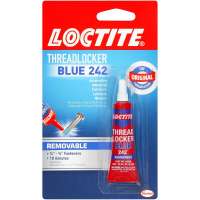
Loctite Heavy Duty Threadlocker 0.2 oz Blue 242 Single
₱514.91₱540.00
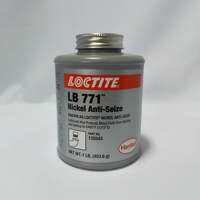
Loctite LB Nickel Anti-Seize (1lb.)
₱3,006.00
Buy on Lazada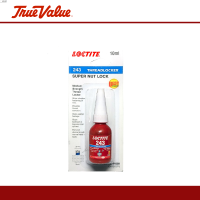
Loctite 243 Medium Strength Thread Locker
₱499.00
Buy on Lazada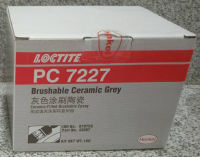
LOCTITE PC 7227 NORDBAK BRUSHABLE CERAMIC GRAY 1 KG KIT Wear Prevention Coating is a low friction brushable easy-to-use epoxy resin system that offers protection against turbulence chemical attack abrasion and corrosion. High gloss low friction.
₱12,500.00
Buy on Lazada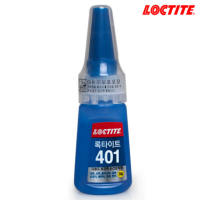
Loctite 401 Multipurpose Instant Adhesive 20g – Super Strong Fast-Bond Glue for Metal Stone Plastic Wood & Rubber | 20-Second Cure High Strength Transparent Formula
₱418.00
Buy on Lazada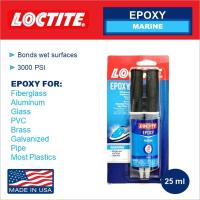
Loctite Epoxy Marine 25 ml - 64797
₱975.00
Buy on Lazada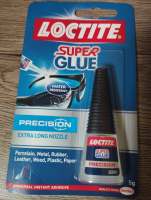
Loctite REG Super Glue Liquid Type 5g (Long Nozzle)
₱256.00₱300.00
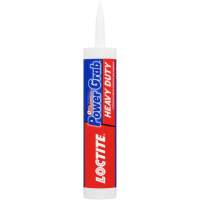
Loctite Power Grab Express Heavy Duty Construction Adhesive 9 fl oz 1 Cartridge
₱1,878.00
Buy on LazadaAbout Loctite
Overview
Loctite is a major global brand specializing in adhesives, sealants, threadlockers and surface-treatment technologies. Originally developed in the United States around a breakthrough in anaerobic adhesive chemistry, Loctite grew from an industrial solution for preventing bolts and machine parts from loosening into a broad technology brand serving both professional industries and consumers. Today, it is owned by the German chemical and consumer-goods company Henkel.1
Henkel describes Loctite as the world’s leading brand for adhesives, sealants and surface treatments.
| Attribute | Information |
|---|---|
| Brand | Loctite |
| Industry | Adhesives, sealants, surface treatments and specialty chemicals |
| Origin | United States |
| Founded | 1953 |
| Founder / inventor | Professor Vernon K. Krieble |
| Original breakthrough | Anaerobic threadlocking adhesive |
| Parent company | Henkel |
| Henkel acquisition | 1997 |
| Markets | Industrial, automotive, electronics, aerospace, construction, maintenance, consumer/DIY and others |
| Known for | Threadlockers, super glues, structural adhesives and sealants |
| Global presence | Products marketed internationally, with Henkel describing Loctite as present in more than 130 countries |
History
Origins in the 1950s
The story of Loctite begins with Professor Vernon K. Krieble, a chemist associated with Trinity College in Hartford, Connecticut. In the early 1950s, Krieble and his son Robert worked on a new type of adhesive designed to solve a problem that conventional mechanical engineering could not easily eliminate: nuts and bolts loosening because of vibration.
Their solution was an anaerobic adhesive—a liquid material that remains relatively stable in the presence of air but cures when air is excluded, particularly in the confined space between closely fitted metal surfaces. This allowed the adhesive to occupy the microscopic gap between threaded fasteners and prevent them from loosening.
The technology was commercialized through the American Sealants Company, founded in Connecticut. The company subsequently became Loctite Corporation; Henkel’s historical timeline records a 1956 presentation of “Loctite, the liquid locknut,” while Henkel describes the brand as founded in 1953.2
The name “Loctite”
The name is essentially a combination of “lock” and “tight.” It reflected the original purpose of the technology: keeping threaded mechanical components locked tight despite vibration and mechanical stress. Henkel continues to associate the brand’s essence with this concept.
Expansion into industry
The original threadlocking technology gave Loctite a foothold in industrial maintenance and manufacturing. Instead of relying solely on mechanical locking mechanisms, engineers could use chemistry to improve the reliability of mechanical assemblies.
By the 1960s, Loctite was expanding its technology portfolio. Its products were used in areas such as automobiles, machinery and manufacturing, where preventing fasteners from loosening or fluids from leaking could improve reliability and reduce maintenance.
The super glue connection
Although threadlocker is central to Loctite’s industrial heritage, many consumers know the brand primarily because of super glue.
Super glue is based on cyanoacrylate chemistry. The technology has a different origin from Loctite’s original anaerobic threadlockers.
In 1942, chemist Harry Coover encountered cyanoacrylate while working on materials for precision optical equipment. The material initially appeared unsuitable for the intended application because it bonded surfaces extraordinarily well. Coover later recognized its potential as an adhesive. Commercial super glue followed, and Loctite subsequently developed cyanoacrylate adhesives under its brand.
This distinction is important: Loctite did not originally begin as a “super glue company.” Its foundational technology was anaerobic threadlocking adhesive. Super glue became an important part of the brand’s portfolio later.
Acquisition by Henkel
A major turning point came in 1997, when Henkel acquired Loctite Corporation.
Henkel had already taken a minority stake in Loctite earlier, with its historical materials noting Henkel’s shareholding beginning in 1985. Full acquisition came in 1997.3
The acquisition combined:
- Loctite’s expertise in high-performance adhesive technologies
- Henkel’s global manufacturing and distribution network
- Henkel’s research and development capabilities
- Access to a much larger international industrial customer base
Loctite retained its identity as a major brand while becoming part of Henkel’s Adhesive Technologies business.4
Today, Loctite is one of Henkel’s most important brands and is described by Henkel as one of its iconic brands.
Product portfolio
“Loctite” is not one type of glue. It is a large family of adhesive, sealing and surface-treatment technologies. Its portfolio includes several major categories.
Threadlockers
This is arguably the product category most closely associated with Loctite’s industrial heritage.
Threadlockers are applied to threaded fasteners such as bolts, screws, nuts and studs. They cure between the metal surfaces and help prevent loosening caused by vibration and mechanical loads.
Different formulations are designed for different levels of holding strength and service requirements. For example, Loctite markets blue threadlocker products designed for applications where fasteners need to resist vibration while still being removable with conventional tools.5
Instant adhesives and super glues
These are generally cyanoacrylate adhesives designed for rapid bonding. They are commonly used for household repairs, hobbies, electronics, small components, plastics, rubber, metal, wood and other materials, depending on formulation.
Loctite offers both consumer-oriented and professional instant adhesive formulations.6
Structural adhesives
Structural adhesives are designed to create strong, durable bonds capable of carrying significant loads. Depending on the chemistry, these can include epoxies, acrylic adhesives, hybrid adhesives, light/UV-curing adhesives and other specialized formulations.
These products are particularly important in industrial manufacturing, where adhesives can sometimes replace or supplement conventional mechanical fastening methods.
Sealants
Loctite also produces sealants designed to prevent leakage of fluids, gases, lubricants, hydraulic media, threaded connections, pipe connections, flanges and other mechanical interfaces.
This makes Loctite particularly important in maintenance, repair and operations (MRO).
Gasketing and flange sealing
Some Loctite technologies form or replace conventional gaskets. They can be used on mechanical assemblies where surfaces need to be sealed against liquids or gases.
Construction adhesives
The consumer side of Loctite extends into construction and home improvement. Products include construction adhesives designed for bonding materials such as wood, concrete, stone, metal, plastics, panels and molding.
The consumer portfolio also includes spray adhesives and specialty repair adhesives.7
Major technologies
One of Loctite’s defining characteristics is that it is fundamentally a chemistry and materials-technology brand, rather than simply a glue brand.
Its technology portfolio includes:
- Anaerobic adhesives
- Cyanoacrylates
- Epoxy adhesives
- Acrylic adhesives
- Silicone technologies
- Urethane technologies
- Hot-melt adhesives
- UV/light-curing adhesives
- Threadlocking technologies
- Thread and pipe sealing technologies
- Surface treatments
This broad technical base allows Loctite products to be engineered for very different environments—from a household repair to an automated factory assembly line.8
Industrial applications
Industrial Loctite is much broader than the products typically seen in hardware stores.
Henkel says Loctite solutions are used across hundreds of industries and applications. Historically, these have included sectors such as automotive, aerospace, electronics, energy, medical technology, agriculture and manufacturing.
Automotive
Loctite products can be used for threadlocking, engine assembly, sealing, vibration resistance, component bonding, and maintenance and repair. Automotive applications were an important early market for Loctite.
Aerospace
Aerospace manufacturing places exceptionally high demands on materials because components may encounter vibration, temperature extremes, pressure, chemicals and weight constraints. Specialized adhesives and sealants can therefore play an important role in aircraft and aerospace component manufacturing.
Electronics
Modern electronics increasingly rely on adhesives rather than traditional mechanical fastening for certain applications. Loctite technologies can be used for component bonding, encapsulation, protection, thermal management, assembly and precision bonding.
Medical devices
Loctite has also developed specialized adhesive technologies for medical-device manufacturing. In 2025, Henkel announced new LED-curable Loctite adhesives specifically intended for medical-device assembly.8
Manufacturing and machinery
This remains one of Loctite’s core areas. Factories use adhesive technologies to prevent fasteners from loosening, seal threaded connections, secure components, bond assemblies, protect surfaces and simplify maintenance.
Loctite and the DIY market
The brand has also developed a major consumer identity. For ordinary consumers, Loctite is often associated with quick repairs and super glue.
Its consumer products are positioned around activities such as repairing, installing, renovating, crafting and household maintenance. The consumer portfolio includes instant adhesives, construction adhesives, repair products, sealants and specialty adhesives.
This gives Loctite an unusual position: it operates simultaneously as a highly technical industrial brand and a household repair brand.
Engineering significance
The significance of Loctite is not simply that it makes strong glue. Its original innovation changed the way engineers could think about mechanical reliability.
Traditionally, a mechanical connection was primarily solved mechanically: use a bolt, nut, washer, locking mechanism, safety wire, etc. Loctite introduced another possibility: use chemistry to improve a mechanical connection.
An adhesive could fill microscopic gaps, lock threaded components, seal interfaces and reduce the effects of vibration. That concept became particularly valuable as machinery became more complex and manufacturers demanded greater reliability.
Henkel describes Loctite’s contribution as helping provide solutions that are durable, strong and long-lasting across demanding industrial applications.9
Brand positioning
Loctite’s positioning can be broadly summarized as performance, reliability, engineering and innovation. It is generally positioned above ordinary generic glue brands when the application requires a specifically engineered solution.
The brand’s industrial reputation is built around characteristics such as high strength, durability, reliability, resistance to vibration, precision, specialized formulations and engineering expertise.
Henkel describes Loctite as a global specialist in high-performance adhesives, sealants and surface treatments.
Loctite vs. “glue”
A useful way to understand the brand is that glue is a category, while Loctite is a technology portfolio. A typical consumer might buy “glue” simply to stick two objects together. Loctite, however, develops formulations for particular engineering problems.
| Problem | Relevant Loctite technology |
|---|---|
| Screw keeps loosening | Threadlocker |
| Threaded pipe leaks | Thread sealant |
| Two small parts need rapid bonding | Cyanoacrylate |
| Large components need structural bonding | Structural adhesive |
| Mechanical joint needs sealing | Gasket/flange sealant |
| Household object breaks | Specialty repair adhesive |
| Construction material needs permanent bonding | Construction adhesive |
| Electronic component needs precision bonding | Specialized industrial adhesive |
This specialization is one of the reasons Loctite has become an important industrial brand rather than simply another consumer glue manufacturer.
Global reach
Loctite has evolved from a small American technology company into a global brand. Henkel states that Loctite is marketed in more than 130 countries, while its products serve both industrial customers and consumers.
The brand’s industrial applications extend across numerous manufacturing sectors, while its consumer products are sold through hardware stores, home-improvement channels and other retail outlets in various markets.
Relationship with Henkel
Today, Loctite sits within Henkel Adhesive Technologies.
Henkel’s Adhesive Technologies business organizes its industrial portfolio around several major technology brands, including Loctite, Technomelt, Bonderite, Teroson and Aquence.
For consumers and craftsmen, Henkel also operates brands including Loctite, Pritt, Ceresit and Pattex.
Loctite therefore occupies a particularly interesting position within Henkel because it serves both B2B industrial customers and consumers.
Notable historical milestones
| Year | Milestone |
|---|---|
| 1953 | Vernon Krieble develops the foundation of Loctite’s anaerobic adhesive technology |
| 1956 | “Loctite, the liquid locknut” is publicly presented |
| 1958 | Commercial production of Loctite-associated super glue/cyanoacrylate products begins |
| 1960s | Loctite expands its industrial adhesive technologies |
| 1968 | Loctite enters the automobile market |
| 1970s | Super glue becomes an important consumer application |
| 1985 | Henkel begins its shareholding relationship with Loctite |
| 1997 | Henkel acquires Loctite Corporation |
| 2000s–2010s | Expansion of consumer, construction, specialty and industrial adhesive technologies |
| 2020s | Continued development in areas including electronics, medical devices and advanced manufacturing |
The dates vary somewhat depending on whether a source is referring to the invention, company formation, brand launch or commercial introduction; Henkel’s own historical sources, for example, distinguish the 1953 founding from the 1956 public presentation.2
Modern brand identity
The simplest way to describe modern Loctite is as a global engineering-adhesives brand that helps manufacturers, technicians and consumers bond, lock, seal and protect components.9
Its historical identity began with a very specific problem—preventing threaded fasteners from loosening—but the brand subsequently expanded into a much wider materials-technology portfolio.
The result is a brand that operates at two very different scales:
- Consumer Loctite: Small repairs, super glue, construction adhesive and household projects.
- Industrial Loctite: Automotive, aerospace, electronics, medical devices, machinery, manufacturing, maintenance and other demanding applications.
That combination is arguably the defining characteristic of the brand.
References
- Loctite – Adhesives, Sealants & Surface Treatments – Henkel
- About Loctite
- The Loctite story: A close-up of Henkel’s biggest brand
- Beyond the Loctite Brand
- Products
- Homepage
- Loctite
- Loctite adhesive expertise drives innovation in medical device manufacturing
- LOCTITE®Pulse: A smarter, simpler, safer and more sustainable maintenance solution