Shop on Lazada
Maidenform products
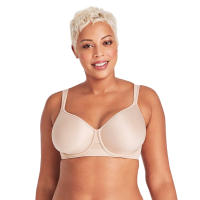
Maidenform Womens Passion For Comfort® Breathable Minimizer Underwire
₱3,650.00
Buy on Lazada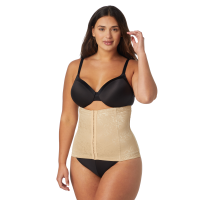
Maidenform Womens Instant Slimmer Waistnipper
₱2,225.00₱4,450.00
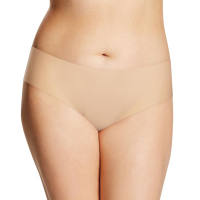
Maidenform Womens Flawless No Show Cheeky Hipster
₱1,650.00
Buy on Lazada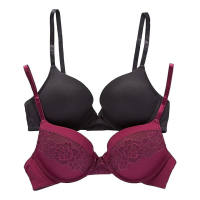
Maidenform Self Expressions Womens 2pk Push-Up Bra - Black/Galactic Red
₱2,125.00₱4,250.00

Maidenform Womens Lift Wirefree Bra
₱3,650.00
Buy on Lazada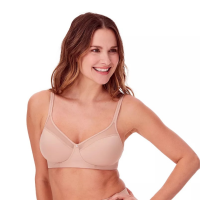
Bali® One Smooth U® Ultra Lite Spacer Wireless Bra - Nude
₱1,825.00₱3,650.00
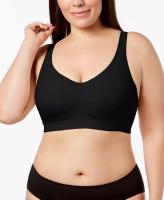
Comfort Revolution ComfortFlex Fit Shaping Wireless Bra BLACK
₱3,650.00
Buy on Lazada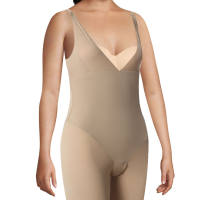
Maidenform Womens Open Bust Body Shaper
₱2,475.00₱4,950.00
About Maidenform
Maidenform is an American women’s intimate-apparel brand best known for bras, underwear, and shapewear. Founded in 1922, the brand has more than a century of history and is particularly notable for helping popularize the modern, fitted, uplift bra. Today, Maidenform is part of HanesBrands, whose intimate-apparel portfolio includes brands such as Hanes, Bali, Playtex, and Wonderbra.1
Overview
| Category | Information |
|---|---|
| Brand | Maidenform |
| Founded | 1922 |
| Origin | New York City, United States |
| Founders | Ida Rosenthal, Enid Bissett, and William Rosenthal |
| Industry | Intimate apparel |
| Main products | Bras, panties/underwear, shapewear |
| Parent company | HanesBrands |
| Historical significance | Pioneer of fitted and uplift bra design |
| Best-known advertising | “I Dreamed” campaign |
| Current positioning | Everyday bras, underwear, and shapewear focused on fit, support, smoothing, and comfort |
History
Origins: 1922
Maidenform’s story began with Enid Bissett’s dress shop, Enid Frocks, in New York City. Bissett worked with Ida Rosenthal, a Russian Jewish immigrant and seamstress, and Ida’s husband, William Rosenthal.
In the early 1920s, women’s fashion was strongly influenced by the Flapper aesthetic. The popular bandeau-style undergarments tended to flatten the bust to create the fashionable straight silhouette.
Ida and Enid believed that dresses could fit and look better if the undergarment provided more support and shaping rather than simply flattening the body. They modified the bandeau by gathering it in the center, creating greater separation and support. William Rosenthal subsequently helped refine the design by adding straps and other structural improvements.1
The resulting garment was called “Maiden Form,” a name deliberately contrasting with the fashionable concept of the “boyish form.” The bras were initially incorporated into dresses or given to customers with their dresses. Demand became strong enough that customers began asking to purchase the bras separately.2
Eventually, the brassiere business became more successful than the dress business, and the company shifted its focus almost entirely toward women’s foundation garments.
Early manufacturing
The business expanded into dedicated brassiere manufacturing, establishing operations in Bayonne, New Jersey, during the 1920s. In 1927, William Rosenthal became president and obtained patents covering several bra designs, including nursing, long-line, full-figure, and seamed uplift designs.3
This period was important because Maidenform helped move the bra away from being essentially a one-shape bandeau toward a garment designed around the individual contours of the body.
The company’s approach was particularly significant because fitted bras had previously been much more associated with custom-made garments. Maidenform helped bring shaped, supportive bras into mass-market manufacturing.
Maidenform and bra innovation
One of Maidenform’s most important contributions was its emphasis on shaping and uplift.
Rather than treating the bust as something that should simply be compressed, Maidenform’s designs aimed to support and emphasize the body’s natural shape. This philosophy became central to the brand’s identity.
William Rosenthal developed numerous patented designs, and Maidenform became associated with fitted cups, uplift construction, and increasingly specialized bras. By the late 1920s, the company was producing hundreds of thousands of bras annually.3
The company’s historical importance therefore goes beyond simply being an underwear manufacturer: Maidenform was one of the companies that helped establish the modern bra as a fitted, engineered garment.
World War II
During World War II, Maidenform adapted some of its manufacturing capabilities to support the U.S. war effort.
Among its wartime products were specialized “pigeon vests,” garments designed to carry messenger pigeons with paratroopers. The Smithsonian’s Maidenform collection documents the company’s wartime activities and production records.1
This unusual episode is an interesting part of Maidenform’s corporate history because it illustrates how apparel manufacturers were redirected toward military production during the war.
Advertising history
Advertising became one of Maidenform’s greatest strengths.
The “I Dreamed” campaign
Perhaps the most famous campaign in Maidenform’s history was “I Dreamed.”
Launched in 1949, the campaign depicted women wearing a Maidenform bra while appearing in imaginative, humorous, or fantastical situations. The advertisements typically presented the woman above the waist in a bra while the rest of the scene suggested an elaborate dream or fantasy.
The campaign continued for approximately 20 years, making it one of the longest-running advertising campaigns in advertising history. The Smithsonian describes it as a major part of Maidenform’s historical advertising collection.4
The concept was memorable because it transformed an advertisement for an undergarment into a story about fantasy, aspiration, confidence, and female identity.
Changing image of women
Maidenform’s advertising also evolved with American society.
In earlier decades, advertising often presented women primarily through domestic roles. By the 1960s and 1970s, Maidenform’s marketing increasingly portrayed women as independent and professionally active.5
This evolution reflects a broader change in the way women’s intimate apparel was marketed: from simply being a functional foundation beneath clothing toward becoming part of a woman’s identity, confidence, lifestyle, and self-expression.
Product evolution
Although Maidenform began primarily as a brassiere company, its product range expanded considerably over the decades.
Today, the brand’s major categories include:
- Bras — including everyday, T-shirt, wireless, full-coverage, and other styles.
- Underwear/panties — designed to coordinate with bras and provide everyday comfort.
- Shapewear — garments intended to smooth, shape, and support the body.
- Seamless and soft essentials — newer products emphasizing comfort and low-profile construction.6
The brand has therefore evolved from a specialist bra manufacturer into a broader intimate-apparel and shapewear brand.
Acquisition by HanesBrands
A major modern milestone came in 2013, when HanesBrands acquired Maidenform Brands.
HanesBrands announced the acquisition in October 2013 for approximately $583 million. The transaction brought Maidenform and related intimate-apparel brands, including Flexees and Lilyette, into the HanesBrands portfolio.7
This gave Maidenform access to the larger company’s manufacturing, distribution, retail, and marketing infrastructure.
Today, Maidenform remains a brand within the HanesBrands portfolio. HanesBrands has described Maidenform as a major shapewear brand and a longstanding name in bras, panties, and shapewear.8
Maidenform today
The modern Maidenform brand is considerably broader than the company that emerged in the 1920s.
Its current positioning centers on the idea that what a woman wears underneath her clothes can affect how the entire outfit looks and feels. The emphasis is on:
- Fit
- Support
- Smoothing
- Shaping
- Comfort
- Everyday wearability
- Confidence
The official Maidenform store currently organizes its offering primarily around bras, underwear, and shapewear, with an emphasis on everyday essentials and newer soft/seamless products.6
HanesBrands has also introduced M by Maidenform, a newer collection launched in 2023 and aimed at younger consumers, expanding the brand beyond its traditional image.8
Brand significance
Maidenform’s historical significance can be summarized in three areas.
1. It helped modernize the bra
Maidenform was part of the transition from relatively simple bandeau garments toward fitted, structured bras designed around individual body shapes.1
2. It pioneered memorable intimate-apparel advertising
The “I Dreamed” campaign became one of the most recognizable advertising campaigns associated with lingerie and foundation garments.4
3. It survived changing definitions of femininity
Across more than 100 years, Maidenform’s marketing moved from traditional ideas of femininity and domesticity toward representations of women as independent, active, professional, and confident. Its history consequently mirrors many changes in American fashion and women’s social roles.
Founders
Ida Rosenthal
Ida Rosenthal was a seamstress and one of the central figures behind Maidenform. Her understanding of garment construction and women’s clothing helped drive the company’s original innovation. She also played an important role in the company’s sales and business operations. The Library of Congress and PBS both highlight her role in the development of Maidenform and the modern fitted bra.
Enid Bissett
Enid Bissett owned the New York dress shop where the Maidenform story began. Her collaboration with Ida Rosenthal led to the development of the bra that eventually became the company’s defining product.1
William Rosenthal
William Rosenthal, Ida’s husband, helped refine the original design and later became president of the company. He was responsible for numerous patents involving bra construction and played a major role in turning Maidenform’s ideas into scalable manufacturing processes.3
Name and identity
The name Maidenform itself reflects the company’s original philosophy.
In the 1920s, the fashionable silhouette emphasized a youthful, relatively flat “boyish” figure. Maidenform positioned its product in opposition to that aesthetic, promoting a more naturally shaped and supported silhouette.1
That makes the name more than just a brand label: it captures the company’s original design philosophy of enhancing rather than suppressing the natural shape of the body.
Corporate timeline
| Year | Milestone |
|---|---|
| 1921 | Ida Rosenthal and Enid Bissett operate a New York dress business. |
| 1922 | Maiden Form is established around their innovative brassiere design. |
| 1920s | Dedicated brassiere manufacturing expands; operations move to Bayonne, New Jersey. |
| 1927 | William Rosenthal becomes president and patents multiple bra innovations. |
| 1930 | The company’s name becomes Maidenform Brassiere Company. |
| 1941–1945 | Maidenform participates in wartime production, including specialized pigeon vests. |
| 1949 | The famous “I Dreamed” advertising campaign begins. |
| 1949–1960s | “I Dreamed” becomes a major long-running advertising campaign. |
| Late 20th century | The company expands beyond bras into broader intimate apparel and shapewear. |
| 2013 | HanesBrands acquires Maidenform Brands for approximately $583 million. |
| 2023 | M by Maidenform launches, targeting younger consumers. |
| Today | Maidenform operates as a major bras, underwear, and shapewear brand within the HanesBrands portfolio. |
References
- Maidenform Collection | NMAH.AC.0585 | SOVA, Smithsonian Institution
- Maidenform Collection | Smithsonian Institution
- History of Maidenform, Inc. – FundingUniverse
- Maidenform Collection, 1922-1997 for project 29103 | Smithsonian Digital Volunteers
- Maidenform
- Maidenform Bras, Panties, and Shapewear
- HanesBrands Completes Acquisition of Maidenform Brands
- [Part I