Shop on Lazada
Maison Margiela products
![[AUTHENTIC] MAISON MARGIELA Beach Walk EDT Perfume 100ML | The Glow PH](https://ph-live.slatic.net/p/0a67a6b3dc1406fe64ea8dd149d95673.png_200x200q80.jpg)
[AUTHENTIC] MAISON MARGIELA Beach Walk EDT Perfume 100ML | The Glow PH
₱7,950.00
Buy on Lazada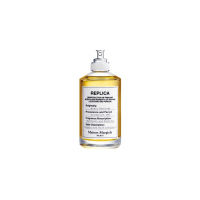
Official MAISON MARGIELA REPLICA LAZY SUNDAY MORNING / COFFEE BREAK Men Women EDT PERFUME SPRAY 100ML
₱3,339.15₱6,780.00
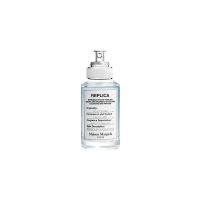
Official Genuine Maison Margiela Never Ending Summer / Sailing Day / Autumn Vibes 100ML EDT
₱2,790.00₱10,000.00

【100% AUTHENTIC PERFUME】Maison Margiela LAZY SUNDAY MORNING 100ml DISCOUNT EVENT Eau De Toilette
₱3,719.00₱6,000.00
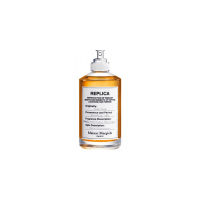
Official MAISON MARGIELA REPLICA JAZZ CLUB / BY THE FIREPLACE Men Women EDT PERFUME SPRAY 100ML
₱3,339.15₱6,780.00
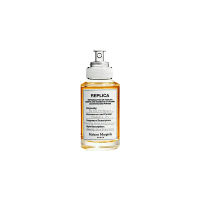
Official Dealer Maison Margiela Lazy Sunday Morning / By the Fireplace / Jazz Club 100ML EDT Special Sales
₱2,845.00₱9,000.00
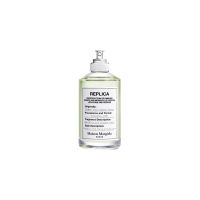
Official Dealer Maison Margiela When the Rain Stop Under the Lemon Trees Flower Morket 100ML EDT Special Sales
₱2,855.00₱9,000.00
Official Genuine Maison Margiela Never Ending Summer / Sailing Day / Autumn Vibes 100ML EDT
₱2,755.00₱10,000.00
About Maison Margiela
Maison Margiela, formerly known as Maison Martin Margiela, is a French luxury fashion house established in Paris in 1988 by Belgian designer Martin Margiela. The maison is recognised for its unconventional, deconstructive approach to fashion, its emphasis on anonymity, conceptual design, recycling and repurposing, and its deliberate rejection of many traditional conventions of luxury fashion.1
The house operates across haute couture (branded as Artisanal), ready-to-wear, footwear, leather goods, accessories and fragrances. Its visual identity is particularly associated with the Tabi split-toe shoe, four white stitches, numeric coding, the Bianchetto white-paint technique, exposed construction and anonymity.1 Today, Maison Margiela is regarded as one of the most influential avant-garde fashion houses of the late 20th and early 21st centuries.
Basic information
| Official name | Maison Margiela |
| Former name | Maison Martin Margiela |
| Founded | 1988 |
| Founder | Martin Margiela |
| Founded in | Paris, France |
| Founder nationality | Belgian |
| Industry | Luxury fashion |
| Products | Haute couture/Artisanal, ready-to-wear, footwear, bags, accessories, fragrances |
| Best known for | Tabi, deconstruction, anonymity, four stitches, numeric codes, Bianchetto |
| Artisanal haute couture membership | Permanent member since 2012 |
| Current identity | Parisian haute couture house |
| Official website | maisonmargiela.com |
Maison Margiela describes itself as a Parisian haute couture house founded in 1988 on ideas of nonconformity and the subversion of norms, treating fashion as a form of artistic expression.1
Founder: Martin Margiela
Martin Margiela was born in Belgium and became one of the most influential yet deliberately elusive designers of his generation. Before establishing his own house, he worked with Jean Paul Gaultier before founding his eponymous label in Paris in 1988.
Margiela was distinguished not only by his clothing but also by his attitude towards the fashion system. He resisted the notion that fashion should revolve around the personality of the designer. Unlike many luxury designers, he rarely appeared publicly, avoided conventional interviews and allowed the clothes and the collective identity of the house to take precedence over his own celebrity. Vogue has described this approach as a deliberate “shield of anonymity”.2
This philosophy became fundamental to Maison Margiela. Rather than following the traditional model of a celebrity designer driving a brand, the house sought to prioritise the maison, its ideas, the clothes and ultimately the wearer.
Philosophy
Maison Margiela was founded around the principle of nonconformity. The house questioned numerous assumptions surrounding fashion, including what constitutes luxury, why expensive clothing must look expensive, why designers require fame, why construction should be hidden, why old materials are discarded, why clothing must conform to conventional silhouettes, why imperfections are removed and why ordinary objects cannot become couture.
Consequently, Margiela frequently transformed ordinary, discarded or inexpensive objects into sophisticated fashion items. Early work included garments and accessories constructed from unconventional materials and found objects such as gloves, military surplus materials and salvaged everyday items.2 The result was a form of fashion that could be simultaneously intellectual, experimental, humorous, wearable, disturbing and beautiful.
Deconstruction
Deconstruction is perhaps the single most important concept associated with Maison Margiela. While traditional fashion tends to conceal garment construction, Margiela frequently did the opposite by exposing seams, linings, hems, padding, closures, stitching, pattern construction, unfinished edges and garment structure. The construction itself became part of the aesthetic.
The house describes this philosophy as exposing elements that are normally hidden and turning imperfections into artistic features.1 In this sense, Margiela did not simply design a jacket but rather explored the very idea of a jacket.
Anonymity
Anonymity is another defining characteristic of the maison. Historically, the house avoided placing the designer’s name prominently on its clothing, using labels featuring a series of numbers instead. The designer himself also eschewed the celebrity culture surrounding fashion.
This stood in radical contrast to the typical luxury model where brands are synonymous with their founders, such as Chanel with Gabrielle Chanel or Dior with Christian Dior. Margiela instead emphasised the collective house over the individual, operating on the philosophy that the clothes should become famous rather than the person who designed them. Anonymity eventually became an integral part of the brand’s mythology.
The Four Stitches
One of the most recognisable visual signatures of Maison Margiela is its four white stitches. These first appeared with the Spring/Summer 1989 collection and are usually positioned on the outside of a garment or accessory. Originally, they functioned to attach the interior label to the garment.1
Instead of hiding the label attachment, Margiela made it visible. The result became an instantly recognisable brand code where four white stitches signify Maison Margiela. The detail is deliberately understated, avoiding any large traditional logo.
Numeric coding
Introduced by Martin Margiela in 1997, the numeric coding system uses numbers to identify different product categories or lines within the house.1 Rather than simply displaying the brand name, the label presents a grid of numbers with the relevant number circled or marked.
This system reinforces the house’s preference for codes, anonymity and conceptual identity. It also functions as an insider language for those familiar with the brand.
The Tabi
The Tabi is arguably the product most representative of Maison Margiela. It is a split-toe shoe inspired by the traditional Japanese tabi sock, a design dating back centuries. Maison Margiela introduced its interpretation in 1988.1
For Martin Margiela’s first show, the traditional flat form was transformed into a heeled boot. The soles were dipped in red paint, leaving distinctive split-toe footprints on the runway.1 Over time, the Tabi has appeared as ankle boots, high boots, pumps, loafers, Mary Janes, ballet flats, sandals, sneakers and other footwear variations, remaining recognisable through its divided toe.
Vogue has described the Tabi as one of Margiela’s defining designs, noting that it eventually moved from an avant-garde niche into broader popular and celebrity culture.2 The Tabi serves essentially as Maison Margiela’s equivalent of a fashion signature.
Bianchetto
Bianchetto is a technique involving painting an object or garment white while deliberately leaving visible brush strokes. Instead of creating a perfectly uniform surface, the process emphasises traces of human intervention.
The technique was introduced in 1989 when Martin Margiela painted Salvation Army furniture for the house’s studio.1 As the object is used, scratched or worn, its history becomes visible. This aligns with Margiela’s fascination with time, imperfection, transformation and reuse.
Artisanal
Maison Margiela’s haute couture expression is called Artisanal. Rather than merely reproducing traditional couture techniques, Artisanal combines haute couture craftsmanship with experimentation, deconstruction, found materials and conceptual art.
The house describes Artisanal as its couture line, emphasising unique, delicately handmade pieces and radical experimentation. Maison Margiela has been a permanent member of the Chambre Syndicale de la Haute Couture since 2012.1 Artisanal collections are often closer to wearable sculpture than conventional luxury clothing, incorporating reconstructed garments, vintage materials, found objects, hand embroidery, unusual textiles, trompe-l’œil, sculptural construction, extreme draping, exaggerated silhouettes and deliberate imperfections.
Replica
The Replica line reflects Margiela’s fascination with reproducing existing garments and objects rather than inventing entirely new ones. This challenges the conventional luxury concept of originality.
A Replica garment may reproduce an existing vintage or everyday item while preserving its characteristics and adding information about its origin. This creates a paradox quintessential to the maison: an expensive designer garment designed to look like an ordinary old garment.
MM6
MM6 was introduced in 1997 as a separate line offering a more accessible alternative to the avant-garde main Maison Margiela line.2 Compared with the main house, MM6 generally adopts a more everyday and commercially wearable approach while retaining Margiela’s conceptual DNA. It has since become a significant component of the broader Maison Margiela universe.
Fragrance
Maison Margiela maintains an important fragrance division, best known for the REPLICA concept. REPLICA fragrances extend the brand’s fascination with memory and reconstruction into perfume.
Rather than merely describing ingredients, the concept evokes places, moments and memories. Fragrances might attempt to recreate the emotional impression of a beach, a café, clean laundry, a rainy morning or a summer evening. This makes fragrance another manifestation of Margiela’s interest in memory and reconstruction.
John Galliano era
In 2014, British designer John Galliano became creative director of Maison Margiela. His appointment was significant given his history as one of the most theatrical and narrative-driven designers in luxury fashion.
His work at Margiela combined the house’s existing principles of deconstruction, transformation, historical references and anonymity with a more dramatic, couture-oriented visual language. Vogue documented his arrival at the house in 2014.2 Galliano’s tenure proved particularly important for developing Maison Margiela’s modern haute couture identity, with his Artisanal collections becoming renowned for extraordinary transformations of existing materials and garments.
Maison Margiela today
By 2026, Maison Margiela continues to position itself as an unconventional Parisian haute couture house. Current house codes include Artisanal, anonymity, the Tabi and Bianchetto. The house highlighted these four codes in its 2026 MaisonMargiela/folders project, which used archival materials and exhibitions to examine the evolution of the house’s creative language.1
Fall/Winter 2026
The Fall/Winter 2026 collection represented an important contemporary chapter for the house. Presented in Shanghai, it marked the first time the maison held a show in China. The presentation brought together both ready-to-wear and Artisanal collections, exploring ideas of repurposing, flea-market objects, Edwardian silhouettes, thrift references and transformed materials.1
This demonstrates how the original Margiela philosophy continues to operate decades after the house’s founding: taking something familiar, dismantling it, reinterpreting it and giving it a new identity.
Distinction from traditional luxury
Maison Margiela is unusual because its luxury identity is often predicated on not looking conventionally luxurious. While traditional luxury brands emphasise expensive materials, recognisable logos, heritage, celebrity designers, polished finishing and exclusivity, Margiela emphasises anonymity, imperfection, recycled materials, exposed construction, conceptual ideas, unusual proportions, ordinary objects, deconstruction and humour. This distinction is why Margiela is frequently described as avant-garde.
Major codes
| Code | Meaning |
|---|---|
| Tabi | Split-toe footwear inspired by Japanese tabi |
| Four Stitches | Four visible white stitches identifying the house |
| Numeric Code | Number-based product-line identification |
| Bianchetto | White overpainting with visible brush marks |
| Artisanal | Couture-level handmade experimentation |
| Replica | Reproduction/reinterpretation of existing garments |
| Anonymity | Rejection of conventional designer celebrity |
| Deconstruction | Exposing and challenging garment construction |
| Upcycling | Transforming existing or discarded materials |
| Trompe-l’œil | Creating visual illusions through clothing |
These elements are not merely decorative trademarks; together they form the Margiela design language.1
Aesthetic
The Maison Margiela aesthetic can be summarised as deconstructed, intellectual, anonymous, experimental, minimalist, strange, playful, historical, anti-fashion and artistic. However, “minimalist” alone does not fully capture the brand. A more accurate description might be conceptual luxury disguised as something unconventional. A Margiela garment can appear simple from a distance yet reveal extreme complexity upon examination of its construction.
Cultural importance
Maison Margiela has exerted enormous influence on contemporary fashion. Its ideas helped popularise concepts such as deconstruction, upcycling, reconstructed clothing, visible construction, oversized silhouettes, anonymous branding, conceptual luxury, vintage reproduction, unconventional materials and fashion as artistic practice. Many contemporary designers have subsequently explored similar territory.
The house also demonstrated that a fashion brand could build a powerful identity without relying on a traditional celebrity designer persona.
Comparison with traditional luxury
| Traditional luxury | Maison Margiela |
|---|---|
| Logo | Four stitches / numeric codes |
| Designer celebrity | Designer anonymity |
| Perfect finishing | Deliberate imperfection |
| New materials | Reused materials |
| Hidden construction | Exposed construction |
| Conventional silhouette | Deconstructed silhouette |
| Status | Concept |
| Permanence | Transformation |
| Product | Idea |
| Fashion as commerce | Fashion as artistic expression |
This comparison illustrates why Maison Margiela occupies such a distinctive position within luxury fashion.
Pricing and value
The price of Margiela products is not determined solely by materials. Several factors contribute to its luxury positioning, including specialised craftsmanship, couture-level techniques, handwork, complex construction, limited production, research and development, archival references, design intellectual property, Parisian luxury positioning and brand heritage.
Ironically, Margiela sometimes deliberately makes expensive products look inexpensive, damaged, unfinished or ordinary. This contradiction is intrinsic to the brand’s appeal.
Core philosophy
At its essence, Maison Margiela questions what fashion is supposed to be. Rather than asking what should be made next season, it asks why clothing has to function in a particular way at all. This inquiry explains almost everything about the house, from the Tabi and four stitches to its anonymous designer, reconstructed garments, white-painted furniture, Artisanal couture and unusual runway presentations.