Shop on Lazada
Makeup Revolution products
makeup revolution conceal and fix translucent loose setting powder 13g
₱350.00₱1,050.00
makeup revolution blush and glow highlighter palette
₱330.00₱1,099.00
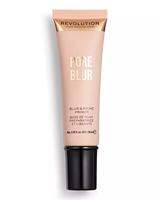
Makeup revolution pore blur primer 28ml
₱249.00₱899.00
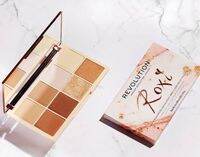
makeup revolution ROXI highlight and contouring powders
₱500.00₱1,699.00
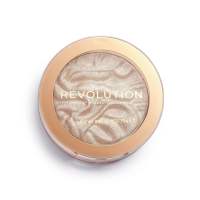
Makeup Revolution Highlight Reloaded Pigment Rich & Silky Formula Face Highlighter Cruelty-Free & Vegan Dare to Divulge
₱450.00
Buy on Lazada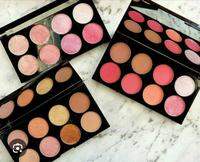
Makeup revolution blush palette 1.6g
₱450.00₱1,199.00
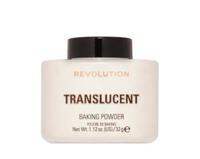
Makeup revolution translucent baking powder 32g
₱350.00₱999.00
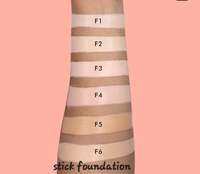
Makeup revolution foundation stick
₱280.00₱999.00
About Makeup Revolution
Makeup Revolution, frequently referred to as Revolution, is a British cosmetics and beauty brand established in 2014. It serves as the flagship mass-market label of Revolution Beauty Group plc, a London-based company founded by Adam Minto and Tom Allsworth. The brand was built on a core proposition: making fashionable, high-quality beauty products widely accessible through affordable pricing, extensive shade ranges, rapid product development, social-media-driven marketing, and cruelty-free formulations.1 Currently, Revolution functions as the group’s masterbrand, encompassing makeup, skincare, haircare, fragrance, and related categories. The company reports sales in 75 countries with over 14,000 retail locations and more than 300 employees worldwide.7## History
Foundation
Makeup Revolution was launched in 2014 by British entrepreneurs Adam Minto and Tom Allsworth. Rather than positioning themselves as a traditional premium house, the founders aimed to challenge the industry by producing innovative products at significantly lower price points. Their original concept focused on delivering “prestige-looking beauty without the prestige price,” operating on the belief that consumers should not need to spend large sums to access interesting formulations, trendy colours, or inclusive shade ranges.
The brand launched its website, RevolutionBeauty.com, in 2014 alongside a major retail partnership with Superdrug in the United Kingdom. Initially occupying small stands in approximately 100 stores, rapid sales growth enabled expansion to premium positions in around 800 Superdrug stores by 2018.6 This early combination of online retail and physical drugstore distribution became a cornerstone of the business model.
International expansion
Following its establishment in Britain, Revolution expanded globally. A significant milestone occurred in 2016 when the brand entered the United States market through an agreement with Ulta Beauty. By 2021, Revolution Beauty reported availability in approximately 11,000 stores across 45 countries. Current corporate figures indicate a further expanded footprint covering 75 global markets and more than 14,000 stores.7
Brand philosophy
The central tenet of Makeup Revolution is the democratization of beauty. Unlike traditional prestige brands that compete via luxury packaging and exclusivity, Revolution seeks to make new trends available to a broader consumer base. Its mission is defined as developing “incredible, cruelty free beauty for everyone,” emphasizing accessibility in both shade and price.1
Cruelty-free status
The company states that all products are cruelty-free and have never been tested on animals. This commitment is recognized through PETA certification.1 However, it is important to distinguish cruelty-free from vegan; while the brand is working to increase the proportion of vegan formulas, not every Revolution product is currently vegan.
Inclusivity and self-expression
Revolution has historically emphasized products for diverse skin tones. The Conceal & Define range, for example, was launched with 50 inclusive shades to address gaps in complexion offerings for deeper or unique skin tones. Furthermore, the brand promotes makeup as a tool for creativity, experimentation, and individual expression rather than solely as a means to conceal imperfections.
The “fast beauty” model
A defining characteristic of Revolution’s business strategy is its speed of product development. The company monitors beauty trends, social media conversations, and customer feedback to rapidly create responsive products. Revolution Beauty has stated that some items can move from concept to market in as little as 16 weeks. Often described as “fast beauty,” this approach mirrors fast fashion and follows a cycle of consumer trend identification, rapid development, launch, and feedback integration. This allows the brand to react quickly to viral TikTok products, new finishes, celebrity trends, and emerging ingredients.
Product categories
While makeup remains the core category, Revolution has expanded into a comprehensive beauty ecosystem.
Makeup
This category includes foundation, concealer, powder, blush, bronzer, highlighter, contour, eyeshadow, mascara, eyeliner, eyebrow products, lipsticks, lip gloss, lip liners, setting sprays, and tools. Official listings feature hundreds of SKUs across these sub-categories.
Skincare, haircare, and fragrance
The brand has developed skincare lines designed to complement its colour cosmetics, often featuring popular active ingredients. Haircare and fragrance have also been added to extend the brand beyond facial cosmetics. In 2024, Revolution Beauty announced a strategic simplification of its portfolio, reducing from seven brands and 11 categories to three brands and seven categories to concentrate resources on its strongest assets.2
Notable products
Several items have become synonymous with the brand:
- Conceal & Define Foundation and Concealer: These signature products combined low pricing, high coverage, and a vast shade range with strong social media visibility, establishing the brand’s reputation for accessible complexion products.
- Eyeshadow palettes: Revolution is widely recognized for affordable palettes ranging from neutral everyday sets to highly colourful themed collections, allowing consumers to experiment with trends without high financial commitment.
- Loose Baking Powder: The brand developed a significant presence in setting and baking products with this range.3
- 5D Extreme Extension Mascara: Highlighted by the company as one of its notable mascara innovations.
Marketing and collaborations
Social media platforms such as Instagram, YouTube, and TikTok have been fundamental to Revolution’s growth. Unlike legacy brands reliant on magazine advertising, Revolution built visibility through influencers, makeup artists, user-generated content, and online communities. The company describes itself as being “built by our community, for our community.”4
Licensed collaborations
A key marketing feature is the extensive use of licensed partnerships. Collaborations have included Disney, The Lion King, The Simpsons, Bratz, Friends, Grease, The Grinch, Coca-Cola, Love Island, Dr. Seuss, Elf, and Mean Girls. These partnerships transform cosmetics into collectible merchandise. For instance, Disney collaborations have featured eyeshadow palettes, lip products, and gift sets. Many of these collections are released as limited editions and may be discontinued after their promotional period.
Brand architecture
It is important to distinguish that Makeup Revolution is a brand, while Revolution Beauty is the parent group. Historically, the group operated multiple sub-brands including Revolution PRO, Relove, I Heart Revolution, XX Revolution, Obsession, and Planet Revolution. For example, XX Revolution was positioned as a premium-feeling line combining makeup with skincare-oriented formulations.
However, corporate strategy shifted in 2024. Revolution Beauty simplified its portfolio to three core brands: Revolution, Relove, and I Heart. Revolution was designated the group’s masterbrand, effectively incorporating Revolution PRO into the main line. Consequently, Revolution now serves as the primary consumer-facing masterbrand.
Parent company: Revolution Beauty Group plc
Makeup Revolution belongs to Revolution Beauty Group plc, a British publicly traded company founded in 2014. In July 2021, the group was admitted to the London Stock Exchange’s AIM market. At admission, it reported approximately £157.6 million in revenue for the 14-month period ending February 2021 and operations across five continents.
Following a period of strategic restructuring focused on profitability and operational efficiency, the 2024 annual report highlighted £191.3 million in group sales and the shift toward the Revolution masterbrand. Current company-reported figures cite £187 million generated income, operations in 75 countries, and 344 colleagues.7
Retail strategy
Revolution employs a multi-channel distribution model combining direct-to-consumer e-commerce with wholesale relationships. Key retail partners include Superdrug and Boots in the UK, and Ulta Beauty, Target, and Walgreens in the US, alongside various international chains.4 This strategy ensures that affordable products are encountered in ordinary retail environments rather than exclusively in specialist stores, reinforcing the brand’s accessibility proposition.
Market position
Makeup Revolution occupies a distinct space between drugstore cosmetics and prestige-inspired beauty. Its competitive advantage lies in combining trend-forward aesthetics, broad choice, low prices, and fast launches. It competes indirectly with brands such as e.l.f. Cosmetics, NYX Professional Makeup, ColourPop, Essence, Catrice, Wet n Wild, Maybelline, and L’Oréal Paris. Differentiation is driven less by proprietary technology and more by speed, breadth, digital marketing, and trend responsiveness.
Sustainability and ethics
Beyond its cruelty-free status, Revolution acknowledges the tension between fast beauty and environmental responsibility. The brand aims to reduce waste and carbon impact while maintaining rapid development cycles, describing its sustainability journey with the phrase “#progressnotperfection.” While vegan offerings are increasing, the long-term objective is to continue raising the percentage of vegan formulas across the portfolio.
Controversies
Like many rapidly expanding beauty brands, Revolution has faced criticism regarding accusations that certain products or packaging resembled those of competitors; the company has historically rejected claims of deliberate copying. Additionally, the wider Revolution Beauty Group has experienced corporate governance challenges, including senior leadership changes and shareholder issues involving Boohoo in 2023. These matters pertain to the parent group’s history and should be distinguished from the consumer-facing Makeup Revolution brand.
Significance
Makeup Revolution demonstrated how a young cosmetics company could challenge established players without relying on traditional luxury positioning. Its success reflects a broader industry transformation where beauty is increasingly driven by social media, influencers, and affordable experimentation. The name “Revolution” encapsulates its original commercial strategy: changing the economics of cosmetics by making beauty trends accessible to a much wider audience.5
References
- Makeup Revolution | Revolution Beauty Official Site
- Revolution Beauty
- Nosotros – Revolution Beauty London
- Revolution Beauty Expands Into Select Walgreens Stores And Online Nationwide – Revolution Beauty
- Revolution Bright Light Bronzing Drops – Revolution Beauty
- Revolution Beauty – You are the Revolution – Boots
- REVOLUTION BEAUTY | LinkedIn