Shop on Lazada
Maxus products
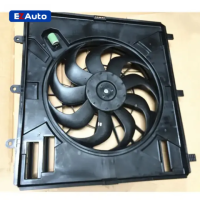
Maxus T60 Radiator Fan/2016-Present Model/C00051512/Cooling Fan/Car Fan Radiator/2017 2018 2019 2020 2021 2022 2023 T60 EZAuto
₱6,053.00₱6,588.00
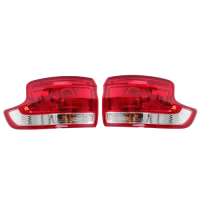
Maxus G10 Tail Light/2016-Present Model/Facelift/Tail Lamp/Back Light/Rear Lamp/Bumper Light/Bumper Lamp/2017 2018 2019 2020 2021 2022 2023 2024
₱14,808.00₱15,994.00
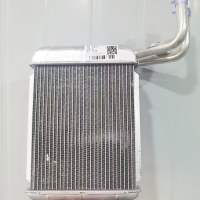
Maxus V80 Evaporator/Cooling Coil/V80/Engine Cooling/EzAuto
₱3,885.00₱6,928.00
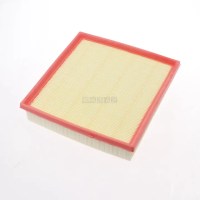
Maxus G50 Air Filter/2019-Present/Premium Sports/Air Conditioner Filter/2020 2021 2022 2023 2024 2025
₱497.00₱889.00
About Maxus
Maxus is a Chinese automotive brand owned by SAIC Motor Corporation Limited, one of the largest automobile manufacturers in China. The marque is particularly associated with commercial vehicles, vans, pickups, MPVs, SUVs, and electric vehicles. Although the modern Maxus brand was established in China in the early 2010s, its name and commercial-vehicle lineage are rooted in the former British LDV (Leyland DAF Vans) business and the original Maxus van model developed in the United Kingdom.1
Today, Maxus operates as an international brand under SAIC MAXUS Automotive Co., Ltd., with vehicles sold across markets in Asia, Europe, Oceania, Latin America, Africa, and the Middle East.1
Quick facts
| Details | |
|---|---|
| Brand | Maxus / MAXUS |
| Chinese name | 上汽大通 (SAIC Maxus) |
| Parent company | SAIC Motor Corporation Limited |
| Modern brand launched | 2011 |
| Corporate entity | SAIC MAXUS Automotive Co., Ltd. |
| Origins | British LDV commercial-vehicle heritage |
| Headquarters | Shanghai, China |
| Main focus | Commercial vehicles, MPVs, pickups, SUVs, EVs |
| Core philosophy | Technology, Trust, Ambition |
| Notable early model | Maxus V80 |
| Major markets | China and international markets |
| Current positioning | Global commercial and passenger-vehicle brand |
SAIC states that SAIC MAXUS Automotive Co., Ltd. was established on 21 March 2011 as a wholly owned subsidiary of SAIC Motor.
Origin of the name
The name Maxus has an unusually interesting history for a Chinese automotive brand. It did not originally originate with SAIC but was instead the name of a commercial van developed by British manufacturer LDV. Introduced in the 2000s, the original Maxus van became the foundation for the modern SAIC Maxus V80.
SAIC subsequently acquired the Maxus brand assets from LDV, allowing the name to continue under Chinese ownership. SAIC’s own historical account traces the lineage through the British commercial-vehicle industry, including Lancashire Steam Engine Company, Leyland, Freight Rover, Leyland DAF, and eventually LDV.
There are essentially two eras of Maxus history:
- British Maxus — the original LDV commercial van.
- SAIC Maxus — the modern Chinese-owned global automotive brand.
This dual heritage allows Maxus to legitimately describe itself as having British commercial-vehicle roots while operating as a Chinese automotive marque.
Historical background
1896–1907: British roots
SAIC’s historical account traces the brand’s distant roots to 1896, when James Sumner and Henry Spurrier established the Lancashire Steam Engine Company and began producing vehicles. The company subsequently evolved into Leyland Motors, becoming one of Britain’s major commercial-vehicle manufacturers.
Over the following decades, various corporate reorganizations created the chain of companies that eventually led to LDV. The broad lineage was:
Lancashire Steam Engine → Leyland → Freight Rover → Leyland DAF → LDV → Maxus → SAIC Maxus
This heritage is significant because Maxus has historically positioned itself much more strongly around commercial vehicles than around traditional passenger cars.
LDV and the original Maxus
In the 1990s, LDV Limited became an independent British commercial-vehicle manufacturer, producing vans such as the Pilot and Convoy primarily for the European market. In 2004, LDV introduced the Maxus, a new generation of large commercial van. SAIC’s historical material describes this vehicle as an important development in LDV’s history and identifies it as the predecessor of the later SAIC Maxus V80.
The original Maxus was designed around the needs of commercial operators, emphasizing cargo capacity, multiple body configurations, fleet use, passenger transportation, practicality, and modern commercial-vehicle engineering. However, LDV subsequently encountered serious financial difficulties.
SAIC acquisition
The major turning point came when SAIC Motor acquired LDV’s Maxus-related assets. This allowed SAIC to use the established Maxus name while developing a new generation of vehicles using its own engineering, manufacturing, and global resources. Rather than simply resurrecting the old British van, SAIC effectively turned Maxus into a new international automotive brand.
Maxus today is a Chinese-owned brand with British commercial-vehicle heritage, rather than a continuation of an independent British car company.
SAIC’s own history describes the acquisition of the Maxus brand assets in 2009 and the subsequent launch of SAIC’s Maxus V80 in 2011.
Modern era and expansion
2011: Birth of modern SAIC Maxus
The modern Maxus era officially began in 2011 when SAIC launched the Maxus V80. Based on the heritage of the original LDV Maxus but substantially developed and upgraded under SAIC, the V80 became the foundation of the new brand. The first V80 rolled off the production line in June 2011, entering the Chinese market later that year.
Strategically, SAIC intended Maxus to become an international commercial-vehicle marque capable of competing with established European and Japanese manufacturers, rather than merely another inexpensive Chinese van brand.
Expansion beyond vans
Initially heavily associated with large vans and light commercial vehicles, Maxus quickly expanded its range. The V80 served as the foundational model, available in configurations for cargo transportation, passenger transport, shuttle buses, ambulances, special-purpose vehicles, government fleets, and recreational vehicles. The model also helped establish Maxus in overseas markets, with SAIC reporting V80 usage in sectors including government, medical, education, postal services, and transportation.
Entry into the MPV market
The next major step was the G10 MPV, which debuted as a concept in 2013 and entered production in 2014. The G10 demonstrated that Maxus was no longer intended to be merely a van manufacturer. Targeting the broader MPV and passenger-vehicle market, it combined large interior space, passenger comfort, commercial-vehicle practicality, turbocharged engines, and luxury-oriented equipment. This marked Maxus’s transition from a specialist commercial-vehicle marque toward a full-range vehicle brand.
SUVs, pickups, and C2B philosophy
During subsequent years, Maxus expanded its portfolio to include pickups, SUVs, electric vehicles, and recreational vehicles. A key product was the D90, a large SUV introduced in the late 2010s aimed at customers seeking a conventional passenger SUV rather than a commercial vehicle.
The D90 also exemplified Maxus’s Customer-to-Business (C2B) development philosophy. Unlike traditional manufacturing where vehicles are pushed from manufacturer to customer, the C2B model reverses part of the process: customer requirements inform product definition and manufacturing. SAIC described Maxus as an early adopter of this model in China’s automotive industry, allowing customers to participate in product definition, configuration, feature selection, pricing, testing, and improvement. Hundreds of thousands of users reportedly participated in various stages of the D90’s development.
Brand identity
Philosophy
Maxus’s official brand philosophy centers on three pillars:
- Technology: Emphasizing technological development, intelligent vehicles, connectivity, and electrification.
- Trust: Prioritizing reliability and service, given the commercial and professional use of many Maxus products.
- Ambition: Reflecting the brand’s forward-looking goals. Older SAIC materials sometimes translate this value as “progress” or “effort,” reflecting different English translations of the Chinese terminology.
Logo
The Maxus logo features a distinctive three-arrow/triangle motif representing the brand’s core values. The geometric design conveys movement, forward progress, technology, cooperation, and dynamism, consistent with Maxus’s positioning as a modern global brand rather than a traditional Chinese commercial-vehicle manufacturer.
Product families
Maxus’s current international portfolio is substantially broader than its original V80-based range. The company groups its products into several major categories.1
Commercial vehicles
Current international examples include:
- eDeliver 3
- eDeliver 5
- eDeliver 7
- eDeliver 9
- Deliver 7
- Deliver 9
These models target cargo and fleet applications. The electric eDeliver family is particularly significant as Maxus increasingly positions itself as an electric commercial-vehicle manufacturer.
MPVs
The passenger-oriented MPV range includes:
- MIFA 7
- MIFA 9
- G70
- G90
- G50 Plus
- G10 (selected markets)
The MIFA range represents the premium end of the company’s passenger-vehicle strategy.1
Pickups
Maxus has become a significant pickup manufacturer with an international lineup including:
- T90
- T90 EV
- eTerron 9
The eTerron 9 exemplifies Maxus’s shift toward electrified pickups.1
SUVs and crossovers
The brand has produced SUVs such as the D60 and D90, helping to diversify its image beyond commercial vehicles.1
Electrification strategy
Electric vehicles are now central to Maxus’s strategy. The company entered the electric commercial vehicle segment relatively early with the EV80, which SAIC described as the first pure-electric wide-body light commercial vehicle sold in the European market.
Commercial vans are particularly suitable for electrification due to predictable fleet routes, depot returns, high daily mileage in urban delivery, reduced local emissions, and centralized charging capabilities. Consequently, Maxus developed electric products for logistics, delivery, and commercial fleets alongside private consumers. Today, the electric range spans vans, MPVs, and pickups.1
Global presence
Internationalization has been part of Maxus’s strategy since inception. By 2015, SAIC reported exports to 41 countries and regions. The current global site lists markets across Asia, Europe, Oceania, Africa, the Middle East, and Latin America, with separate regional product portfolios.1
Maxus is somewhat unusual among Chinese automotive brands because its international strategy has historically focused heavily on commercial vehicles, where fleet customers may be more receptive to specialized products.
Europe
Europe is particularly important due to Maxus’s British roots and commercial-vehicle expertise. Early success included government and fleet orders in countries such as Ireland, helping establish the brand in the European market. Electric vans have since become an increasingly important part of the European strategy.
Australia and New Zealand
Australia and New Zealand are key export destinations, with product offerings spanning commercial vans, pickups, passenger vehicles, and electric vehicles.
Philippines
Maxus previously had a notable presence in the Philippines, offering vans, MPVs, and SUVs. However, as of 2026, Maxus Philippines has concluded its vehicle sales and distribution operations in the country. The company continues to provide service and parts support through its Alabang Service Center during the transition period. Existing owners remain relevant to the service network, but new vehicle sales have ceased according to official local announcements.2
Corporate structure
Maxus is a wholly owned subsidiary of SAIC Motor Corporation Limited, a major Chinese automotive group with numerous businesses and joint ventures. The corporate structure is:
SAIC Motor Corporation Limited
↓
SAIC MAXUS Automotive Co., Ltd.
↓
MAXUS brand
This ownership provides Maxus access to SAIC’s engineering resources, manufacturing facilities, supply chain, R&D, software, electronics, global distribution, and financial backing. This support is a major competitive advantage compared to smaller independent Chinese vehicle manufacturers.
Market positioning
Maxus occupies a distinct position in the global automotive industry. Its historical DNA is strongly commercial, differentiating it from other Chinese marques:
| Brand | Historical strength |
|---|---|
| Maxus | Vans, commercial vehicles, pickups, MPVs |
| BYD | EVs, batteries, passenger cars |
| MG | Passenger cars, SUVs, EVs |
| Geely | Passenger cars, SUVs, technology |
| Foton | Commercial vehicles and trucks |
| JAC | Commercial vehicles and passenger vehicles |
Maxus attempts to position itself above the stereotypical image of a low-cost Chinese manufacturer by emphasizing European heritage, SAIC’s manufacturing scale, technology, safety, customization, international standards, and electric mobility. The strategy is to offer modern, well-equipped vehicles at competitive prices while leveraging SAIC’s scale.
Strengths
- Commercial-vehicle expertise: Considerable experience with vans and fleet-oriented vehicles stemming from the V80 era.
- SAIC backing: Access to significantly more resources than many smaller Chinese brands.
- Electric commercial vehicles: Accumulated experience valuable as cities introduce emissions restrictions.
- Broad product range: Coverage from small electric commercial vehicles to large MPVs, pickups, and SUVs.
- International orientation: Designed from the beginning as a global brand rather than solely a domestic marque.
Challenges
- Brand recognition: Lacks the decades-long consumer recognition of Toyota, Ford, Mercedes-Benz, or Volkswagen outside specific markets.
- Dealer and service networks: Limited networks can disadvantage commercial customers who prioritize uptime.
- Competition: Faces established manufacturers (Ford, Toyota, Mercedes-Benz, Volkswagen, Renault, Hyundai, Kia, Isuzu, Mitsubishi, Nissan) and expanding Chinese competitors.
- Resale value: Newer Chinese brands may face weaker resale values than established Japanese and European rivals in some markets.
- Market-by-market strategy: Product availability differs substantially by country; models available in Australia or Europe may not be offered in Southeast Asia.1
Significance in the Chinese auto industry
Maxus represents an early example of a Chinese automaker acquiring an internationally recognized foreign automotive name and transforming it into a global Chinese-owned brand. Its development illustrates a broader shift in China’s automotive industry from producing inexpensive domestic vehicles to acquiring international technology and heritage, developing products domestically, and competing globally.
Brand evolution timeline
- 1896: Lancashire Steam Engine Company founded
- Evolution: Leyland → Freight Rover → Leyland DAF → LDV
- 2004: Original LDV Maxus van launched
- 2009: SAIC acquires Maxus assets
- 2011: Modern SAIC Maxus established; V80 launched
- Subsequent launches: G10, EV80, G50, D60/D90, T-series pickups, MIFA MPVs, eDeliver/eTerron EVs
This history creates an unusual British-Chinese identity: the name’s heritage is British, while the present-day company, engineering, and ownership are Chinese.
Current status
As of 2026, Maxus functions as SAIC’s global commercial-and-passenger-vehicle marque, with electrification increasingly central to its strategy. The international catalogue spans commercial vehicles, MPVs, pickups, and SUVs, with electric versions growing across these categories.1 What began as a large-van brand has evolved into a comprehensive automotive business combining British heritage, Chinese ownership, SAIC technology, commercial-vehicle DNA, and a growing EV focus.