Shop on Lazada
Mitsubishi Electric products

Modification Snorkel For Mitsubishi Pajero Vehicles
₱2,504.00
Buy on Lazada
Subaru forester EJ20EJ25 Alternator I.C regulator A866x68472G mitsubishi electric
₱2,300.00
Buy on Lazada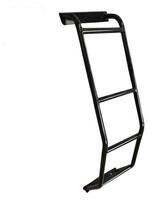
Rear Climbing Ladder
₱4,241.00
Buy on Lazada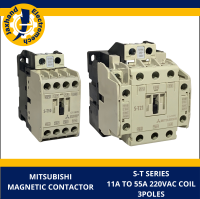
S-T Series Mitsubishi Magnetic Contactor 11A - 55A 3Poles 100% ORIGINAL AUTHENTIC *JAXHAND ELECTOMECH*
₱3,420.00
Buy on Lazada
Subaru Forester SGFA20FB20 Starter bendix drive M191X18971G oem brand
₱1,450.00
Buy on Lazada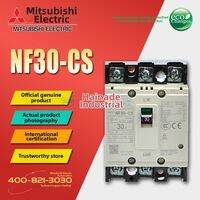
Mitsubishi Electric | Plastic Enclosed Circuit Breaker
₱1,570.00
Buy on Lazada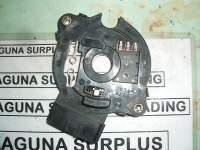
REFURBISHED Distributor Ignition Module for Mazda Mitsubishi Kia etc PARTNUM: J834A 7Z24
₱1,200.00₱1,950.00
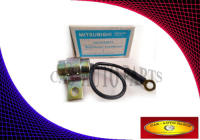
Distributor Condenser for Mazda Anfra Mitsubishi Galant Lancer Boxtype Mirage L300 gas
₱150.00
Buy on LazadaAbout Mitsubishi Electric
Overview
Mitsubishi Electric Corporation (三菱電機株式会社, Mitsubishi Denki Kabushiki-gaisha) is a major Japanese multinational manufacturer specializing in electrical and electronic equipment, industrial systems, infrastructure technologies, building systems, air-conditioning, home appliances, automotive equipment, semiconductors, and digital solutions. Founded in 1921 and headquartered in Tokyo, Japan, it is one of the core companies within the broader Mitsubishi corporate group.1
Although it shares the three-diamond logo and historical lineage with other Mitsubishi entities, Mitsubishi Electric is a separate company from Mitsubishi Motors, Mitsubishi Heavy Industries, Mitsubishi Corporation, and other Mitsubishi firms. These organizations share brand heritage but operate as independent corporations.
Corporate Profile
| Category | Information |
|---|---|
| Official name | Mitsubishi Electric Corporation |
| Japanese name | 三菱電機株式会社 |
| Romanization | Mitsubishi Denki Kabushiki-gaisha |
| Founded | January 15, 1921 |
| Headquarters | Tokyo Building, Marunouchi, Chiyoda-ku, Tokyo, Japan |
| President & CEO | Kei Uruma |
| Industry | Electrical & electronic equipment, industrial technology, infrastructure, HVAC, digital technology |
| Employees | 150,386 consolidated employees |
| FY2026 revenue | ¥5.895 trillion |
| Corporate slogan | “Changes for the Better” |
| Stock listing | Tokyo Stock Exchange |
| Parent/group relationship | Independent company within the broader Mitsubishi group |
As of March 31, 2026, the company reported consolidated revenue of ¥5.895 trillion, consolidated total assets of ¥7.358 trillion, and a workforce of 150,386 employees.2
Business Scope
Mitsubishi Electric operates primarily as a technology and engineering company rather than solely as a consumer electronics brand. Its portfolio encompasses everyday consumer products such as air conditioners, refrigerators, and home appliances, alongside specialized industrial and infrastructure systems including:
- Factory automation equipment
- Industrial robots
- Elevators and escalators
- Railway systems
- Power-grid equipment
- Satellites and space systems
- Defense-related systems
- Automotive electronic components
- Semiconductors and power devices
- Building-management systems
- Information and communications infrastructure
- Energy-management systems
- Digital and AI-related solutions
The company organizes its business structure into five major areas: Infrastructure, Industry & Mobility, Life, Business Platform, and Semiconductors & Devices.3 This extensive diversification is a defining characteristic of the corporation.
History
Origins in the Mitsubishi Group
The origins of the organization trace back to 1870, when entrepreneur Yataro Iwasaki established the business that eventually became Mitsubishi. Over subsequent decades, the Mitsubishi organization expanded into shipping, mining, banking, commerce, and shipbuilding, evolving into a collection of independent companies rather than a single entity.4 Mitsubishi Electric emerged directly from this industrial foundation.
Establishment and Early Development
Mitsubishi Electric was established on January 15, 1921. The company originated when Mitsubishi Shipbuilding spun off a factory in Kobe dedicated to manufacturing electrical equipment, specifically electric motors.5 Consequently, the company’s initial expertise was rooted in electricity, motors, industrial engineering, and electrical equipment.
Throughout the twentieth century, Mitsubishi Electric expanded from industrial electrical equipment into a broader range of technologies. Historical product developments included electric fans, televisions, refrigerators, elevators, electronic calculators, air-conditioning equipment, industrial control systems, semiconductors, display systems, and communications equipment.6 This diversification transformed the organization from a specialized equipment manufacturer into a large-scale technology conglomerate.
Expansion into Air Conditioning
Air conditioning has become one of Mitsubishi Electric’s most prominent business sectors. In 1954, the company established its Shizuoka Works for the specialized production of room and packaged air conditioners, later expanding into chillers, heat pumps, ventilation systems, and commercial HVAC.7
In 1968, Mitsubishi Electric introduced the KIRIGAMINE wall-mounted split-system air conditioner, which incorporated what the company states was the world’s first line-flow fan.8 HVAC technology subsequently became a key business driver in markets across Japan, Southeast Asia, Europe, North America, Australia, and the Middle East.
Globalization
Mitsubishi Electric progressively established international sales and operating organizations. Records indicate expansion into Thailand in 1971, followed by the United States and Australia in 1974, and Singapore in 1977.9 Global operations eventually developed into a comprehensive network of manufacturing facilities, R&D centers, sales subsidiaries, service organizations, and regional headquarters.10
Major Business Areas
Infrastructure
Mitsubishi Electric supplies technology for large-scale infrastructure projects, distinguishing it from typical consumer electronics brands. Key offerings include:
- Power systems
- Electrical-grid equipment
- Transportation and railway systems
- Public-utility systems
- Communication systems
- Social infrastructure
- Defense and space systems
Products in this sector range from individual electronic components to complete systems supporting railways, power networks, and national infrastructure.
Factory Automation
Factory Automation (FA) is a critical industrial business segment. Technologies include programmable logic controllers (PLCs), industrial robots, servo motors, inverters, human-machine interfaces, industrial computers, CNC systems, motion-control systems, sensors, and industrial networking. These solutions enable manufacturing facilities to automate production processes, positioning Mitsubishi Electric as a significant player in industrial automation.
Building Systems
The company is a major provider of building technologies, including elevators, escalators, air conditioning, ventilation, building-management systems, and energy-management systems. Elevators have been a key technological product since the company’s twentieth-century development.11 In modern facilities, Mitsubishi Electric technology often integrates HVAC, vertical transportation, electrical systems, and building management.
Air Conditioning and Home Appliances
This segment is the most visible to general consumers and includes residential air conditioners, commercial HVAC, heat pumps, chillers, ventilation systems, refrigeration equipment, and household appliances. Products are noted for technologies emphasizing energy efficiency, inverter control, quiet operation, airflow management, and heat-pump innovation.12
Automotive Technology
Mitsubishi Electric supplies various technologies to the automotive industry, including electric motors, power electronics, alternators, starters, vehicle control systems, sensors, and infotainment technologies. It is important to distinguish this business from Mitsubishi Motors; while they share historical heritage, Mitsubishi Electric focuses on electrical/electronic equipment and components, whereas Mitsubishi Motors manufactures automobiles.
Semiconductors and Electronic Devices
The semiconductor business operates upstream from typical consumer brands, producing power semiconductors, high-frequency devices, optical devices, power modules, and electronic components. These are utilized in electric vehicles, industrial equipment, renewable-energy systems, power supplies, consumer electronics, transportation, and communications infrastructure.
Space and Defense
Mitsubishi Electric maintains specialized aerospace and defense businesses involving satellites, satellite communications, radar, space-related electronics, defense systems, command and control systems, and tracking technologies. The infrastructure business officially categorizes defense/space systems alongside social and power systems,13 making the company part of Japan’s strategic high-technology sector.
Digital Technology
Moving beyond traditional hardware, the company has expanded into software, digital transformation, and integrated solutions. The Business Platform area covers IT infrastructure, security solutions, system integration, and digital services. Investments in AI and digital innovation aim to combine physical engineering capabilities with software and data technologies.14 This marks an evolution from a pure hardware manufacturer to a provider of hardware, automation, software, data, and integrated systems.
Corporate Philosophy
For many years, Mitsubishi Electric utilized the global corporate statement “Changes for the Better,” introduced in 2001 to signify a commitment to continuous improvement.15 In 2026, the company introduced a revised corporate philosophy with a new Purpose: “We create new possibilities for a better tomorrow, with bold vision and boundless innovation.” This philosophy is intended to guide decision-making as the company transforms into an “Innovative Company.”
Brand Identity and Logo
The Mitsubishi logo consists of three red diamonds, a symbol that predates Mitsubishi Electric itself. According to corporate history, the emblem has roots in the nineteenth-century Mitsubishi organization and is associated with the family crests of Yataro Iwasaki and the Yamanouchi family.16 The name Mitsubishi translates to “three diamonds” (mitsu meaning three, bishi meaning diamond or water chestnut). Mitsubishi Electric uses this symbol in conjunction with the wordmark MITSUBISHI ELECTRIC.
Relationship with the Mitsubishi Group
The modern Mitsubishi corporate world consists of independent companies with shared historical origins and business relationships, not a single controlling entity. Key independent companies include Mitsubishi Electric, Mitsubishi Heavy Industries, Mitsubishi Corporation, Mitsubishi Motors, Mitsubishi UFJ Financial Group, Mitsubishi Chemical Group, and Mitsubishi Estate. Mitsubishi Electric describes the modern group as a collection of independent companies active across diverse industries.17
Leadership and Governance
As of 2026, Kei Uruma serves as President and CEO. Uruma joined the company in 1982 and held various positions in public-utility systems and corporate strategy before assuming the top post in July 2021. Regarding governance, the company reports that a majority of its board members have been outside directors since fiscal 2022.18
Financial Scale
For the fiscal year ended March 31, 2026, Mitsubishi Electric reported the following financial results:
| Metric | FY2026 |
|---|---|
| Revenue | ¥5.895 trillion |
| Operating profit | ¥433.0 billion |
| Profit before income taxes | ¥526.0 billion |
| Net profit attributable to shareholders | ¥407.7 billion |
| Employees | 150,386 |
Revenue increased from ¥5.522 trillion in FY2025 to approximately ¥5.895 trillion in FY2026,19 reflecting its status as a multi-trillion-yen global industrial technology corporation.
Research and Development
R&D remains central to corporate strategy, spanning power electronics, automation, robotics, artificial intelligence, semiconductors, communications, space technology, transportation, energy, HVAC, digital systems, and advanced materials. Historical innovations range from early electrical machinery to semiconductor lasers, Diamond Vision display systems, and modern digital platforms.
Market Positioning
While sometimes grouped with Panasonic, Sony, Toshiba, Hitachi, and Sharp, Mitsubishi Electric possesses a distinct business profile focused heavily on industrial technology and infrastructure.
| Company | Primary Association |
|---|---|
| Mitsubishi Electric | Industrial automation, HVAC, infrastructure, elevators, power systems, electronics |
| Panasonic | Consumer electronics, batteries, appliances, automotive |
| Sony | Entertainment, cameras, gaming, electronics |
| Hitachi | Infrastructure, digital systems, industrial technology |
| Toshiba | Energy, infrastructure, electronic technologies |
| Sharp | Displays, appliances, electronics |
The brand image emphasizes engineering, reliability in infrastructure and industrial environments, advanced technology over lifestyle branding, energy efficiency, and continuous improvement.20
Presence in Thailand
Mitsubishi Electric has a significant operational history in Thailand, where Mitsubishi Electric Kang Yong Wattana (MKY) was established in 1971 as a sales and marketing organization. Thailand subsequently became a key manufacturing and commercial base for regional operations. The brand maintains high visibility in the country through air conditioners, home appliances, factory automation, industrial equipment, building systems, and electrical technologies.
Key Milestones
- 1870: Mitsubishi’s historical roots begin with Yataro Iwasaki’s business.
- 1921: Mitsubishi Electric Corporation is established.
- 1950s: Expansion into consumer electrical products and air conditioning.
- 1954: Shizuoka Works begins specialized air-conditioner production.
- 1960s: Expansion of air conditioning and advanced electronics.
- 1968: KIRIGAMINE air conditioner introduced.
- 1970s: International expansion including Thailand, the U.S., Australia, and Singapore.
- 1980s: Growth in advanced electronics, semiconductors, displays, and global markets.
- 1990s: Further internationalization and environmental technology development.
- 2001: “Changes for the Better” adopted as global corporate statement.
- 2010s: Increased focus on energy efficiency, automation, infrastructure, and global systems.
- 2021: Celebration of 100th anniversary.
- 2026: Introduction of new corporate philosophy; reporting of ¥5.895 trillion FY2026 revenue and 150,386 employees.21
References
- About Mitsubishi Electric | MITSUBISHI ELECTRIC Global website
- Corporate data | MITSUBISHI ELECTRIC Global website
- Annual Securities Report
- About Mitsubishi Electric | MITSUBISHI ELECTRIC UNITED STATES
- History | MITSUBISHI ELECTRIC Global website
- History of Mitsubishi Electric | MITSUBISHI ELECTRIC MEA
- History of our corporate logo | MITSUBISHI ELECTRIC Global website
- History
- History | Air Conditioning and Refrigeration Systems | MITSUBISHI ELECTRIC
- President’s Message | MITSUBISHI ELECTRIC Global website
- Directors & Executive Officers profiles | MITSUBISHI ELECTRIC Global website
- Leadership | MITSUBISHI ELECTRIC Global website
- Integrated Report | MITSUBISHI ELECTRIC Global Website
- KYE – Factsheet – The Stock Exchange of Thailand
- KYE – Factsheet – The Stock Exchange of Thailand
- 役員のプロフィール | 三菱電機 Mitsubishi Electric
- プロフィール | 三菱電機 Mitsubishi Electric
- ข้อมูลขององค์กร | Mitsubishi Electric ประเทศไทย
- Corporate Data | MITSUBISHI ELECTRIC THAILAND
- About Mitsubishi Electric | MITSUBISHI ELECTRIC MEA
- About Mitsubishi Electric | MITSUBISHI ELECTRIC MALAYSIA