Shop on Lazada
Moleskine products
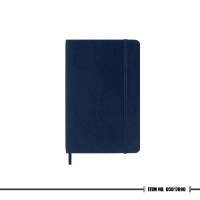
Moleskine Classic Notebook Soft Cover Ruled
₱2,179.00
Buy on Lazada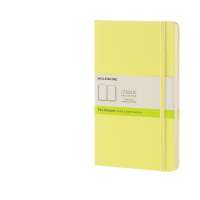
Moleskine Classic Hard Cover Plain Notebook (Citron Yellow)
₱1,290.00
Buy on Lazada
Moleskine The Lord of the Rings Aragorn Notebook
₱2,199.00
Buy on Lazada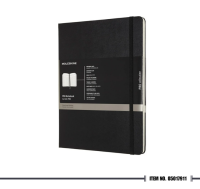
Moleskine PRO Notebook Hard Cover
₱2,519.00
Buy on Lazada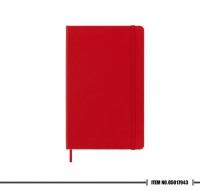
Moleskine Classic Notebook Hard Cover Ruled
₱2,009.00
Buy on Lazada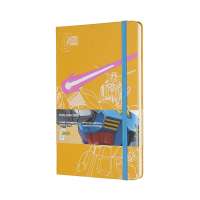
Moleskine Limited Edition Gundam Large Ruled Notebook (Yellow)
₱1,580.00
Buy on Lazada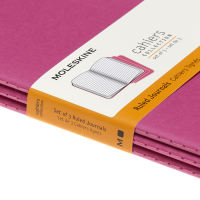
Moleskine Cahier Journal Notebook Set of 3 (Kinetic Pink)
₱1,370.00
Buy on Lazada
Moleskine Passion Journal - Movies & TV
₱2,649.00
Buy on LazadaAbout Moleskine
Brand Profile
Moleskine is an Italian-origin lifestyle and stationery brand best known for its iconic black notebooks, planners, journals, and writing products. Headquartered in Milan, Italy, it has evolved from a notebook manufacturer into a broader creative-lifestyle ecosystem encompassing paper products, writing instruments, bags, reading accessories, digital tools, limited editions, and creative experiences 1. The brand describes itself as a platform that “celebrates talent, champions originality and cherishes long-term thinking” 1.
| Category | Information |
|---|---|
| Brand | Moleskine |
| Company | Moleskine Srl |
| Origin | Milan, Italy |
| Established | 1997 |
| Original company | Modo & Modo |
| Founder / key creative figure | Maria Sebregondi and the Modo & Modo team |
| Headquarters | Milan, Italy |
| Best known for | Notebooks and planners |
| Product universe | Notebooks, journals, planners, writing instruments, bags, accessories, digital tools |
| Core idea | Creativity, handwriting, ideas, personal expression |
| Current ownership | D’Ieteren Group |
| Current status | Privately held subsidiary / brand within D’Ieteren |
| Official website | moleskine.com |
The Name “Moleskine”
The term “moleskine” predates the modern commercial brand. Historically, small black notebooks covered with a durable, oilcloth-like material were produced by French bookbinders and became associated with artists, writers, and travelers. The writer and travel author Bruce Chatwin played a pivotal role in popularizing the word. In his 1987 book The Songlines, Chatwin described the small black notebooks he had purchased in Paris as “moleskines” and documented the disappearance of the French manufacturer that produced them 23.
The original manufacturer closed in 1986, seemingly ending the notebook’s production. However, in 1997, the Milan-based company Modo & Modo revived the concept and registered Moleskine as a trademark, marking the beginning of the modern brand 3.
Historical Background
Pre-brand heritage
The modern Moleskine narrative deliberately connects the brand to an older tradition of notebooks used by creative figures. The company identifies Vincent van Gogh, Pablo Picasso, Ernest Hemingway, and Bruce Chatwin as part of the cultural lineage associated with this style of notebook 1. It is important to note, however, that the modern Moleskine company did not manufacture the specific notebooks used by these historical figures. Rather, the company positions its modern product as the heir or successor to the type of notebook associated with them 3.
Founding and relaunch
In the mid-1990s, Maria Sebregondi, then associated with the Milanese publisher Modo & Modo, proposed reviving the legendary notebook concept. The company aimed to give the object a cultural identity and narrative rather than simply manufacturing another blank notebook. In 1997, Modo & Modo relaunched the notebook under the Moleskine name 3. This strategic decision positioned the product not merely as stationery, but as a tool for ideas, creativity, journeys, and personal stories, allowing the brand to command a premium over ordinary stationery.
Timeline
- 19th–20th centuries: French bookbinders produce small, portable notebooks with dark, durable covers, which become associated with writers, artists, and travelers.
- 1986: The small family-owned manufacturer in Tours, France, closes. Bruce Chatwin later describes the disappearance of the notebook in The Songlines 1.
- 1987: Chatwin’s The Songlines is published, helping popularize the term “moleskine” in English-language culture 2.
- 1997: Milanese publisher Modo & Modo revives the notebook and registers the Moleskine trademark 3.
- Late 1990s–2000s: Moleskine expands internationally, establishing the notebook as a recognizable premium stationery brand.
- 2006: Modo & Modo is acquired by an investment group to support further expansion; the company subsequently becomes Moleskine Srl 2.
- 2013: Moleskine becomes a publicly listed company on the Italian stock exchange 4.
- 2016: Belgian investment group D’Ieteren acquires control of Moleskine, and the company is subsequently delisted from the Milan Stock Exchange 4.
- Today: Moleskine operates as a global creative brand with products spanning analog and digital creativity 3.
Product Portfolio
While notebooks remain the signature product, the modern Moleskine portfolio is considerably broader.
Notebooks
The classic Moleskine notebook serves as the foundation of the brand. Typical characteristics include hard or soft covers, an elastic closure, a ribbon bookmark, rounded corners, an inner pocket, and cream-colored paper. Available in multiple sizes and formats (plain, ruled, dotted, and squared), the classic black notebook functions almost as a visual logo for the brand.
Planners
The planner category extends the brand from creative expression into organization and productivity. Moleskine produces weekly, daily, monthly, academic, 12-month, and 18-month planners 1.
Journals and Writing Instruments
Moleskine offers specialized journals designed around particular activities and interests. Pens and other writing tools complement the notebooks, reinforcing the concept of a complete analog writing system.
Bags and Reading Accessories
Reflecting its historical association with mobility and creativity, Moleskine has expanded into bags and travel-oriented products. The company also offers accessories related to reading and personal knowledge management 1.
Moleskine Smart
Moleskine Smart bridges handwriting and digital technology through a “write on paper → capture/digitize → continue digitally” workflow. This initiative illustrates the brand’s effort to remain relevant in a digital-first world without abandoning its analog identity 1.
Limited Editions and Collaborations
Moleskine frequently creates special editions based on artists, writers, films, literature, popular culture, museums, and cultural properties. Current collections include collaborations related to franchises such as The Lord of the Rings and Alice’s Adventures in Wonderland 1.
Design Philosophy and Identity
The Iconic Notebook
The most recognizable Moleskine product is the small black hardcover notebook. Its design is intentionally restrained, emphasizing a minimal black cover, a small logo, rounded corners, an elastic closure, a ribbon bookmark, and compact proportions. This simplicity allows the notebook to function as a container for the user’s identity rather than imposing a strong identity of its own.
Brand Values
Moleskine’s philosophy centers on handwriting and creativity. The brand’s manifesto describes handwriting as a fundamental human form of expression 1. Core values include:
| Value | Meaning |
|---|---|
| Creativity | Ideas deserve a physical space |
| Originality | Encourage individual expression |
| Handwriting | Preserve the human act of writing |
| Mobility | Creativity can happen anywhere |
| Long-term thinking | Ideas and memories deserve preservation |
| Design | Everyday objects can be beautiful |
| Culture | Connect products with art, literature and ideas |
| Personal identity | The user transforms the object through use |
These values align with the brand’s positioning of the “blank page” as a space for possibility, where the brand supplies the object and the customer supplies the meaning 5.
Visual Identity
The visual identity is characterized by minimalism, black and cream tones, clean typography, simple geometric forms, and premium tactile materials. This design language communicates intelligence, creativity, and sophistication, positioning the brand as “quiet premium” rather than loud luxury. The distinctive silhouette of the black notebook, elastic band, and rounded corners often functions as a brand identifier even without prominent branding.
Market Positioning and Audience
Target Audience
Moleskine’s customer base extends beyond traditional stationery buyers to include writers, designers, artists, architects, students, entrepreneurs, professionals, journalers, travelers, and stationery enthusiasts. A Moleskine notebook simultaneously functions as a stationery product, a productivity tool, a lifestyle accessory, a creative object, and a personal archive.
Lifestyle Brand Strategy
Moleskine competes on meaning, identity, design, cultural association, and experience rather than solely on paper quality, price, or functionality. Consumers pay for the Moleskine experience and symbolism, which allows the brand to occupy a premium position in the stationery market. Storytelling is fundamental to this strategy; the brand adds a cultural narrative to a simple physical object (paper, binding, and cover), thereby generating emotional value.
Competitive Landscape
Moleskine competes across several overlapping categories:
- Traditional stationery: Paperblanks, Leuchtturm1917, Rhodia, Clairefontaine, Midori.
- Premium notebooks: Leuchtturm1917, Field Notes, Traveler’s Company, Smythson, Baron Fig.
- Productivity: Digital calendar apps, note-taking applications, digital planners, tablets, and styluses.
- Lifestyle/Design: Premium lifestyle brands selling objects based on design and identity.
The brand’s primary competitive advantage is brand meaning rather than technical specification.
Corporate Development and Sustainability
Ownership History
Moleskine’s corporate history has progressed through several stages:
- Modo & Modo: Created and relaunched Moleskine in 1997.
- Investment ownership: Supported international expansion during the 2000s.
- Public company: Listed in Milan in 2013.
- D’Ieteren: Acquired control in 2016 and took the company private 4.
Today, Moleskine Srl is headquartered in Milan and is identified as the trademark owner 1.
Retail Strategy
Moleskine operates through a global network combining direct retail stores, wholesale retailers, bookstores, stationery stores, department stores, e-commerce, and corporate/custom programs. Its physical stores serve to transform the brand from a single-product stationery label into a physical lifestyle environment 1.
Moleskine Foundation
The Moleskine Foundation is a nonprofit organization focused on creativity and education. It uses creative education to support marginalized young people and works with cultural and creative organizations globally, extending the brand’s philosophy into social change 1.
Sustainability
Under the concept of “Sustainable Creativity,” Moleskine connects creativity with responsible production and consumption. Sustainability initiatives address the brand’s reliance on paper, packaging, printing, materials, manufacturing, and transportation, integrating environmental responsibility into its broader value proposition 1.
Contemporary Status
As of 2026, Moleskine continues to position itself as a global creative ecosystem. Its portfolio includes notebooks, planners, Moleskine Smart, limited editions, and bags, while its website promotes cultural collaborations and creative collections 3. The central philosophy remains consistent with its founding principles: creativity, handwriting, mobility, design, and personal expression. Moleskine demonstrates how a simple object can become valuable when product design, cultural storytelling, emotional positioning, and consistent branding work together to transform a commodity into a premium cultural object.