Shop on Lazada
Monster High products
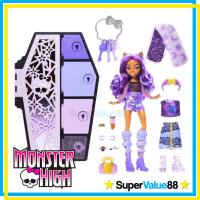
NEW Official Monster High Skulltimate Secrets Series 1 & 2 Fashion Dolls with 19+ Surprises - Frankie Stein Draculaura Clawdeen Wolf Lagoona Blue Cleo De Nile
₱4,295.75₱4,699.75
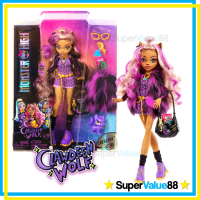
NEW Original Monster High Clawdeen Wolf Doll with Fun Accessories and Pet Generation 3 Articulated Posable Fashion Doll by Mattel
₱2,649.75₱3,999.75
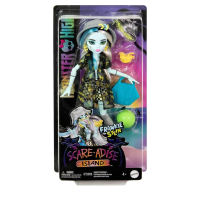
Monster High Scareadise Island Doll Asst
₱1,200.00₱1,999.00
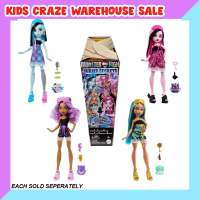
Monster High Buried Secrets Dolls and Accessories Cozy Creepover Theme with Mysterious Doll and 5 Unpack Surprises
₱1,000.00₱1,999.00
About Monster High
Monster High is an American fashion-doll and multimedia entertainment franchise owned by Mattel. Created by toy designer Garrett Sander, the brand debuted in 2010 and centres on a fictional high school attended by the teenage children of famous monsters, mythological creatures, and other supernatural beings 1.
Rather than depicting monsters solely as frightening figures, Monster High blends horror, gothic fashion, comedy, teen drama, friendship, and self-expression. Its core message celebrates being unusual rather than concealing it. Mattel describes the modern brand as championing individuality and self-expression through characters inspired by classic monsters 2.
Basic information
| Information | Details |
|---|---|
| Name | Monster High |
| Type | Fashion-doll / multimedia franchise |
| Created by | Garrett Sander |
| Owner | Mattel |
| Country of origin | United States |
| Debut | 2010 |
| Original medium | Fashion dolls |
| Primary setting | Monster High school |
| Main themes | Friendship, individuality, identity, acceptance, fashion |
| Genre | Fantasy, comedy, teen drama, horror-inspired |
| Major eras | Generation 1, Generation 2, Generation 3 |
| Current status | Active franchise |
| Major media | Dolls, web series, animated films/specials, TV series, live-action film, books, games and merchandise |
The first Monster High dolls were released in July 2010, following the franchise’s initial marketing launch earlier that year. The original concept was notable for Mattel because the company introduced the dolls before expanding the property into entertainment and other media 1.
Concept and premise
The fundamental premise of Monster High asks what would happen if the children of classic monsters attended the same high school. Consequently, Monster High serves as both the name of the school and the title of the franchise.
Students are teenage descendants or reinterpretations of figures from traditional monster stories, mythology, folklore, horror cinema, and popular culture. Key characters include:
- Frankie Stein — inspired by Frankenstein’s monster
- Draculaura — daughter of Dracula
- Clawdeen Wolf — werewolf
- Cleo de Nile — mummy
- Lagoona Blue — sea monster
- Deuce Gorgon — son of Medusa
- Ghoulia Yelps — zombie
- Abbey Bominable — yeti
- Toralei Stripe — werecat
- Spectra Vondergeist — ghost
- Robecca Steam — robot/steampunk-inspired character
These characters typically take a recognisable monster concept and reimagine it as a fashionable teenage personality. This duality is a defining characteristic of the franchise, which functions simultaneously as a monster universe and a teen-fashion universe.
Creation
The franchise originated with Garrett Sander, who began developing the concept at Mattel around 2007. Development continued for approximately three years before the brand launched publicly in 2010.
The project aimed to address a demographic gap between traditional children’s toys and teenage-oriented fashion. Mattel sought a property that would appeal to children beginning to outgrow conventional dolls. The resulting concept combined interests in classic monsters, horror movies, gothic aesthetics, fashion dolls, teenage social life, humour, supernatural mythology, and individuality.
Crucially, Monster High was conceived as a multimedia franchise from its inception rather than a doll line that later received a cartoon adaptation. Development of dolls, animation, books, websites, and other merchandise occurred concurrently.
Generation 1 era (2010–2016)
Fans commonly refer to the period from 2010 to 2016 as Generation 1 (G1). This era is most strongly associated with the original identity of Monster High.
Original dolls featured a distinctive aesthetic characterised by exaggerated fashion-doll proportions, colourful gothic clothing, elaborate hairstyles, monster-themed accessories, unusual skin colours, and physical traits such as fangs, stitches, scales, and scars. Many releases also featured high levels of articulation and a blend of cute, glamorous, and creepy design elements. The original packaging and character designs established the brand’s recognisable visual language, with early waves focusing heavily on Frankie Stein, Draculaura, Clawdeen Wolf, Cleo de Nile, Lagoona Blue, and Deuce Gorgon.
Main characters
Frankie Stein
Frankie Stein is one of the franchise’s principal protagonists and is based on Frankenstein’s monster. She is typically portrayed as energetic, optimistic, curious, and somewhat inexperienced. Her body features stitches and bolts reflecting her heritage. Frankie represents the idea that being assembled differently does not make someone defective.
Draculaura
Draculaura, the daughter of Dracula, is among the most recognisable characters. She is characterised by pink-and-black fashion, vampire aesthetics, an upbeat personality, and emotional sensitivity. Notably, she is vegetarian in the original continuity. Draculaura remains a central figure across multiple generations and is commercially significant to the franchise.
Clawdeen Wolf
Clawdeen Wolf is a werewolf known for her confidence, fashion sense, and ambition. Frequently aspiring to become a designer, her personality balances independence with loyalty to friends. Alongside Frankie and Draculaura, she forms one of the franchise’s most important character groupings.
Cleo de Nile
Cleo de Nile is a teenage mummy descended from ancient Egyptian royalty. Initially portrayed as glamorous, wealthy, and status-conscious, her personality develops significantly throughout the franchise. Her design incorporates Egyptian-inspired clothing, gold jewellery, bandages, and other mummy imagery.
Lagoona Blue
Lagoona Blue is a sea monster recognised for her friendly, compassionate, and athletic nature. Her design uses blue skin, fins, and aquatic details to establish her underwater heritage.
Deuce Gorgon
Deuce Gorgon is the son of Medusa. His most recognisable feature is his hair, which consists of snakes. He wears sunglasses because his family’s supernatural ability can turn people to stone. His relationship with Cleo de Nile is one of the franchise’s recurring romances.
Ghoulia Yelps
Ghoulia Yelps is a zombie distinguished by high intelligence and academic giftedness. In the original continuity, she communicates primarily through zombie-like sounds understood by other characters. She exemplifies the franchise’s tendency to transform conventional horror stereotypes into sympathetic teenage characters.
Monster High school
The school serves as the central location for much of the franchise. It is a fictional American high school where supernatural teenagers attend classes and navigate ordinary adolescent problems alongside their monster identities.
Students engage in typical educational and social activities including classes, exams, sporting events, dances, clubs, competitions, parties, friendships, and romantic relationships. However, these experiences are complicated by supernatural elements; for example, dating scenarios may involve vampires, werewolves, ghosts, or magical powers. The core formula combines ordinary teenage life, supernatural identities, fashion, and comedy.
Original web series
A 2D animated web series served as one of the first major entertainment components. Debuting on YouTube in 2010, it consisted of short episodes generally lasting only a few minutes and ran through 2015. This format allowed Mattel to introduce characters, promote dolls, establish relationships, tell concise stories, and reach children online, helping transform Monster High from a toy line into a recognisable fictional universe.
Books
Monster High expanded into literature, notably through a book series by Lisi Harrison. These books offered their own interpretation of the universe, focusing heavily on teenage relationships, school life, and social dynamics. The book continuity was not identical to the animated continuity, reflecting the franchise’s structure of multiple continuities rather than a single consistent canon.
Animated films and specials
The franchise produced numerous animated films and television specials, including New Ghoul at School, Fright On!, Why Do Ghouls Fall in Love?, Scaris: City of Frights, 13 Wishes, Freaky Fusion, Haunted, Boo York, Boo York, and Great Scarrier Reef. These productions enabled larger narratives and the introduction of new characters and doll lines. Films often functioned as part of the product strategy, featuring new characters, costumes, and accessories alongside or prior to corresponding doll releases.
Signature aesthetic
Monster High became distinctive through a visual identity that mixed aesthetics rarely combined in mainstream children’s dolls:
Gothic
Black clothing, skulls, bats, spiderwebs, coffins, and dark architectural elements are prevalent.
Horror
Characters draw directly from Frankenstein, Dracula, werewolves, mummies, ghosts, zombies, and other horror concepts.
Fashion
Elaborate outfits and accessories make clothing integral to character identity.
Cute and kawaii influences
Despite horror foundations, monsters are frequently rendered as cute, colourful, and glamorous.
Teen culture
Characters navigate relationships, school drama, hobbies, rivalries, and social lives.
This combination is essentially summarised as gothic horror, fashion dolls, and high-school drama.
Core message
Beneath the monsters and fashion lies a recurring social message: it is acceptable to be different. Stories treat characters’ differences as integral to their identity rather than flaws to eliminate. Themes include individuality, self-confidence, friendship, acceptance, overcoming stereotypes, respecting differences, finding identity, and refusing to conform. The famous slogan during the original era was “Be yourself, be unique, be a monster!”
Generation 2 (2016–2018)
In 2016, Mattel rebooted Monster High in an era fans call Generation 2 (G2). Characters received redesigned appearances, and the aesthetic became younger and more colourful to appeal to a younger demographic. Compared to G1, G2 featured brighter colours, simpler fashions, younger-looking designs, altered face sculpts, simplified articulation, a softer tone, and revised backstories. New animated material included Welcome to Monster High, which served as an origin story for the rebooted universe.
The reboot proved controversial among existing fans and did not replicate the commercial success of the original era. The main toy line was discontinued around 2018 1.
2020 revival
Monster High returned in 2020 through collector-oriented products. A key component was the Skullector line, which connected the fashion-doll format with recognisable horror properties. This demonstrated that the original aesthetic retained a substantial adult and collector audience, eventually leading to a broader relaunch.
Generation 3 (2022–present)
Generation 3 (G3) arrived in 2022 with another new continuity and redesigned characters. While retaining the central concept of teenage monsters attending Monster High, G3 made substantial changes to backgrounds, personalities, and relationships. The aesthetic is more colourful and contemporary than G1 while preserving recognisable monster motifs. This generation launched with both a new animated television series and a live-action musical film, premiering in 2022 through Nickelodeon-related distribution.
G3 animated series
The Monster High animated television series reimagined characters for a new audience while maintaining the basic school premise. Unlike the original web series, this version follows a conventional television format with longer episodes and ongoing narrative arcs. Substantial revisions to backgrounds and relationships make G3 a separate continuity rather than a continuation of G1.
Live-action film
Mattel and Nickelodeon released Monster High: The Movie, a live-action musical adaptation, in 2022, followed by Monster High 2. These films use a separate continuity and reinterpret characters in live action, marking the franchise’s evolution into an entertainment IP capable of supporting television movies and broader screen adaptations.
Generations compared
| Feature | G1 | G2 | G3 |
|---|---|---|---|
| Period | 2010–2016 | 2016–2018 | 2022–present |
| Tone | Gothic, edgy, comedic | Younger, softer | Colorful, contemporary |
| Main audience | Tweens + collectors | Younger children | Children + collectors/fans |
| Fashion | Detailed gothic fashion | Simpler/brighter | Colorful modern fashion |
| Continuity | Original universe | Rebooted universe | Rebooted again |
| Doll aesthetic | Highly stylized | Softer/younger | Updated proportions/designs |
| Media | Web series + films | Reboot films/animation | TV series + live action |
| Fan reputation | Classic/most influential | Controversial | Modern reinterpretation |
Fans commonly use G1, G2, and G3 as shorthand for these eras 3.
Dolls and collecting
Although Monster High is a multimedia franchise, dolls remain its foundation. Mattel’s current collection includes fashion dolls, playsets, pets, vehicles, Skulltimate Secrets dolls, collector dolls, accessories, styling products, and themed merchandise 2.
A significant collector market exists, particularly for older G1 dolls. Desirability is driven by discontinued production, character popularity, rare releases, convention exclusives, special editions, unusual accessories, original packaging, and condition.
Collector culture
Monster High developed an unusually strong collector community for a children’s fashion-doll brand. G1 dolls have become nostalgic objects for those who encountered the franchise during its original 2010s popularity. Mattel has responded with collector products and reproductions; for example, the Haunt Couture line revisited major G1 characters in premium designs, while Booriginal Creeproductions reproduced elements of original dolls and packaging. This created two overlapping audiences: children discovering Monster High for the first time, and adults returning through nostalgia and collecting.
Merchandise
Merchandise extends far beyond dolls to include clothing, backpacks, stationery, accessories, costumes, plush toys, cosmetics, fragrances, games, collectible figures, school supplies, home items, and playsets. Mattel’s current collection continues to offer dolls, playsets, accessories, vehicles, and collector products 2.
Spin-offs
Monster High’s success inspired other Mattel fashion and fantasy franchises. Ever After High, launched in 2013, focused on fairy tales, legends, and storybook characters rather than monsters. Enchantimals centred on human-animal hybrid characters. These properties demonstrated the business model Monster High helped establish: building a fictional universe around distinctive character designs and extending it across dolls, animation, books, and merchandise 1.
Factors in success
Monster High’s original success stemmed from several converging factors:
- Distinctive characters: Major characters had immediately recognisable concepts based on famous monsters.
- Strong visual identity: Dolls differed substantially from traditional fashion dolls.
- Fashion: Individual styles made dolls attractive as both toys and collectibles.
- Storytelling: Characters possessed personalities, relationships, and fictional histories.
- Humour: Extensive use of monster-related jokes and wordplay.
- Relatability: Supernatural creatures navigated familiar teenage experiences.
- Inclusivity: Emphasis on individuality and comfort with difference provided strong emotional identity.
- Multimedia expansion: Animation, books, games, and online content maintained visibility beyond the toy aisle.
Cultural identity
Monster High occupies a notable position in popular culture for normalising alternative and gothic aesthetics within mainstream children’s toys. Prior to Monster High, fashion dolls were often strongly associated with conventional beauty, glamour, and femininity. Monster High introduced a formula demonstrating that one could be fashionable, feminine, glamorous, weird, creepy, colourful, and unconventional simultaneously. Characters with blue, green, purple, or grey skin; stitches, fangs, scales, wings, or horns were presented as fashionable protagonists rather than villains.
Legacy
Monster High became one of Mattel’s most important original toy franchises of the 2010s. Published accounts indicate it reached approximately $1 billion in value in its third year, with annual sales exceeding $500 million at its early peak 1.
Its influence is evident in the popularity of fashion dolls with darker aesthetics, the use of horror imagery in children’s entertainment, multimedia toy franchises, collector-oriented fashion dolls, nostalgia-driven revivals, character-driven design, and gothic fashion in mainstream children’s products. The franchise also demonstrated that a toy brand could create a substantial fictional universe without originating as a film or television property.
Fictional philosophy
At its heart, Monster High inverts the traditional monster story. In classic horror, the monster is the outsider; in Monster High, everyone is a monster, so nobody has to be the outsider. Frankie need not hide her stitches, Draculaura need not cease being a vampire, and Clawdeen need not stop being a werewolf. Their differences are fundamental to their identities, serving as metaphors for the adolescent experience of being different.