Shop on Lazada
Mothercare products
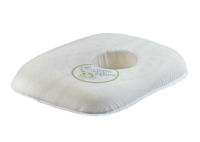
Little Zebra Latex New Born Pillow
₱1,495.00
Buy on Lazada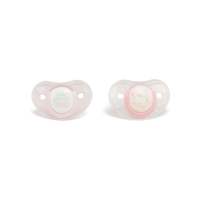
Mothercare Orthodontic Soothers - 2 Pack (6+ months)
₱349.00
Buy on Lazada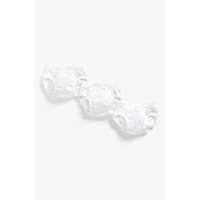
Mothercare White Trainer Pants (Medium) - 3 Pack
₱1,099.00
Buy on Lazada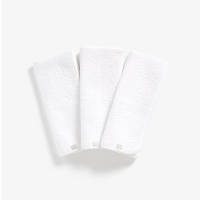
Mothercare Changing Mat Liners - 3 Pack
₱849.00
Buy on Lazada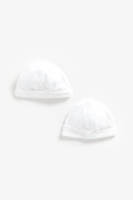
Mothercare White Hats - 2 Pack
₱399.00
Buy on Lazada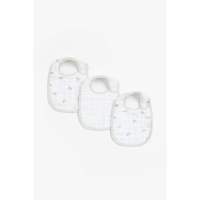
Mothercare Muslin Velcro Newborn Bibs - 3 pack
₱699.00
Buy on Lazada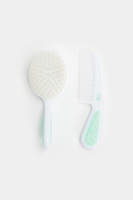
Mothercare Brush and Comb Set
₱299.00
Buy on Lazada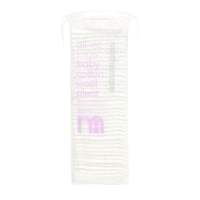
Mothercare Cotton Pleat - 150g
₱249.00
Buy on LazadaAbout Mothercare
Mothercare is a British-origin global brand specializing in products for expectant mothers, babies, young children, and parents. Founded in the United Kingdom in 1961, it began as a specialist retailer selling maternity clothing, pushchairs, and nursery furniture. Over the following decades, Mothercare developed into a well-known parenting and children’s brand, expanding internationally through franchise partnerships.1
Today, Mothercare is no longer primarily a directly operated UK retail chain. Following the administration of its UK retail business in 2019, the company reorganized around Mothercare Global Brand Limited (MGB), focusing on brand ownership, product design, sourcing, licensing, and international franchise partnerships.2
Overview
| Field | Information |
|---|---|
| Brand name | Mothercare |
| Origin | United Kingdom |
| Founded | 1961 |
| Founders | Selim Zilkha and Sir James Goldsmith |
| First store | Surrey, England |
| Industry | Retail / consumer goods / parenting |
| Main customers | Expectant mothers, parents, babies and young children |
| Core categories | Maternity, baby clothing, children’s clothing, nursery, feeding, bathing, travel and play |
| Business model today | Global brand owner, designer, sourcing business and franchisor |
| Parent company | Mothercare plc |
| Brand-owning subsidiary | Mothercare Global Brand Limited |
| Stock market | London Stock Exchange/AIM |
| Heritage | British |
| International model | Primarily franchise partnerships |
| Global footprint | Hundreds of stores and e-commerce sites across numerous countries |
Mothercare’s corporate materials describe it as a global specialist brand that designs, sources, and supplies products for parents and young children. Its current network is operated primarily through franchise partners rather than company-owned stores.3
History
1961: Foundation
Mothercare was founded in 1961 by Selim Zilkha and Sir James Goldsmith. The first store opened in Surrey, England. The original concept was relatively focused: providing specialist products for mothers-to-be and families with young children. The initial product range included pushchairs, nursery furniture, and maternity clothing. The company subsequently expanded into children’s clothing and a much broader range of products for parents and children.4
1962: Mail order
Only a year after opening its first store, Mothercare began a mail-order business, an early indication of its ambition to serve customers beyond its physical retail locations.5
1968–1972: Expansion and listing
In 1968, Mothercare expanded its clothing proposition to children up to approximately five years old, eventually extending the range to children up to eight. Mothercare became a publicly listed company in 1972, marking an important stage in its corporate development.6
1980s: Corporate expansion
During the 1980s, Mothercare became part of a much larger retail group structure. Mothercare merged with Habitat in 1982, creating Habitat Mothercare plc. In 1986, Habitat Mothercare merged with British Home Stores (BHS), resulting in Storehouse plc.7 This period transformed Mothercare from a standalone specialist retailer into part of a major British retail conglomerate.
1990s: International development
Mothercare increasingly pursued international growth during this decade. Its first international franchise store opened in Kuwait in 1983, followed later by expansion into markets including Malaysia, Hong Kong, Singapore, Russia, and other parts of Europe.8 The franchise model became particularly important because it allowed Mothercare to expand its brand internationally without having to operate every store itself.
In 1996, Mothercare acquired Children’s World from Boots and subsequently rebranded the stores as Mothercare World.9
2000s: Refocusing and acquisitions
In 2000, the BHS business was sold to Philip Green, while Storehouse returned to the Mothercare name. Around this period, Mothercare increasingly focused on its specialist position in parenting and children’s products.10
Mothercare acquired Early Learning Centre (ELC) in 2007 for approximately £85 million. ELC was a complementary children’s brand specializing in toys and educational products, and the acquisition broadened Mothercare’s proposition beyond basic baby and nursery products.11 In 2010, Mothercare also acquired the trademark and brand of Blooming Marvellous, a maternity-focused brand, further strengthening its maternity proposition.12
The UK retail crisis and restructuring
The 2010s were a difficult period for Mothercare. The company faced increasing pressure from changing consumer shopping habits, the growth of online retail, strong competition, high UK store operating costs, and difficult conditions in the British high-street retail sector. In 2018, Mothercare announced plans to close a substantial number of UK stores as part of restructuring efforts.13
These challenges culminated on 5 November 2019, when Mothercare UK Limited, the subsidiary responsible for the group’s UK retail operations, entered administration. The Mothercare brand and much of the international franchise business were subsequently transferred to Mothercare Global Brand Limited (MGB). This fundamentally changed the nature of the company. Instead of being primarily a British retailer operating hundreds of its own stores, Mothercare became a capital-light international brand business focused on brand ownership, product design, sourcing, supply, licensing, and franchise partnerships. The company describes this restructuring as transforming Mothercare into a focused international brand operator with no directly operated stores.14
Current operations
As of 2026, Mothercare’s business is substantially different from previous decades. The brand is now operated globally through franchise partners, with products covering clothing and essential categories including baby, nursery, feeding, bathing, and play.15
Corporate disclosures indicate the network spans numerous countries through franchise stores and e-commerce platforms. While specific figures vary as partnerships change, corporate history materials have cited approximately 700 dedicated Mothercare stores in around 36 countries plus over 400 additional stores selling Mothercare products, while other overviews note more than 450 stores across 31 countries.16 The international franchise network is now the core of its business.
Business model
Mothercare’s modern business model combines British heritage with global brand management, product development, sourcing, and franchise retail. Rather than owning and operating most stores itself, Mothercare works with local partners. A typical franchise relationship allows a partner to operate Mothercare stores or e-commerce operations within a particular territory while using the Mothercare brand and intellectual property.
This model offers several advantages:
- Lower capital requirements: Mothercare does not have to fund the entire physical retail infrastructure itself.
- Local expertise: Local franchisees understand their country’s consumers, shopping habits, regulations, real estate market, distribution systems, and cultural preferences.
- International scalability: Mothercare can enter multiple countries without building a completely new retail organization in each market.
- Recurring brand revenues: The company generates revenues through franchise arrangements, sourcing, and other brand-related activities rather than relying entirely on sales from company-owned stores.
Mothercare states that its primary route to market is its global franchise network and that physical retail remains the dominant channel for its international business.17
Products
Mothercare is positioned as a one-stop parenting and baby specialist. Its product universe includes several major categories:
- Maternity: Products for pregnancy and expectant mothers, including maternity clothing.
- Baby clothing: Clothing and essentials for newborns and babies.
- Children’s clothing: Clothing for young children.
- Nursery: Products associated with creating and furnishing a baby’s nursery, including furniture and bedding.
- Travel: Pushchairs, strollers, car-related products, and travel accessories.
- Feeding: Products for feeding babies and young children.
- Bathing: Baby bath and personal-care essentials.
- Toys and play: Products designed for children’s play and development.
- Home and essentials: Various everyday products intended to support parents and young children.
Corporate descriptions specifically identify clothing, baby and nursery products, feeding, bathing, and play among its principal categories.18
Target market and brand positioning
Mothercare’s target customer extends beyond mothers to include expectant parents, newborn parents, and parents of young children. The brand participates in a customer’s journey over several years, allowing it to develop long-term relationships with families. Its positioning is built around the idea of being a specialist in parenting, with brand values centered around expertise, playfulness, and evolution.19
The brand identity is strongly associated with British heritage, parenting expertise, trust, quality, practicality, safety, and comfort. The company describes its ambition as being “the most trusted and desirable baby-expert brand.” Unlike general fashion retailers, Mothercare’s proposition is based on being an expert parenting destination.
International expansion
Internationalization has been a critical element of Mothercare’s history. The company began international franchising relatively early, with its first international franchise store opening in Kuwait in 1983.20 Over subsequent decades, Mothercare expanded across the Middle East, South Asia, Southeast Asia, Europe, and other international markets. Corporate materials emphasize that the brand is now present in numerous countries through franchise partners, including stores in major shopping malls.21
India and South Asia
India has historically been an important international market for Mothercare. More recently, Mothercare and Reliance established a new joint venture covering India, Nepal, Sri Lanka, Bhutan, and Bangladesh. Under the arrangement, Reliance acquired a 51% interest in the new joint venture, while Mothercare retained 49% and granted the joint venture perpetual rights to use the Mothercare brand and related intellectual property in those territories.22 This exemplifies Mothercare’s modern strategy of combining its global brand and product expertise with powerful local partners.
Early Learning Centre
Early Learning Centre (ELC) is an important part of Mothercare’s corporate history. Originally established as a children’s toy and educational-products business in 1974, it was acquired by Mothercare in 2007.23 The acquisition made strategic sense because the two brands addressed complementary parts of the family market. However, the modern Mothercare business is more focused on its core global Mothercare brand and international franchise operations.
Corporate structure
It is necessary to distinguish between Mothercare the brand and Mothercare plc the company:
- Mothercare plc: The publicly listed UK company.
- Mothercare Global Brand Limited: The key subsidiary that owns the Mothercare brand and conducts the global brand and franchise business.24
- Mothercare UK: Historically responsible for the British retail operation; its 2019 administration resulted in the modern franchise-focused structure.25
This distinction is significant because Mothercare stores overseas are not necessarily directly owned and operated by the UK parent.
Financial and corporate status
Mothercare plc remains an active UK public limited company. Companies House records list its registered office in Hemel Hempstead, England.26 The company’s shares are traded on the AIM market of the London Stock Exchange, and it continues to publish annual reports and regulatory announcements through its investor-relations website.
Key milestones
| Year | Event |
|---|---|
| 1961 | Mothercare founded by Selim Zilkha and Sir James Goldsmith; first store opens in Surrey |
| 1962 | Mail-order business begins |
| 1968 | Children’s clothing becomes part of the proposition |
| 1972 | Mothercare becomes a public company |
| 1982 | Merges with Habitat |
| 1983 | First international franchise store opens in Kuwait |
| 1986 | Habitat Mothercare merges with British Home Stores |
| 1990s | International expansion accelerates |
| 1996 | Children’s World acquired from Boots |
| 2000 | Storehouse returns to Mothercare name |
| 2007 | Early Learning Centre acquired |
| 2010 | Blooming Marvellous brand acquired |
| 2018 | Major UK restructuring and store closures |
| 2019 | Mothercare UK enters administration; Mothercare Global Brand established |
| 2020 | Business becomes primarily an international franchise operation |
| 2021 | Mothercare celebrates 60th anniversary |
| 2022 | Russian market terminated |
| 2023 | Boots partnership launched for UK and Ireland |
| 2024 | New South Asian joint-venture structure with Reliance |
| 2025–26 | Continued focus on international franchising and brand growth |
Historical milestones are drawn primarily from Mothercare’s corporate history and annual-report materials.
Competitive position and strengths
Mothercare operates in a competitive market containing specialist baby retailers, children’s fashion brands, department stores, online marketplaces, and general retailers. Rather than attempting to be the cheapest general retailer, Mothercare positions itself as an expert brand that understands parenting.
Major strengths include:
- Strong heritage: The brand has existed since 1961, giving it more than six decades of history.
- High brand recognition: Mothercare has been associated with parenting and baby products for generations.
- Specialist positioning: It is significantly more specialized than a conventional fashion retailer.
- International franchise infrastructure: The company has extensive experience working with franchise partners.
- British brand heritage: Its British origins are an important part of its international identity.
- Broad product ecosystem: It addresses maternity, newborn, nursery, clothing, travel, feeding, and play rather than relying on a single product category.
Challenges
Mothercare faces significant challenges including intense online competition where consumers can easily compare prices, changing retail behavior making traditional large-store models less attractive, and competition from global brands and large international retailers. The franchise model reduces capital requirements but means Mothercare relies heavily on the capabilities of its partners. Additionally, a brand founded in 1961 must continually evolve its visual identity, products, and marketing to remain relevant to younger parents, while price sensitivity remains a key consideration for families purchasing large quantities of baby products.
Brand philosophy
At its heart, Mothercare is built around helping parents feel confident in caring for their children. The company emphasizes expertise, trust, and helping parents navigate the complicated process of pregnancy, childbirth, and raising young children. Its corporate positioning describes its role as helping parents feel happy and confident while drawing on its long British heritage and specialist parenting knowledge. This approach positions Mothercare as a parenting specialist rather than simply a baby clothing retailer.
References
- Our history – Mothercare plc
- 2024/25 Annual Report
- Investor overview – Mothercare plc
- At a glance – Mothercare plc
- AIM Rule 26 – Mothercare plc
- Annual Report & Accounts 2023
- Mothercare
- Chairman’s statement – Mothercare plc
- MOTHERCARE GLOBAL BRAND LIMITED filing history – Find and update company information – GOV.UK
- MOTHERCARE PLC. overview – Find and update company information – GOV.UK
- Investors – Mothercare plc
- Downloads – Mothercare plc
- MOTHERCARE UK LIMITED persons with significant control – Find and update company information – GOV.UK
- Mothercare plc
- Mothercare plc
- Reports and presentations Archive – Mothercare plc
- 2018/19 Annual Report – Mothercare plc
- 2020/21 Preliminary Results – Mothercare plc
- MOTHERCARE GROUP LIMITED(THE) overview – Find and update company information – GOV.UK
- MOTHERCARE PLC. filing history – Find and update company information – GOV.UK
- MOTHERCARE GROUP LIMITED(THE) filing history – Find and update company information – GOV.UK
- mothercare.ro
- About Mothercare | Trusted Baby Care Since 1961
- About us | Mothercare
- Ποιοι είμαστε | Mothercare
- About Mothercare | Trusted Baby Care Since 1961