Shop on Lazada
MSR products
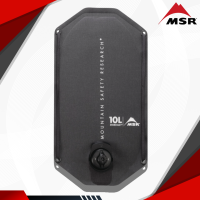
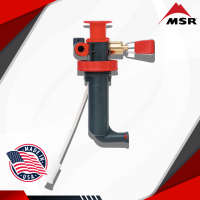
About MSR
Mountain Safety Research (MSR), commonly referred to as MSR, is an American outdoor equipment brand specialising in technical gear for camping, backpacking, mountaineering, and other demanding environments. Founded in 1969 by Seattle engineer and lifelong mountaineer Larry Penberthy, MSR originated not as a conventional manufacturer but as a newsletter dedicated to testing climbing equipment and exposing weaknesses in existing safety standards.1
Over subsequent decades, MSR established a reputation for highly engineered, field-tested equipment, particularly camping stoves, water-treatment systems, tents, snowshoes, cookware, and mountaineering gear. The company is currently part of Cascade Designs, a Seattle-based outdoor equipment corporation that also owns brands such as Therm-a-Rest, Platypus, and SealLine.2
Overview
| Field | Information |
|---|---|
| Full name | Mountain Safety Research |
| Common name | MSR |
| Founded | 1969 |
| Founder | Larry Penberthy |
| Origin | Seattle, Washington, United States |
| Industry | Outdoor recreation / sporting goods |
| Main categories | Tents, stoves, cookware, water filtration and purification, snowshoes, mountaineering equipment |
| Parent company | Cascade Designs |
| Known for | Technical outdoor equipment, backpacking stoves, expedition gear, water-treatment systems |
| Brand character | Engineering-focused, technical, durable, field-tested |
| Website | msrgear.com |
The name Mountain Safety Research reflects the brand’s original purpose: researching and improving the safety and reliability of equipment used in mountainous terrain.3
History
Origins
The origins of MSR date to 1968, when Larry Penberthy, a Seattle-based engineer and mountaineer, began independently testing climbing equipment. He discovered that certain items failed at loads significantly below the manufacturers’ advertised specifications. Rather than accepting these results, Penberthy published his findings and investigated methods to improve climbing safety.4
In 1969, he established Mountain Safety Research to continue this work. Initially, MSR functioned primarily as a newsletter and research project rather than a traditional outdoor brand. Its publications covered topics including ice axes, climbing ropes, pitons, stoves, and other mountaineering equipment.5
The newsletter eventually began selling equipment to fund its research and safety initiatives. When suitable products were unavailable, Penberthy designed his own. This approach established the foundation of MSR’s identity:
Identify a problem → test existing solutions → engineer an improvement → field-test it.
This engineering-driven philosophy remains central to the brand today.
Larry Penberthy
Larry Penberthy (1916–2001) was the pivotal figure in MSR’s early history. He combined three interests that profoundly influenced the company: engineering, mountaineering, and equipment safety.
Penberthy focused particularly on the discrepancy between advertised performance and real-world performance. His philosophy held that outdoor equipment should be tested under conditions where lives might genuinely depend on it.6 His approach was notably hands-on; rather than treating product design as a purely theoretical exercise, he utilised actual climbing and mountain environments as laboratories.
For instance, when testing an MSR tent in the 1970s without access to a suitable wind tunnel, Penberthy mounted the tent on the back of a pickup truck and drove at highway speeds to expose it to winds exceeding 60 mph.7 This willingness to test products under rigorous conditions became a defining characteristic of MSR.
Early innovations
MSR’s early products focused primarily on mountaineering safety. Notable early developments included:
- Metal-shafted ice axes
- Snow anchors and snow flukes
- Climbing equipment
- Mountaineering helmets
- Camp stoves
- Mountain tents
- Headlamps
- Outdoor clothing innovations
The company’s 1970 Eagle Ice Axe, for example, featured a metal shaft at a time when wooden shafts were standard, addressing weaknesses identified through MSR’s research.8 The company also developed innovations outside its eventual core categories, including early work on bicycle helmets, lithium-powered headlamps, and pit-zip ventilation in outdoor clothing.9
MSR stoves
The stove category is arguably the product line most strongly associated with MSR.
Model 9
In 1973, Penberthy developed the MSR Model 9 stove. Its design addressed a critical challenge for mountaineers: obtaining sufficient liquid water in cold, high-altitude environments. Instead of relying on a conventional small integrated fuel tank, the Model 9 utilised a remote pressurised fuel bottle connected to the burner. This allowed the stove to operate effectively in cold conditions and made it particularly useful for melting snow.10
The Model 9 established a design philosophy that would become characteristic of MSR: reliability in environments where ordinary camping equipment might fail.
XGK
MSR subsequently developed the XGK family of expedition stoves, designed for demanding environments and various liquid fuels. The XGK became closely associated with high-altitude and expedition use. Its reputation for reliability helped establish MSR as a serious manufacturer of expedition cooking equipment. Historical records note that the XGK’s design was also utilised during a California condor conservation operation in 1984, where dependable heating equipment was required for transporting eggs.11
WhisperLite
One of MSR’s most renowned products is the WhisperLite, introduced in 1984. Designed as a lightweight liquid-fuel backpacking stove, it became one of the company’s signature products. Its combination of relatively low weight, liquid-fuel capability, and field serviceability made it particularly attractive to backpackers and mountaineers.12 The WhisperLite International later expanded this concept by supporting multiple types of liquid fuel.
PocketRocket
In 2001, MSR introduced the PocketRocket, a compact canister stove weighing approximately three ounces in its original form. It represented a departure from the company’s large expedition stoves, focusing instead on compact, lightweight cooking equipment for backpackers and climbers.13 The PocketRocket family subsequently became one of MSR’s best-known backpacking stove lines.
Reactor
In 2007, MSR introduced the Reactor Stove System. Rather than functioning as a conventional burner, the Reactor utilised a radiant-heating system and combustion technology designed to maintain performance in challenging conditions. It became particularly noted for rapid boiling times and wind resistance. The Reactor exemplifies MSR’s broader philosophy: instead of merely making an existing product lighter or cheaper, the company frequently attempts to redesign the underlying technology.
Water filtration and purification
Backcountry water treatment constitutes another major component of MSR’s identity. The company entered this field because reliable access to drinking water is fundamental to extended wilderness travel. In 1991, it introduced the WaterWorks filter, which incorporated both carbon and ceramic filtration technologies.
Subsequent products included:
- WaterWorks
- MiniWorks
- MIOX purifier
- Guardian purifier
- Guardian Gravity purifier
The MiniWorks became particularly well known among backpackers due to its field-serviceable design.
Guardian
MSR later developed the Guardian family of water purifiers. Introduced in 2016, the Guardian purifier incorporated technology intended to provide protection against viruses as well as other waterborne contaminants.
In 2021, MSR introduced the Guardian Gravity Purifier, applying Guardian technology to a high-volume gravity-fed system. This highlights an important distinction within MSR’s portfolio: the company manufactures both relatively simple filters and more sophisticated purification systems, with the latter designed for situations requiring broader pathogen protection.
MSR tents
Although MSR gained fame for stoves and water-treatment equipment, tents are now among its most significant product categories. The company entered tent design early in its history, describing its 1973 Mountain Tent as an important early example of its engineering-oriented approach to shelter design.8
A major milestone occurred in 2004 with the introduction of the Hubba tent series. The Hubba series emphasised low weight, efficient packing, easy setup, practical interior space, and backpacking-oriented design. The series achieved significant success and helped establish MSR as a major lightweight tent manufacturer.
Four-season and expedition tents
MSR also manufactures tents intended for severe environments. In 2017, it introduced three all-season tent families:
- Advance Pro
- Remote
- Access
These were designed for environments where wind, snow, cold temperatures, and difficult setup conditions are significant concerns. Consequently, MSR’s tent portfolio spans a broad range, from lightweight three-season backpacking shelters to specialised four-season mountaineering tents.
Snowshoes
MSR has also been a significant manufacturer of snowshoes. A notable historical product was the Denali snowshoe, introduced in 1995, which utilised an injection-moulded plastic deck designed for durability and versatility across varying snow conditions.
The company continued developing snowshoe technology, eventually introducing systems such as Lightning, Revo, Paragon, and Explore. In 2024, MSR introduced the Paradigm binding and Explore Series snowshoes, continuing its long-standing development of snow-travel equipment.
Cookware and camp kitchen equipment
MSR’s cooking portfolio extends beyond stoves to include pots, pans, cookware sets, mugs, cups, utensils, kitchen accessories, and stove systems. These products are generally designed around the same principles as its stoves: low weight, efficient packing, durability, and outdoor functionality. MSR cookware is oriented specifically toward backpacking and expedition use rather than conventional home cooking.
Acquisition and corporate history
MSR has undergone several changes in ownership and corporate structure. In 1981, MSR was acquired by REI. In 2000, MSR merged with Edgeworks, a company associated with the Moss, Walrus, and Armadillo tent brands; these tent businesses were subsequently consolidated under MSR.
In August 2001, Cascade Designs acquired MSR.2 MSR remains part of Cascade Designs today. The parent company’s portfolio includes several outdoor equipment brands, most notably MSR, Therm-a-Rest, Platypus, and SealLine. These companies share a Seattle-area heritage and a focus on technical outdoor equipment.
Manufacturing and design philosophy
MSR’s reputation is grounded less in fashion or lifestyle branding and more in engineering and performance. The company’s stated design philosophy emphasises functionality, simplicity, reliability, and enduring design. MSR describes its products as being developed using engineering and scientific knowledge to solve real problems encountered in mountain and outdoor environments.
Notably, some MSR products continue to be hand-built on manufacturing lines located near where the products are developed, according to Cascade Designs. The brand also emphasises repairability and long product life, consistent with Penberthy’s original conviction that durable equipment should remain useful for many years rather than being routinely replaced.
Major MSR innovations
MSR’s historical innovations encompass a wide range of outdoor technology.
| Year | Innovation / product | Significance |
|---|---|---|
| 1969 | MSR newsletter | Began systematic research into mountaineering safety |
| 1970 | Eagle Ice Axe | Early aluminum/metal-shaft ice-axe development |
| 1973 | Model 9 Stove | Remote-fuel stove designed for cold conditions |
| 1974 | Bicycle helmet | Extension of MSR’s safety-engineering work |
| 1975 | Lithium headlamp batteries | Early consumer use of lithium batteries in headlamps |
| 1976 | MSR Parka | Helped popularise underarm ventilation zippers (“pit zips”) |
| 1984 | WhisperLite | Lightweight liquid-fuel backpacking stove |
| 1988 | Shaker Jet | Self-cleaning technology for liquid-fuel stove jets |
| 1991 | WaterWorks | Combined ceramic and carbon water filtration |
| 1995 | Denali Snowshoe | Injection-moulded snowshoe deck |
| 2001 | PocketRocket | Extremely compact backpacking canister stove |
| 2002 | MIOX | Electrochemical water-purification technology |
| 2004 | Hubba | Lightweight, easy-pitch backpacking tent |
| 2007 | Reactor | Advanced radiant-heating stove system |
| 2016 | Guardian | High-performance water purifier |
| 2017 | Advance Pro / Remote / Access | New generation of four-season tents |
| 2021 | Guardian Gravity | High-volume gravity purification system |
| 2024 | Paradigm / Explore | New snowshoe and binding technology |
This timeline is based primarily on the official MSR history maintained by Cascade Designs.
Product categories today
MSR’s modern product range encompasses several key categories.
Tents
MSR produces shelters ranging from lightweight backpacking tents to four-season mountaineering and expedition tents. Notable families include Hubba, Freelite, Access, Remote, Advance Pro, and Habitude. The Habitude series, introduced in 2020, represents MSR’s expansion into larger standing-height tents intended for families and groups.
Stoves
Stoves remain one of MSR’s most recognisable categories. Examples include PocketRocket, WhisperLite, WhisperLite International, XGK, Reactor, and WindBurner.
Water treatment
MSR produces pump filters, gravity filters, purifiers, replacement cartridges, and treatment accessories.
Cookware
The cookware line includes backpacking cookware, pots, pans, mugs, utensils, and integrated cooking systems.
Snowshoes
MSR continues to produce technical snowshoes for recreational and demanding winter travel.
Mountaineering equipment
While MSR’s historical portfolio includes snow anchors, ice axes, and other technical equipment, the modern brand focuses primarily on shelters, cooking, water treatment, and snow travel.
Brand identity
MSR occupies a distinctive position within the outdoor industry, generally associated with technical performance rather than fashion. The company’s products appeal particularly to backpackers, mountaineers, climbers, alpine travellers, winter adventurers, expedition teams, serious campers, and outdoor professionals. Simultaneously, many MSR products remain accessible to recreational campers.
The brand’s reputation rests fundamentally on the premise that outdoor equipment should function reliably when conditions become difficult. Consequently, MSR products may appear more expensive or technically complex than standard camping gear, as they are designed around performance, weight, reliability, and serviceability rather than minimising retail price.
MSR’s place in the outdoor industry
MSR is widely regarded as one of the historically significant American technical outdoor brands. Its importance stems from helping to popularise an approach to outdoor equipment where engineering, laboratory testing, field testing, and user safety were fundamental to product development.
The company’s influence is particularly evident in backpacking stoves. Remote liquid-fuel burners, lightweight stove systems, high-performance wind-resistant burners, and field-serviceable designs have become integral to modern backcountry cooking. Similarly, its water-treatment products reflect the transformation of water filtration from simple camping equipment into highly engineered expedition technology.
Sustainability and repairability
MSR places significant emphasis on long product life and repair. The company’s philosophy holds that durable, repairable equipment reduces the need for continual manufacturing of replacements. Cascade Designs states that MSR works to reduce the environmental and social impacts associated with its materials, chemicals, packaging, suppliers, and manufacturing processes.
MSR is also a founding member of the Outdoor Industry Association Sustainability Working Group and has participated in industry sustainability initiatives such as the Higg Index.
Defining characteristics
MSR’s distinguishing features can be summarised as follows:
- Engineering first: Historically, MSR developed products because existing equipment did not perform adequately.
- Field testing: The company maintains a long tradition of testing equipment in realistic and sometimes extreme environments.
- Reliability: Many MSR products are intended for situations where equipment failure could have serious consequences.
- Lightweight design: Backpacking and mountaineering prioritise reducing weight without sacrificing functionality.
- Repairability: Many technical products are designed with maintenance and replacement parts in mind.
- Long-term product development: MSR has maintained product families such as WhisperLite and PocketRocket over many years, refining rather than constantly replacing their basic concepts.
- Expedition heritage: The company maintains strong connections to mountaineering, high-altitude travel, winter environments, and scientific applications.
Reputation
Among outdoor enthusiasts, MSR is particularly respected for its stoves and water-treatment equipment, while its tents and snowshoes have also become major components of its modern portfolio. Its strongest reputation lies in situations where weight, reliability, weather resistance, and field serviceability take precedence over price.
For casual weekend campers, MSR equipment may be more technical than necessary. However, for backpackers travelling far from roads or expeditions operating in severe weather, these characteristics offer significant advantages.
Legacy
The most significant aspect of MSR’s history is arguably not any individual product, but the method of product development established by Larry Penberthy. MSR began with a simple question: Does this equipment actually work as well as people say it does?
Penberthy’s response was to test it himself. When existing equipment proved inadequate, MSR designed alternatives. This cycle—question, test, engineer, field-test, improve—became the foundation of the brand. More than five decades after its founding, MSR continues to describe itself as driven by the pursuit of reliable, high-performance equipment and the belief that better equipment enables greater adventures.
References
- MSR – Our History – Cascade Designs
- The MSR® Origin Story – Cascade Designs
- MSR – About Us – Cascade Designs
- Diapositiva 1
- Mountain Safety Research
- MSR: The Best Outdoor Brand for Trekking & Bivouac Gear
- MSRについて|MSR公式
- About The Brand: MSR (Mountain Safety Research) | Simply Hike UK
- MSR’s Legacy of Product Testing | Gear Institute
- Discover MSR
- MSR Outdoor Gear Singapore | Stoves, Tents & Water Filters | Outdoor L
- MSR Outdoor Gear Singapore | Stoves, Tents & Water Filters | Outdoor L
- MSR – Needle Sports Ltd