Shop on Lazada
MUELLER products
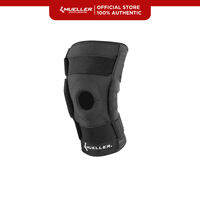
Mueller ® Hinged Wraparound Knee Brace
₱3,500.00
Buy on Lazada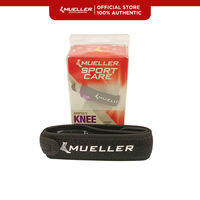
Mueller ® Jumpers Knee Strap Black
₱1,024.00₱1,280.00

Mueller ®Ball Stickum Grip Powder 1.25 oz shaker
₱792.00₱990.00
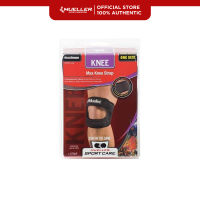
Mueller ® Max Knee Strap Black (One Size Fits Most)
₱1,812.00₱2,265.00

Mueller Athletic Care Non-Porous Tape 1½” X 15
₱3,350.00₱6,700.00
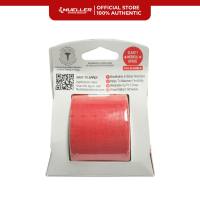
Mueller ®Kinesiology Tape® I-Strip Roll
₱720.00₱900.00
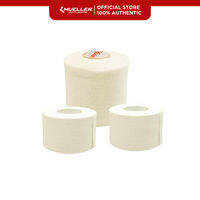
Mueller ® Athletic Tape Kit
₱792.00₱990.00
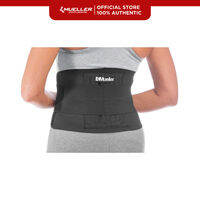
Mueller ® Back Brace Black
₱1,816.00₱2,270.00
About MUELLER
Mueller is an American brand of water and gas infrastructure products associated with Mueller Water Products, Inc. The brand traces its origins to 1857, when German-born inventor and entrepreneur Hieronymus Mueller established a business in Decatur, Illinois. Over more than 160 years, Mueller developed from a machine and plumbing-products business into a major supplier of products used in water transmission, distribution, measurement, and flow control.1
Today, Mueller’s portfolio includes water valves, fire hydrants, pipe connection and repair products, water meters, leak-detection technologies, pressure-management systems, and digital water-management solutions. Mueller Water Products describes itself as a leading manufacturer and marketer of products and solutions used in the transmission, distribution, and measurement of water in North America.1
Note: “Mueller” is not a single worldwide brand. Several unrelated businesses use the Mueller/Müller name. This article refers specifically to the Mueller water-infrastructure brand and Mueller Water Products.
Overview
| Field | Information |
|---|---|
| Brand | Mueller® |
| Industry | Water infrastructure / flow control |
| Origin | Decatur, Illinois, United States |
| Founded | 1857 |
| Founder | Hieronymus Mueller |
| Parent company | Mueller Water Products, Inc. |
| Major products | Valves, fire hydrants, meters, pipe repair products, tapping equipment, leak detection and water-management technologies |
| Primary market | Municipal and utility water infrastructure |
| Main geographic focus | North America, with products and technologies serving markets internationally |
| Related brands | Echologics, Hydro Gate, Hydro-Guard, HYMAX, i2O, Jones, Krausz, Mi.Net, Milliken, Pratt, Singer, Sentryx and others |
| Corporate headquarters | Atlanta, Georgia, United States |
Mueller Water Products currently operates through Water Flow Solutions and Water Management Solutions, covering products ranging from valves and service brass to hydrants, metering, leak detection and pressure-control technologies.1
History
Origins: 1857–1900
The history of Mueller begins in 1857, when Hieronymus Mueller arrived in Decatur, Illinois, and established a business. Mueller was an inventor whose work eventually became heavily concentrated on plumbing and water-distribution technology.1
One of the company’s important early innovations was the water and gas main tapping machine. A patent was issued in 1872, allowing connections to pressurised water and gas mains without shutting down the entire system. This technology became one of the foundations of Mueller’s long-term position in utility infrastructure.1
The company subsequently developed a series of valves, service connections, pressure-regulation equipment and other plumbing technologies. Mueller’s historical record includes innovations such as water-pressure regulators, sanitary drinking fountains and equipment for tapping live water and gas mains.1
Expansion into valves and hydrants
During the 20th century, Mueller expanded its product range and became increasingly associated with municipal water infrastructure.
Among its historical developments were:
- Gas shutoff valves introduced in 1907.
- Copper plumbing and flare connections introduced in 1923.
- Rubber-seated butterfly valves introduced in 1926.
- Mechanical gas-line stopping equipment introduced in 1936.
- Tamper-resistant gas valves introduced in 1949.
- Grooved fittings under the Gruvlok line introduced in 1960.2
Mueller also expanded through acquisitions. Henry Pratt Company and James Jones Company became Mueller subsidiaries in 1996, while Milliken Valve was acquired in 2003. These businesses broadened Mueller’s capabilities in valves and flow-control equipment.2
Development of Mueller Water Products
The modern corporate structure emerged in the 2000s.
In 2005, Walter Industries acquired Mueller Water Products and combined it with other water-related businesses. Mueller Water Products, Inc. subsequently became a separate publicly traded company in 2006.1
The company subsequently expanded beyond traditional valves and hydrants into technologies for monitoring and managing water networks.
For example:
- 2009: Mueller Systems was created through the combination of Arkion Systems and Hersey Meters.
- 2010: Mueller expanded its leak-detection and pipe-condition-assessment capabilities through the acquisition of Echologics.
- 2011: Echologics and Hydro-Guard became part of Mueller Water Products.
- 2017: Mueller acquired Singer Valve, expanding its automatic-control-valve capabilities.1
Products
Mueller’s products are primarily intended for water utilities, municipalities, contractors and infrastructure operators rather than ordinary consumer retail markets.
Valves
Valves are one of Mueller’s core product categories. Its portfolio includes:
- Gate valves
- Butterfly valves
- Ball valves
- Plug valves
- Specialty valves
- Automatic control valves
- Service valves
- Brass valves
These products are used to control, isolate and regulate water within distribution networks. Mueller states that its products include some of the largest installed bases of valves and hydrants in the United States.1
Fire hydrants
Fire hydrants are another major part of the Mueller brand.
Mueller manufactures hydrants designed for municipal water systems and fire-protection applications. Its historical materials identify the Albertville, Alabama facility as a major hydrant manufacturing location, and the company says its hydrant brands hold a leading position in the U.S. market.1
Pipe repair and connection products
Mueller also produces equipment for connecting, repairing and maintaining water pipelines.
These products are particularly important because municipal water networks often contain ageing infrastructure that must be repaired without completely replacing existing pipelines.
Water meters
Metering is another major area of Mueller’s business. Through its historical Hersey and Mueller Systems operations, the company developed water-metering and advanced-metering capabilities.
These technologies allow utilities to measure water consumption and collect information needed for billing, conservation and network management.1
Leak detection
Mueller has expanded into acoustic leak detection and pipe-condition assessment through technologies associated with Echologics.
These systems are designed to help utilities identify underground leaks and evaluate the condition of water infrastructure without necessarily excavating entire sections of pipeline.1
Digital water management
Mueller’s more recent strategy extends beyond physical hardware into digital infrastructure.
Its portfolio includes technologies for:
- Remote pressure monitoring
- Leak detection
- Water-network monitoring
- Automated meter reading
- Advanced metering infrastructure
- Data collection and analysis
- Utility-management software
The company’s Sentryx™ Water Intelligence Platform is an example of its movement toward connected and data-driven water infrastructure.1
Major brands
Mueller Water Products owns or operates a collection of brands associated with different parts of the water-infrastructure market.
Its current brand portfolio includes:
- Mueller®
- Echologics®
- Hydro Gate®
- Hydro-Guard®
- HYMAX®
- i2O®
- Jones®
- Krausz®
- Mi.Net®
- Milliken®
- Pratt®
- Pratt Industrial®
- Sentryx™
- Singer®
- U.S. Pipe Valve & Hydrant2
These brands allow the company to cover both conventional water-flow hardware and newer monitoring and management technologies.
Mueller Co.
A particularly important operating company is Mueller Co.
Mueller describes Mueller Co. as one of the largest manufacturers of fire hydrants, butterfly valves and iron gate valves in the United States and Canada. It also produces products including pipe-repair equipment, water meters, tapping machines, tools and technologies for leak detection and pipe-condition assessment.2
The company has manufacturing operations in several U.S. locations. For example, Mueller identifies:
- Decatur, Illinois — brass foundry and manufacturing
- Albertville, Alabama — fire hydrants
- Chattanooga, Tennessee — iron gate valves
- Cleveland, Tennessee — stainless-steel pipe-repair products
- Aurora, Illinois — butterfly valves
Mueller also states that certain castings used in its butterfly-valve manufacturing are produced in China.2
Markets and customers
Unlike a consumer plumbing brand whose products are primarily sold to homeowners, Mueller’s principal customers are water utilities and infrastructure professionals.
Its products are used by:
- Municipal water departments
- Public utilities
- Private water companies
- Engineering firms
- Plumbing and infrastructure contractors
- Industrial customers
- Commercial property operators
- Government infrastructure organisations
The products ultimately support systems responsible for drinking-water distribution, fire protection, water conservation and utility network management.1
Geographic presence
Mueller’s strongest historical and commercial presence is in North America, particularly the United States and Canada.
The company describes itself as a leading North American provider of water-infrastructure and flow-control products. Its products and technologies, however, have a broader international presence.2
The brand’s long history in the United States is particularly significant because many Mueller products have become installed components of municipal water systems over generations.
Innovation
Innovation is a central part of Mueller’s historical identity.
The company traces its innovation heritage to Hieronymus Mueller and his early work on water and gas infrastructure. Over time, the company’s definition of innovation expanded from mechanical equipment to include sensors, communications, data analytics and software.
This represents a broader shift in the water industry: instead of simply manufacturing the physical components of a water network, modern Mueller solutions increasingly attempt to help utilities observe, diagnose and optimise the network.1
Importance in the water industry
Mueller is significant because its products are part of the physical infrastructure underlying municipal water systems.
A typical water network requires numerous components to move water from treatment facilities to consumers. Valves control flow, hydrants provide emergency fire access, meters measure consumption, fittings connect pipes, and monitoring systems help utilities identify leaks and manage pressure.
Mueller’s product portfolio spans many of these functions, giving the company a position that extends from conventional mechanical infrastructure to modern digital water management.1
Corporate structure
It is important to distinguish Mueller from Mueller Industries, Inc.
Mueller Water Products
Mueller Water Products, Inc. is the company associated with the water-infrastructure Mueller brand discussed above. Its business focuses on water transmission, distribution, measurement and management.1
Mueller Industries
Mueller Industries, Inc. (NYSE: MLI) is a separate company. It is a diversified industrial manufacturer specialising in copper and copper-alloy products, as well as aluminium, steel and plastics. Its businesses serve plumbing, HVACR, automotive, appliance, defence, medical and other industries.3
So, if you see “Mueller” on a fire hydrant, water valve or municipal water-system component, you are generally dealing with the Mueller Water Products/Mueller Co. family, not necessarily Mueller Industries.
Legacy
The defining characteristic of the Mueller brand is its unusually long connection to water infrastructure. From Hieronymus Mueller’s 19th-century inventions to today’s connected water-management technologies, the company has repeatedly evolved alongside the water industry.
Its historical significance comes not simply from the age of the company, but from the fact that many of its inventions and products became part of the standard equipment used to build and maintain water-distribution networks. Mueller itself describes its history as spanning more than 160 years and emphasises its role in developing technologies that became industry standards.1