Shop on Lazada
Nakabayashi products
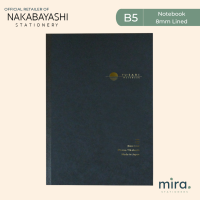
Nakabayashi Yu-sari Notebook
₱700.00
Buy on Lazada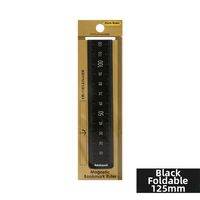
Nakabayashi | Student Folding Magnetic Ruler
₱316.45
Buy on Lazada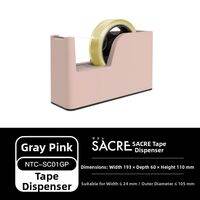
Nakabayashi | Easy-Clean Adhesive Tape Cutter for Packaging and Office
₱1,125.75
Buy on Lazada![Nakabayashi Logical Prime Notebook [80 pages]](https://ph-live.slatic.net/p/ed3ffea5c091c2d97423b0ee3229f10d.png_200x200q80.jpg)
Nakabayashi Logical Prime Notebook [80 pages]
₱199.00₱299.00
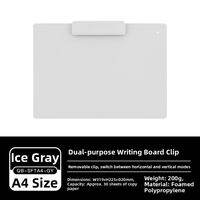
Nakabayashi | Dual-Use Horizontal & Vertical Writing Board Clipboard Movable Clip Head Sketch Drawing Board Student File Folder
₱673.10
Buy on Lazada![Nakabayashi Logical Prime Ring Notebook [100 pages]](https://ph-live.slatic.net/p/356b2b844828bda2d7866159b87196d2.png_200x200q80.jpg)
Nakabayashi Logical Prime Ring Notebook [100 pages]
₱299.00₱399.00
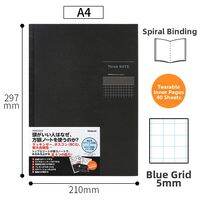
Nakabayashi | Logical Creative Mind Map Notebook A4
₱415.83
Buy on Lazada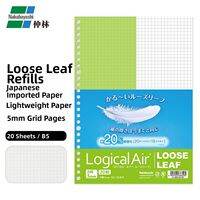
Nakabayashi | Removable Clip Loose Leaf Notebook
₱182.96
Buy on LazadaAbout Nakabayashi
Company overview
Nakabayashi Co., Ltd. (Japanese: ナカバヤシ株式会社, Nakabayashi Kabushiki-gaisha) is a Japanese manufacturing and information-services company. Internationally, it is best known for stationery, paper products, photo albums, filing products, office equipment, shredders, and document-management solutions. The company maintains an English-language corporate website to provide information on its products and overseas sales areas.2
The firm has a long history in bookbinding and the preservation of printed materials. Its origins date to 1923, when Yasuo Nakabayashi established a small bookbinding and book-repair business in Osaka. The modern corporation was established in 1951, and the company adopted the name Nakabayashi Co., Ltd. in 1970.
Today, Nakabayashi operates as a diversified enterprise rather than solely a stationery brand. Its business portfolio encompasses consumer stationery and paper goods, library services, commercial printing, information processing, office equipment, furniture, document security, recycling, and related services.1
Basic information
| Item | Information |
|---|---|
| Japanese name | ナカバヤシ株式会社 |
| English name | NAKABAYASHI CO., LTD. |
| Founded | 1923 |
| Corporate establishment | June 30, 1951 |
| Founder / originator | Yasuo Nakabayashi |
| Headquarters | Osaka, Japan; Tokyo headquarters in Itabashi |
| Industry | Stationery, paper products, office equipment, printing, information services |
| Stock listing | Tokyo Stock Exchange, Standard Market |
| Stock code | 7987 |
| Representative | Ichiryo Nakabayashi |
| Consolidated employees | 2,113 (as of March 31, 2025) |
| Consolidated sales | ¥62.767 billion (FY ended March 31, 2025) |
| Major fields | Stationery, albums, filing, office equipment, shredders, printing, library services and document management |
Reported 2025 figures and current corporate information are derived from Nakabayashi’s corporate service data.1
History
1923–1950s: Bookbinding origins
The history of Nakabayashi began in April 1923 in Osaka, when Yasuo Nakabayashi opened the Nakabayashi Bookbinding Works (中林製本所) in Naniwa Ward. The business specialised in binding magazines and repairing books. Understanding this origin is essential, as bookbinding—rather than conventional stationery—formed the foundation of the company. Later product lines such as albums, notebooks, filing systems, and other paper goods evolved directly from this technical expertise.
In 1951, the corporate predecessor, Nakabayashi Bookbinding Co., Ltd., was established in Osaka with capital of ¥500,000 and 18 employees. Manufacturing capabilities expanded in 1956 with the establishment of a large bookbinding factory in Sakai, Osaka. By 1959, the company had entered the notebook and planner market.
1960s: Transition to paper products
A significant turning point occurred in 1968 when Nakabayashi began manufacturing the Fueller Album (フエルアルバム). This product line helped transform the organisation from a specialist bookbinder into a manufacturer of consumer paper products, with albums becoming a signature category.
The company changed its name to Nakabayashi Bookbinding & Notebook Co., Ltd. in 1963. Subsequently, in October 1970, it adopted its present corporate name:
NAKABAYASHI CO., LTD.
1970s: Expansion into stationery and office products
During the 1970s, Nakabayashi expanded rapidly. It established factories in Shimane Prefecture, increased album production, and entered the file and office-paper-products business. In 1974, the company marked its entry into office machinery by producing the Tojistar, an electric desktop bookbinding machine.
This era established the fundamental structure of the modern Nakabayashi business:
Bookbinding → Albums → Stationery & paper products → Filing → Office equipment
Corporate operations also scaled up during this period. The Osaka headquarters building was completed in 1976, followed by a listing on the Osaka Securities Exchange in 1977. The company subsequently listed on the Tokyo Stock Exchange in 1981 and achieved First Section status in 1983.
Development into a diversified manufacturer
Throughout the 1980s and 1990s, Nakabayashi continued to expand beyond consumer stationery. Manufacturing activities grew to include:
- Photo albums
- Notebooks and planners
- Files and folders
- Paper products
- Office equipment
- Steel office products
- Office furniture
- Printing
- Business forms
- Bookbinding machinery
- Document-related equipment
The company also developed manufacturing and distribution facilities across Japan. By this stage, Nakabayashi had evolved into an integrated company centred on the broader concept of organising, storing, preserving, and managing information, rather than functioning simply as a stationery manufacturer.
Document security and recycling
A key development in the company’s evolution was its expansion into document-security and recycling services. Nakabayashi became involved in shredding and confidential-document destruction, including mobile and on-site shredding services. Corporate records note the establishment of a nationwide confidential-document shredding service network in 2002.
This move represented a logical extension of the company’s original expertise. The corporate evolution can be characterised as follows:
Preserve information → organise information → store information → process information → securely destroy information
This comprehensive approach remains evident in Nakabayashi’s modern business portfolio.1
Products and brands
The consumer-facing product range of Nakabayashi is considerably broader than its reputation for albums might suggest.2
Photo albums
Photo albums remain one of the most historically significant categories for Nakabayashi. The Fueller Album line, introduced in 1968, played a major role in the company’s development. The firm produces various albums and photo-storage products designed around the physical preservation and organisation of photographs, a category deeply connected to its original bookbinding expertise.
Notebooks and stationery
Nakabayashi manufactures a wide array of stationery products, including:
- Notebooks
- Memo pads
- Writing products
- Paper products
- Planners
- Files
- Folders
- Desk accessories
- Cutting products
- Organisational products
Current English-language catalogues feature Logical notebooks, Life Style Tool products, and Hikigiri Slim scissors.2
Filing and organisation
Files and document organisation constitute another major segment of the product portfolio. The company entered file manufacturing in 1972 when its Kakeai factory began production. Products in this area are designed for:
- Document storage
- Filing
- Paper organisation
- Office administration
- Personal organisation
- Archiving
Office equipment
Historically beginning with the Tojistar electric desktop bookbinding machine in 1974, the company subsequently expanded into steel products and office furniture. The portfolio has included:
- Bookbinding equipment
- Letter cases
- Office desks
- Office furniture
- Storage equipment
- Document-processing equipment
Shredders
Shredders represent a significant category for Nakabayashi, serving personal, home-office, and business environments. This aligns with the company’s broader document-management business. Nakabayashi positions itself as a comprehensive manufacturer concerned with information organisation, spanning shredders, confidential-document protection, and recycling.1
Writing instruments
The company also operates in the writing instrument sector under specialised brands. Its English website highlights TACCIA fountain pens and ballpoint pens, including the TACCIA SPECTRUM and TACCIA COMET lines.2 TACCIA positions Nakabayashi in the premium segment of the writing-instrument market, distinct from mass-market office supplies.
Major business divisions
Modern Nakabayashi operations are broadly divided into several key areas.
Consumer products
This division includes items most commonly encountered by general consumers:
- Stationery
- Paper products
- Albums
- Files
- Home/desk organisation
- Writing instruments
- Office accessories
Library and book-related services
Leveraging historical bookbinding expertise, the company provides modern library-support and book-related services. Nakabayashi continues to operate in library support, bookbinding, and related information-management activities.1
Printing and information processing
Business activities in this division include:
- Commercial printing
- Business forms
- Information processing
- Document production
This segment exemplifies the company’s expansion from physical books into broader information handling.
Office furniture and equipment
Manufacturing and business activities cover office equipment and furniture, including storage and organisational products.1
Document security
Confidential-document destruction and shredding services serve as significant extensions of the information-management business.
Recycling
Nakabayashi has developed businesses related to recycling and resource recovery, particularly concerning paper and office waste.
Corporate philosophy and identity
While Nakabayashi’s diverse businesses—photo albums, notebooks, scissors, shredders, office furniture, printing, and library services—may initially appear unrelated, they share a common theme:
Managing physical information and the objects used to create, preserve, organise, and dispose of it.
This concept represents the historical DNA of the company. A bookbinder naturally deals with paper, books, documents, preservation, organisation, and storage. Nakabayashi gradually expanded each of these activities into distinct commercial categories. This explains how the company simultaneously functions as a stationery brand, office-products manufacturer, bookbinding company, printing company, and information-management business.
International presence
Although fundamentally a Japanese company, Nakabayashi sells products internationally. It maintains an English-language corporate website providing information on products and overseas sales areas. A redesigned English website launched in February 2018 to improve accessibility for international markets.2
International operations have included subsidiaries and business relationships outside Japan. Historically, the company established operations in China and later created NAKABAYASHI USA, LTD. Corporate filings indicate continuing changes to its overseas corporate structure over time.
Corporate structure and recent development
Nakabayashi has expanded through both organic growth and acquisitions. Corporate history records the integration of companies involved in printing, stationery, office products, furniture, information services, manufacturing, and document-related services.
In recent years, the company has consolidated parts of its group structure. Miyoshi Co., Ltd. and Revex Co., Ltd. were absorbed into Nakabayashi in 2024, while Bixthree Co., Ltd. was absorbed in January 2025.
Nakabayashi currently trades on the Tokyo Stock Exchange Standard Market under stock code 7987. Reported consolidated revenue for the fiscal year ended March 31, 2025, was approximately ¥62.8 billion, with 2,113 consolidated employees.1
Distinctive characteristics
Compared to other well-known Japanese stationery companies such as Pilot, Zebra, Pentel, and Uni—which are strongly associated with writing instruments—Nakabayashi possesses a distinct identity rooted in paper, books, albums, filing, and information organisation.
This makes Nakabayashi particularly relevant to those interested in:
- Japanese stationery
- Archival products
- Scrapbooking
- Photo preservation
- Paper organisation
- Filing systems
- Office organisation
- Bookbinding
- Document management
- Shredders
- Japanese manufacturing
Its product philosophy can be summarised as encompassing “everything around information on paper.”
Timeline at a glance
- 1923 — Yasuo Nakabayashi establishes the Nakabayashi Bookbinding Works in Osaka.
- 1951 — Nakabayashi Bookbinding Co., Ltd. is established.
- 1956 — Large bookbinding factory established in Sakai, Osaka.
- 1959 — Notebook/planner production begins.
- 1963 — Company becomes Nakabayashi Bookbinding & Notebook Co., Ltd.
- 1968 — Fueller Album production begins.
- 1970 — Company adopts the name Nakabayashi Co., Ltd.
- 1972 — File production begins.
- 1974 — Enters office machinery with the Tojistar bookbinding machine.
- 1977 — Listed on the Osaka Securities Exchange.
- 1981 — Listed on the Tokyo Stock Exchange.
- 1983 — Moves to the former Tokyo/Osaka First Section.
- 1990s — Expands office equipment, furniture, and information-related businesses.
- 2000s — Expands document security, shredding, overseas operations, and acquisitions.
- 2010s — Further diversification into stationery, furniture, printing, and information services.
- 2022 — Moves to the Tokyo Stock Exchange Prime Market as part of market restructuring.
- 2023 — Re-selects the Standard Market.
- 2024–2025 — Further group consolidation through mergers and restructuring.
Note on branding
Nakabayashi is a company, while many names encountered by consumers—such as Logical, TACCIA, and Fueller Album—are individual product lines or brands within its broader portfolio.2