Shop on Lazada
National products
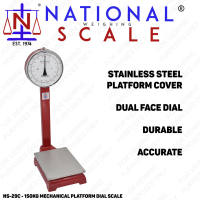
National Mechanical Platform Dial Scale 50-150kg (NS-29C)
₱13,932.00₱16,020.00
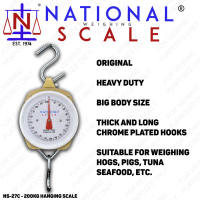
National Hanging Hook Scale 100-250kg
₱2,050.00₱2,459.00
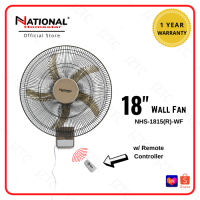
National Homestar 18-inch Wall Fan with Remote Controller (NHS-1815(R)-WF)
₱2,099.00₱2,450.00
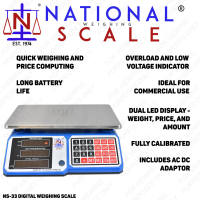
National Scale Brand 30kg Digital Price Computing Scale (NS-33 & NS-34)
₱2,285.00₱2,550.00
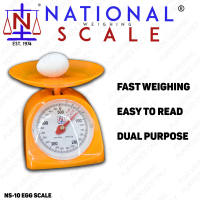
National Scale Brand 500g Egg Scale (NS-10)
₱1,149.00₱1,220.00
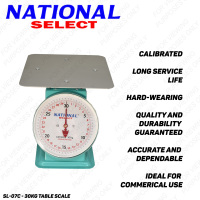
National Select Flat Plate Table Scale (SL-07C) Timbangan Kilohan
₱1,885.00₱2,265.00

National Multi Purpose Lithium Grease Yellow Red & Sticky Red 250g
₱152.00
Buy on Lazada
NATIONAL BRAKE FLUID DOT-3 900ml SUPER HEAVY DUTY MOTOR VEHICLE BRAKE & CLUTCH FLUID
₱266.00
Buy on LazadaAbout National
National (Japanese: ナショナル, Nashonaru) was a prominent Japanese consumer electronics and home appliance brand owned by Matsushita Electric Industrial Co., Ltd., the entity now known as Panasonic Corporation. Throughout the 20th century, it stood as one of the most recognisable electronics marques in Japan and across Asia, including the Philippines.
The brand traces its origins to 1927, when founder Kōnosuke Matsushita launched a square-shaped battery-powered lamp under the National name. He selected the English word national to express his vision that the product would become essential to households throughout Japan.
Although National was never an independent corporation, it served as a comprehensive product brand for Matsushita, covering household appliances, electrical equipment, audio-visual products, lighting, batteries, personal care devices, and other consumer goods. Over time, Panasonic emerged as the company’s primary international brand, while National retained particular significance in Japanese and Asian markets.
As Panasonic moved to unify its global branding, the National marque was gradually retired. In 2004, Panasonic replaced National across much of Asia. In Japan, the transition was finalised following the corporate name change from Matsushita Electric Industrial Co., Ltd. to Panasonic Corporation on October 1, 2008.
Overview
| Category | Information |
|---|---|
| Brand name | National |
| Japanese name | ナショナル |
| Romanization | Nashonaru |
| Type | Consumer electronics and appliance brand |
| Parent company | Matsushita Electric Industrial Co., Ltd. |
| Modern successor | Panasonic |
| Origin | Japan |
| Brand introduced | 1927 |
| Founder associated with brand | Kōnosuke Matsushita |
| Headquarters of parent company | Kadoma, Osaka, Japan |
| Major markets | Japan, Asia-Pacific, and selected international markets |
| Major products | Appliances, lighting, batteries, radios, televisions, audio equipment, kitchen appliances, air conditioners, personal appliances and more |
| Final phase-out | 2008 in Japan |
| Current status | Discontinued as a principal Panasonic brand |
History
Origins
The history of National is intrinsically linked to the founding of Matsushita Electric. In 1918, Kōnosuke Matsushita established the business that would become Matsushita Electric in Osaka, initially manufacturing electrical wiring devices and lamp sockets before expanding into consumer electrical products.
One of the company’s early successes was the development of battery-powered bicycle lamps. In 1923, Matsushita created a distinctive bullet-shaped bicycle lamp that offered significantly longer operating times than competing models.
In 1927, Matsushita developed a square-shaped battery-powered lamp intended for independent marketing. Seeking a name that conveyed widespread utility across Japan, he encountered the word “international” and, after considering its meaning, chose National as the brand name. This square lamp became the first major product to bear the National marque.
The launch featured an aggressive marketing strategy unusual for the era: Matsushita’s company distributed 10,000 samples to retailers without obligation, helping to establish the product in the Japanese market. According to Panasonic’s historical records, sales exceeded 30,000 lamps per month within the first year.
Expansion into household appliances
National quickly evolved beyond a lighting brand. During the late 1920s and 1930s, Matsushita expanded into electrical appliances designed for ordinary Japanese households. A key early product was the Super Electric Iron, introduced in 1927.
Matsushita’s philosophy centred on producing reliable electrical appliances at prices accessible to average households. The Super Electric Iron was engineered to match the quality of existing products while selling for considerably less. The company also developed electric foot warmers and other heating products. This approach—mass production, relatively affordable prices, and broad household availability—became central to the National brand identity.1
Over subsequent decades, National expanded into diverse categories, including:
- Radios
- Televisions
- Audio equipment
- Electric irons
- Refrigerators
- Washing machines
- Vacuum cleaners
- Rice cookers
- Air conditioners
- Fans
- Lighting
- Batteries
- Kitchen appliances
- Personal-care appliances
- Heating equipment
- Electrical components
- Bicycles and bicycle components
Consequently, National transformed from a single-product label into a general household-electronics brand.
National and Panasonic
A defining aspect of the brand’s history is its relationship with Panasonic. Originally, Panasonic was not the company’s primary Japanese consumer brand. The name was introduced in 1955 for speakers intended for export markets. According to Panasonic’s official history, “Panasonic” combines Pan—meaning universal or all—and Sonic, referring to sound.
Over time, Matsushita operated several brands with distinct purposes:
- National — particularly associated with Japanese domestic appliances and consumer products
- Panasonic — increasingly used as the company’s international/global brand
- Technics — associated particularly with high-end audio
Panasonic’s brand-history timeline reflects this progression, including the establishment of usage standards for Panasonic, National and Technics in 1988. Thus, National and Panasonic were not originally competing companies; they were brands belonging to the same corporate group.
The National-Panasonic era
By the late 20th century, Panasonic had gained significant international prominence. In some markets, products carried combinations such as National Panasonic, reflecting the transition between the two brands. Simultaneously, National remained an exceptionally strong domestic brand in Japan.
The distinction was broadly geographical and product-oriented: National was strongly associated with Matsushita’s Japanese consumer-appliance heritage, while Panasonic increasingly represented the company’s international identity. This arrangement persisted for decades because National commanded enormous recognition in Japan and other Asian markets, while Panasonic had developed strong recognition overseas. Eventually, however, maintaining multiple major corporate brands became less strategically attractive.
National in Asia
National became particularly influential throughout Asia. The brand was widely associated with products such as:
- Rice cookers
- Refrigerators
- Washing machines
- Air conditioners
- Fans
- Televisions
- Radios
- Kitchen appliances
- Batteries
- Lighting equipment
For many Asian consumers, particularly during the second half of the 20th century, National was synonymous with Japanese-made household electronics. Its reputation was closely tied to Matsushita’s emphasis on durability, engineering, and practical household products.
National in Indonesia
National has a notable history in Indonesia, where its name became closely connected with a local company established through a partnership between Matsushita Electric and Indonesian businessman Drs. H. Thayeb Moh. Gobel.
The roots of the Indonesian operation date to 1954, when Gobel established PT Transistor Radio Manufacturing in Cawang, Jakarta, producing transistor radios under the Tjawang brand. In 1957, Gobel travelled to Japan under the Colombo Plan and met Kōnosuke Matsushita.
In 1960, Gobel’s company signed a technical-assistance agreement with Matsushita Electric, leading to the establishment of a joint venture in 1970 named PT National Gobel. This partnership explains why the National name became so familiar in Indonesia. The Indonesian company later became PT National Panasonic Gobel, while the broader Panasonic/Gobel relationship continued to develop.
In 2004, the National brand in Indonesia was transformed into Panasonic, and the company became PT Panasonic Gobel Indonesia. Panasonic’s Indonesian corporate history describes this transition as part of the company’s evolution into the Panasonic brand. Consequently, in Indonesia, the old National name is not merely a historical Japanese brand but part of the country’s own history of consumer electronics manufacturing and the long-running Gobel–Matsushita/Panasonic partnership.
Brand identity
National’s visual identity evolved several times throughout its history. Panasonic’s official brand archive records:
- 1925 — National trademark registered
- 1927 — National used commercially on products
- 1937 — Japanese National lettering/logo adopted
- 1959 — National mark adopted
- 1966 — English-language “National” logo adopted
- 1971 — National’s N-mark logo revised
- 1973 — National and Technics logos revised
- 1988 — Formal brand-use standards established for National, Panasonic and Technics
- 1997 — National and Panasonic continued as basic trademarks
- 2003–2004 — Panasonic increasingly became the global brand while National was retained for specific markets/products
- 2008 — Panasonic became the unified corporate brand worldwide
The familiar National wordmark and stylized “N” became strongly associated with Japanese household technology during the postwar period.
Major product categories
Audio and video
National manufactured and marketed a wide range of consumer electronics, including:
- Radios
- Portable radios
- Television sets
- Cassette recorders
- Tape decks
- VCR-related equipment
- Audio components
- Speakers
- Portable electronic products
For premium audio, however, Matsushita increasingly used Technics, while Panasonic was used extensively for international audiovisual products.
Home appliances
Home appliances eventually became one of National’s strongest areas. The brand appeared on:
- Refrigerators
- Washing machines
- Clothes dryers
- Vacuum cleaners
- Rice cookers
- Microwave ovens
- Electric irons
- Fans
- Air conditioners
- Heaters
- Kitchen appliances
This category was especially important in Japan, where National remained the established appliance brand long after Panasonic had become the company’s better-known international name.
Lighting and batteries
Lighting was fundamental to the National story, as the brand originated with lamps. Early National bicycle and household lamps helped establish Matsushita’s reputation, while the resulting demand encouraged expansion into battery manufacturing. Panasonic’s history records that the success of the 1927 National lamp contributed to increased battery sales and eventually led Matsushita to take over a battery factory in 1931. Thus, lighting and batteries were among the foundations of what later became the enormous Matsushita consumer-products business.
Advertising and popular culture
National was notable for its extensive advertising. The company frequently positioned National not merely as a product label but as a household lifestyle brand.
One unusual example was National Kid, a Japanese tokusatsu television series launched in 1960 in cooperation with Toei. Created partly as a merchandising and promotional vehicle for the National brand, it was not particularly successful in Japan but later developed a cult following in Brazil.
National also utilised major celebrities in its advertising. During the 1970s, the Swedish pop group ABBA appeared in National advertising campaigns in several countries. Japanese performers including Pink Lady also featured in National commercials, illustrating the scale of the brand’s advertising presence during its peak.
Safety recall
National’s history includes a significant product-safety episode. Several National-branded kerosene fan heaters were recalled beginning in 2005 after a defect involving the air-supply hose was found to potentially allow carbon monoxide to leak into rooms. Panasonic subsequently conducted an extensive recall campaign.
This incident became a significant part of the later history of the National brand in Japan and contributed to efforts to locate remaining affected heaters. It is documented in Panasonic’s historical material and Japanese product-safety records.
Decline and discontinuation
The National brand was phased out not because Matsushita failed, but because Panasonic had become the stronger global brand. Matsushita gradually reduced National’s international use:
- 1980 — National use ended in Europe
- 1988 — National was no longer used as the principal brand in Australia and New Zealand
- 2004 — National was substantially phased out in Asia
- 2008 — National was phased out in Japan as Panasonic unified the corporate brand
The decisive moment arrived on October 1, 2008. On that date, Matsushita Electric Industrial Co., Ltd. officially changed its corporate name to Panasonic Corporation, unifying its global corporate branding under Panasonic. National-branded Japanese white goods and housing equipment were subsequently converted to Panasonic branding. The shift from National → Panasonic was primarily a brand consolidation rather than the disappearance of the underlying business.
What happened to National products?
Following the transition, products previously sold under National were generally sold under Panasonic. The technology, factories, engineering organisations, and product lines did not disappear; only the branding changed. For example, a Japanese refrigerator or washing machine that once carried the National logo was subsequently marketed as a Panasonic product. Consequently, National is best understood as a historic predecessor brand of Panasonic rather than a completely separate electronics manufacturer.
Relationship with Panasonic today
Today, National is no longer Panasonic’s principal consumer brand. Panasonic’s official brand history identifies Panasonic as the group’s corporate/global brand, while other specialised brands remain in use, including Technics and various Panasonic business brands.
The old National name survives primarily through:
- Vintage products
- Collectors
- Historical references
- Used appliances
- Old advertisements
- Museums and archives
- Memories of older consumers
- Historical Panasonic documentation
National-branded products consequently hold considerable nostalgic value, particularly in Japan and countries such as Indonesia where the brand had a long consumer presence.
Legacy
National’s importance extends beyond its logo. The brand represents a critical stage in the development of Japanese mass-market electronics. During the 20th century, Japanese manufacturers helped transform electrical appliances from expensive luxury goods into ordinary household products, with National at the centre of this transformation.
Early Japanese consumer electronics
National was one of the earliest widely recognised Japanese electronics brands. Its origins in the 1920s place it near the beginning of Japan’s modern consumer-electronics industry.
Mass-market philosophy
Matsushita emphasised producing reliable products at prices accessible to ordinary households. This philosophy became a defining feature of the company’s business model.
Asian household penetration
National became especially influential across Asia, where its appliances and electronics became familiar household products.
Foundation for Panasonic
The National business helped Matsushita grow into the enormous corporation that eventually adopted Panasonic as its unified global identity.
Cultural nostalgia
For many who grew up with Japanese appliances during the 1960s–2000s, the National logo is strongly associated with durability, Japanese engineering, and the era of analog household electronics.
National vs. Panasonic
| Feature | National | Panasonic |
|---|---|---|
| Origin | Japan | Japan |
| Parent company | Matsushita Electric | Originally Matsushita Electric |
| First major use | 1927 | 1955 |
| Original focus | Japanese domestic market | Export/global markets |
| Major association | Household appliances | Global electronics and technology |
| Japan | Extremely important historically | Became dominant after 2008 |
| Asia | Historically very strong | Replaced National |
| Current status | Discontinued | Current Panasonic group brand |
| Relationship | Former Matsushita brand | Successor/unified brand |
Why did Panasonic replace National?
Several practical reasons drove the change. Global recognition was the primary factor; Panasonic had become far more recognisable internationally, while National was strongly tied to specific countries and product categories. Maintaining separate National and Panasonic identities also complicated global marketing. Panasonic therefore chose to concentrate its corporate identity under a single name. The 2008 change was explicit: Panasonic stated that it aimed to bring the group’s activities and achievements together under the Panasonic name and strengthen the brand globally.
Name and terminology
It is necessary to distinguish National the electronics brand from unrelated companies and organisations that use the word “National”. The National brand discussed here was the National/ナショナル brand of Matsushita Electric, later Panasonic. It should not be confused with entities such as National Semiconductor, National Cash Register, National Car Rental, National Grid, or other organisations whose names independently contain the word “National”.
Timeline
- 1918 — Kōnosuke Matsushita establishes the business that becomes Matsushita Electric.
- 1923 — Matsushita develops a battery-powered bicycle lamp.
- 1925 — National trademark registered according to Panasonic’s brand history.
- 1927 — National brand officially introduced with a square-shaped battery-powered lamp.
- 1927 — Matsushita begins producing electrical heating appliances, including the Super Electric Iron.1
- 1930s–1940s — National expands across electrical and consumer products.
- 1955 — Panasonic name first used for export-market speakers.
- 1960 — National enters a new era of mass advertising, including National Kid.
- 1970 — PT National Gobel is established in Indonesia through the Matsushita–Gobel partnership.
- 1980 — National branding ends in Europe.
- 1988 — National/Panasonic/Technics brand-use standards are established.
- 2004 — National is transformed into Panasonic in Indonesia and substantially phased out across Asia.
- 2005 — Recall campaign begins for affected National kerosene heaters.
- 2008 — Matsushita Electric Industrial becomes Panasonic Corporation and the worldwide corporate brand is unified as Panasonic. National products in Japan begin transitioning to Panasonic.
- Today — National survives primarily as a historical brand and in vintage products; Panasonic is its modern corporate successor.
Summary
National was the historic Japanese household-electronics brand of Matsushita Electric, founded in 1927 around a successful battery-powered lamp and eventually expanded into virtually every major category of consumer appliances before being gradually replaced by Panasonic, culminating in the global brand unification of 2008.