Shop on Lazada
NGK products
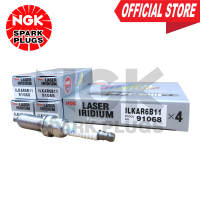
NGK ILKAR6B-11 Laser Iridium Spark Plug for Toyota Avanza 2015-2019 and Vios 1.3 1.5 Dual VVTi 2016-2021 Set of 4
₱2,680.00
Buy on Lazada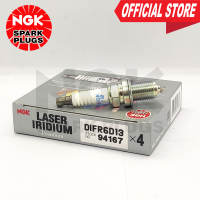
NGK DIFR6D-13 Laser Iridium Spark Plug for Honda City Jazz BR-V Brio and Mobilio 2015-2019 Set of 4
₱3,800.00
Buy on Lazada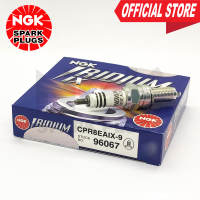
NGK CPR8EAIX-9 Iridium IX Spark Plug for Honda Beat 110ADV 150 PCX 150 Yamaha Aerox 155 & Nmax 155
₱2,280.00
Buy on Lazada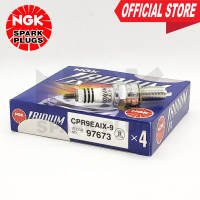
NGK CPR9EAIX-9 Iridium IX Spark Plug for Honda Click 125i & 150i Beat 110FiSupra GTR 150Fi & RS 150
₱2,280.00
Buy on Lazada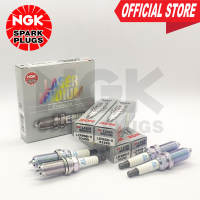
NGK LZFR5BI-11 Laser Iridium Spark Plug for Mitsubishi Mirage Hatchback and G4 2012-2021 Xpander 2018-2021
₱3,920.00
Buy on Lazada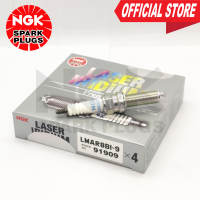
NGK LMAR8BI-9 Laser Iridium Spark Plug for Honda PCX 160 ADV 160 Click 160 & Yamaha Xmax 300
₱4,600.00
Buy on Lazada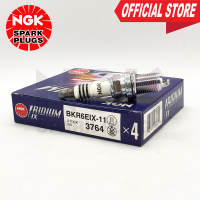
NGK BKR6EIX-11 Iridium IX Spark Plug Set of 4
₱2,090.00
Buy on Lazada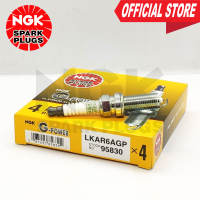
NGK LKAR6AGP G-Power Spark Plug for COROLLA ALTIS 1.8 2.0 VVTi 2008-2022 Set of 4
₱1,000.00
Buy on LazadaAbout NGK
History
NGK traces its origins to 1919, when NGK Corporation (originally NGK Insulators, Ltd.) was established in Nagoya, Japan as a manufacturer of ceramic insulators for electric power systems. [1]
In 1930, the company began manufacturing spark plugs under the “NG Spark Plug” name, which became NGK Spark Plug in 1934. As demand grew, a separate company, Niterra Co., Ltd., was founded in 1936 to focus on spark plugs and automotive components. [2]
In 2023, NGK Spark Plug Co., Ltd. officially changed its corporate name to Niterra Co., Ltd. to reflect its expansion beyond spark plugs into electronics, sensors, ceramics, and medical technologies. Despite the corporate name change, the NGK brand remains in use worldwide for spark plugs and many automotive products. [3]
Separately, the original NGK Insulators company rebranded to NGK Corporation in 2026 while continuing its focus on industrial ceramics and energy technologies. [4]
Meaning of “NGK”
The abbreviation NGK comes from the Japanese company name:
Nihon Gaishi Kabushikigaisha (日本碍子株式会社)
which translates to Japan Insulator Co., Ltd.
Headquarters
-
Country: Japan
-
City: Nagoya, Aichi Prefecture
-
Founded: 1919 (NGK Corporation)
-
Automotive business founded: 1936 (now Niterra)
Main Products
NGK is widely known for manufacturing:
-
Spark plugs
-
Iridium spark plugs
-
Ruthenium spark plugs
-
Glow plugs (diesel engines)
-
Ignition coils
-
Oxygen (O2) sensors
-
Air-fuel ratio sensors
-
Exhaust gas temperature sensors
-
Knock sensors
-
Automotive electronics
-
Technical ceramics
-
Ceramic cutting tools
-
Industrial sensors
Spark Plug Technologies
NGK offers several spark plug series designed for different applications.
Copper Spark Plugs
-
Standard nickel electrode
-
Affordable
-
Reliable for daily driving
-
Typically replaced every 20,000–30,000 km
Platinum Spark Plugs
-
Longer service life
-
Better wear resistance
-
Suitable for modern engines
Iridium IX
One of NGK’s most popular performance spark plugs.
Features:
-
Fine-wire iridium center electrode
-
Improved ignition
-
Better throttle response
-
Long lifespan
-
Commonly used in motorcycles and performance vehicles
Laser Iridium
Designed primarily for OEM applications.
Features:
-
Laser-welded iridium center electrode
-
Platinum ground electrode
-
Excellent durability
-
Service life often exceeding 100,000 km under normal conditions
Ruthenium HX
NGK’s newest premium technology.
Advantages include:
-
Higher ignition efficiency
-
Improved durability
-
Better resistance to wear
-
Optimized for modern turbocharged and direct-injection engines
Automotive Sensors
Beyond spark plugs, NGK is a major producer of engine-management sensors, including:
-
Oxygen sensors
-
Wideband air-fuel ratio sensors
-
NOx sensors
-
MAP and pressure sensors
-
Exhaust gas temperature sensors
These sensors help reduce emissions, improve fuel economy, and optimize engine performance.
OEM Partnerships
NGK products are supplied as original equipment to many global vehicle manufacturers, including:
-
Toyota
-
Honda
-
Nissan
-
Mazda
-
Subaru
-
Mitsubishi Motors
-
Suzuki
-
Yamaha Motor
-
Kawasaki Motors
-
BMW
-
Mercedes-Benz
-
Volkswagen
-
Hyundai
-
Kia
OEM fitment varies by vehicle model and engine.
Global Presence
NGK products are sold in more than 100 countries, with manufacturing facilities and technical centers across:
-
Japan
-
United States
-
Germany
-
France
-
United Kingdom
-
China
-
Thailand
-
Indonesia
-
India
-
Brazil
-
Mexico
-
South Africa
-
Australia
The broader NGK group employs nearly 20,000 people worldwide. [5]
Reputation
NGK has earned a strong reputation for:
-
High manufacturing quality
-
Reliable ignition performance
-
Long service life
-
OEM-grade engineering
-
Strong research and development in ceramic materials
Its spark plugs are widely recommended by mechanics and automotive manufacturers for both standard replacement and performance applications.
Beyond Automotive
NGK’s expertise in advanced ceramics extends into:
-
Power transmission insulators
-
Semiconductor manufacturing components
-
Energy storage systems
-
Environmental technologies
-
Industrial filtration
-
Electronic ceramics
-
Medical and sensing technologies
These businesses leverage the company’s long-standing ceramic engineering capabilities. [6]
Brand Philosophy
NGK emphasizes innovation through ceramic technology with a focus on:
-
Environmental sustainability
-
Carbon neutrality
-
Advanced mobility
-
Digital society technologies
-
High-quality manufacturing (Monozukuri)
The company continues to invest in next-generation materials, sensors, batteries, and energy solutions while maintaining the NGK brand’s legacy in automotive ignition products. [7]