Shop on Lazada
Nin Jiom products
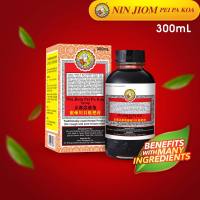
Nin Jiom Pei Pa Koa Syrup 300ml - Relieve Cough - Herbal Ingredients and Honey
₱485.00
Buy on Lazada
Nin Jiom Pei Pa Koa Syrup 6x300ml - Bundle - Relieve Cough - Herbal Ingredients and Honey
₱2,911.00
Buy on Lazada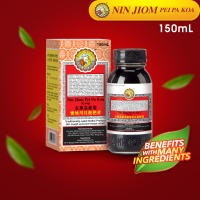
Nin Jiom Pei Pa Koa Syrup 150ml - Relieve Cough - Herbal Ingredients and Honey
₱279.00
Buy on Lazada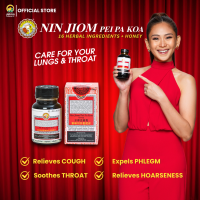
Nin Jiom Pei Pa Koa Syrup 75ml - Relieve Cough - Herbal Ingredients and Honey
₱197.00
Buy on Lazada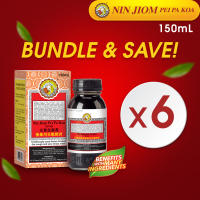
Nin Jiom Pei Pa Koa Syrup 6x150ml - Bundle - Relieve Cough - Herbal Ingredients and Honey
₱1,677.00
Buy on Lazada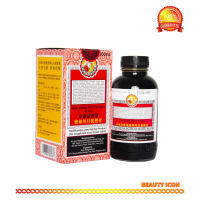
Nin Jiom Pei Pa Koa Sore Throat & Cough Herbal Syrup Medicine 300ml ( Honey Loquat Flavored)
₱520.00₱750.00
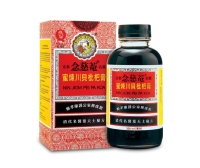
Nin Jiom Pei Pa Koa Syrup 150ml Cough Syrup Chinese Herbal Medicine (NEW ITEM) HONGKONG IMPORTED
₱450.00₱550.00
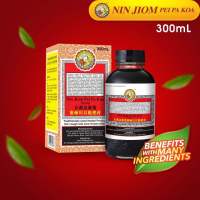
Nin Jiom Pei Pa Koa Herbal Syrup (300mL | 150mL | 75mL)
₱350.00
Buy on LazadaAbout Nin Jiom
Overview
Nin Jiom (Chinese: 京都念慈菴) is a prominent Hong Kong-based Chinese herbal medicine brand, widely recognized in the Philippines and globally for its flagship product, Nin Jiom Pei Pa Koa (also known as Nin Jiom Herbal Cough Syrup). The brand traces its origins to a traditional remedy from the Qing dynasty and has evolved into an international herbal-health entity. Its identity is deeply rooted in the Confucian value of filial piety, combining traditional Chinese herbal knowledge with modern manufacturing standards.
| Category | Information |
|---|---|
| Brand | Nin Jiom |
| Chinese name | 京都念慈菴 |
| Industry | Traditional Chinese medicine / Herbal health products |
| Best-known product | Nin Jiom Pei Pa Koa |
| Origin | China; modern corporate operations centered in Hong Kong |
| Key Entity | Nin Jiom Medicine Manufactory (H.K.) Limited |
| Core Heritage | Traditional Chinese herbal medicine |
| Signature Ingredients | Loquat, honey, and various traditional herbs |
| International Reach | Distributed in more than 20 countries and regions |
The company positions itself as a pioneer in modernizing Chinese herbal medicine by integrating traditional practices with contemporary scientific methods and quality-control technologies.1
Name and Meaning
The name Nin Jiom (念慈菴) carries significant cultural weight. The company translates the name as “in memory of my mother” or “commemoration of my mother.” This meaning is tied to the brand’s origin story, where the original medicine was reportedly developed by a son seeking a cure for his mother’s illness.1 Consequently, the name is not merely commercial but embeds the concept of filial piety (孝)—respect and devotion toward one’s parents—into the brand’s identity and logo symbolism. United States trademark records also reflect this English translation of the Chinese mark.2
Qing Dynasty Origins
According to the company’s historical account, the brand’s roots lie in the Qing dynasty. A provincial commander named Yang Xiaolian sought a remedy for his mother, who suffered from severe cough and bronchial illness. He encountered a famous physician who provided a secret herbal formula that reportedly helped her recover.1 Before her death, Yang’s mother requested that the remedy be reproduced to benefit others. This act of care became the foundation of the brand’s philosophy: medicine as an expression of concern for people rather than just a commercial product.
Establishment in Hong Kong
The brand’s modern history is closely linked to Hong Kong. Descendants of the Yang family moved to Hong Kong during periods of turmoil and entrusted the business to Tse Siu Bong. Nin Jiom’s official history states that Tse established Nin Jiom Medicine Manufactory (H.K.) Limited in 1946.1 However, some external records, such as those from the Hong Kong General Chamber of Commerce, cite 1962 as the year Tse acquired the recipe and formally incorporated the Hong Kong business. Thus, 1946 remains the date emphasized in brand narratives, while 1962 appears in certain corporate registration contexts.
Nin Jiom Pei Pa Koa
The product that brought Nin Jiom international fame is Pei Pa Koa (枇杷膏). In English-speaking markets, including the Philippines, it is commonly referred to as Nin Jiom Herbal Cough Syrup. The name breaks down roughly as:
- Pei Pa / 枇杷: Loquat
- Koa / 膏: Thick syrup, paste, or medicinal preparation
Nin Jiom describes Pei Pa Koa as an herbal preparation containing honey, loquat, and various traditional herbs.4 Traditionally, it is used to soothe the throat and provide relief from symptoms such as cough, hoarseness, and throat irritation. Regulatory classifications vary by country; in the United States, for instance, it is marketed as an herbal dietary supplement rather than a conventional pharmaceutical cough medicine.4
Distinctive Characteristics
Several factors distinguish Pei Pa Koa from ordinary Western cough syrups:
- Traditional Heritage: The formulation originates from Chinese herbal medicine traditions, combining multiple herbs based on therapeutic principles.
- Key Ingredients: Loquat and honey are central to its sensory profile, resulting in a thick, sweet, and strongly herbal syrup.
- Historical Depth: Unlike modern pharmaceutical brands built around single synthetic molecules, Nin Jiom markets its product on a multi-century traditional heritage.
- Cultural Symbolism: The product’s branding is directly connected to the narrative of filial piety between a mother and son.
Product Diversification
While Pei Pa Koa remains the most recognizable product, Nin Jiom has expanded its portfolio to include:
- Traditional Chinese medicine preparations
- Herbal candies
- Herbal teas
- Heat-clearing products
- Other herbal health supplements
This diversification allows the brand to occupy a space between traditional medicine, herbal wellness, and everyday consumer health products.3
Manufacturing and Technology
Nin Jiom does not position itself as purely traditional. Its stated philosophy combines traditional Chinese herbs with modern manufacturing and scientific technology. The company utilizes precision equipment and quality-control systems to standardize its herbal products.1
Hong Kong Operations
The headquarters and main manufacturing facility in Hong Kong handle production, management, and global marketing. The factory employs modern medicine-preparation, filling, capping, and quality-control equipment.1
Taiwan Operations
Nin Jiom also maintains a manufacturing and research presence in Taiwan. The facility uses technologies such as water extraction and low-temperature vacuum processing for herbal granulation. It has received Good Manufacturing Practice (GMP) certification.1
Fritillaria Cultivation
To ensure supply chain control and quality, Nin Jiom cultivates Fritillaria bulbs (Bulbus Fritillariae Cirrhosae), a key ingredient in respiratory formulations. These are grown at high elevations on the Qinghai–Tibetan plateau, reaching areas approximately 3,800 metres above sea level.1
International Expansion
Nin Jiom’s growth outside Greater China has been significant:
- 1960s: Expansion into Southeast Asian markets, including Singapore, Thailand, and the Philippines.1
- 1980s: Entry into Western markets, including the United States, Canada, and Europe.
Today, the brand’s products are distributed in more than 20 countries and regions.3
Presence in the Philippines
The Philippines holds particular importance in Nin Jiom’s international history, having been one of the first Southeast Asian markets entered in the 1960s.1 This early presence explains why Nin Jiom Pei Pa Koa is a familiar sight in Filipino pharmacies and health retail stores, often stocked alongside conventional cough and throat remedies.
Brand Philosophy
Nin Jiom’s corporate identity rests on four pillars:
- Filial Piety: The defining concept, commemorating the mother in the brand’s name and logo.1
- Care for Life: Connecting the traditional family story to a modern mission of caring for consumers’ health.3
- Traditional Knowledge: Preserving Chinese herbal wisdom rather than replacing it entirely with modern pharmaceutical approaches.
- Modernization: Applying rigorous quality control and technology to ancient formulas.
Quality and Regulatory Credentials
The brand emphasizes international certifications to support its global positioning. According to its Taiwan operation, Nin Jiom holds or has held certifications including:
- GMP certification associated with Australia’s Therapeutic Goods Administration (TGA)
- DIN certification associated with Health Canada
- GMP certification for its Taiwan manufacturing facility3
These credentials demonstrate compliance with various international regulatory standards, though specific product approvals depend on local laws in each market.
Trademark and Ownership
Visual Identity
The traditional logo evokes Chinese culture and the story of a mother and son, deliberately avoiding abstract corporate imagery. This visual strategy aims to associate the product with family, care, tradition, and trust, distinguishing it from typical pharmaceutical branding.
Cultural Significance
Nin Jiom represents the successful commercialization and internationalization of traditional Chinese medicine. By transforming an old-style herbal preparation into a standardized consumer product while retaining its historical narrative, the brand bridges the gap between traditional medicine, herbal wellness, and global consumer health.
Corporate Social Responsibility
Nin Jiom links its brand identity to charitable activities in Mainland China, Hong Kong, Taiwan, and internationally.
Timeline
| Period | Development |
|---|---|
| Qing dynasty | Origin of the Pei Pa Koa formula and the Yang family story |
| 19th–early 20th century | Formula passed through generations |
| 1946 | Official founding of Nin Jiom Medicine Manufactory (H.K.) Limited |
| 1960s | Expansion into Southeast Asia, including the Philippines |
| 1962 | Alternative date cited for formal HK incorporation/acquisition of recipe |
| 1980s | Expansion into North America and Europe |
| 1990s onward | Portfolio expansion beyond Pei Pa Koa |
| 2000s | Continued international trademark registrations |
| 2010s–2020s | Modernization of cultivation, research, and distribution |
| Today | Global recognition as a leading Chinese herbal-health brand |
Conclusion
Nin Jiom is a Hong Kong-based Chinese herbal medicine brand whose identity is built around the centuries-old tradition of Pei Pa Koa and the cultural value of filial piety. Originally a Qing-dynasty remedy developed to aid a sick mother, the brand has evolved into an international entity selling products in over 20 countries. By combining traditional herbal formulations with modern manufacturing, quality control, and scientific research, Nin Jiom has successfully positioned itself as a trusted provider of herbal health solutions in the Philippines and worldwide.123