Shop on Lazada
No Brand / Not Branded products
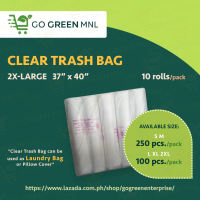
♻️Bio♻️ STARSEAL ROLLED Trash Bag / Garbage Bag Small / Medium / Large/ Extra Large XL / 2XL (BLACK OR CLEAR)
₱649.95
Buy on Lazada
Wise Cleaner Premium DIY Dishwashing Liquid Kit 15-16L for Home Refill and Negosyo
₱505.00
Buy on Lazada
Wise Cleaner Premium Fabric Conditioner Kit 5 or 10L DIY or Magic for Laundry Refill
₱535.00
Buy on Lazada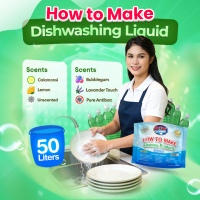
Wise Cleaner DIY Dishwashing Liquid Kit 50L for Bulk Refill and Negosyo
₱1,415.00
Buy on Lazada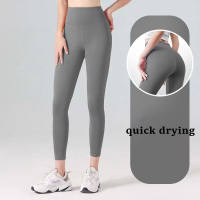
woman yoga leggings sports high waist tights fitness trainning quick drying pants
₱220.00₱388.00
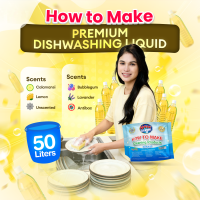
Wise Cleaner Premium DIY Dishwashing Liquid Kit 50L for Refill and Negosyo
₱1,735.00
Buy on Lazada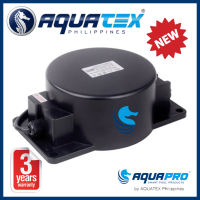
AQUAPRO Under Water Pool Light Transformer 12V AC 50W / 105W / 160W / 200W /300W / 400W
₱5,299.00
Buy on Lazada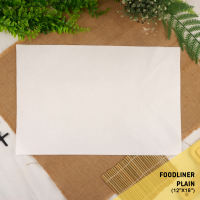
100PCS GREASEPROOF PAPER FOOD WRAPPER / LINER PAPER FOR BURGERS NACHOS WINGS FRIES PIZZA SANDWICH
₱182.00
Buy on LazadaAbout No Brand / Not Branded
No Brand / Not Branded (Korean: 노브랜드, Nobeuraendeu) is a South Korean private-label retail brand owned by Emart, the major discount retailer of the Shinsegae Group. Despite its name, No Brand / Not Branded is itself a highly recognizable commercial brand. Its central idea is to reduce unnecessary branding, packaging, advertising, and distribution costs so that consumers pay primarily for product quality and functionality rather than a famous brand name.
The brand was introduced in 2015 in South Korea and initially consisted of only nine products. It subsequently expanded into a large private-label business covering food, beverages, household supplies, personal-care products, electronics, stationery, and other everyday goods.
Overview
| Field | Information |
|---|---|
| Brand name | No Brand / Not Branded |
| Korean name | 노브랜드 |
| Romanization | Nobeuraendeu |
| Type | Private-label / hard-discount retail brand |
| Owner | Emart Inc. |
| Parent group | Shinsegae Group |
| Country of origin | South Korea |
| Founded/launched | 2015 |
| Original concept | High quality at low prices |
| Main categories | Food, snacks, beverages, household goods, personal care, lifestyle products, etc. |
| Visual identity | Predominantly yellow, black and white |
| International presence | South Korea and overseas markets including the Philippines, Vietnam, Mongolia and Laos |
Emart’s own brand information describes No Brand / Not Branded as its ultra-low-price brand and emphasizes reducing costs through direct product planning, shorter distribution channels, and reduced advertising and marketing expenditure.
History
Origins
No Brand / Not Branded was developed by Emart as part of an internal innovation initiative. The original idea was relatively simple: many consumer products cost more because customers are also paying for branding, advertising, packaging, and other marketing expenses. Instead of competing primarily through a famous manufacturer name, the brand sought to concentrate on the underlying product.
When the line launched in April 2015, it had just nine products. Early products included everyday consumables such as snacks and household necessities. The concept quickly attracted attention because products could be significantly cheaper than comparable national-brand products. One early report recorded price differences of up to 67% for certain items.
The line expanded extraordinarily quickly. A 2021 academic study reported that the number of products had grown from nine at launch to around 800 products within 16 months.
Development into a retail brand
Initially, No Brand / Not Branded products were simply another private-label assortment sold through Emart-related retail channels. Their popularity eventually justified dedicated specialty stores. The first dedicated store opened in August 2016, and the concept subsequently expanded into a network of standalone stores as well as sales through Emart and other channels.
This development created an interesting contradiction at the heart of the business: No Brand / Not Branded became a brand by selling the idea of not needing a brand. Although its products are intentionally presented with minimal branding, consumers eventually came to recognize the yellow packaging and the name itself as a sign of affordable products from Emart.
Meaning of the name
The name “No Brand / Not Branded” is deliberately provocative. Traditional consumer marketing often encourages people to purchase products because of brand reputation, celebrity endorsements, advertising, packaging, status, perceived prestige, or familiar manufacturer names. No Brand / Not Branded reverses this logic. Its philosophy is essentially that the product should be evaluated for what it actually is, rather than for the prestige of the name printed on it.
Emart has used the concept “It’s not a brand, it’s a consumer” to communicate this philosophy. Its official brand presentation emphasizes product value, practical design, and cost reduction. This makes No Brand / Not Branded an example of what marketing literature sometimes calls “no-brand branding”: the absence or minimization of conventional branding becomes the brand’s distinguishing characteristic.1
Business model
No Brand / Not Branded operates primarily as a private-label brand. In a conventional consumer-goods model, a manufacturer develops a product and sells it under its own brand, which a retailer then sells. With private labeling, the retailer develops or specifies products and has manufacturers produce them according to its requirements, selling them under its own label. No Brand / Not Branded uses this model to control several parts of the value chain.
Cost reduction
Its strategy has historically emphasized simplified packaging, reduced advertising and marketing expenditure, large-scale purchasing, direct relationships with suppliers, efficient distribution, product standardization, and a focus on essential product characteristics. Emart states that it directly plans products and works with producers to shorten distribution processes while reducing advertising and marketing costs. The result is intended to be a lower retail price without simply making the product cheaply.
“Low price, high quality”
One of the most important distinctions of No Brand / Not Branded is that it does not present itself merely as a discount or low-quality brand. Its proposition is closer to high quality combined with low price and minimal unnecessary cost. This distinction became increasingly important as the brand matured. Recent reporting notes that internal priorities emphasize quality first, followed by price and differentiation, rather than simply producing the cheapest possible merchandise. This helps explain why the products can compete with both inexpensive generic products and established national brands. The objective is not necessarily to be the absolute cheapest item on the shelf but to provide a particularly attractive price-to-quality ratio.
Product range
No Brand / Not Branded has developed into a broad consumer-goods assortment rather than remaining solely a snack label. Its products have included:
Food
- Potato chips
- Cookies
- Crackers
- Chocolate products
- Instant foods
- Frozen foods
- Dumplings
- Sauces
- Canned foods
- Meat and other prepared foods
Beverages
- Juices
- Coffee
- Tea
- Soft drinks
- Other packaged beverages
Household products
- Tissues
- Paper products
- Cleaning products
- Kitchen supplies
- Storage products
- Everyday household necessities
Personal care
- Body wash
- Soap
- Wet tissues
- Oral-care products
- Other basic personal-care items
Lifestyle and general merchandise
- Stationery
- Small appliances
- Electronics
- Clothing and accessories
- Kitchenware
- Other everyday consumer products
The assortment has therefore evolved from the original concept of inexpensive packaged goods into a much broader everyday-consumption ecosystem.
Packaging and visual identity
One of the most recognizable characteristics of No Brand / Not Branded is its packaging. The brand frequently uses yellow backgrounds, black typography, simple product photography or illustrations, large and straightforward product descriptions, minimal decorative elements, and limited use of elaborate brand imagery. This is not accidental; the packaging communicates the philosophy that the customer should immediately understand what the product is rather than being persuaded by elaborate visual advertising.
Interestingly, the simple yellow packaging eventually became so recognizable that it effectively became a form of branding itself. Academic research has noted that this conspicuous packaging allows the supposedly “unbranded” products to stand out visually in stores.
Marketing strategy
The marketing strategy of No Brand / Not Branded is unusual because it partially markets the absence of marketing. Rather than emphasizing luxury or status, it emphasizes value, practicality, simplicity, product performance, affordability, and consumer needs. Word-of-mouth and social media have also played an important role. Some early products became popular after consumers shared their experiences online, helping the company achieve awareness without relying exclusively on traditional advertising.
This creates a self-reinforcing cycle: simple product leads to low cost, which leads to attractive price, consumer trial, positive word-of-mouth, greater demand, greater purchasing scale, and further cost advantages.
Target market
No Brand / Not Branded is primarily aimed at value-conscious consumers. Its customers can include families seeking affordable groceries, students, young consumers, budget-conscious households, consumers interested in Korean products, people who prioritize function over prestige, and shoppers looking for alternatives to expensive national brands. However, its appeal is not restricted to low-income consumers. A major part of its proposition is that consumers can choose No Brand / Not Branded because they do not want to pay extra for branding, even when they could afford more expensive alternatives.
No Brand / Not Branded versus generic products
“No Brand / Not Branded” should not simply be interpreted as meaning “generic product.” There is an important distinction. A generic product may have little or no recognizable brand identity and can be sold by many different retailers. No Brand / Not Branded, by contrast, is a specific private-label brand controlled by Emart. While a generic product implies “no particular brand,” a No Brand / Not Branded product is intentionally developed and sold under Emart’s specific concept. This is one of the central paradoxes of the company: legally and commercially, it is a brand. U.S. trademark records describe Emart’s use of the marks and consumers’ association of those marks with Emart products.2
Expansion outside South Korea
No Brand / Not Branded eventually expanded beyond South Korea. One of its most significant international markets is the Philippines, where the brand was brought in through Robinsons Retail Holdings. The first Philippine store opened in Manila in 2019. In the Philippines, the assortment has included Korean food and snacks alongside beauty, household, and lifestyle products.
Emart’s global sourcing material lists operations in South Korea, the Philippines, Vietnam, Mongolia, and Laos, in addition to exports to other markets. This international expansion demonstrates that the concept is not limited to Korean consumers. The combination of Korean products, simple presentation, and affordable prices has given the brand broader international appeal.
No Brand / Not Branded in the Philippines
In the Philippine market, No Brand / Not Branded has been positioned as a source of Korean food, snacks, and lifestyle products at relatively accessible prices. The Philippine operation is associated with Robinsons Retail, which received the franchise rights to introduce the brand to the country. Its Philippine assortment has included products such as:
- Korean snacks
- Cookies and biscuits
- Frozen food
- Dumplings
- Kimchi
- Beverages
- Body-care products
- Household supplies
- Paper products
This makes the Philippine version somewhat different from the stereotypical perception of the brand as simply a Korean supermarket snack label.
Relationship with Emart and Shinsegae
No Brand / Not Branded is part of the larger Emart ecosystem. Emart is a major South Korean retailer and part of the broader Shinsegae Group. The relationship flows from Shinsegae Group to Emart to No Brand / Not Branded and finally to private-label food, household, and lifestyle products. The brand therefore benefits from Emart’s purchasing power, retail infrastructure, supplier relationships, and distribution network.
No Brand / Not Branded stores
Dedicated stores are designed around the same philosophy as the products. They generally emphasize large quantities of merchandise, straightforward displays, functional store layouts, clear product information, low-price positioning, and strong use of the yellow identity. The store itself becomes an extension of the private-label concept. Rather than entering a store to browse hundreds of competing manufacturers, consumers enter expecting the majority of products to have already been selected according to the retailer’s value proposition.
Growth
Growth was unusually rapid for a private-label initiative. Beginning with only nine products in 2015, it expanded to hundreds of products very quickly and later developed dedicated stores. Recent Korean reporting describes No Brand / Not Branded as having developed into a substantial retail operation, with more than 270 specialty stores in Korea and sales exceeding ₩1 trillion after several years of growth. Emart’s more recent global sourcing material gives a 2024 figure of 310 stores in Korea, along with stores in several international markets. Because store counts and product assortments change over time, these figures should be treated as snapshots rather than permanent totals.
Brand philosophy
The simplest way to understand No Brand / Not Branded is through four principles:
1. Product over prestige
A product should be purchased because it works well, not because its manufacturer has a famous name.
2. Quality before price
The objective is not merely to make something cheap. It is to provide acceptable or strong quality while eliminating unnecessary costs.
3. Minimalism
Packaging and marketing should communicate information efficiently rather than create unnecessary expense.
4. Consumer-centered retail
The consumer, rather than the competitor or the prestige of the brand, is supposed to be the starting point for product development.
This philosophy is reflected in the phrase associated with the brand: “It’s not a brand, it’s a consumer.”
The paradox of No Brand / Not Branded
Perhaps the most interesting aspect is its apparent contradiction. It began with the proposition that brands add costs. But after years of success, No Brand / Not Branded itself became a recognizable brand. Consumers can specifically seek out its potato chips, cookies, household products, or stores. The yellow packaging has become recognizable, and the name itself carries expectations about price and quality. In other words, it demonstrates that a brand does not necessarily need to be built around prestige. A brand can instead stand for the idea that consumers should not pay extra for the brand name. That is arguably its greatest marketing achievement.
Competition
No Brand / Not Branded occupies an interesting position between several retail models:
| Competitor type | Main proposition |
|---|---|
| National brands | Brand reputation and product differentiation |
| Generic products | Basic functionality and low price |
| Supermarket private labels | Retailer-backed value |
| Discount retailers | Low prices across many categories |
| No Brand / Not Branded | Private label + minimalist branding + Korean retail identity + value |
Its closest conceptual competitors include other retailer-owned brands and minimalist consumer-goods companies. One important comparison is MUJI, whose Japanese name Mujirushi Ryōhin roughly means “no-brand quality goods.” MUJI, however, has developed a much broader lifestyle philosophy and premium/minimalist positioning, whereas No Brand / Not Branded is fundamentally centered on affordability and value.1
No Brand / Not Branded and “anti-brand” culture
The brand can also be understood within the broader movement toward anti-brand or post-brand consumption. Traditional branding says, “Buy this because our name means something.” No-brand strategies attempt to say, “Forget the name. Look at the product.” This idea appeals to consumers who are skeptical of paying for celebrity endorsements, luxury packaging, corporate advertising, status symbols, or excessive product design. However, the irony is that once consumers begin identifying with the philosophy, the anti-brand philosophy itself becomes a brand identity. No Brand / Not Branded is therefore not literally without branding; it is better described as a brand whose competitive identity is built around minimizing conventional branding.
Corporate identity
The identity of No Brand / Not Branded can be summarized as affordable products without unnecessary branding costs. Its recognizable characteristics include yellow-and-black packaging, simple typography, direct product descriptions, wide product assortment, Emart ownership, private-label manufacturing, low-price positioning, consumer-oriented product development, and Korean retail heritage.
Cultural impact
No Brand / Not Branded has become more than an assortment of inexpensive products. In South Korea, it has developed into a recognizable retail concept and has cultivated customer loyalty around the combination of quality and affordability. Recent reporting notes that some consumers who first encountered the brand as teenagers have continued buying it as adults, suggesting that it has moved beyond simply being perceived as a “cheap snack” retailer. Its success also illustrates a broader change in consumer behavior: shoppers increasingly evaluate value for money rather than automatically assuming that a famous brand is better.
Criticism and limitations
The concept also has limitations. First, “no branding” is not truly no branding; the yellow packaging, logo, and store design are themselves powerful branding devices. Second, lower prices do not necessarily mean every product is objectively superior in value; consumers still need to compare ingredients, quantities, durability, and prices with competing products. Third, the enormous assortment means quality and positioning can vary from product to product. Fourth, private-label success depends heavily on the retailer’s purchasing and distribution power, meaning the model is closely tied to Emart’s infrastructure.
Legacy
The most significant contribution of No Brand / Not Branded to retail strategy may be its demonstration that minimal branding can itself become a powerful form of branding. It took a conventional private-label idea—that products can be sold cheaply by spending less on marketing—and transformed it into a consumer-facing identity asking why consumers should pay for the name when they can pay for the product. From nine products in 2015, it developed into a major private-label operation with hundreds of products, dedicated stores, and international expansion.
References
- Brand
- Mart, Inc. established NO BRAND BURGER as a quick service restaurant serving burgers, chicken and other food products. E-Mart, Inc. use of the NO BRAND trademarks has been uninterrupted since at least as early as 2015 in Korea and 2016 in the United States. E-Mart, Inc. serves a wide variety of customers through its expansive range of goods and products in the food industry, at retail stores and on-line. As a result of its activities E-Mart, Inc. has acquired substantial trademark rights in NO BRAND and NO BRAND inclusive terms in connection with a broad array of goods and services (“NO BRAND MARKS”).