Shop on Lazada
ODI products

ODI | Off-road High Strength Thick-walled Aluminum Motorcycle Handlebar
₱10,260.18
Buy on Lazada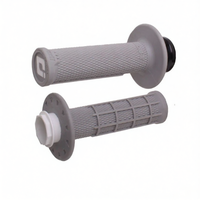
ODI | Lock-on Grip MX Emig Pro V2 Grip
₱2,756.56
Buy on Lazada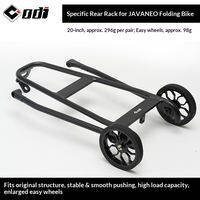
ODI Special Rear Rack for JAVA NEO 16in /20in Folding Bike High Load Capacity Aluminum Alloy Rear Shelf with Enlarged Wheels
₱1,738.86₱2,674.67

1 Pair ODI Mountain Bike Handle Grip for MTB HandleBar Cover Anti Slip Bike Handlebar Rubber Grip Cycling Parts
₱189.00₱319.00
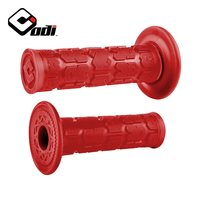
ODI | Offroad Motorcycle Handlebar Grips
₱1,208.31
Buy on Lazada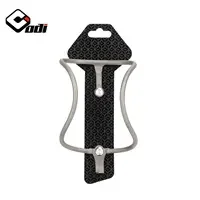
ODI Ultralight 18g Bicycle Water Bottle Cage Titanium Alloy MTB Road Bike Water Bottle Holder Durable Mountain Cycling Cup Rack
₱747.80₱1,339.38
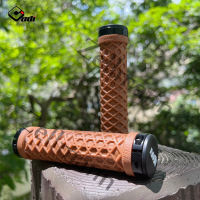
ODI & VANS LOCK-ON HANDLE GRIP FOR MTB FOLING BIKE GRIPS (130MM)
₱679.00₱1,295.00

ODI Vans v2.1 MTB Lock-On 135mm Medium Compound Bicycle Grips (100% original)
₱2,380.00
Buy on LazadaAbout ODI
Overview
ODI, frequently referred to as ODI Grips, is an American manufacturer specialising in high-performance handlebar grips for bicycles, motorcycles, powersports vehicles, and other action-sports applications. The company is widely recognised for pioneering the Lock-On Grip system, a technology that fundamentally altered how grips are attached to handlebars in both cycling and motorsports. ODI describes itself as “The World Leader in Grip Technology.” 1
The current product range extends beyond grips to include handlebars, controls, throttle tubes, grip accessories, and related components. These products serve diverse markets including BMX, mountain biking, motocross, street motorcycles, sport bikes, V-twin motorcycles, snow vehicles, and watercraft. 2
| Category | Information |
|---|---|
| Brand | ODI / ODI Grips |
| Industry | Powersports, cycling and action sports |
| Country of origin | United States |
| Headquarters / manufacturing | Riverside, California, USA |
| Founded | 1970s/early 1980s |
| Original founders | Herb and Kay Guerr |
| Original name meaning | Ornate Designs Incorporated |
| Current brand philosophy | Observe. Design. Innovate. |
| Best known for | Lock-On grips |
| Major markets | BMX, MTB, motocross, ATV, motorcycle, sportbike, V-twin, snow and other powersports |
| Manufacturing philosophy | In-house U.S. production |
| Official slogan | “The World Leader in Grip Technology” |
ODI states that it has been developing products for more than 40 years and continues to manufacture its core items at its own facility in the United States. 3
History
Origins
The roots of ODI trace back to the 1970s in Torrance, California, where Herb and Kay Guerr operated a moulding business. Initially, the company produced a variety of moulded products rather than focusing exclusively on bicycle grips, with output including skateboard components, boogie-board parts, and other moulded goods. 4
Over time, the company became increasingly involved with the emerging BMX industry.
The Mushroom Grip
ODI achieved its first major breakthrough during the BMX boom of the 1980s with the introduction of the Mushroom Grip. Featuring a distinctive ribbed, mushroom-shaped surface pattern, this grip became closely associated with BMX racing and freestyle culture. Its commercial success helped establish ODI as a significant name in the bicycle-component market. 5
The Mushroom Grip is historically significant as it established a development pattern that would define the company: combining specialised moulded materials, distinctive surface patterns, and athlete feedback to create products designed specifically for rider control and comfort.
Ownership and Rebuilding
After the original owners sold ODI in the 1980s, the company experienced a difficult period marked by ownership changes. Herb and Kay Guerr subsequently established a separate grip company, ATI, while ODI continued under different management. 6
A pivotal moment occurred in the early 1990s when injection-moulding specialist Dave Grimes became involved with the brand. Coming from a manufacturing and injection-moulding background rather than professional cycling or motorsports, Grimes eventually acquired ODI and its assets. He took responsibility for rebuilding the company and restoring relationships with athletes and licensors. 7
Under Grimes’ direction, ODI shifted from being primarily a grip manufacturer to a technology-driven brand focused on developing proprietary products and manufacturing processes.
The Lock-On Revolution
The most significant development in ODI’s history was the creation of the Lock-On Grip system. Traditional grips typically relied on friction, adhesive, wire, or other methods to secure them to the handlebar. ODI developed a system in which the grip is mounted onto a sleeve and mechanically secured to the handlebar using a clamp.
This system offered several distinct advantages:
- More secure attachment
- Reduced grip movement
- Faster installation
- Easier removal and replacement
- Consistent positioning
- Better performance in wet or demanding conditions
ODI launched its early Lock-On system in the mountain-bike market, where the technology subsequently became a major industry standard. The company identifies itself as the innovator of the Lock-On system and states that it remains a worldwide standard for grips. 8
The technology eventually expanded beyond MTB into BMX, motocross, and powersports applications.
From Bicycle Grips to Powersports
Although ODI is strongly associated with BMX and mountain biking, the company has maintained longstanding connections with motocross. Historical accounts indicate that ODI produced motocross grips and private-label products during its earlier years, though it placed greater emphasis on the bicycle market during the BMX boom. The company later relaunched its own branded motocross-grip products in the early 2000s. 9
The modern ODI lineup covers a broad range of riding disciplines. Major markets include:
- BMX
- Mountain bikes
- Motocross
- Enduro / off-road motorcycles
- ATVs
- Street motorcycles
- Sport bikes
- V-twin motorcycles
- Snow applications
- Watercraft
- Road cycling
- Scooters and related applications
The current catalogue is divided into dedicated product categories for areas such as MOTO, MTB, ROAD, SNOW, SPORTBIKE, STREET, and V-TWIN. 10
Meaning of “ODI”
The initials originally stood for:
Ornate Designs Incorporated
However, the company eventually determined that the original meaning no longer represented its identity. ODI subsequently redefined the initials as:
Observe. Design. Innovate.
This phrase now serves as the philosophy behind the brand. ODI states that its development process involves observing professional riders, studying wear patterns, and collecting information from real-world use before applying that knowledge to its design and manufacturing processes.
Product Philosophy
ODI’s product development centres heavily on the rider’s contact points. While a grip may appear to be a simple component, it significantly affects steering control, vibration absorption, rider comfort, hand fatigue, traction, throttle control, wet-weather performance, and overall bike handling.
Consequently, ODI invests heavily in proprietary grip compounds and surface designs. The company states that these compounds are researched and tested with top athletes to balance comfort, durability, and performance.
ODI also emphasises keeping its manufacturing operations in the United States. The company’s facility handles significant portions of its moulding and production process, allowing for strict control over materials, tooling, and manufacturing quality.
Key Technologies
Lock-On Grips
The Lock-On system is arguably ODI’s signature technological contribution. Instead of relying solely on friction between rubber and handlebar, the system mechanically locks the grip into position. This innovation made grip installation and removal significantly easier while reducing unwanted rotation. The concept became especially influential in mountain biking and later spread throughout other riding disciplines. 11
Proprietary Compounds
ODI develops its own grip compounds rather than treating the grip merely as a moulded piece of rubber. Different compounds are engineered around specific priorities such as softness, vibration damping, durability, traction, weather resistance, and rider comfort. This allows ODI to offer distinct grip characteristics tailored for racing, trail riding, motocross, and street use. 12
Dual-Density / Multi-Compound Construction
ODI was an early adopter of grips using different material densities in different areas of the grip. Parts of the grip requiring additional cushioning utilise a softer material, while other areas prioritise support and durability. The historical development of products such as the Attack grip helped establish this approach within the performance-grip market. 13
Notable Products and Designs
ODI has produced numerous recognisable grip designs throughout its history.
Mushroom
The Mushroom Grip is one of the most historically significant ODI designs. It was a major success during the 1980s BMX boom and remains an important part of the brand’s heritage. 14
Ruffian
The Ruffian is a recognisable lock-on grip design particularly associated with MTB and BMX applications.
Rogue
The Rogue is another popular design known for a larger, more cushioned profile.
Elite
The Elite family represents ODI’s modern performance-oriented grip designs and includes various patterns and configurations.
Emig Pro
In motocross, ODI has developed products with professional racers, including the Jeff Emig signature line. Development work with Emig involved detailed attention to dimensions, compound formulation, and surface design. 15
Athlete and Racing Influence
Professional athletes have played a vital role in ODI’s product development. The company’s history includes relationships with athletes from BMX, mountain biking, and motocross, including figures such as John Tomac, Jeff Emig, and Rick Johnson.
ODI utilises professional riders not only for marketing but also as integral participants in the product-development process. The company’s philosophy involves observing how riders use products, studying wear and performance characteristics, and incorporating that data into new designs. 16
Collaborations
ODI has collaborated with other well-known brands to create special-edition and co-branded grips. Examples include collaborations associated with Vans, Troy Lee Designs, various bicycle and motorcycle manufacturers, and professional athletes.
The ODI x Vans grips are particularly recognisable as they incorporate elements inspired by the famous Vans waffle sole pattern. These collaborations have helped ODI expand its perception beyond an industrial component manufacturer into the broader lifestyle and action-sports market.
Manufacturing
A distinguishing characteristic of ODI is its commitment to U.S. manufacturing. The company operates from Riverside, California, where it maintains manufacturing, development, and related operations. ODI produces its core products in its own facility rather than outsourcing production to overseas manufacturers. 17
This approach allows ODI to maintain tighter control over:
- Materials
- Moulds and tooling
- Grip compounds
- Product dimensions
- Manufacturing consistency
- Product testing
- Design changes
The company’s manufacturing heritage is significant because ODI originated from an injection-moulding background rather than starting purely as a sporting-goods marketing company.
Current Status
ODI has evolved from a small American moulding operation into a specialised global action-sports brand. Its current product catalogue encompasses grips, handlebars, controls, throttle tubes, and accessories across multiple riding categories. 18
The catalogue includes separate product families for MOTO, MTB, ROAD, SNOW, SPORTBIKE, STREET, and V-TWIN, demonstrating the breadth of the ODI platform. 19 Despite this expansion, the brand’s core identity remains strongly connected to grip technology.
Brand Identity
ODI’s identity is defined by five key pillars:
- American manufacturing: The company emphasises producing its core products in the United States.
- Grip technology: Grips are positioned as performance components rather than generic accessories.
- Rider-driven development: Professional athletes and real-world riding data directly influence product development.
- Innovation: The Lock-On system exemplifies ODI’s approach to fundamentally changing established components.
- Action-sports heritage: The company maintains deep roots in BMX, MTB, and motocross culture.
Significance
ODI’s importance in cycling and powersports stems primarily from its contributions to grip technology. Before lock-on grips became widespread, replacing a handlebar grip was often a messy and time-consuming process, particularly when adhesives were involved. ODI’s mechanical attachment concept offered a simpler alternative that eventually became commonplace throughout mountain biking and other disciplines.
Furthermore, ODI’s long history in BMX and motocross has provided the brand with strong credibility among competitive riders. Its products consequently exist at the intersection of engineering, racing, and action-sports culture.
References
- About us – ODI
- ODI GRIPS オーディーアイグリップ|ミズタニ自転車株式会社
- Collections – ODI
- THE ODI BRAND STORY – A GRIPPING TALE OF DETERMINATION – Mountain Bike Action Magazine
- JOHNNY JUMP ON ODI GRIPS’ HISTORY, STRUGGLES & OPPORTUNITIES – Motocross Action Magazine
- ODI | kunstform BMX Shop & Mailorder – worldwide shipping
- Inside ODI: Keeping It In The US – Pinkbike
- ODI Grips | Lock-On MX Grips, Emig Pro & Handlebar Grips | BTO Sports
- ODI Grips | Cycle Components | Westbrook Cycles
- The History of ODI Grips with Johnny Jump by bmxultradotcom
- Customer Service – ODI
- ODI
- Products – ODI
- Moto – ODI
- ODI Grips & Lock-On Grips for Road & Mountain Bikes | Jenson USA
- Odi Grips – Warehouse Skateboards
- ODI | kunstform BMX Shop & Mailorder – worldwide shipping
- ODI x D3O
- ODI Bike Parts | ODI Bike Accessories | ODI Specifications