Shop on Lazada
OKOutdoor products
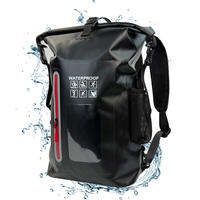
OKOutdoor | New Waterproof Outdoor Sports Backpack with Separate Compartments for Wet and Dry Items: Ideal for Fishing Camping River Trekking Swimming and Rafting
₱1,444.00
Buy on Lazada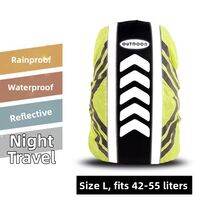
OKOutdoor | Waterproof Backpack Rain Cover
₱420.88₱647.40
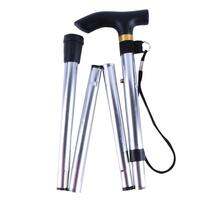
Outdoor Aluminum Alloy Hiking Cane Foldable Anti-slip Walking Stick Elderly Cane Ultra-light Portable Mountain Climbing Staff
₱343.00₱721.00
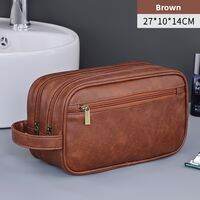
OKOutdoor | Waterproof Double Layer Large Capacity High Quality Mens Toiletry Bag
₱475.00
Buy on Lazada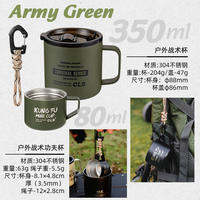
Outdoor Camping Stainless Steel Water Cup with Lid Thermal Coffee Cup Mountain Climbing Tactical Travel Mug Durable Drinkware
₱1,054.00
Buy on Lazada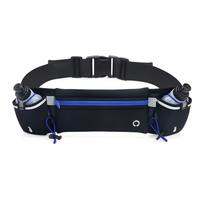
Sport Running Fanny Pack Multi-Functional Water Bottle Waist Bag Close-Fitting Mobile Phone Waist Bag Marathon Bag Waterproof Outdoor
₱567.00
Buy on Lazada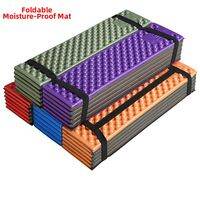
OKOutdoor | Waterproof Anti-moisture Camping Mat
₱649.00₱1,196.00
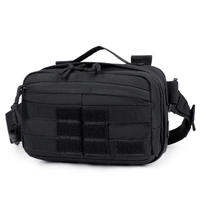
OKOutdoor | Multifunctional Outdoor Tactical Sports Waist Pack
₱882.00
Buy on LazadaAbout OKOutdoor
OKOUTDOOR (Korean: 오케이아웃도어; also styled OK Outdoor or OKOUTDOOR.COM) is a South Korean outdoor equipment and apparel brand that originated as an online specialist retailer for mountaineering, camping, sports, and other outdoor activities. Founded around 2000 by Jang Seong-deok, the business initially operated under the name OK Mountain before evolving into OKOUTDOOR.COM 1.
Unlike conventional outdoor labels focused primarily on manufacturing, OKOUTDOOR historically integrated brand development, product sourcing, retail distribution, and specialist e-commerce. Its business model emphasised selling outdoor products directly to consumers while reducing intermediary distribution costs 1.
Overview
| Field | Information |
|---|---|
| Brand name | OKOUTDOOR |
| Korean name | 오케이아웃도어 |
| Country of origin | South Korea |
| Founded | 2000 |
| Founder / CEO | Jang Seong-deok |
| Predecessor | OK Mountain |
| Original website | OKOUTDOOR.COM |
| Industry | Outdoor equipment, apparel, sporting goods, retail |
| Core activities | Mountaineering, camping, hiking, sportswear, outdoor equipment |
| Business model | Specialist retailer + own-product development/manufacturing |
| Distribution | Online retail and historically company-operated physical stores |
The 2000 founding date is supported by contemporary reporting and company history materials. A 2010 profile states that Jang established OK Mountain in 2000 and subsequently developed OK Outdoor, while another business case study records the launch of OKmountain.com in March 2000 and OKoutdoor.com in September of that year.
History
Founding
OKOUTDOOR traces its origins to 2000, when entrepreneur and outdoor enthusiast Jang Seong-deok established a business called OK Mountain. Jang had previously worked for Samsung C&T after graduating from Nihon University in Japan. His active participation in hiking, skiing, mountain marathons, and Ironman triathlons influenced the company’s emphasis on practical outdoor equipment 2.
The original business began on a relatively small scale. Contemporary reporting indicates that Jang started with approximately ₩50 million in capital and a roughly 33-square-metre office. The enterprise subsequently evolved from an information-oriented website into an online specialist retailer.
Development of OKOUTDOOR.COM
The company launched OKoutdoor.com as an online shopping platform in 2000. Its concept was considerably broader than selling a single type of outdoor product; the site sought to assemble products from numerous specialist brands in one place, creating what Korean sources describe as a “category killer” retail model 3.
Rather than functioning simply as a marketplace for third-party sellers, OKOUTDOOR’s historical model involved direct purchasing and inventory management. A 2010 case study described the company as purchasing products from approximately 500 brands and operating its own inventory and logistics systems 4.
Business model
A distinctive characteristic of OKOUTDOOR was its attempt to combine the advantages of a specialist outdoor store with those of an e-commerce company. The company historically pursued several interconnected strategies.
Multi-brand outdoor retail
OKOUTDOOR.COM carried products from a large number of international and Korean outdoor brands rather than limiting itself to its own label. Contemporary material described a selection of approximately 500 brands and tens of thousands of products 5. This made OKOUTDOOR more comparable to a specialised outdoor department store or category-killer retailer than to a conventional single-brand clothing company.
Direct purchasing
The company emphasised direct procurement rather than a conventional seller marketplace. This allowed it to control inventory, pricing, logistics, and customer service more closely. A 2010 business case described its operation as a 100% direct-purchase model 6.
Online and offline retail
OKOUTDOOR combined its website with physical company-operated stores. Contemporary sources describe large-format retail locations designed around the same specialist-category concept as the online store 7.
In-house product development
Crucially for understanding OKOUTDOOR as a brand, the company did not merely resell other manufacturers’ products. It developed its own clothing, packs, and accessories, describing a process in which outdoor specialists were involved in planning, design, and production. The stated objective was to create functional products while eliminating unnecessary intermediary costs 8.
Products
OKOUTDOOR’s own-brand products have historically covered a broad range of outdoor and sports applications.
Apparel
The clothing portfolio has included:
- Hiking jackets
- Windbreakers
- Waterproof and water-resistant jackets
- Fleece jackets
- Base layers
- Stretch tops
- Running tights
- Cycling apparel
- MTB clothing
- Outdoor casualwear
- Men’s and women’s technical clothing
Current and recent product listings continue to identify OKOUTDOOR products such as the MT Core Vest, Storm Block Jacket, fleece jackets, and running tights 4568.
Equipment and accessories
Historically, the wider OKOUTDOOR retail business has also dealt with:
- Camping equipment
- Hiking equipment
- Backpacks
- Outdoor accessories
- Sporting goods
- Climbing-related equipment
- Cycling products
The company’s original retail identity was strongly associated with mountaineering and camping equipment before expanding into other outdoor sports 91718.
Product philosophy
OKOUTDOOR’s own products are positioned around a straightforward philosophy: function first, practical design, and competitive pricing. The brand’s product descriptions repeatedly emphasise technical performance rather than fashion alone. Depending on the product, this has included water resistance, wind resistance, breathability, moisture management, quick drying, stretch, insulation, durability, lightweight construction, and ergonomic patterning.
For example, the Storm Block Jacket is described as combining waterproofing, wind protection, and breathability, while the brand’s running tights use stretch construction intended for running, cycling, MTB, and climbing 5131415. The brand has also used specialised textile technologies and materials, with product descriptions mentioning AeroCool, LYCRA, stretch fabrics, and quick-drying fabrics 716.
Pricing strategy
A major part of OKOUTDOOR’s historical positioning was value for money. The company argued that controlling product planning, sourcing, production, and distribution could reduce unnecessary intermediary margins and allow products to be sold at lower prices than comparable imported outdoor products 1.
This gave OKOUTDOOR a somewhat unusual position in the Korean outdoor market: specialist outdoor knowledge combined with technical products and relatively accessible pricing. Consequently, it was not positioned primarily as a luxury outdoor fashion brand.
Growth
OKOUTDOOR experienced rapid growth during the 2000s. According to a 2010 Korea JoongAng Daily profile, the company reported sales of approximately ₩1.96 billion in 2008 and ₩4.17 billion in 2009. The article reported that sales had been increasing by an average of roughly 200% annually during the company’s early growth period 10.
A separate 2010 business case reported the company’s historical sales trajectory as approximately ₩3.2 billion in 2002 and ₩10 billion in 2003, identifying OKOUTDOOR as a major online and offline player in Korean mountaineering and camping retail 1. These figures should be understood as historical data from the company’s high-growth period rather than current financial information.
Brand identity
OKOUTDOOR’s identity can be summarised through several key characteristics.
Outdoor specialist
The company was founded by an active outdoor enthusiast, and its early identity was strongly tied to hiking and mountaineering. This helped distinguish it from general-purpose fashion retailers 2.
Technical focus
Products emphasise practical performance, including weather protection, moisture management, stretch, durability, and mobility, rather than purely fashionable aesthetics 58.
Direct-to-consumer orientation
The company historically emphasised direct distribution through its own online and offline channels 1.
Value-oriented positioning
Rather than competing primarily through prestige or luxury branding, OKOUTDOOR sought to offer technically capable outdoor products at comparatively reasonable prices.
User-driven development
Historical descriptions of the company mention using feedback from customers and field testers who participated in hiking, marathon running, inline skating, and MTB to improve subsequent products 2.
Founder: Jang Seong-deok
Jang Seong-deok is the entrepreneur most closely associated with OKOUTDOOR. An outdoor enthusiast himself, Jang participated in hiking, skiing, mountain marathons, and Ironman competitions. His personal involvement in outdoor sports became part of the company’s philosophy of designing and selling products based on actual outdoor use 2.
Jang’s entrepreneurial philosophy was associated with persistence and continuous improvement. On the company’s tenth anniversary, he published a book titled There Is No O.K. at OK Outdoor, discussing his business experience and philosophy.
Dual nature: Retailer and brand
It is important to distinguish between OKOUTDOOR’s two roles. It functions as both a historical Korean specialist outdoor retailer and a private-label outdoor brand whose products were developed by the company. The retailer sold many third-party brands, while OKOUTDOOR-branded products represented the company’s own product development effort.
Contemporary product descriptions explicitly state that OKOUTDOOR directly developed products and managed their planning and production, while current retail listings continue to identify OKOUTDOOR as a Korean-origin brand 21112.
Relationship with OKmall
Recent searchable product listings show OKOUTDOOR-branded products being sold through OKmall, a Korean e-commerce retailer. OKmall’s brand pages describe OKOUTDOOR as a brand in which outdoor specialists oversee product planning, design, and production, with an emphasis on eliminating unnecessary distribution costs 211.
This provides evidence that OKOUTDOOR-branded merchandise remains represented in Korean e-commerce, although available sources do not establish that the historical OKOUTDOOR.COM retail operation continues in exactly the same organisational form as during its 2000s expansion. This distinction is significant because much of the detailed information available about OKOUTDOOR’s corporate history pertains to the 2000–2010 period.
Notable characteristics
| Characteristic | OKOUTDOOR |
|---|---|
| Market | South Korea |
| Primary category | Outdoor & sports |
| Heritage | Hiking / mountaineering |
| Retail model | Specialist multi-brand retailer |
| Own brand | Yes |
| Apparel | Yes |
| Camping | Yes |
| Cycling | Yes |
| Running | Yes |
| Technical clothing | Yes |
| Price positioning | Value-oriented |
| Distribution philosophy | Direct / controlled distribution |
| Product development | In-house planning and development |
| Physical retail | Historically significant |
| E-commerce | Core part of original business |
Historical significance
OKOUTDOOR reflects the development of Korean specialty e-commerce and outdoor retail during the 2000s. At a time when outdoor equipment was often purchased through physical specialty shops, OKOUTDOOR built its business around offering a vast assortment of specialist equipment online while maintaining physical retail locations. Its model therefore combined specialty retail, e-commerce, inventory control, direct purchasing, and own-brand manufacturing.
Contemporary reporting characterised the company as a leading online outdoor retailer during this period, while business-case material highlighted its sophisticated inventory management and integrated online-offline systems 10.
References
- [생산운영관리]OKoutdoor 20101210 | PPTX
- OKmall – 1등 명품 이커머스
- [OKOUTDOOR]파워 런 롱 타이즈 | 오케이몰
- [OKOUTDOOR]MT 코어 베스트 | 오케이몰
- [OKOUTDOOR]스톰블럭 자켓 | 오케이몰
- [OKOUTDOOR]Ws 칼라이스 플리스 자켓 | 오케이몰
- [OKOUTDOOR]Ws 클렌 파워스트레치 지퍼티 | 오케이몰
- [OKOUTDOOR]MTR-X 숏 타이즈 | 오케이몰
- 오케이아웃도어(OKOUTDOOR) 알파인 미니 체어 : 다나와 가격비교
- 대한민국 건강도우미, 오케이아웃도어닷컴 – 헬스조선
- OKmall – 1등 명품 이커머스
- [OKOUTDOOR]Ws NEW 시에라 XS 자켓 | 오케이몰
- [OKOUTDOOR]Ws 스톰블럭 자켓 | 오케이몰
- [OKOUTDOOR]Ws 스톰블럭 자켓 | 오케이몰
- [OKOUTDOOR]Ws 스톰블럭 자켓 | 오케이몰
- [OKOUTDOOR]Ws 랜스 파워스트레치 지퍼티 | 렉스몬드
- 오케이아웃도어(OKOUTDOOR) 이중 은박 캠핑매트 (1인용) : 다나와 가격비교
- 오케이아웃도어(OKOUTDOOR) 이중 은박 로고매트 (180 x 200) : 다나와 가격비교