Shop on Lazada
Olympus products
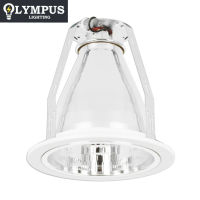
Olympus LED Round Vertical Recessed Pinlight Housing w/ Beehive Reflector E27 Fixture 4 inches / 6 inches
₱366.00
Buy on Lazada
Olympus LED Eyeball Gimbal Pinlight Downlight (Replaceable Bulb)
₱488.00
Buy on Lazada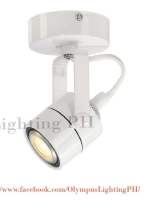
Olympus Surface Mounted LED Spotlight Rotatable 360 degrees (Replaceable bulb)
₱420.00
Buy on Lazada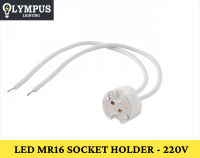
Olympus LED MR16 SOCKET HOLDER - 220V
₱41.00
Buy on Lazada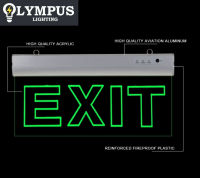
Olympus LED Exit Light Exit Sign Acrylic Green
₱665.00
Buy on Lazada
Olympus Tough TG-7 OM SYSTEM 50ft Waterproof Digital Camera with 4x Optical Zoom f/2.0 Lens 12MP BSI CMOS Sensor TruePic VIII Image Processor 4K Video Recording Wi-Fi GPS and Shock-Resistant Up to 7ft for Sports & Outdoor Photography | JG Superstore
₱30,999.00₱38,749.00
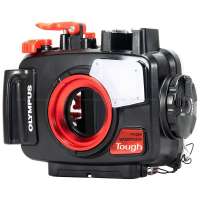
Olympus PT-059 Underwater Housing for The TG-6
₱22,280.14₱30,984.12
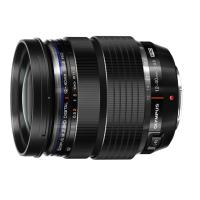
Olympus M.Zuiko Digital ED 12-40mm f/2.8 PRO Lens
₱49,287.88₱55,273.32
About Olympus
Olympus Corporation (オリンパス株式会社, Orinpasu Kabushiki-gaisha) is a Japanese multinational medical technology company headquartered in Tokyo. Established in 1919, the firm began as a manufacturer of microscopes and optical instruments before evolving into one of Japan’s most prominent precision optics companies. Today, its primary business focuses on medical technology, specifically endoscopy, surgical systems, and therapeutic devices 1.
It is important to distinguish the current corporate entity from its historical consumer imaging division. Olympus transferred its camera and imaging business to Japan Industrial Partners in 2021. That business now operates independently as OM Digital Solutions, with products marketed under the OM SYSTEM brand 1.
Company at a glance
| Field | Information |
|---|---|
| Company | Olympus Corporation |
| Japanese name | オリンパス株式会社 |
| Founded | October 12, 1919 |
| Founder | Takeshi Yamashita |
| Original name | Takachiho Seisakusho |
| Headquarters | Tokyo, Japan |
| Industry today | Medical technology |
| Historical industries | Microscopes, cameras, optical equipment, audio equipment |
| Major current field | Endoscopy and minimally invasive medical technology |
| Global presence | 40 countries/regions |
| FY2025 consolidated revenue | ¥997.3 billion |
| Corporate purpose | Making people’s lives healthier, safer and more fulfilling |
For the fiscal year ended March 2025, Olympus reported consolidated revenue of approximately ¥997.3 billion, with operations spanning roughly 40 countries and regions 1.
Origins
The history of Olympus dates back to 1919, when Takeshi Yamashita founded Takachiho Seisakusho in Tokyo. Unlike its modern identity, the original ambition was to establish domestic Japanese production of microscopes, reducing reliance on foreign technology at the time. The company released its first microscope, the Asahi, in 1920 2.
The trademark Olympus was subsequently adopted, inspired by Mount Olympus, the legendary home of the gods in Greek mythology. This choice also created a conceptual link to the company’s Japanese name, Takachiho, which holds significance in Japanese mythology 2.
The company underwent several name changes throughout its history:
- 1919: Takachiho Seisakusho
- 1942: Takachiho Optical Co., Ltd.
- 1949: Olympus Optical Co., Ltd.
- 2003: Olympus Corporation 2
Early optical technology
Early expertise at Olympus centred on precision optics. Microscope manufacturing was particularly significant as it established core capabilities in precision lens manufacturing, optical engineering, miniature mechanical components, imaging, and precision manufacturing. These foundational skills eventually supported both the camera business and the medical endoscopy division. Historically, cameras and medical equipment were not unrelated ventures; both emerged from the company’s fundamental proficiency in optics, imaging, miniaturisation, and precision engineering.
Entry into photography
Olympus entered the camera industry in the 1930s. In 1936, it introduced the Semi-Olympus I, its first camera featuring a Zuiko lens, which established the Zuiko optical brand 3.
Major photographic milestones
- 1936 — Semi-Olympus I: The company’s first Olympus-branded camera.
- 1959 — Olympus Pen: Utilised a half-frame format allowing twice as many exposures from a standard 35mm film roll, becoming one of the company’s most successful designs 3.
- 1963 — Olympus Pen F: A compact interchangeable-lens half-frame SLR that marked a milestone in compact camera design 3.
- 1972 — OM-1: Originally introduced as the M-1, this compact 35mm SLR helped establish the brand’s reputation for lightweight photographic equipment 3.
- 1990s — μ / Stylus: The compact μ series gained prominence in the consumer point-and-shoot market.
- 1996 — CAMEDIA: Marked entry into the consumer digital camera era with the C-800L/C-400L models 3.
- 2003 — E-1: An interchangeable-lens digital SLR based on the Four Thirds System 3.
- 2008 — Micro Four Thirds: Olympus and Panasonic announced this standard for smaller interchangeable-lens cameras 3.
- 2009 — PEN E-P1: Revived the historic PEN name in a modern mirrorless digital camera.
- 2012 — OM-D E-M5: Combined classic OM design philosophy with modern mirrorless technology 3.
Photographic philosophy
Olympus developed a distinctive philosophy prioritising small size, low weight, and innovative engineering. Rather than competing solely through larger sensors or professional bodies, the company focused on maximising photographic capability within compact form factors. This approach is evident from the Pen and OM series through to the digital Micro Four Thirds cameras.
The company pioneered or popularised technologies including compact SLR designs, half-frame photography, weather-resistant compacts, digital SLR systems, Micro Four Thirds, in-body image stabilisation, and computational photography. OM Digital Solutions describes the inherited imaging philosophy as emphasising compact and lightweight design, reliability, and unconventional approaches to imaging 3.
Medical technology development
Medical technology eventually surpassed cameras in strategic importance. Olympus began developing medical imaging early in its history, creating what it describes as the world’s first practical gastrocamera in 1950 2. This achievement allowed physicians to examine the interior of the stomach using a miniature optical imaging system.
Subsequent developments included gastroscopes, fibre-optic endoscopes, surgical endoscopes, endoscopic imaging systems, therapeutic instruments, and minimally invasive surgical technologies. By combining optics with miniaturisation, Olympus became a major player in gastrointestinal endoscopy and minimally invasive medicine, transforming its identity from an optical manufacturer to a medical technology company.
Endoscopy legacy
While cameras built consumer recognition, endoscopy established Olympus’s strategic importance in healthcare. Endoscopes allow physicians to visualise internal anatomy without conventional open surgery. The portfolio has expanded from early gastrocameras to include flexible and rigid endoscopes, high-definition digital imaging, surgical visualisation, treatment instruments, therapeutic devices, and system integration. Current solutions encompass endoscopes, laparoscopes, video-imaging systems, and related services 2. The medical business focuses heavily on early detection, diagnosis, and minimally invasive treatment 4.
Technological convergence
A notable aspect of the company’s history is that its two major identities—camera manufacturer and medical company—developed from similar technological foundations. Both domains require optics, miniaturisation, imaging, precision mechanics, electronics, and digital image processing. While a camera places a lens and sensor outside the body, an endoscope places a miniature optical system inside it. This overlap facilitated the transfer of expertise between consumer and medical imaging.
Camera product families
For decades, Olympus was among the world’s best-known Japanese camera brands. Major photographic families included:
- OM: Classic 35mm SLR system known for compactness and mechanical sophistication.
- PEN: Legendary half-frame family later revived as a digital mirrorless line.
- μ / Stylus: Compact consumer cameras famous for stylish, pocketable, and weather-resistant designs.
- CAMEDIA: Digital compact camera line.
- Four Thirds: Digital SLR standard using a smaller sensor format and dedicated lenses.
- Micro Four Thirds: Mirrorless system developed jointly with Panasonic.
- OM-D: Mirrorless family inspired by the original OM SLR concept.
- Tough: Rugged compact cameras designed for outdoor and underwater use.
Divestiture of imaging business
Significant restructuring occurred around 2020–2021 amidst a changing consumer camera market where smartphones increasingly replaced compact cameras. In 2020, Olympus announced an agreement to transfer its imaging business to Japan Industrial Partners (JIP). The transaction was completed on January 1, 2021, with the business transferred to a new entity, OM Digital Solutions Corporation 1. Consequently, cameras traditionally referred to as “Olympus cameras” are no longer produced by Olympus Corporation.
OM SYSTEM transition
Following the transfer, OM Digital Solutions introduced the OM SYSTEM brand. In October 2021, the company announced that imaging and audio products would transition to this new branding 5. The corporate lineage is as follows:
Olympus Corporation → Historical imaging division → Transferred to Japan Industrial Partners → OM Digital Solutions → OM SYSTEM
Modern products such as the OM-1, OM-5, and OM-series lenses belong to OM Digital Solutions rather than Olympus Corporation’s current medical business.
Current operations
Modern Olympus is primarily a medical technology company. Its business centres on technologies assisting healthcare professionals in detecting, diagnosing, and treating disease through minimally invasive procedures to improve patient outcomes. Major areas include endoscopic and therapeutic solutions 2.
The company states its purpose as “Making people’s lives healthier, safer and more fulfilling” 4. As of April 2025, Olympus reports operations in approximately 40 countries and regions, with technologies addressing more than 100 diseases or conditions 1.
Corporate identity shift
The modern corporate identity differs significantly from historical public perception. Previously associated with cameras, lenses, and microscopes, Olympus is now defined by medical technology, endoscopy, and minimally invasive treatment. Photography remains part of the corporate history but is no longer the main business. The separation of the imaging business marked the end of a significant era.
Separation of scientific and industrial businesses
Former scientific and industrial businesses have also been separated. Products such as microscopes, industrial inspection equipment, scientific imaging systems, and non-destructive testing equipment are now associated with Evident. Olympus explicitly states that former Life Science Solutions and Industrial Solutions products are no longer owned or controlled by Olympus Corporation and are marketed by Evident 2.
The historical ecosystem has effectively split into distinct successors:
| Historical Olympus activity | Current Entity |
|---|---|
| Medical technology | Olympus Corporation |
| Cameras / imaging | OM Digital Solutions / OM SYSTEM |
| Microscopes / life science | Evident |
| Industrial inspection | Evident |
This distinction is essential for research, as the name Olympus refers to different businesses depending on the period.
Major milestones
- 1919: Takeshi Yamashita establishes Takachiho Seisakusho in Tokyo to manufacture microscopes domestically 2.
- 1920: First Asahi microscope goes on sale.
- 1921: Olympus is registered as a trademark 2.
- 1936: First Olympus camera, the Semi-Olympus I, is launched.
- 1949: Company becomes Olympus Optical Co., Ltd.
- 1950: Development of the world’s first practical gastrocamera.
- 1959: Olympus Pen launches.
- 1963: Pen F launches.
- 1972: OM-1 launches.
- 1980s–1990s: Becomes a major manufacturer of compact film cameras.
- 1996: Enters consumer digital photography with CAMEDIA.
- 2003: Company name becomes Olympus Corporation.
- 2003: E-1, the first Four Thirds DSLR, launches.
- 2008: Olympus and Panasonic announce the Micro Four Thirds standard.
- 2009: PEN E-P1 launches.
- 2012: OM-D E-M5 launches.
- 2020: Announces planned transfer of imaging business.
- 2021: Imaging business officially transferred to OM Digital Solutions 1.
- 2021: OM Digital Solutions introduces the OM SYSTEM brand 5.
- 2026: Continues to operate primarily as a global medical technology company, expanding therapeutic and endoscopic portfolios 1.
Brand philosophy
The corporate narrative encompasses several recurring themes:
- Precision: Originating in precision optical instruments, this engineering culture persisted throughout the company’s history.
- Miniaturisation: The company became renowned for reducing the size of sophisticated technology in both cameras and medical instruments.
- Imaging: Creating useful images has been central to technological development, from microscopes to endoscopes.
- Innovation: Designs often diverged from mainstream approaches, including half-frame cameras, compact SLRs, and minimally invasive medical devices.
- Human benefit: Contemporary purpose is explicitly focused on healthcare and improving quality of life 2.
Historical significance
Olympus is notable for its long evolution across microscopes, cameras, digital imaging, and medical imaging. Its history comprises three major eras:
1919–1950s: The Optical Era
Microscopes, lenses, and precision instruments.1950s–2010s: The Imaging Era
Cameras, photographic lenses, compact cameras, SLRs, and mirrorless systems alongside expanding medical technology.2020s–present: The Medical-Technology Era
Focus shifts primarily to healthcare, while the former camera business continues independently under OM SYSTEM.
Distinction between Olympus and OM SYSTEM
Understanding the current brand landscape requires distinguishing between the two entities. Olympus Corporation and OM SYSTEM share historical lineage but are separate today.
- Olympus Corporation: Medical technology, endoscopy, surgical technologies, therapeutic devices, and healthcare.
- OM Digital Solutions / OM SYSTEM: Mirrorless cameras, M.Zuiko lenses, Tough cameras, audio products, and imaging technology.
Olympus Corporation confirmed the imaging business transfer in 2021, while OM Digital Solutions describes its history as the continuation of the former Olympus Imaging business 1.