Shop on Lazada
P&G products
![[Japan No.1] P&G Lenor Happiness Aroma Jewel Laundry 420ml Long Lasting Scent: Rose Lavender Pomegranate Bouquet Jasmine 日本宝洁衣物柔顺剂颗粒精油持久留香珠除臭防静电](https://filebroker-cdn.lazada.com.ph/kf/S9ef8447e9706492c971ee75864a34b952.jpg_200x200q80.jpg)
[Japan No.1] P&G Lenor Happiness Aroma Jewel Laundry 420ml Long Lasting Scent: Rose Lavender Pomegranate Bouquet Jasmine 日本宝洁衣物柔顺剂颗粒精油持久留香珠除臭防静电
₱750.00₱899.00
P&G Lenor Happiness Aroma Jewel Laundry 420ml 日本宝洁护衣长效留香珠
₱780.00₱899.00
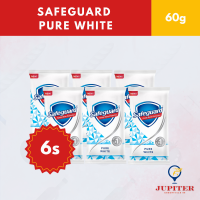
Safeguard Pure White 60g x 6
₱157.50
Buy on Lazada
Metamucil 4in1 Multi Health Fiber!! REAL SUGAR Orange Smooth (3.4 LBS) 1560grams
₱1,999.00₱3,500.00
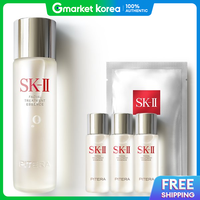
P&G | Sk-Ii Brand 8A Pitera Essence 230ml Set
₱13,928.63₱20,809.66
![[Japan Imported] P&G Bold Laundry Detergent Gelball Premium Fresh Clean Laundry Ball Laundry Beads Ariel 12Pcs / 11Pcs 宝洁碧浪4D洗衣凝珠除螨除菌抑菌强去污多效洗衣球家用](https://ph-live.slatic.net/p/24806496bd4aca56721085853e4a85f9.jpg_200x200q80.jpg)
[Japan Imported] P&G Bold Laundry Detergent Gelball Premium Fresh Clean Laundry Ball Laundry Beads Ariel 12Pcs / 11Pcs 宝洁碧浪4D洗衣凝珠除螨除菌抑菌强去污多效洗衣球家用
₱386.00₱499.00
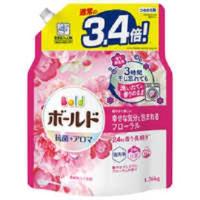
P&G Bold Liquid Laundry Detergent Premium Blossom Scent Refill Extra Jumbo 1360g
₱550.00₱600.00
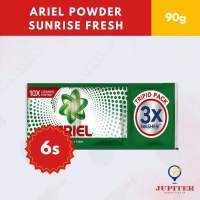
Ariel Powder Sunrise Fresh 90g x 6
₱158.00
Buy on LazadaAbout P&G
The Procter & Gamble Company, commonly referred to as P&G, is a prominent American multinational consumer goods corporation headquartered in Cincinnati, Ohio. Established in 1837 by brothers-in-law William Procter and James Gamble, the firm originated as a soap and candle manufacturer before evolving into one of the world’s largest producers and marketers of daily consumer products.1
Currently, P&G maintains operations in approximately 70 countries, with its products available in roughly 180 countries and territories. Its extensive portfolio features widely recognised household names such as Tide, Ariel, Pampers, Gillette, Oral-B, Pantene, Head & Shoulders, Olay, Vicks, Always, Dawn, Febreze, Crest, and SK-II.2
Basic information
| Item | Information |
|---|---|
| Full name | The Procter & Gamble Company |
| Common name | P&G |
| Founded | 1837 |
| Founders | William Procter and James Gamble |
| Origin | Cincinnati, Ohio, United States |
| Headquarters | Cincinnati, Ohio, United States |
| Industry | Consumer packaged goods / consumer goods |
| Major product areas | Beauty, grooming, health care, fabric & home care, baby/feminine/family care |
| Geographic reach | Operations in ~70 countries; products sold in ~180 countries and territories |
| Current CEO | Shailesh G. Jejurikar |
| Stock | NYSE: PG |
| Fiscal 2026 net sales | $87.0 billion |
| Fiscal 2026 operating income | $21.2 billion |
The financial figures above pertain to the fiscal year ended 30 June 2026. For this period, P&G reported net sales of $87.032 billion, an increase from $84.284 billion in fiscal 2025.3
Corporate identity and brand structure
It is essential to distinguish that P&G is not primarily a single consumer brand. Rather, it functions as a brand-owning corporation that develops, manufactures, markets, and distributes a vast portfolio of individual brands.
For instance:
P&G → Fabric & Home Care → Tide
or
P&G → Baby Care → Pampers
or
P&G → Grooming → Gillette
Consumers frequently recognise Tide, Pampers, or Gillette without necessarily associating them with P&G as the parent company. This multi-brand architecture is a defining characteristic of the corporation. Its strategic focus remains on categories where consumers use products frequently and where product performance significantly influences brand choice.4
History
Foundation in 1837
P&G was founded in 1837 in Cincinnati, Ohio. William Procter was a candle maker, whilst James Gamble was a soap maker. As they were married to sisters, their father-in-law, Alexander Norris, encouraged them to form a business partnership. Their respective enterprises were merged, creating what became Procter & Gamble.5
Consequently, the company’s early output was intrinsically linked to soap, candles, fats, and related household goods.
Ivory and the origins of modern branding
A landmark product in P&G’s early history was Ivory soap, developed in the late 19th century. Ivory’s significance extended beyond its utility as soap; it demonstrated P&G’s increasingly sophisticated approach to:
- Product innovation
- Packaging
- Advertising
- Branding
- Consumer research
- Distribution
P&G cites Ivory as an early example of its enduring philosophy of achieving “superiority” across product, packaging, communication, retail execution, and value proposition.6
This development presaged the business model for which P&G would later become renowned: building powerful brands around technically differentiated everyday products.
Invention of modern brand management
One of P&G’s most significant contributions to business history is the development of brand management. In 1931, P&G executive Neil McElroy established a system wherein individual brands were assigned dedicated managers responsible for understanding consumers, developing marketing strategies, and coordinating the brand’s business operations.
This framework profoundly influenced modern marketing organisations. In simplified terms:
Traditional model:
Company → Products → Sell products
P&G-style brand-management model:
Company → Brand team → Consumer insight → Product + advertising + packaging + distribution → Brand growth
This system helped establish the concept that a company could manage multiple competing brands as distinct businesses, each with unique positioning and consumer strategies. P&G identifies 1931 as the year McElroy created brand management.7
Major historical innovations
P&G’s history is closely intertwined with consumer-product innovation. Notable milestones include:
| Year | Development |
|---|---|
| 1837 | P&G founded |
| 1879 | Ivory soap developed |
| 1890 | First P&G R&D laboratory opened |
| 1924 | P&G conducted its first consumer research |
| 1931 | Modern brand-management system established |
| 1946 | Tide laundry detergent introduced |
| 1955 | Crest toothpaste launched |
| 1961 | Pampers introduced |
| 1961 | Head & Shoulders introduced |
| 1980s–2000s | Major international expansion and portfolio development |
| 2005 | P&G acquired Gillette |
| Today | Focused portfolio of major consumer brands |
These milestones illustrate a recurring P&G pattern: scientific research + consumer insight + branding + mass distribution.8
The Gillette acquisition
A pivotal event in modern P&G history was the acquisition of The Gillette Company, completed in 2005. This transaction significantly strengthened P&G’s position in:
- Shaving
- Razors
- Men’s grooming
- Personal care
It also added brands and businesses including Gillette, Braun, and Oral-B to the P&G portfolio. The deal highlighted a key element of P&G’s strategy: rather than creating every major brand internally, the company can acquire established brands with strong consumer loyalty and integrate them into its global system.
Current business structure
P&G currently organises its business into five major operating sectors, encompassing 10 product categories.9
Fabric & Home Care
Products used for laundry and household cleaning. Major brands include:
- Tide
- Ariel
- Downy
- Gain
- Dawn
- Febreze
- Ambi Pur
- Fairy
- Lenor
Baby, Feminine & Family Care
Major brands include:
- Pampers
- Always
- Whisper
- Bounty
- Charmin
Beauty
Major brands include:
- Pantene
- Head & Shoulders
- Herbal Essences
- Olay
- SK-II
Health Care
Major brands include:
- Oral-B
- Crest
- Vicks
Grooming
Major brands include:
- Gillette
- Gillette Venus
- Braun
- The Art of Shaving
P&G’s official brand portfolio includes many additional regional and specialised brands.10
Most famous brands
Some of the company’s best-known brands can be categorised as follows:
Laundry & household
Tide, Ariel, Downy, Gain, Dawn, Febreze, Fairy, Lenor
Baby
Pampers
Hair care
Pantene, Head & Shoulders, Herbal Essences
Skin & personal care
Olay, SK-II, Old Spice
Grooming
Gillette, Gillette Venus, Braun
Oral care
Oral-B, Crest
Personal health
Vicks
Feminine care
Always, Whisper
Family care
Bounty, Charmin
P&G’s portfolio varies by country; consequently, a consumer in the Philippines, the United States, Japan, or Europe may encounter somewhat different P&G brands.11
Business model
P&G’s business model can be summarised as:
Research → Innovation → Brand building → Manufacturing → Distribution → Retail → Repeat purchase
The company concentrates on daily-use categories where consumers frequently make choices based on product performance.12
For example, regarding laundry detergent:
- Consumers need to wash clothes regularly.
- They compare products based on cleaning performance, scent, convenience, and price.
- P&G develops technologies to improve performance.
- It builds a recognisable brand such as Tide or Ariel.
- It invests heavily in advertising and consumer communication.
- Retailers distribute the product widely.
- Consumers repurchase it.
- P&G uses consumer feedback and research to improve future products.
This creates a high-frequency, repeat-purchase business.
Importance of branding
P&G is arguably as much a marketing and brand-management company as it is a manufacturing entity. Historically, the company has invested heavily in:
- Consumer research
- Advertising
- Packaging
- Product positioning
- Brand identity
- Retail execution
- Product innovation
Its current strategy describes this as “superiority” across five vectors:
- Product
- Package
- Brand communication
- Retail execution
- Value
P&G argues that winning in consumer goods requires all five elements to work in concert rather than relying solely on product technology.13
Current strategy
P&G refers to its current approach as the Integrated Growth Strategy. It is built around five major choices:
Portfolio
Concentrate on daily-use categories where product performance influences brand choice.
Superiority
Ensure the product, packaging, communication, retail experience, and value proposition are superior to alternatives.
Productivity
Improve efficiency to generate resources for investment and growth.
Constructive disruption
Continuously evolve products, technologies, processes, and business practices rather than becoming complacent.
Organization
Maintain an organisation that is agile, empowered, and accountable.
P&G emphasises that these elements are designed to reinforce one another rather than operate independently.14
Financial scale
P&G is enormous by consumer-goods standards. For fiscal 2026, the company reported:
- Net sales: $87.0 billion
- Operating income: $21.2 billion
- Net sales growth: Approximately 3% versus fiscal 2025
Fiscal 2025 had produced $84.3 billion in sales.15
For comparison, P&G’s fiscal 2025 sales were divided approximately as follows:
| Business | Share of sales |
|---|---|
| Fabric & Home Care | 36% |
| Baby, Feminine & Family Care | 24% |
| Beauty | 18% |
| Health Care | 14% |
| Grooming | 8% |
North America accounted for about 52% of fiscal 2025 sales, followed by Europe at 22%.16
Competitive advantage
P&G’s competitive strength derives from several synergistic factors.
Brand equity
Brands such as Tide, Pampers, and Gillette have accumulated decades of consumer recognition.
Distribution
P&G maintains extensive relationships with retailers and distributors globally.
R&D
The company has invested in research and development for generations. Its first dedicated R&D laboratory dates back to 1890.17
Consumer knowledge
P&G possesses a particularly long history of formal consumer research, beginning at least as early as its documented consumer-research work in 1924.18
Scale
Producing and marketing enormous quantities of everyday products affords P&G significant economies of scale.
Portfolio
If one category underperforms, P&G has other major categories and brands generating revenue.
Innovation
Innovation remains central to P&G. The company does not define innovation purely as inventing new products; it also focuses on:
- Formulations
- Packaging
- Manufacturing processes
- Digital technology
- Supply chains
- Consumer experiences
- Sustainability
- New business models
For example, P&G describes Tide evo as a major laundry innovation involving concentrated detergent fibres and recyclable packaging, with the underlying technology protected by numerous patents.19
Historically, Tide, Crest, Pampers, Head & Shoulders, and other products similarly emerged from attempts to solve specific consumer problems.20
Advertising legacy
P&G has exerted enormous influence on advertising. The company helped popularise the concept that a consumer product should have:
A distinct brand + a distinct consumer promise + consistent communication.
This is one reason P&G is frequently discussed in marketing and MBA courses. Its brand-management philosophy essentially asks:
Who is the consumer? What problem are they trying to solve? Why should they choose our brand?
That thinking is now standard throughout the consumer-goods industry, but P&G was among the companies that helped institutionalise it.
Leadership
As of 2026, Shailesh G. Jejurikar serves as P&G’s Chairman of the Board, President, and Chief Executive Officer.21
P&G’s leadership structure is organised around its business sectors and global corporate functions, with executives responsible for areas such as Beauty, Grooming, Health Care, Fabric & Home Care, Baby/Feminine/Family Care, and finance.22
Corporate culture
P&G’s culture has historically emphasised:
- Integrity
- Leadership
- Ownership
- Innovation
- Consumer understanding
- Internal talent development
- Long-term brand building
The company has also historically promoted employee development and profit-sharing. P&G describes its 1887 profit-sharing programme as one of the oldest continuous systems of its kind in the United States.23
A notable feature of P&G is its reputation for developing managers internally. Many executives spend significant portions of their careers moving through different P&G businesses and markets.
Sustainability and social responsibility
P&G has increasingly integrated environmental and social considerations into its business strategy. Its current strategy identifies environmental sustainability as one of four areas intended to strengthen the broader growth strategy, alongside supply chain, digital capabilities, and the employee value proposition.24
Areas of focus include:
- Reducing environmental footprint
- Packaging improvements
- Responsible sourcing
- Supply-chain efficiency
- Water and energy use
- Community initiatives
- Inclusion and diversity
Crucially, P&G increasingly presents sustainability not merely as philanthropy but as something connected to product development, manufacturing, packaging, and operations.
Historical significance
P&G’s importance extends beyond the products it sells. It has influenced several areas of modern business:
Marketing
P&G helped establish modern brand management.
Consumer research
It was an early large-scale user of systematic consumer research.
Advertising
It helped develop sophisticated mass-market advertising and brand-building techniques.
Product innovation
It created or popularised numerous everyday products and technologies.
Global consumer goods
It became a model for how a company can manage a portfolio of global brands across many countries.
Corporate management
Its management practices have influenced generations of executives and marketing professionals.
Challenges
Despite its scale, P&G faces fundamental challenges common to multinational consumer-goods companies.
Private-label competition
Retailers increasingly sell cheaper store brands, putting pressure on premium branded products.
Inflation and input costs
Commodity, packaging, energy, labour, and transportation costs can squeeze margins.
Changing consumer behaviour
Consumers increasingly research products online and can switch brands more easily.
E-commerce
Traditional supermarket distribution must coexist with online marketplaces and direct-to-consumer channels.
Emerging-market competition
Local companies can sometimes understand regional consumers better or compete at lower prices.
Sustainability expectations
Consumers, regulators, and investors increasingly expect companies to reduce environmental impacts.
Portfolio management
P&G must continually decide which brands and categories deserve investment and which should be reduced or exited.
The company explicitly describes portfolio choices, supply-chain changes, and organisational redesign as important areas for accelerating future growth.25
Distinction from typical brands
Perhaps the most critical distinction to understand is that P&G itself is a corporation, not a single consumer product brand in the same sense as Tide or Pampers. It functions as an ecosystem of brands. This structure allows P&G to build multiple billion-dollar brands under one corporate platform.
Summary
If one were to explain P&G in a single sentence:
P&G is a 19th-century Cincinnati-founded American consumer-goods corporation that built a global business by combining scientific product innovation, sophisticated brand management, mass distribution, and a portfolio of powerful everyday-use brands.
The simplest way to remember P&G is as “the company behind the brands.” When encountering:
Pampers → baby
Tide/Ariel → laundry
Downy → fabric care
Dawn → dishwashing
Pantene → hair
Head & Shoulders → scalp care
Olay/SK-II → beauty
Oral-B/Crest → oral care
Gillette → grooming
Vicks → health
There is a high probability that one is looking at part of P&G’s enormous brand ecosystem.26
Ultimately, P&G’s remarkable achievement is not simply that it has existed since 1837. Its true accomplishment lies in transforming from a soap-and-candle manufacturer into a global system for creating, managing, marketing, and scaling consumer brands. Its history can therefore be understood through four overarching concepts:
Consumer insight → Innovation → Brand building → Global scale.
That formula has made P&G one of the defining companies in the history of modern consumer marketing.27
References
- | 2022 Annual Report None — | —
- The Legacy of Multi-Generational Families at P&G: Meet the Lea Family | P&G
- P&G Announces Fourth Quarter and Fiscal Year 2026 Results
- Citizenship Report 2023 | P&G
- A Portfolio of Daily-Use Categories | P&G 2025 Annual Report
- Đổi mới | P&G
- Well Positioned for the Future | P&G 2025 Annual Report
- Innovation | P&G
- Innovation | Procter and Gamble
- Brands | P&G
- Các nhãn hiệu và các sản phẩm của P&G
- P&G Releases 2025 Annual Report | P&G
- P&G’s Integrated Strategy | P&G 2025 Annual Report
- Organization | P&G 2025 Annual Report
- Financial Highlights 2025 | P&G 2025 Annual Report
- Constructive Disruption | P&G 2025 Annual Report
- P&G History – A legacy of forward-thinking
- P&G leadership team | About P&G
- An American Legacy | P&G
- Accelerating Growth and Value Creation | P&G 2025 Annual Report
- Pampers Swaddlers – from America’s #1 Diaper Brand1 – Are Now Fragrance Free
- P&G Announces Fiscal Year 2026 First Quarter Results
- P&G Legal Entities that may Process Canadian Consumers’ Personal Data
- P&G Announces Fourth Quarter and Fiscal Year 2025 Results
- A Common Mistake: The Long History of Misspelling Procter & Gamble
- Annual Report 2025 | Procter and Gamble
- Downloads | P&G 2025 Annual Report