Shop on Lazada
Paperblanks products
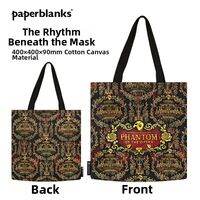
Paperblanks | Retro Art Tote Bag High Aesthetic Versatile Famous Painting Print
₱2,429.32
Buy on Lazada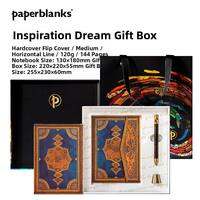
Paperblanks | Safavid Series Notebook Elegant for Business Study
₱4,418.33
Buy on Lazada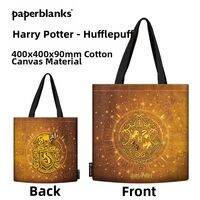
Paperblanks | Harry Potter Collection Eco-friendly Tote Bag
₱2,211.62₱2,211.64
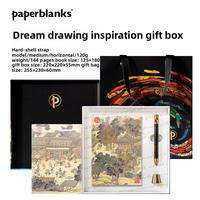
Paperblanks | Vintage Chinese Style Gift-quality Notebook
₱4,418.82
Buy on Lazada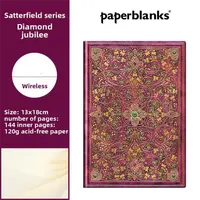
Paperblanks | Handwritten Notebook Satkley Series Student Gift
₱2,562.43
Buy on Lazada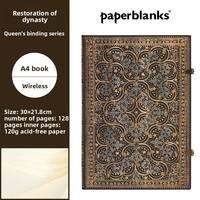
Paperblanks | Retro Artistic Elegant Journal Notebook
₱3,957.71
Buy on Lazada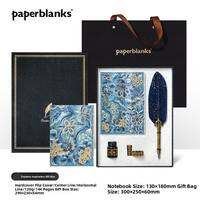
Paperblanks | Embellished Hanfu Embroidery Diary Blue Willow Journal Stylish And Visually Appealing
₱3,939.66
Buy on Lazada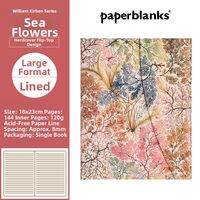
Paperblanks | Elegant Diary Book
₱3,386.31
Buy on LazadaAbout Paperblanks
Overview
Paperblanks is a premium stationery brand founded in Vancouver, Canada, in 1992. It is best known for decorative journals, notebooks, planners, and paper goods that draw inspiration from global art, literature, traditional bookbinding, and cultural heritage.1 The brand was established with the intention of creating high-quality everyday journals that function as aesthetic objects rather than purely utilitarian writing pads.1
Today, Paperblanks centres its identity on creativity, self-expression, craftsmanship, and the relationship between art and the written word. Its products are distinguished by ornate covers featuring historical artwork, elaborate patterns, decorative edges, ribbon markers, distinctive closures, and book-like construction. The current catalogue extends beyond journals to include planners, bookmarks, pencils, pencil cases, tote bags, gift sets, puzzles, and other creative stationery items.
Hachette currently describes Paperblanks as the “number two premium stationery brand worldwide” and identifies it as a global brand founded in 1992.2
| Field | Information |
|---|---|
| Brand | Paperblanks |
| Founded | 1992 |
| Origin | Vancouver, British Columbia, Canada |
| Industry | Stationery, publishing/creative products, journals |
| Best known for | Decorative journals and notebooks |
| Core aesthetic | Historic art, decorative bookbinding, manuscripts, patterns and cultural art |
| Main audience | Writers, artists, journalers, students, stationery enthusiasts and gift buyers |
| European headquarters | Dublin, Ireland |
| Positioning | Premium / design-led stationery |
| Parent/publishing relationship | Associated with Hachette’s publishing group today |
| Official website | Paperblanks.com |
History
1992 — The beginning
Paperblanks began in Vancouver, Canada, in 1992 with the specific goal of creating what its founders considered the perfect everyday journal.1 Rather than adopting a conventional stationery aesthetic, the company looked to historic decorative arts and cultural traditions for inspiration. Early covers featured botanical illustrations, Japanese imagery, Buddhist calligraphy, Zen brush artwork, William Morris designs, and medieval manuscript imagery.3
This approach was significant because Paperblanks treated the cover itself as an artwork, positioning the notebook closer to a small decorative book than a disposable writing pad.
1995 — Literary manuscripts
In 1995, Paperblanks introduced its Literary Manuscripts collection, an early predecessor to later collections exploring embellished manuscripts and old-leather aesthetics. This release helped establish one of the brand’s recurring themes: the connection between writing, historical books, and visual art.
2002 — Expansion into Europe
The brand expanded into Europe in 2002, marking a pivotal stage in its development from a Canadian stationery company into an international brand.
2004–2005 — Product and geographic expansion
Paperblanks introduced magnetic wrap closures in 2004 and opened its European headquarters in Dublin, Ireland, in 2005. The establishment of the Dublin office became a central component of the brand’s international operations.
2011 onward — Beyond journals
The product range gradually expanded beyond traditional journals. In 2011, the company began offering planners and address books, followed over subsequent years by additional stationery and creative products.
2017–2025 — Elaborate design language
The brand continued to develop physical features such as metal clasp closures and ornamental book-edge printing. It also introduced collections celebrating Canadian artistic heritage, including the Alistair Bell Collection.
In 2022, Paperblanks celebrated its 30th anniversary and introduced new products such as pencil cases and dot-grid planners.1 In 2024, it further developed offerings for the bullet-journaling community. In 2025, the brand introduced an updated visual identity, including a refreshed logo and distinctive icon.
Founding concept
The fundamental Paperblanks concept involves taking the beauty and craftsmanship traditionally associated with books and historic decorative art and applying it to an everyday journal. This distinguishes the brand from mass-market notebook manufacturers.
While a conventional notebook primarily sells paper and functionality, Paperblanks attempts to sell a combination of:
- Writing instrument
- Decorative object
- Personal keepsake
- Art reproduction
- Gift
- Everyday companion
The company describes its journals as spaces for people to write, sketch, remember, and dream, emphasizing the emotional purpose of the product alongside its functional utility.
Design philosophy
Design is the defining characteristic of Paperblanks. Rather than developing every cover from a new graphic identity, the brand maintains an extensive design archive based on historical artworks, decorative traditions, manuscripts, textiles, patterns, artists, and cultural objects.3
Its early catalogue drew from sources including:
- 18th-century botanical illustration
- Japanese Edo-period screens and scrolls
- Buddhist calligraphy
- Zen brushwork
- William Morris
- Medieval manuscripts
- Decorative papers
- Historical bookbinding3
Art as the cover
A key characteristic of Paperblanks is that the cover often serves as the principal attraction. Instead of obscuring historical inspiration, the company generally provides information about the source artwork. Endpapers typically include credit and copyright information as well as historical background regarding the original piece. Consequently, purchasing a Paperblanks journal can resemble acquiring a miniature reproduction of a decorative-art object.
Major design influences
The Paperblanks catalogue draws from a broad range of visual traditions.
William Morris and Arts & Crafts
Floral patterns associated with William Morris and the Arts and Crafts movement are particularly compatible with the Paperblanks aesthetic. The company has produced numerous designs based on Morris-inspired patterns, including floral and botanical compositions.
Manuscripts
Illuminated manuscripts and historic handwriting serve as another major source of inspiration. This connects the physical book with the act of writing through the visual language of the manuscript.
Decorative bookbinding
Paperblanks frequently takes inspiration from historical bindings, including elaborate leather, gilded, and ornamental styles. Some collections intentionally imitate the appearance of old leather-bound books.
Marbled paper
The brand incorporates historic marbled-paper traditions. For example, Cockerell designs reference the work of Sandy Cockerell and the broader history of decorative marbled papers.
Global cultural art
Paperblanks does not limit itself to European art. Its archive includes influences from Japan, India, Islamic decorative traditions, botanical illustration, literature, and many other artistic and cultural sources. This global approach is central to the brand’s identity.
Product range
Although journals remain the core category, the modern catalogue is considerably broader. The current lineup lists hundreds of products across categories including journals, planners, bookmarks, pencils, pencil cases, tote bags, gift sets, and puzzles.
Journals
Journals remain the flagship category. Paperblanks offers a wide variety of lined, unlined, and dot-grid formats in both hardcover and softcover constructions. Options vary by size, closure system, paper weight, and edition type, including special artist and literary collections. The current journal catalogue contains hundreds of designs. Common sizes include formats such as Mini, Midi, Maxi, and Ultra, depending on the particular collection.
Planners
The brand has expanded significantly into planners, including products aimed at traditional planning as well as bullet journaling and dot-grid users.
Address books
Address books were among the company’s earliest major expansions beyond journals.
Bookmarks
Bookmarks fit naturally into the book-oriented identity of Paperblanks and are frequently coordinated with journal designs.
Pencil cases and writing accessories
The company has expanded into pencil cases and other tools intended for creative users.
Gift products
Paperblanks produces boxed sets and other gift-oriented products, reinforcing its positioning as a premium stationery and lifestyle-gift company rather than solely a notebook manufacturer.
Construction and materials
Paperblanks places considerable emphasis on the physical construction of its books. Depending on the specific product, features may include:
- Decorative printed covers
- Hardcover construction
- Thread stitching
- Glue binding where appropriate
- Ribbon page markers
- Elastic or wrap closures
- Magnetic closures
- Metal clasps
- Decorative edge printing
- Back-cover or memento pouches
- Special endpapers
Current products may use 100% recycled binder boards, decorative cover papers, satin ribbon markers, and acid-free sustainable-forest paper.1 These details are intended to make the journal resemble a crafted book rather than a mass-produced notebook.
Paper quality
Paperblanks uses different paper weights depending on the product. Current examples include 100 gsm and 120 gsm paper, with specifications varying between collections.1 The company describes its journal paper as acid-free, sustainable-forest paper, and standard construction incorporates recycled binder boards. This aligns with the brand’s positioning of journals as objects intended to be kept and revisited rather than quickly consumed.
Sustainability
Sustainability is an explicit component of Paperblanks’ product specifications. According to the company, its paper is derived from sustainable forest pulp, binder boards use 100% recycled materials, and books use FSC-certified paper. Individual product pages identify features such as 100% recycled binder boards, sustainable forest paper, and acid-free paper.1
Sustainability is presented as a materials and production consideration, while the primary consumer proposition remains design, craftsmanship, and creative expression.
Brand identity
The Paperblanks identity is built upon five major concepts:
- Art: The brand uses historical and contemporary art as a primary source for product design.
- Books: Products deliberately evoke the appearance and tactile experience of traditional books.
- Writing: The fundamental purpose is providing a beautiful space to write, draw, and record life.
- Discovery: The brand emphasizes discovering artworks and cultural traditions through its products.
- Self-expression: The finished journal becomes the user’s own object; while the cover belongs to a historical artistic tradition, the pages contain the customer’s personal story.
This distinction is central to the brand’s philosophy: Paperblanks provides the visual history, while the user provides the personal history.
Relationship with art and culture
A distinctive characteristic of Paperblanks is its effort to credit the original sources of its designs. Product information frequently explains the artwork, artist, movement, or historical tradition behind a particular cover, rather than presenting ornate patterns as anonymous decorative graphics.1 This effectively turns some products into portable art-history objects.
Customers may encounter covers inspired by William Morris, medieval manuscripts, Japanese art, botanical illustration, historic bookbinding, decorative textiles, famous literary works, and fine-art traditions. The notebook thus serves two functions: a canvas for the customer’s writing and a window into an existing artistic tradition.
Paperblanks and literature
Literature is a recurring element in the catalogue. The brand has produced designs associated with literary works and authors, and the current catalogue includes products inspired by figures such as Jane Austen, Johann Wolfgang von Goethe, Gabriel García Márquez, Astrid Lindgren, and Carlo Collodi.1 This aligns with the broader philosophy that a journal is simultaneously an object for reading, writing, and preserving stories.
Special editions and collaborations
Paperblanks develops themed and special-edition collections alongside historically inspired designs. The contemporary catalogue includes collaborations and licensed collections, such as Harry Potter/Hogwarts-related products, literary designs, and art-focused collections.1 This allows the company to combine its traditional decorative-art identity with recognizable contemporary cultural properties.
International presence
Although Paperblanks originated in Vancouver, its business developed internationally. A major milestone was the expansion into Europe in 2002, followed by the opening of the European headquarters in Dublin in 2005. The brand is now positioned as an international stationery company.
Canada remains part of its identity; Paperblanks introduced the Alistair Bell Collection in 2020 as its first collection specifically honouring its Canadian roots.
Corporate positioning
Paperblanks occupies a distinct space within the stationery market. It is not positioned as a cheap everyday notebook brand, a minimalist productivity brand, a conventional office-supplies company, or a purely fine-art publisher. Instead, it sits between stationery, publishing, giftware, decorative arts, and lifestyle products.
Hachette describes it as a premium stationery brand,2 while Paperblanks itself emphasizes creativity, self-expression, and the artistic stories behind its designs.1 This explains why Paperblanks products tend to have a noticeably more decorative appearance than brands such as Moleskine or many minimalist notebook companies.
Distinctive characteristics
| Characteristic | Paperblanks |
|---|---|
| Primary product | Decorative journals |
| Design philosophy | Art and cultural heritage |
| Visual style | Ornate, historical, colorful, book-like |
| Core emotion | Inspiration and self-expression |
| Functional focus | Writing, drawing, planning and recording |
| Material focus | Premium-feeling construction and paper |
| Cultural element | Strong |
| Gift appeal | Very strong |
| Minimalist aesthetic | Low |
| Decorative aesthetic | Very high |
The brand’s primary differentiator is that the notebook itself is designed to be an object worth keeping. Paperblanks does not primarily sell notebooks; it sells the experience of owning and filling a beautiful book. This distinction underpins the brand’s emphasis on artwork, historical provenance, materials, craftsmanship, and collectability.1
Timeline
- 1992 — First Paperblanks collection launched in Vancouver.
- 1995 — Literary Manuscripts collection introduced.
- 2002 — Paperblanks launches in Europe.
- 2004 — Magnetic wrap closures introduced.
- 2005 — European headquarters established in Dublin.
- 2011 — Product range expands beyond journals into planners and address books.
- 2017 — 25th-anniversary edition and new design developments.
- 2018 — Ornamental book-edge printing introduced.
- 2020 — Alistair Bell Collection introduced, celebrating Canadian roots.
- 2022 — 30th anniversary; additional stationery products introduced.1
- 2024 — Further expansion of dot-grid/bullet-journaling products.
- 2025 — Updated brand identity, including new logo and icon.
- 2026 — New website and Spring 2026 collection introduced, with expanded collaborations and contemporary designs.