Shop on Lazada
PB Swiss Tools products
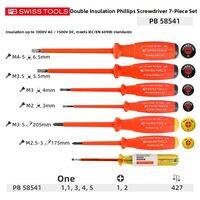
PB Swiss Tools | Insulated Screwdriver Electrician Tool
₱12,294.44
Buy on Lazada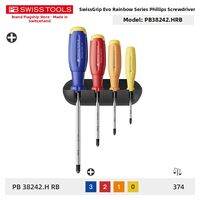
PB Swiss Tools | Colorful High Hardness Cross And Flat Head Screwdriver Set
₱6,840.72
Buy on Lazada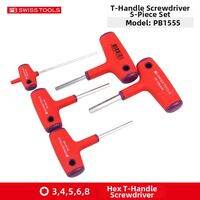
PB Swiss Tools | High Hardness Long Ball Head T-Type Hex Wrench
₱7,032.71
Buy on Lazada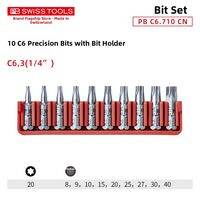
PB Swiss Tools | Extended Super Hard Star Screwdriver Bits
₱6,122.24
Buy on Lazada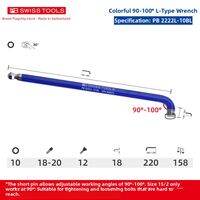
PB Swiss Tools | Rainbow Colored Extended Hard Ball End Hex Wrench
₱2,495.84
Buy on Lazada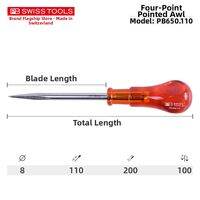
PB Swiss Tools | Ultra Sharp Hole Punching Drill
₱1,936.86
Buy on Lazada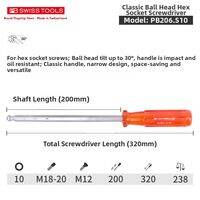
PB Swiss Tools | Small Straight Hex Screwdriver Single Tool
₱3,515.48
Buy on Lazada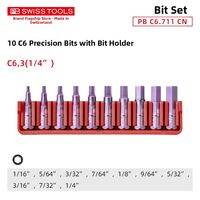
PB Swiss Tools | British Standard Hexagonal Bit Set
₱5,302.16
Buy on LazadaAbout PB Swiss Tools
PB Swiss Tools is a Swiss family-owned manufacturer best known for premium hand tools, particularly screwdrivers, hex keys, bits, striking tools, and precision tools. The company also manufactures specialized medical instruments for implant removal. Its defining characteristic is an unusually strong commitment to Swiss-based development and manufacturing; the company states that its products are 100% developed and manufactured in Switzerland.1
The company traces its origins to 1878, when it began as a village blacksmith’s shop in Wasen, in Switzerland’s Emmental region. Today, it remains family-owned, employs around 200 people, and operates production facilities in the Emmental. Its current CEO is Marco Baumann, while Eva Jaisli serves as President of the Board of Directors.1
Company overview
| Attribute | Details |
|---|---|
| Company / brand | PB Swiss Tools |
| Legal company | PB Swiss Tools AG |
| Founded | 1878 |
| Origin | Wasen, Emmental, Switzerland |
| Headquarters | Wasen, Bern, Switzerland |
| Ownership | Family-owned |
| Industry | Hand tools, precision tools, medical instruments |
| Main markets | Professional trades, industry, precision work, electronics, automotive, maintenance, medical applications |
| Manufacturing philosophy | 100% Made in Switzerland |
| Employees | Around 200 |
| CEO | Marco Baumann |
| Board President | Eva Jaisli |
| Brand slogan | “Work with the best.” |
| Notable guarantee | Lifetime guarantee on qualifying tools/material and manufacturing defects |
| Origins | Village blacksmith |
| Current brand name | PB Swiss Tools, adopted in 2006 |
Official company materials describe PB Swiss Tools as a global market and quality leader in tool development and manufacture.1
Origin of the name
The “PB” in PB Swiss Tools derives from Paul Baumann. In 1918, Paul Baumann took over the family business, and his initials eventually became the basis of the brand name. Consequently, the name signifies “Paul Baumann” combined with “Swiss Tools,” reflecting Swiss-made tools. This distinction is central to the brand identity, as the corporate history and manufacturing strategy are explicitly tied to Switzerland rather than using “Swiss” merely as a marketing adjective.
History
1878: Foundation
PB Swiss Tools traces its history to 1878, when a small blacksmith’s shop was established in Wasen, Emmental. The original business differed significantly from the modern tool manufacturer, producing various metal objects including agricultural and household items, ox nose rings, mouse traps, and watch chains. This era forms the foundation of the company’s narrative regarding its evolution from a village smithy to a high-tech manufacturer.
1918: Paul Baumann
Paul Baumann assumed control of the family business in 1918. His leadership marked a significant transition in the company’s history, and his initials eventually provided the company with its PB identity.
1939–1945: Swiss military tools
During World War II, Paul Baumann and his son Max Baumann senior developed robust hand tools for the Swiss Armed Forces. Following the war, demand for higher-quality tools increased among industrial and trade customers, leading the company to expand its production facilities in Wasen. This period facilitated the shift from general blacksmithing toward specialized tool manufacturing.
1953: Transparent red screwdriver handle
In 1953, the company introduced an injection-molding process that was unusual in Europe at the time to manufacture its distinctive red transparent screwdriver handles. The material used was cellulose acetate butyrate (CAB), a cellulose-based material derived from wood rather than petroleum. Production scraps could be shredded and reused.1 The red transparent handle subsequently became a primary visual signature of PB Swiss Tools.
1967: Ball-point hex key
In 1967, PB developed its first hexagonal wrench with a ball point and established an in-house electroplating operation. The ball-point hex key would eventually become one of the company’s most recognizable products.
1970: International expansion
By 1970, PB’s Swiss-made products were being sold internationally in North America, Europe, Africa, Asia, and Australia. The company had thus positioned itself as an international Swiss tool manufacturer decades before the PB Swiss Tools name was formally adopted.
1982: Early industrial automation
According to company history, PB Baumann became the fourth Swiss company to integrate industrial robots into its production. Automation was intended to handle repetitive operations, allowing employees to concentrate on broader tasks rather than simply reducing labor. This reflects a philosophy where traditional craftsmanship and advanced manufacturing technology developed alongside one another.
1992: Serial-number traceability
In 1992, PB Swiss Tools introduced laser-etched serial numbers on its hand tools. These serial numbers connect to a database, allowing production and inspection information to be traced back to that year.1 This system functions as part of the quality-control and warranty philosophy rather than serving solely as a product identifier.
2000: Rainbow color coding
PB introduced its Rainbow color-coded hex-key system in 2000. Instead of identifying sizes solely through markings, different sizes received distinct colors to allow users to identify and select the correct wrench more quickly.1 The Rainbow system became one of the company’s most recognizable innovations.
2001: SwissGrip
The SwissGrip two-component screwdriver handle was introduced in 2001, representing a growing emphasis on ergonomics by combining a hard internal structure with a softer external material.1
2006: Rebranding
A major branding milestone occurred in 2006 when the company changed its name from PB Baumann GmbH to PB Swiss Tools. This change made the brand’s central proposition explicit: PB combined with Swiss manufacturing and tools.1
2007: DigiTorque
PB Swiss Tools introduced the DigiTorque, a torque screwdriver handle with a digital display. This demonstrated the incorporation of electronics and measurement technology into professional tooling beyond conventional hand tools.
2011: Medical instruments
PB Swiss Tools expanded beyond workshop tools with OPERACE, a system of instruments designed for removing implant screws. Developed in cooperation with doctors and specialists, the product was certified under DIN EN ISO 13485, the quality-management standard for medical devices.1 Medical instruments remain a separate but significant business segment.
2012: Water reduction
PB installed a circulating-water system in its electroplating operation. The company reports that this reduced water consumption by approximately 80–90%, saving more than 80,000 liters per week according to recent corporate materials.1
2013: China subsidiary
PB Swiss Tools established a sales and marketing subsidiary in Shanghai, reflecting an increasingly international distribution network.
2015: Fossil-fuel reduction
By 2015, PB equipped its plants with heat pumps and eliminated oil for heating. According to the company, this saves approximately 50,000 liters of oil per year, with waste heat from production machines contributing to the heating system.1
2022: VDE interchangeable system
PB introduced a VDE interchangeable-handle and slim-blade system featuring a click mechanism and color coding. The blades can also be used without the handle in appropriate applications.
2023: 145th anniversary
PB Swiss Tools celebrated 145 years in 2023. At that time, the company described itself as a family-owned and family-managed business with approximately 200 employees, many from the surrounding Emmental region.
2025–2026: New product development
The company continues to introduce new products. In August 2025, PB launched the SwissGrip Evo screwdriver line, emphasizing ergonomics, grip, material technology, and sustainability. In April 2026, PB Swiss Tools announced a collaboration with Swiss companies POMOCA and SWIZA to develop a multi-tool pocketknife associated with the Patrouille des Glaciers 2026.
Product portfolio
PB Swiss Tools offers a broad product portfolio comprising roughly 3,000 products.1
Screwdrivers
Screwdrivers are arguably the most iconic category for PB Swiss Tools. The range includes slotted, Phillips-type, Pozidriv, Torx-type, precision/electronics, VDE insulated, interchangeable-blade systems, torque screwdrivers, SwissGrip, Classic handles, and Multicraft handles. PB specifically highlights its parallel-form slotted screwdriver tips, describing them as a Swiss specialty rather than an ISO/DIN international standard form.
Hex keys and Allen keys
PB Swiss Tools is particularly noted for its hexagonal L-wrenches. The range includes metric and inch hex keys, ball-point hex keys, Rainbow color-coded sets, individual keys, and hex-key sets. The stated size range extends from approximately 0.71 mm to 22 mm. The ball-point design allows users to drive hexagonal screws at an angle, which is useful where straight access is difficult.
PrecisionBits
The company produces precision bits for professional and industrial applications. These are designed with controlled dimensions, specialized steel alloys, and tight manufacturing tolerances consistent with the philosophy applied to larger tools.
Striking tools
The portfolio includes hammers, dead-blow hammers, mallets, chisels, center punches, and pin punches. The dead-blow tools incorporate internal components designed to reduce rebound and improve control.
Interchangeable handles and blades
PB has developed modular screwdriver systems where a single handle accommodates different blades. These are particularly useful for electrical work, electronics, service technicians, maintenance, mobile technicians, and industrial applications.
Torque tools
The company produces torque-oriented tools, including screwdriver systems for applications requiring controlled tightening force. The DigiTorque is a notable example in this category.
Special tools
Specialized tools and handles include cabinet keys, scrapers, file handles, universal handles, and specialized maintenance tools.
Medical instruments
The medical division centers on OPERACE, an instrument system designed to assist surgeons in removing implant screws. This extension of traditional expertise addresses the need for high precision, controlled manufacturing, and traceability in medical implant extraction.
Premium positioning
PB Swiss Tools occupies the premium and professional end of the hand-tool market based on several key characteristics.
Swiss manufacturing
The primary differentiator is the insistence on manufacturing brand products in Switzerland. The company describes this as “100% Made in Switzerland,” stating that products are developed and manufactured in its Swiss facilities.1 This approach contrasts with industry trends toward globalized manufacturing and Asian production.
Specialized steel
PB uses a proprietary special alloy based on spring steel. According to the company, the material achieves a hardness of approximately 58–60 HRC while retaining toughness and spring characteristics. This balance of hardness, toughness, elasticity, and wear resistance is critical for screwdriver tips and hex keys, where dimensional accuracy and resistance to deformation are essential.
Engineering and design
Screwdriver tip geometry
PB Swiss Tools emphasizes screwdriver-tip geometry. Slotted screwdriver tips use a parallel form rather than tapering toward the tip, maintaining consistent contact with the screw slot to reduce cam-out or slipping. PB describes this as a Swiss specialty, reflecting an engineering philosophy focused on optimizing tool geometry for specific tasks rather than simply increasing strength.
Handles and ergonomics
The company has developed multiple generations of screwdriver handles:
- CAB handles: Classic and multicraft handles use cellulose acetate butyrate (CAB), a wood-derived cellulose material.
- SwissGrip, VDE, and electronics handles: These utilize a two-component construction with a tough polypropylene core and a softer elastomer outer layer to provide structural strength while improving grip and comfort.1
Ergonomics is treated as a functional requirement in product design rather than solely an aesthetic consideration.
Quality assurance
Lifetime guarantee
PB Swiss Tools offers a lifetime guarantee on screwdrivers, bits, hex-key L-wrenches, and striking tools against material or manufacturing defects, subject to warranty conditions. The serial number system reinforces this proposition by linking individual tools to production information via laser etching.1 This treats the tool as an individually traceable component rather than an anonymous commodity.
Quality control and traceability
Tools undergo repeated inspection during manufacturing. For serial-numbered products, the serial number allows tracing of production steps, raw materials, suppliers, delivery information, inspection results, and production history. The database for this traceability system extends back to 1992. This level of traceability is particularly relevant to medical-device operations, where requirements exceed those for ordinary consumer tools.
Manufacturing philosophy
PB Swiss Tools maintains a high degree of vertical integration. Production operations include metal forming, machining, heat treatment, plastic processing, electroplating, tool assembly, quality inspection, and product development. Reports describe production at Emmental facilities in Wasen and Sumiswald/Grünen, emphasizing this vertical integration as a factor in maintaining close control over tolerances and quality.
Automation and Industry 4.0
Despite its focus on Swiss craftsmanship, PB Swiss Tools utilizes modern automation. Industrial robots were introduced as early as 1982, with continued investment in robotics and automated production cells in recent years.1 Rather than replacing domestic manufacturing with offshore production, the company uses automation to enhance the competitiveness of Swiss production.
Sustainability
Sustainability is a core component of the corporate identity, based on the principle that durable tools requiring less frequent replacement are inherently resource-efficient. Initiatives include water recycling, heat pumps, elimination of oil-based heating, waste-heat utilization, FSC-certified wood for certain mallets, reduced plastic packaging, energy-efficiency measures, and CO₂-reduction initiatives.
PB reports that its circulating water system saves more than 80,000 liters of water per week, while eliminating fossil-fuel heating saves approximately 50,000 liters of oil per year. The company holds or cites certifications including ISO 9001, ISO 14001, FSC certification, and EN ISO 13485 for relevant medical-device activities.
Corporate structure
PB Swiss Tools remains a family-owned business after five generations, emphasizing connections between the company, employees, and the Emmental region. The management structure includes:
- Marco Baumann — CEO
- Jörg Boger — CTO
- Olaf Dähler — CCO
- Eva Jaisli — President of the Board of Directors1
This ownership structure supports the emphasis on maintaining production and employment in Switzerland.
Brand philosophy and market position
The company’s central slogan, “Work with the best,” summarizes its market position. PB Swiss Tools does not compete primarily on lowest price, retail volume, or mass-market positioning. Instead, it emphasizes precision, durability, ergonomics, traceability, Swiss manufacturing, and lifetime ownership. The target customer is typically one for whom the cost of tool failure, downtime, or inaccurate work exceeds the premium paid for high-quality equipment.
Target applications
Products serve both professional and demanding private users across various sectors:
- Mechanical work: Automotive, machinery, maintenance, and industrial assembly.
- Electrical work: VDE screwdrivers and insulated interchangeable systems.
- Electronics: Precision screwdrivers and bits.
- Industrial maintenance: Reliable hand tools for professional technicians.
- Watchmaking and precision work: Accurately manufactured tools for delicate mechanical tasks.
- Bicycles: Specialized products and tool sets for maintenance.
- Construction and trades: Screwdrivers, hex keys, striking tools, and punches.
- Medical applications: OPERACE surgical instruments for implant-screw extraction.
Market differentiation
Compared to mass-market tools that emphasize low price and general-purpose use, or professional mainstream tools focusing on reliability and warranty, PB Swiss Tools adds specific emphasis on Swiss manufacturing, precision, material engineering, traceability, long service life, in-house manufacturing, premium ergonomics, and lifetime guarantees. This positions it as a premium specialist brand.
Distinctive characteristics
Key attributes defining the brand include:
- Genuine Swiss manufacturing: Production is maintained in Switzerland rather than using the name purely for branding.
- Durable materials: Special spring-steel alloy combines hardness with toughness.
- Precision engineering: Significant attention to tip geometry, tolerances, and manufacturing processes.
- Distinctive design: Red transparent screwdriver handles and Rainbow hex keys provide immediate recognition.
- Traceability: Serial numbers link individual tools to manufacturing data.
- Lifetime guarantee: Coverage against material and manufacturing defects for qualifying products.1
- Family ownership: Continued family ownership after nearly 150 years.
- Sustainability: Environmental strategy centered on long tool life, resource-efficient production, and Swiss manufacturing.1
Visual identity
The visual identity aligns with Swiss industrial design, favoring functional geometry, strong color coding, high visibility, minimal decoration, distinctive red handles, precision-machined metal, and clear markings. The Rainbow system utilizes color as visual information, allowing instant size recognition to facilitate faster tool selection in workshop environments.
Value proposition
For professionals, the economic proposition focuses on total cost of ownership over years of use rather than initial purchase price. A premium tool justifies its cost through longer service life, reduced tip damage, better screw engagement, improved ergonomics, fewer replacements, lower downtime, greater consistency, and stronger warranty support. PB Swiss Tools bases its quality proposition on this long-term value.1
Broader significance
PB Swiss Tools represents a specific model of Swiss manufacturing, demonstrating that a relatively small, family-owned industrial company can compete globally without abandoning high-cost domestic production. Its strategy combines Swiss production, automation, specialization, engineering, premium pricing, and long product life, evolving from a local blacksmith into an international manufacturer while retaining its original production region.
Timeline
| Year | Event |
|---|---|
| 1878 | Village blacksmith shop established in Wasen |
| 1918 | Paul Baumann takes over; “PB” identity begins |
| 1939 | Robust tools developed for Swiss Armed Forces |
| 1945 | Expansion into industrial/trade tool markets |
| 1953 | Red transparent CAB screwdriver handles |
| 1955 | Employee pension fund introduced |
| 1967 | First ball-point hex wrench |
| 1970 | International sales expand |
| 1978 | Max Baumann junior joins company |
| 1982 | Early industrial robots introduced |
| 1992 | Laser serial-number traceability |
| 1996 | Eva Jaisli joins management |
| 1997 | ISO 14001 environmental certification |
| 2000 | Rainbow color-coded hex keys |
| 2001 | SwissGrip introduced |
| 2005 | FSC-certified hickory for wooden mallets |
| 2006 | PB Baumann becomes PB Swiss Tools |
| 2007 | DigiTorque launched |
| 2011 | OPERACE medical instrument system |
| 2012 | Major water-saving system |
| 2013 | Shanghai sales/marketing subsidiary |
| 2015 | Fossil-fuel heating eliminated |
| 2022 | VDE interchangeable system |
| 2023 | 145th anniversary |
| 2025 | SwissGrip Evo introduced |
| 2026 | Multi-tool collaboration with POMOCA and SWIZA |