Shop on Lazada
Peavey products
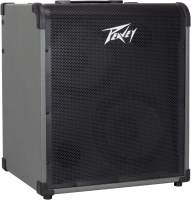
Peavey Max 300 300-Watt Bass Amp Combo
₱30,050.00
Buy on Lazada
PEAVEY MAX 100 BASS AMP COMBO 100-Watts
₱17,500.00₱18,000.00
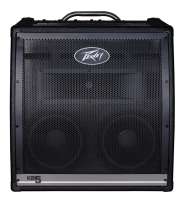
Peavey KB 5 200W Peak Personal PA System and Keyboard Amplifier
₱35,900.00₱37,650.00

PEAVEY PV231EQ Professional dual 31 section equalizer stage dedicated equalizer Audio Interfaces
₱3,699.10₱5,599.00

Peavey 44XT Titanium Compression Driver Unit 1000W Heavy Duty
₱3,000.00₱3,999.00
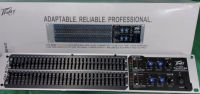
PEAVEY Budweiser PV231EQ professional equalizer dual 31-band equalizer stage dedicated equalizer
₱2,999.00₱13,999.00
About Peavey
Overview
Peavey Electronics Corporation is an American manufacturer of musical instruments and professional audio equipment. The company is best known for its guitar and bass amplifiers, PA and sound reinforcement systems, loudspeakers, guitars, basses, and related audio products. Founded by Hartley Peavey in 1965 in Meridian, Mississippi, the business grew from a one-person operation above his father’s music store into one of the major independent names in the global music equipment industry.1
Historically, Peavey’s identity has centred on three core principles: durability, innovation, and accessible pricing. Its products became particularly associated with working musicians who required equipment capable of surviving touring and demanding live performance conditions.2
Basic information
| Category | Details |
|---|---|
| Company | Peavey Electronics Corporation |
| Brand | Peavey |
| Founded | 1965 |
| Founder | Hartley D. Peavey |
| Headquarters | Meridian, Mississippi, USA |
| Industry | Musical instruments, amplifiers, professional audio |
| Best known for | Guitar amps, bass amps, PA systems, loudspeakers |
| Notable technologies | TransTube, ReValver, MediaMatrix, CNC instrument manufacturing |
| Major amplifier families | 6505, Classic, VYPYR, Bandit, Nashville, TNT, Session |
| Notable instruments | Wolfgang, HP, Vandenberg, Cirrus, T-series, Raptor |
| Current distribution | More than 130 countries according to Peavey |
| Current catalogue | 2,000+ products according to Peavey |
Peavey states that it currently distributes more than 2,000 products to over 130 countries and has accumulated more than 180 patents and innovations.3
Origins and founding
Early years of Hartley Peavey
Hartley D. Peavey grew up in Meridian, Mississippi, where he developed an early interest in electronics, machinery, and music. He worked in his father’s music store, Peavey’s Melody Music, which exposed him to the emerging rock and roll scene.
In 1957, inspired partly by seeing Bo Diddley perform, Peavey decided to play electric guitar. Rather than purchasing existing equipment, he began building his own, constructing his first amplifier that same year.4 He subsequently started designing his own guitars and amplifiers. By 1959, he had designed the distinctive lightning-bolt logo that would eventually become one of the most recognisable symbols in the musical equipment industry.5 In 1961, he built the first amplifier bearing the Peavey name in the basement of his family home.6
Establishment of Peavey Electronics
Following his graduation from college, Hartley Peavey officially established Peavey Electronics Corporation in 1965. The original operation was small, occupying space above his father’s music store in Meridian, with early production consisting largely of hand-built amplifiers.7
The company’s philosophy was unusual for the period. Instead of positioning musical equipment purely as expensive professional gear, Peavey emphasised good performance, reliability, and reasonable pricing. This approach helped the company appeal to working musicians who could not necessarily afford premium equipment from larger competitors.8 This ethos became a defining characteristic of the brand: providing professional-oriented equipment at prices ordinary musicians could realistically afford.
Amplifier history and technology
Early amplifier business
Amplification was Peavey’s first major business area. Early products included guitar and bass amplifiers such as the Musician and Dyna-Bass series. The company gradually expanded into mixers, PA equipment, and speaker cabinets.9
A significant early development was the PA-3, introduced in 1968. Described as a powerful yet relatively affordable public address system, it incorporated a four-channel, 100-watt amplifier and two speaker columns.10 This product demonstrated that Peavey intended to cover the entire audio chain—from instrument to audience—rather than focusing solely on guitar amplification. This strategy eventually became a defining feature of the company.
The Silver Stripe era
One of Peavey’s most recognisable visual characteristics emerged almost accidentally. In 1969, Hartley Peavey mounted a speaker grille frame backwards and noticed that the aluminium mounting extrusion created an attractive appearance. He adopted this look as a design trademark.11
The resulting silver-stripe aesthetic became strongly associated with Peavey products for roughly the next quarter-century. This design cue makes many vintage Peavey amplifiers immediately identifiable. Examples include various generations of the Bandit, Special, Studio Pro, Classic, Deuce, Mace, Musician, TNT, Session, and Nashville models.
Manufacturing innovation
During the mid-1970s, Peavey became an early adopter of computer numerical control (CNC) technology for musical instrument production. The company used computer-controlled manufacturing to produce guitars with greater consistency while reducing production costs. Peavey credits this approach with helping to introduce modern automated manufacturing techniques into the guitar industry, which had historically relied heavily on skilled manual labour.13
This manufacturing philosophy followed a clear logic: computer-controlled manufacturing led to consistency, high production volume, lower costs, and ultimately more affordable instruments. This approach became a crucial part of the company’s competitive advantage.
TransTube technology
TransTube is a notable Peavey technology designed to make solid-state amplifiers behave more like traditional tube amplifiers in terms of response and distortion characteristics. This technology became an important part of Peavey’s solid-state amplifier development, particularly for products intended to provide tube-like playing characteristics without the expense of tube hardware.
Digital modelling and ReValver
Peavey entered the digital modelling era with the VYPYR family. Rather than relying exclusively on traditional analogue circuitry, VYPYR amplifiers use digital signal processing to reproduce a variety of amplifier and effects sounds. This extended the company’s philosophy into the digital age, allowing musicians to access many tones from a single affordable unit.
Additionally, Peavey developed ReValver, a computer-based amp modelling software. This moved amplifier and effects modelling into a software environment, representing a shift from analogue amps to solid-state technology, then to digital hardware, and finally to software modelling.
Key amplifier families
Bandit
The Bandit is one of Peavey’s most famous amplifiers. Designed as a solid-state guitar combo for gigging musicians, it has appeared in multiple generations over the years. It developed a reputation for being loud, reliable, affordable, relatively lightweight, flexible, and extremely durable. The Bandit became particularly popular among players seeking a practical working amplifier rather than expensive boutique equipment, exemplifying the Peavey philosophy of maximum practical performance for the money.
Classic series
While products like the Bandit emphasise solid-state practicality, the Classic line is known for tube amplification and a more traditional guitar-amp character. Introduced as the Vintage Series in the 1970s before evolving into the Classic family, this line has remained popular with rock, blues, and country players.16 The Classic 30 and Classic 50 models are particularly well regarded among guitarists.
5150 and 6505
The 5150/6505 family is arguably the most historically significant Peavey guitar amplifier line. The original 5150 was developed in collaboration with Eddie Van Halen and became one of the defining high-gain amplifiers of the 1990s. After the partnership ended, the amplifier was renamed the 6505 to commemorate Peavey’s 40th anniversary.
The 6505 family became hugely influential in hard rock, heavy metal, metalcore, hardcore, nu metal, and modern high-gain guitar genres. The modern Peavey catalogue continues to feature the 6505 series, including the 6505 1992 Original.17 The amplifier’s sonic signature—characterised by tight low end, aggressive upper mids, huge distortion, and strong sustain—has become almost a genre in itself.
Guitars and basses
Although best known for amplifiers, Peavey has produced a wide variety of guitars and basses, including electric, acoustic, and steel guitars, as well as signature, student, and professional instruments.
- T-series: Represented Peavey’s attempt to compete directly with established American electric guitar designs.
- Predator: Became one of Peavey’s better-known affordable Stratocaster-style instruments.12
- Wolfgang: Arguably the company’s most famous signature guitar, developed with Eddie Van Halen. Produced during the late 1990s, it became strongly associated with Van Halen’s playing during that period.14
- HP series: Represented a more modern, high-performance approach to Peavey electric guitars.
- Cirrus: A flagship bass design that has continued to appear in the company’s modern catalogue.15
Bass and steel guitar amplification
Bass amplification
Peavey has a long history in bass amplification with families including the TNT, TKO, MAX, Tour, MiniMAX, Headliner, and Super Festival series.18 The TNT series, in particular, became an iconic working bass amplifier. Peavey’s bass strategy generally mirrors its guitar equipment philosophy: high output, rugged construction, straightforward controls, and reasonable pricing.
Steel guitar amplification
Steel guitar amplification is a particularly important niche for Peavey. Models such as the Session 400, LTD 400, Session 500, and Nashville series became closely associated with pedal steel and country musicians. Historical documentation describes the Session 400 and LTD 400 as early steel-guitar amplifiers that helped establish the company’s position in the country music market.19 The Nashville series continues this tradition, with current products including the Nashville Session 112 and 115 amplifiers.
Sound reinforcement and professional audio
PA and sound reinforcement
Sound reinforcement was a major driver of Peavey’s growth. Products have included mixers, powered mixers, power amplifiers, PA speakers, portable PA systems, microphones, signal processors, installation audio, and digital audio systems. The company states that its sound reinforcement business grew from the early PA-3 into a broad ecosystem of professional audio equipment.20
This diversification was critical; while individual musicians might buy amplifiers, venues, churches, schools, theatres, and touring companies could purchase entire Peavey sound systems.
Black Widow speakers
The Black Widow is one of Peavey’s best-known loudspeaker technologies. These speakers became famous for their rugged construction and replaceable baskets. Certain designs allowed the speaker basket to be replaced individually after a failure rather than replacing the entire assembly. This design reflected the central Peavey philosophy of creating equipment that survives real-world use and can be repaired rather than discarded.
MediaMatrix
In 1993, Peavey introduced MediaMatrix, a digitally configured and controlled distributed-audio system. Described as one of the company’s major innovations, it has been deployed in more than 10,000 installations worldwide. MediaMatrix helped establish Peavey in large venues, airports, theme parks, public facilities, commercial installations, and complex distributed-audio systems, demonstrating that the company was a serious professional audio technology firm rather than solely a guitar amp manufacturer.
Other brands and divisions
Throughout its history, Peavey Electronics has been associated with several brands and product divisions:
- Peavey: The core musical instrument and audio brand.
- Crest Audio: Professional power amplification and sound reinforcement.
- Trace Elliot: A major British bass amplification brand acquired by Peavey and incorporated into its broader portfolio.
- MediaMatrix: Digital audio processing and distribution.
These businesses helped Peavey expand beyond the conventional guitar amplifier market.
Manufacturing and production
For much of its history, Peavey maintained a substantial manufacturing presence in the United States, particularly around Meridian, Mississippi. This was notable as the musical instrument industry increasingly moved production towards lower-cost Asian manufacturing.
Over time, Peavey also shifted substantial production overseas. Historical reporting notes that the majority of its products have been manufactured outside the US since 2004, and the company closed its UK manufacturing/distribution operations and a Meridian plant in 2014 amid restructuring.21 Consequently, “Peavey” does not automatically indicate that a product was manufactured in the United States.
Sonic characteristics and design philosophy
The Peavey sound
While there is no single universal “Peavey sound” given the hundreds of amplifier designs produced, several tendencies are strongly associated with the brand:
- Solid-state models: Often characterised by high volume, strong clean headroom, firm low end, bright attack, practical versatility, and robust construction.
- Tube amplifiers: Often associated with strong midrange, aggressive overdrive, high gain, punch, and good stage volume.
- 5150/6505: Especially associated with very high gain, aggressive distortion, tight response, strong upper-mid presence, and metal-oriented tones.
- Steel-guitar amps: Typically emphasise extremely clean response, high headroom, strong bass, clear treble, and wide frequency response.
Design principles
Peavey’s identity can be summarised through several recurring principles:
- Durability: Products were designed with working musicians in mind.
- High output: Amplifiers and PA equipment frequently offered substantial power.
- Affordability: The company traditionally provided professional-level functionality without luxury-brand pricing.
- Innovation: Hartley Peavey emphasised technological differentiation, with the company accumulating more than 180 patents and innovations.22
- Repairability: Many classic products were built with practical serviceability in mind.
- Mass production: Peavey was unusually successful at combining industrial manufacturing with musical instrument production.
Artist associations and cultural impact
Working musicians
Peavey’s success was not based exclusively on famous endorsements; the brand became deeply embedded among working musicians, including touring bands, bar bands, country musicians, church musicians, blues players, rock musicians, metal guitarists, bassists, steel-guitar players, schools, and small venues. Classic Peavey products often had a reputation as equipment that could be thrown in a van, taken to a gig, and expected to work reliably.
Notable artists
- Eddie Van Halen: Perhaps the most famous association, producing the 5150 amplifier and Wolfgang guitar.
- Joe Satriani: Associated with Peavey equipment at various points in his career.
- Dimebag Darrell: Peavey equipment became strongly associated with Pantera’s aggressive metal sound, including the Peavey ML guitar and related amplifiers.
- Country and steel-guitar artists: Peavey became especially influential through products like the Session and Nashville amplifier families.
Influence on heavy metal
The 5150/6505 platform became one of the defining sounds of modern metal. Many metal guitarists value the platform for its combination of very high gain, tight distortion, strong attack, powerful low-frequency response, and significant sustain. Its influence is particularly strong in metalcore, death metal, hardcore, nu metal, and modern heavy rock. This represents a notable evolution for a company that originally built steel-guitar amplifiers for Nashville musicians.
Brand identity and logo
The Peavey logo is one of the most recognisable in the musical equipment industry. Its distinctive lightning-bolt design was created by Hartley Peavey while he was still in high school, incorporating the letters of the Peavey name into an angular symbol.26
The visual identity became strongly associated with black chassis, metal hardware, silver stripes, bold typography, industrial construction, and large control panels. Classic Peavey equipment tends to look more industrial than luxurious, an aesthetic that forms part of its enduring appeal.
Hartley Peavey’s guiding philosophy can be summarised as making something different, useful, reliable, and accessible. The company describes its core values as quality, reliability, and innovation.27
Current status and product lines
Peavey remains active today. Its current official catalogue includes guitar amplifiers, bass amplifiers, electric guitars, bass guitars, pedals, loudspeakers, mixers, microphones, power amplifiers, portable PA systems, and professional audio equipment.23 Current amplifier families include the 6505, invective, Classic, Musician, Nashville, and Decade series.24
The company celebrated its 60th anniversary in 2025, marking six decades since Hartley Peavey founded the company.
Vintage versus modern Peavey
For researchers and buyers, distinguishing between eras is important:
- Vintage Peavey: Generally refers to equipment from the 1960s through the 1990s, including the Vintage Series, Classic, Bandit, Special, Musician, Deuce, Mace, Session, LTD, TNT, TKO, and early PA equipment. These are often valued for durability, distinctive sounds, and historical significance.
- Modern Peavey: Encompasses the 6505, invective, VYPYR, newer Classic products, current bass equipment, modern PA, digital products, current guitars, and portable audio.
Major milestones
- 1957: Hartley Peavey builds his first amplifier.28
- 1959: Development of the distinctive Peavey logo concept.29
- 1961: First Peavey-branded amplifier is built.
- 1965: Peavey Electronics Corporation is officially founded in Meridian, Mississippi.1
- 1968: The PA-3 helps establish Peavey in sound reinforcement.
- 1969: The silver-stripe design is introduced.11
- Mid-1970s: Adoption of CNC technology for instrument manufacturing.13
- 1993: Introduction of MediaMatrix digital audio system.
- 1990s: Partnership with Eddie Van Halen produces the 5150 amplifier and Wolfgang guitar.
- 2025: Peavey celebrates 60 years of operation.2
- 2026: Continued sales of guitar/bass amplification, instruments, PA, and professional audio products.
Industry position and legacy
Peavey occupies a distinctive position in the amplifier landscape. While Fender is associated with American clean tones, Marshall with British rock crunch, Mesa/Boogie with high-end American high-gain, and Roland with solid-state modelling, Peavey’s niche is the combination of ruggedness, power, affordability, and engineering.
The company’s importance extends beyond sales figures. It demonstrated that a company could combine industrial manufacturing, engineering, affordability, and professional performance to compete with established names. Its innovations in CNC manufacturing helped modernise guitar production, while MediaMatrix advanced digitally controlled audio systems.25
Peavey’s greatest historical contribution may be democratising professional-grade musical equipment. Just as Fender defined American guitar culture and Marshall defined British rock, Peavey became one of the great engineering-and-value brands that made serious amplification accessible to enormous numbers of working musicians. From its origins in a small space above a music store in Meridian, Mississippi, its influence on guitar, bass, live sound, and professional audio has been remarkably large.
References
- About Peavey – Peavey Electronics Corporation
- Peavey Celebrates 60 Years of Innovation
- Hartley Peavey | NAMM.org
- Peavey Electronics Celebrates 45th Anniversary in 2010 – June 8, 2010
- Divisions – Peavey Electronics Corporation
- A Brief History Of Peavey Electronics | Guitar.com
- Amps – Peavey Electronics Corporation
- PRODUCT CATALOG
- PEAVEY ELECTRONICS CORPORATION
- Peavey Electronics
- Peavey Official Store | Guitars, Amps & Pro Audio Gear
- Electric Guitars – Peavey Electronics Corporation
- Hartley and Mary Peavey Honored with 2019 Mississippi Governor’s Arts Award – February 27, 2019
- Hartley Peavey receives Lifetime Achievement Award in London, England – October 16, 2015
- Peavey Electronics Celebrates 50th Anniversary – June 1, 2015
- Inc. Magazine Profiles Music & Audio Innovator Hartley Peavey – October 4, 2011
- Hartley Peavey Receives Music Industry’s Highest Honor: The MIPA Lifetime Achievement Award – March 30, 2010
- Hartley Peavey Reflects on 44th Anniversary of Peavey Electronics – May 15, 2009
- Hartley Peavey Named to Mississippi Innovators Hall of Fame – May 7, 2008
- Hartley Peavey | Oral Histories | NAMM.org
- Bass Amps & Bass Amplifiers for Practice and Live Use | Peavey
- Peavey Papers – Peavey Electronics Corporation
- Peavey Official Store | Guitars, Amps & Pro Audio Gear
- Peavey Official Store | Guitars, Amps & Pro Audio Gear
- Peavey Electronics | LinkedIn
- Peavey Electronics | LinkedIn
- Contact Us – Peavey Commercial Audio
- Brand: Peavey – PT Hari Musik Indonesia
- Peavey | Guitar.com | All Things Guitar | Guitar.com