Shop on Lazada
Pebeo products
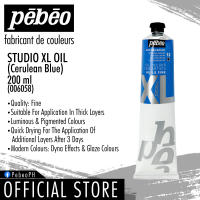
PEBEO Studio XL Oil Paint 200ml
₱769.00
Buy on Lazada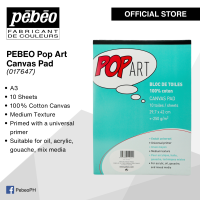
PEBEO Pop Art Canvas Pad
₱1,779.00
Buy on Lazada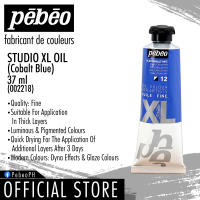
PEBEO Studio XL Oil Paint 37ml
₱239.00
Buy on Lazada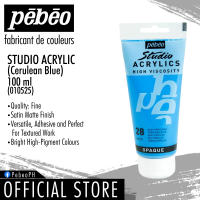
PEBEO Studio Acrylic Paint 100ml
₱190.00
Buy on Lazada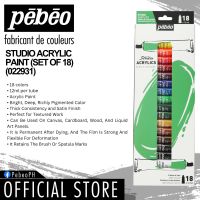
PEBEO Studio Acrylic Paint | Set of 18 | 12 ml | 668710 668210
₱679.00
Buy on Lazada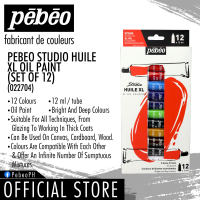
PEBEO Studio Huile XL Oil Paint | Set of 12 | 12 ml | 668600
₱489.00
Buy on Lazada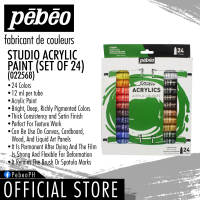
PEBEO Studio Acrylic Paint | Set of 24 | 12 ml | 668720 668220
₱899.00
Buy on Lazada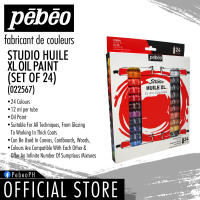
PEBEO Studio Huile XL Oil Paint | Set of 24 | 12 ml | 668620
₱869.00
Buy on LazadaAbout Pebeo
Pebeo is a French manufacturer and brand specialising in artists’ colours, paints, mediums, decorative art materials, and creative products. Founded in 1919 in Provence, near Marseille, the company began as a chemical manufacturer before evolving into one of France’s most established names in artistic materials. Today, Pebeo serves professional artists, students, hobbyists, educators, children, illustrators, and decorative-art users. Its extensive product range spans acrylic, oil, watercolour, gouache, inks, markers, ceramic and glass paints, textile colours, and mixed-media materials.1
Basic information
| Category | Information |
|---|---|
| Brand | Pebeo |
| Founded | 1919 |
| Origin | France |
| Original location | Saint-Marcel, east of Marseille |
| Current headquarters | Gémenos, Provence, France |
| Industry | Artists’ materials, paints, pigments, creative arts |
| Main markets | Fine art, graphic arts, decorative arts, education, children’s creativity |
| Key identity | French colour and art-material manufacturer |
| Notable strengths | Paint formulation, colour technology, mixed media, accessibility, innovation |
| Heritage | More than 100 years of development in colours and artistic materials |
Pebeo describes its mission as creating and innovating in colour while making artistic practices accessible to as many people as possible. Its stated values include quality, commitment, innovation, sustainable development, know-how, and internationalisation.2
The name “Pebeo”
The name Pebeo derives from PbO, the chemical abbreviation for lead protoxide (lead oxide), which was central to the company’s early paint-related chemistry. When the firm was founded in 1919, pigments were largely supplied as powders, and paints were not yet widely available in convenient ready-to-use formats.3
This origin is significant because Pebeo’s history differs from that of many art brands; it developed from a chemical and pigment-manufacturing background rather than beginning purely as an artist’s paint company.
History
1919: Foundation
The story of Pebeo begins in 1919, when the company was established in Saint-Marcel, east of Marseille, in Provence. The factory initially employed around 20 people and operated as a French chemical company, with early activities closely connected to pigments and paint-related materials.4
1922: Claudius Chaveau
A major turning point occurred with the arrival of Claudius Chaveau, a chemist who had studied in Lyon and possessed experience linked to the Lumière brothers’ laboratories. Chaveau became a pivotal figure in the development of Pebeo, establishing a culture of scientific research, experimentation, and colour innovation that remains central to the company.5
1927–1930s: Pigments and research
During the late 1920s and early 1930s, Pebeo invested heavily in pigment technology. The company experimented with chrome pigments, cadmium pigments, lacquers, organic pigments, and other colour technologies. It also investigated how pigments behaved under sunlight, salt exposure, and underwater conditions, leading to applications beyond traditional fine art.6
This period established a defining characteristic of Pebeo: chemistry and artistic creativity were developed together.
The breakthrough: Ready-to-use paint
One of the most significant moments in the history of Pebeo occurred in 1934. At the time, artists and craftsmen commonly prepared their own colours from pigments and binders. Pebeo developed ready-to-use colours, initially producing tubes of oil paint. The company introduced 15 colours, and the convenience of these ready-made paints helped Pebeo enter the artistic market more decisively.7
This marked a fundamental transition from a chemical and pigment manufacturer to a ready-made paint manufacturer, and eventually to an art-material brand.
Pebeo and education
Pebeo has maintained a particularly strong connection with art education. During the 1940s and 1950s, the company developed products designed specifically for children and schools, including colour pastilles, gouache, and watercolour products.
In 1950, Pebeo collaborated with French educator Célestin Freinet, whose educational philosophy emphasised children’s creativity and free expression. Together, they developed a liquid gouache designed to make painting easier and more practical for classroom use.8 This collaboration helped establish another long-term aspect of the brand: art should not be restricted to professional artists.
Fine-art development
In the early 1950s, Pebeo expanded further into the fine-art market. In 1952, the company acquired knowledge and equipment associated with the production of fine oil colours from Armand Drouant, aiding the development of more sophisticated artists’ colours and production techniques.
In 1953, it introduced the Fragonard extra-fine oil-based gouache, followed by fine-art varnishes.9 This expansion signified that Pebeo was no longer simply a manufacturer of educational or industrial colours but was becoming a genuine Beaux-Arts and artists’ materials company.
Ceramic, glass and decorative colours
During the 1960s, Pebeo increasingly explored the properties of artistic materials on surfaces beyond traditional paper and canvas. The company developed products for ceramics, glass, and other surfaces, including ceramic paints.
This experimentation became one of the distinguishing characteristics of Pebeo, as the brand increasingly occupied the space between fine art, craft, decorative art, and experimental mixed media.10
1977: Acrylic paint
A significant milestone arrived in 1977, when Pebeo introduced an acrylic paint produced entirely in France. Although acrylic paint had emerged internationally during the mid-20th century as a fast-drying alternative to oil, Pebeo entered this field relatively early, positioning itself as a pioneer of French-made acrylic paint.11 Acrylic subsequently became one of the company’s most important categories.
International expansion
During the 1980s, Pebeo transformed from a French manufacturer into an international art-materials company. The firm developed export markets and established subsidiaries in countries including Denmark, Italy, and the United States. By this period, approximately 40% of its production was destined for export.12 The company subsequently expanded its international distribution network considerably.
Gémenos headquarters
In 1989, Pebeo moved its headquarters and major operations to Gémenos, near Marseille. Designed by architect Maurice Sauzet, the new facility incorporated Japanese architectural influences and reflected the company’s increasing production capacity and international ambitions.13 Gémenos remains strongly associated with the identity of Pebeo today.
The 1990s: Professionalisation and innovation
The 1990s represented another important era for the company. In 1993, Pebeo received recognition for innovation related to its transparent 100 ml plastic acrylic tube. The company also participated in the European Crisatel research programme alongside institutions such as the Louvre laboratories and the National Gallery of London.14
In 1995, Eric Chaveau succeeded his father Robert Chaveau as head of the company. At this stage, Pebeo described itself as the French leader in colours for arts, education, and leisure, producing thousands of product references across a wide range of formats and applications.15
Contemporary-art identity
The modern identity of Pebeo extends beyond traditional artists’ paints. The company has actively supported and collaborated with contemporary artists and art events, adopting a philosophy centred on “colour + material + experimentation.”
Pebeo has sponsored or participated in events such as the Cow Parade and the Affordable Art Fair Beijing, alongside its own artistic initiatives.16 These efforts have established Pebeo as a brand associated with creative experimentation rather than solely conventional painting.
Mixed Media
One of the most distinctive contributions of Pebeo to the contemporary craft and art market is its emphasis on mixed media. During the 2010s, the company introduced or expanded products such as:
- Fantasy Prisme
- Fantasy Moon
- Mixed Media
- 4Artist Marker
- Crystal resins
- Glass colours
- Gilding materials
- Relief products
- Opalescent and transparent effects
These products allow artists to combine different materials and visual effects within a single artwork.17 This focus differentiates Pebeo from traditional fine-art paint manufacturers.
Major product categories
The current portfolio of Pebeo is notably broad. According to its official catalogue, the company organises its products into several major areas.18
Fine Arts
Acrylic
- Origin Acrylics
- Studio Acrylics
- Artist Acrylics
- Pop Art
- Pouring products
- Acrylic markers
- Acrylic aerosols
- Acrylic auxiliaries
Oil
- Studio XL
- 4Artist Marker
- Oil auxiliaries
Watercolour
- Colorex watercolour inks
- Watercolour markers
- Fine watercolour
- Watercolour auxiliaries
Gouache
- Studio Gouache
- T7 Gouache
Fine-art sets and accessories are also available.19
Decorative arts
Pebeo maintains an extensive decorative-art portfolio, including paints for porcelain, glass, ceramics, textiles, wood, decorative surfaces, and multi-surface applications. Notable product families include Porcelaine 150 for porcelain and tableware, and Vitrea 160 for glass and tableware.20 This range appeals particularly to those working across both fine art and crafts.
Graphic arts
The brand also operates in graphic and illustration-related materials. The current catalogue includes linocut printing materials, inks, India ink, watercolour ink, acrylic markers, oil markers, refillable markers, pastels, and charcoal. Consequently, Pebeo functions as a multi-category creative-materials manufacturer rather than merely a paint brand.21
Children’s art
Children’s and educational ranges remain a vital part of Pebeo. Products include poster paint, washable paint, children’s acrylic, textile paint, modelling clay, sidewalk materials, glitter paints, drawing gum, children’s markers, and creative activity kits.22 This continues the educational philosophy that became integral to the company during the mid-20th century.
Origin: Eco-designed acrylic
A recent innovation is Origin, launched in 2024. Pebeo describes Origin as its first eco-designed acrylic range. The company states that the range is:
- Manufactured in France
- Made with 96% European-origin raw materials
- Formulated with a 100% recycled binder
- Odourless
- Packaged in a tube containing 44% paper
- Available in 48 colours
- Offered in transparent, semi-opaque, and opaque versions
- Available in classic, metallic, iridescent, and fluorescent colours23
Origin represents an effort to combine the traditional strength of Pebeo in colour chemistry with contemporary expectations regarding material efficiency and sustainability.
Distinctive characteristics
The positioning of Pebeo can be summarised around five key characteristics:
- French heritage: The company possesses over a century of history and retains a strong connection to its French manufacturing roots.
- Chemistry-driven innovation: Unlike brands that market primarily through aesthetics, Pebeo has historically emphasised its laboratory and formulation expertise.
- Broad product range: Offerings cover everything from children’s paint to professional fine-art materials, decorative paints, markers, inks, and mixed media.
- Experimental materials: Pebeo is recognisable for products designed to create special effects, textures, transparency, movement, and unusual surface interactions.
- Accessibility: The company explicitly positions artistic practice as something that should be accessible to a broad audience rather than exclusively to professionals.24
Brand philosophy
The philosophy of Pebeo is built around the relationship between science and creativity. Its history follows a consistent pattern: Chemistry → colour → material → artistic experimentation.
The company’s mission is to innovate in colour while making artistic practices accessible and encouraging creativity, emphasising skills accumulated through five generations of leadership.25 This makes Pebeo unusual in the art-materials industry, functioning simultaneously as a chemical/formulation company, paint manufacturer, art brand, educational brand, and creative-materials company.
Market positioning
Pebeo occupies a unique space between several different markets:
| Market | Role of Pebeo |
|---|---|
| Professional fine art | Artist-grade acrylic, oil, watercolour, gouache |
| Student art | Accessible paints and sets |
| Education | School and children’s materials |
| Craft | Glass, ceramic, textile, and decorative paints |
| Mixed media | Experimental materials and special effects |
| Graphic art | Inks, markers, linocut |
| DIY/decorative art | Multi-surface products and kits |
This broad positioning constitutes one of the strongest competitive characteristics of Pebeo.
Relationship with artists
Pebeo has historically placed significant emphasis on working directly with artists. Rather than simply manufacturing existing types of paint, the company frequently uses artists to explore new techniques and applications for its materials.
Its Mixed Media initiatives, competitions, and contemporary-art collaborations illustrate this strategy. The company describes these partnerships as part of its effort to place chemical expertise at the service of artistic imagination.26
Current status
As of 2026, Pebeo remains an active French art-materials manufacturer with a large international product portfolio. Its official website lists products spanning fine arts, graphic arts, decorative arts, children’s creativity, brushes, canvases, and other accessories.27
The company continues to emphasise French manufacturing, colour chemistry, innovation, accessibility, and contemporary creativity. The recent Origin range indicates that sustainability and environmentally conscious product design are becoming increasingly important components of its development strategy.28
Timeline
- 1919: Pebeo founded in Saint-Marcel near Marseille.
- 1922: Claudius Chaveau joins and establishes a strong research and innovation culture.
- 1934: Ready-to-use oil colours introduced.
- 1935: Development of organic pigments.
- 1940: Children’s colour pastilles introduced.
- 1948–1950: Expansion into gouache, watercolour, and educational colours.
- 1952–1953: Expansion into fine-art colour manufacturing.
- 1960s: Development of ceramic and decorative colours.
- 1975: Greater concentration on Beaux-Arts products.
- 1977: French-made acrylic paint launched.
- 1980s: Major international expansion.
- 1989: New headquarters established at Gémenos.
- 1990s: Further laboratory research and international growth.
- 2009: DYNA colours introduced.
- 2011–2018: Expansion of Mixed Media, Fantasy, and marker technologies.
- 2016: Pebeo Mixed Media competition launched.
- 2021: Fifth edition of Mixed Media competition focuses on Urban Art.
- 2024: Origin, the eco-designed acrylic range, launched.
- 2026: Pebeo continues as a broad French manufacturer of fine-art, graphic, decorative, and educational materials.29
References
- HISTORY OF PEBEO – Pébéo
- ABOUT PEBEO – Pébéo
- Pébéo
- Innovation Origin – Pébéo
- HISTOIRE DE PEBEO – Pébéo
- HISTORIA DE PEBEO – Pébéo
- HISTOIRE DE PEBEO – Pébéo
- HISTOIRE DE PEBEO – Pébéo
- QUALITY POLICY – Pébéo
- Manifesto – Pébéo
- A PROPOS DE PÉBÉO – Pébéo
- About – Pébéo
- À propos – Pébéo
- STUDIO XL GOUACHE – SET OF 24 TUBES 20 ML ASSORTED COLOURS + ACCESSORIES – Pébéo
- STUDIO ACRYLICS COLLECTION BOX – Pébéo
- ARTIST ACRYLICS 250 ML MATT MEDIUM – Pébéo
- ARTIST ACRYLICS 75 ML MATT MEDIUM – Pébéo
- STUDIO ACRYLICS POURRING MEDIUM DISPLAY – Pébéo
- STUDIO ACRYLICS POURING MEDIUM BOTTLE 1 L /T – Pébéo
- Histoire-039-039-La-Pébéo-039-039-News – Pébéo
- INTERVIEW ERIC CHAVEAU ET ARTISTIKREZO – Pébéo
- Beaux-Arts – Pébéo
- Shop – Pébéo
- Beaux-Arts – Page 35 – Pébéo
- À propos de Pébéo – Découvrez notre mission et nos valeurs
- Les valeurs de Pébéo | Pebeo
- BEAUX-ARTS | Pebeo
- Actualités Pébéo | Pebeo
- コンセプト | ペベオ・ジャポンについて | Pebeo Japon