Shop on Lazada
Penguin products

Penguin heritage with pocket for Mens
₱949.00
Buy on Lazada
Penguin Shining Star Floor Wax Liquid 1 GALLON
₱1,635.00₱1,785.00
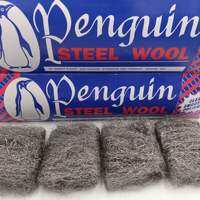
Penguin Super Fine Original Steel Wool 16 Pads - Rust Removal & Surface Prep
₱179.00₱200.00
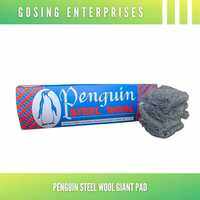
Penguin Steel Wool Giant Pad
₱191.00₱250.00
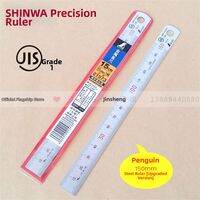
Affordable Shinwa Penguin 150mm Straight Ruler JIS Wear-Resistant Engraved Stainless Steel Ruler 15cm Steel Straight Edge
₱254.00₱460.00

Resun PENGUIN-3200 80W stainless steel submersible pump P-3200 For Aquarium Fish Farm Ponds Waterfalls Fountain
₱4,700.00₱6,400.00
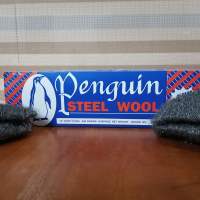
Penguin Steel Wool 16 Pads
₱187.50₱219.00
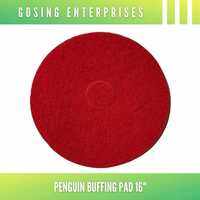
PENGUIN FLOOR POLISHER PADS 16″ (Stripping Pad Buffing Pad Scrubbing Pad Polishing Pad)
₱310.00₱350.00
About Penguin
Overview
Penguin Books is one of the world’s most recognizable publishing brands. Historically associated with affordable paperbacks, distinctive book-cover design, literary classics, and mass-market access to literature, Penguin helped transform the economics and culture of book publishing by demonstrating that high-quality books could be sold cheaply and widely outside traditional bookstores. 1
Today, Penguin operates as part of Penguin Random House, the global publishing group formed in 2013 through the combination of Penguin and Random House. The Penguin name continues to serve as a major publishing brand and imprint in the United Kingdom and internationally. 2
Basic Information
| Feature | Details |
|---|---|
| Name | Penguin Books |
| Founded | 1935 |
| Founder | Allen Lane |
| Country of Origin | United Kingdom |
| Industry | Book publishing |
| Original Innovation | Affordable mass-market paperback |
| Parent Company | Penguin Random House |
| Major Areas | Fiction, nonfiction, classics, children’s books, biography, crime, literary works |
| Best-Known Symbol | Penguin bird logo |
| Major Historic Imprints | Penguin, Pelican, Puffin, Penguin Classics |
| Current Global Parent | Bertelsmann |
Penguin’s original concept was straightforward but revolutionary: publish attractive, well-produced books at a price ordinary people could afford.
Origins
The story of Penguin begins with Allen Lane, a British publisher. In 1934, Lane was returning to London after visiting the author Agatha Christie. At Exeter St Davids railway station, he wanted something worthwhile to read but found that the books available were either poor in quality or too expensive.
Lane concluded that there was an opportunity for something new: good books, attractively produced, but inexpensive enough for almost anyone to buy. 3 His idea was particularly radical because serious literature was traditionally associated with relatively expensive hardback editions and conventional bookshops.
Lane wanted books that could be sold almost anywhere—railway stations, tobacconists, department stores, and other ordinary retail locations—rather than restricting books to traditional bookstores. In 1935, Penguin Books was launched.
The Sixpenny Paperback Revolution
Penguin’s first books were priced at sixpence, approximately the price of a packet of cigarettes at the time. This pricing was central to the company’s strategy. Lane wanted buying a book to be an everyday, spontaneous purchase rather than an expensive commitment. Penguin described the ambition as making quality books affordable and accessible to everyone. 4
The first Penguin list included works by famous authors such as:
- Ernest Hemingway
- Agatha Christie
- André Maurois
The books were deliberately standardized in size and design, allowing Penguin to manufacture and distribute them efficiently. 5
The result was extraordinarily successful. By March 1936, only about ten months after launch, Penguin had printed one million books. This marked the beginning of what is commonly described as the paperback revolution.
Why Penguin Was Revolutionary
Penguin changed the relationship between books, price, and readers. Before Penguin, inexpensive paperbacks existed, but they were often associated with lower-quality or disposable reading. Penguin attempted to overturn that perception by combining low price, good writing, attractive design, and mass distribution.
This combination demonstrated that a publisher could take respected contemporary literature and distribute it on a mass-market scale. This helped make reading a more accessible leisure activity for people who might not normally have bought books. Penguin’s history describes this transformation as “democratising” literature and changing publishing. 6
The Penguin Logo
One of Penguin’s greatest branding achievements is its penguin logo. Allen Lane wanted a symbol that was simultaneously serious and playful—described in the company’s history as a desire for a “dignified but flippant” symbol. His secretary suggested the idea of a penguin. A young employee, Edward Young, was sent to London’s zoo to sketch penguins. Those sketches became the basis for the original Penguin emblem.
Designer and typographer Jan Tschichold played an important role in refining Penguin’s visual identity in the late 1940s. The result became one of the most recognizable logos in publishing.
Penguin developed a consistent visual system in which the logo, typography, colors, proportions, and layout became part of the identity of the entire publishing house. Consequently, readers could often recognize a Penguin book from a distance.
The Color System
Early Penguin books used color coding to indicate categories:
- 🟠 Orange — fiction
- 🔵 Blue — biography
- 🟢 Green — crime
This made Penguin books immediately recognizable on shelves and helped readers understand what kind of book they were looking at. The orange Penguin cover in particular became an iconic part of British publishing design, and the aesthetic remains strongly associated with the brand today.
Pelican Books
In 1937, Allen Lane introduced Pelican Books, an imprint devoted largely to nonfiction and contemporary intellectual subjects. Pelican expanded the original Penguin idea that inexpensive books should not merely entertain people—they should also educate them. The imprint published works dealing with history, politics, economics, science, and other subjects. One of its early books was George Bernard Shaw’s The Intelligent Woman’s Guide to Socialism, Capitalism, Sovietism and Fascism.
Puffin (Children’s Publishing)
Penguin became highly influential in children’s literature. In 1940, it launched Puffin, initially with nonfiction picture books. Puffin subsequently became a major children’s publishing brand, publishing both fiction and nonfiction. 7 It remains one of the best-known children’s publishing names, associated with generations of children’s classics.
Penguin Classics
Perhaps the most prestigious part of the Penguin legacy is Penguin Classics. The series was launched in 1946, beginning with E. V. Rieu’s translation of Homer’s The Odyssey. 8 The objective was consistent with Penguin’s original philosophy: make important works of world literature accessible to ordinary readers.
Penguin Classics is famous for editions of Greek and Roman classics, Shakespeare, European literature, Russian literature, American literature, Asian literature, philosophy, political thought, religious texts, poetry, and historical works. The distinctive black-and-orange design became a recognizable cultural object in its own right.
World War II
Penguin’s affordable books had an important role during World War II. Books were relatively cheap, portable, and easy to distribute, making them useful for soldiers and civilians. The American Penguin operation produced books domestically during the war rather than relying exclusively on British imports.
International Expansion
A U.S. office was established in 1939, giving the brand a foothold in the American publishing market. Penguin subsequently developed a substantial American operation and expanded across markets including Canada, Australia, New Zealand, and the United Kingdom.
Acquisitions
- Viking Press: In 1975, Penguin acquired Viking Press, a major American publisher with an impressive literary history including authors such as John Steinbeck, Saul Bellow, Arthur Miller, Thomas Pynchon, and Don DeLillo.
- Putnam Berkley Group: In 1996, Penguin acquired the Putnam Berkley Group. The resulting organization eventually became known as Penguin Putnam, then Penguin Group USA, and finally Penguin Publishing Group, which is today a major division of Penguin Random House in the United States.
Formation of Penguin Random House
The biggest modern development in Penguin’s corporate history occurred in 2013, when Penguin and Random House merged to create Penguin Random House. This brought together two enormous publishing traditions. Penguin contributed its heritage in paperback publishing, classics, children’s books, and international presence, while Random House brought its extensive network of publishers and imprints.
Penguin Random House is now part of Bertelsmann and operates internationally across more than 20 countries. The group consists of more than 300 editorially and creatively independent publishing imprints and brands.
Current Structure
Today, the term “Penguin” can refer to several related entities:
- Penguin Books: The original publishing brand originating in Britain in 1935.
- Penguin Publishing Group: The large U.S. publishing group within Penguin Random House.
- Penguin Random House: The larger international publishing corporation formed from the 2013 merger.
- Penguin Classics: The internationally recognized classics series.
- Puffin: The major children’s publishing brand originating from Penguin.
Publishing Portfolio
Penguin’s publishing portfolio is extremely broad, covering:
- Fiction: Literary, popular, romance, historical, crime, thriller, science fiction, fantasy.
- Nonfiction: History, politics, economics, science, psychology, philosophy, biography, memoir, current affairs.
- Classics: Ancient, medieval, European, Asian, American literature, philosophy, poetry.
- Children’s Literature: Through Puffin, including fiction, picture books, educational material, and young-adult literature.
- Practical and Lifestyle: Cookbooks, health, business, self-development.
The company’s modern mission remains centered on making books accessible to broad audiences.
Cultural Significance
Penguin’s greatest contribution was arguably the democratization of access to literature. Before the paperback revolution, owning books could be relatively expensive. Penguin demonstrated that respected authors could be published in inexpensive formats and distributed through ordinary retail channels. This helped change books from something associated primarily with bookshops, libraries, and educated elites into a mass consumer product.
Penguin sits at the intersection of literature, publishing, design, retail, and popular culture. Its history reflects changing attitudes toward education, censorship, intellectual freedom, mass media, graphic design, children’s literature, and consumer culture.
Major Milestones
| Year | Event |
|---|---|
| 1934 | Allen Lane develops the idea for inexpensive quality books |
| 1935 | Penguin Books launches; first sixpenny paperbacks appear |
| 1936 | One million Penguin books printed |
| 1937 | Pelican Books launched; Penguin Shakespeare series launched |
| 1939 | Penguin establishes U.S. operation |
| 1940 | Puffin begins |
| 1946 | Penguin Classics launched |
| 1960 | Penguin wins the Lady Chatterley’s Lover obscenity trial |
| 1975 | Penguin acquires Viking Press |
| 1983 | Penguin acquires Frederick Warne |
| 1996 | Penguin acquires Putnam Berkley Group |
| 2000s | Penguin expands digital publishing and direct-to-consumer activities |
| 2013 | Penguin and Random House merge |
| Today | Penguin operates as a major brand within Penguin Random House |
Legacy
Penguin’s legacy is summarized in five major ideas:
- Affordable literature: Proving high-quality books could be inexpensive.
- Mass distribution: Expanding the places where people could buy books.
- Strong branding: Showing that a publisher could develop a powerful visual identity.
- Literary accessibility: Bringing major works of world literature to mass audiences via Penguin Classics.
- Publishing innovation: Repeated experimentation with formats, distribution, design, and new ways of reaching readers.
The company’s original philosophy remains visible in Penguin’s modern mission: “We make books for everyone, because a book can change anyone.”
References
- Welcome to Penguin: We Are What You Read
- Company history – Penguin Books UK
- Our timeline – Penguin Books UK
- Company history | Penguin Random House
- Social Impact – Penguin Books UK
- Penguin Publishing Group – Penguin Books
- Our Legacy – Penguin Random House SEA
- Welcome to Penguin Random House | Penguin Random House