Shop on Lazada
Pentax products
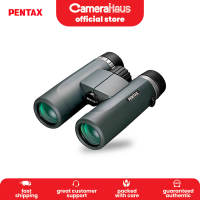
Pentax 10x36 A-Series AD WP Compact Binoculars
₱12,490.00
Buy on Lazada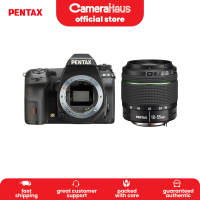
Pentax K-3 DSLR Camera
₱33,940.30
Buy on Lazada
Pentax WG-90 Digital Camera
₱25,990.00
Buy on Lazada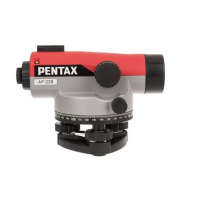
AUTOMATIC LEVEL - PENTAX AP-228 (Complete Set with Tripod and Level Rod)
₱19,800.00
Buy on Lazada
Ricoh PENTAX WG-1000 Digital Camera
₱18,990.00
Buy on Lazada
Pentax Jupiter Binoculars
₱8,998.00
Buy on Lazada
D-Li90 D Li90 DLi90 Li-ion Battery for PENTAX 645 645D 645Z K-1 K-01 K-3 K-5 K-5D K-5IIs K-7 K-7D K1 K01 K3 K5 K5D II 2
₱839.00₱1,390.00
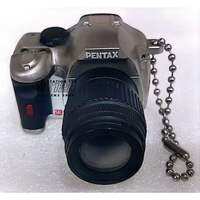
Pentax Camera Keychain
₱250.00
Buy on LazadaAbout Pentax
Overview
Pentax is a Japanese photographic and optical brand best known for its single-lens reflex (SLR) cameras, interchangeable lenses, binoculars, and photographic technologies. Today, the Pentax camera and binocular businesses are operated by Ricoh Imaging Company, Ltd., part of the Ricoh Group.1
The brand holds historical significance as one of the major pioneers of the Japanese SLR industry. Its identity has long been associated with optical quality, compact and durable camera bodies, mechanical camera design, weather resistance, and the traditional eye-level SLR shooting experience. In the modern era, Pentax has become particularly distinctive for continuing to develop DSLR cameras and optical-viewfinder photography at a time when much of the industry has moved toward mirrorless cameras.
Quick Facts
| Brand | Pentax |
| Origin | Japan |
| Founded | 1919, as Asahi Optical Joint Stock Co. |
| Original business | Optical lenses |
| First Japanese SLR | Asahiflex I, 1952 |
| First product carrying “Pentax” name | Asahi Pentax, 1957 |
| Major historical company name | Asahi Optical Co., Ltd. |
| Former corporate owner | HOYA |
| Current owner/operator | Ricoh / Ricoh Imaging |
| Main historical specialty | SLR cameras and lenses |
| Modern camera philosophy | DSLR/optical-viewfinder photography |
| Other products | Binoculars and optical products |
The company’s roots go back to November 27, 1919, when Kumao Kajiwara established Asahi Optical Joint Stock Co. in Tokyo. It began by manufacturing lenses for eyeglasses and binoculars before expanding into projection and photographic optics.2
Origins: Before Pentax
The Pentax story begins before the brand name existed. In 1919, Kumao Kajiwara founded Asahi Optical Joint Stock Co. in Otsuka, Tokyo. The company initially concentrated on optical manufacturing, particularly lenses for eyeglasses and binoculars.3
This optical background became extremely important to the company’s later camera business. Asahi Optical developed expertise in:
- Lens polishing
- Optical design
- Lens coatings
- Binocular optics
- Projection lenses
- Photographic lenses
In 1923, the company produced the AOCO, described by Ricoh Imaging as Japan’s first domestically produced movie projection lens. By the early 1930s, it had moved further into camera optics, including designing a Japanese camera lens and supplying lenses for cameras made by other manufacturers.4
In 1938, the company became Asahi Optical Co., Ltd.5 Strictly speaking, Pentax began life as an optical manufacturer rather than a camera company.
The Birth of the Japanese SLR
The defining moment for the brand came in 1952. Asahi Optical introduced the Asahiflex I, which Ricoh describes as the first single-lens reflex camera manufactured in Japan.6
At the time, rangefinder cameras were prominent. An SLR, by contrast, uses a mirror and viewing system that allows the photographer to look through the camera’s taking lens via the path: Lens → mirror → viewfinder. When the shutter is released, the mirror moves out of the way and light reaches the film. This gave photographers a direct way of composing through the actual taking lens and eventually became one of the dominant camera designs of the second half of the 20th century.
Pentax subsequently developed numerous SLR innovations, helping establish Asahi Optical as one of Japan’s important camera manufacturers.7
Origin of the Name
The Pentax name is closely connected with the SLR’s optical design. The first camera actually carrying the name was the Asahi Pentax, introduced in May 1957. The name referred to the use of a pentaprism in the camera’s viewfinder.8
A pentaprism is the five-sided optical prism that allows an SLR photographer to look through the viewfinder and see an upright, correctly oriented image. The name derives from a combination of “PENTAprism” and the historical suffix “-tax” (from CONTAX), becoming strongly associated with the classic SLR viewing experience.9
The Golden Age of Film
During the 1960s through the 1980s, Pentax became one of the major names in Japanese photography. Its cameras were known for combining relatively compact bodies, sophisticated mechanical engineering, excellent lenses, straightforward controls, innovative exposure systems, increasingly sophisticated metering, and durable construction.
Historically important cameras include:
Asahi Pentax
The camera that established the Pentax name in the marketplace.
Pentax Spotmatic
One of the company’s most famous film SLR families. The Spotmatic became particularly influential because of its through-the-lens (TTL) metering and relatively approachable operation.
Pentax 6×7
A larger professional-format SLR system designed around the 6×7 cm film format. It became famous among photographers who wanted medium-format image quality while retaining an SLR-style shooting experience.
Pentax MX
A remarkably compact mechanical 35 mm SLR introduced in 1976.
Pentax ME
Another 1976 model emphasizing automatic exposure and compactness.
Pentax LX
Introduced in 1980 as a professional-level SLR, the LX was designed with durability and environmental resistance in mind and became one of Pentax’s longest-lived professional cameras.10
The K-Mount Revolution
One of Pentax’s most important contributions to camera history was the K-mount. Introduced in 1975, the K-mount was a bayonet lens mount used by the new Pentax K-series cameras, which originally included the K2, KX, and KM. Pentax also introduced its SMC Pentax lenses alongside the system.11
The K-mount became enormously important because of its longevity. Unlike many camera systems that completely abandoned their old lens mounts when technology changed, Pentax retained considerable compatibility between generations. This created a vast historical ecosystem linking Pentax bodies to K-mount lenses across decades of optical development, which remains one of the primary attractions of the system today.
SMC Lens Technology
Another major part of the Pentax identity is its SMC (Super-Multi-Coating) technology. Lens coatings reduce unwanted reflections inside optical elements and can improve contrast, flare resistance, color transmission, and overall optical performance.
Pentax became particularly famous for its multi-coated lenses. The company also developed later coating technologies, including HD Coating, while maintaining an extensive lens lineup.12 For many photographers, vintage Pentax lenses remain an important part of the brand’s appeal.
Autofocus Development
Pentax was involved in the transition from manual-focus cameras to autofocus. In 1981, it introduced the Pentax ME-F, which Ricoh identifies as the world’s first SLR with TTL autofocus.
Although autofocus technology would eventually become standard throughout the industry, this development demonstrated Pentax’s willingness to experiment with new camera technologies. The company subsequently developed autofocus SLRs and later digital SLRs while retaining the K-mount lineage.
Transition to Digital
Like virtually every major camera manufacturer, Pentax eventually moved into digital photography. The company entered electronic imaging in the early 1980s and later became an important producer of digital compact cameras and DSLRs.13
Its digital SLR lineup included cameras such as the *ist D, K10D, K20D, K-7, K-5, K-3, K-1, K-70, and KP. The K-series became the core of modern Pentax interchangeable-lens cameras.
Corporate History: HOYA and Ricoh Eras
The Pentax–HOYA Era
In 2008, Asahi Optical/Pentax merged with HOYA Corporation. The photographic business continued under HOYA as the Pentax Imaging Systems Division.14 However, HOYA’s strategic priorities increasingly centered on its optical and healthcare businesses, leading to the eventual sale of the camera and binocular divisions.
Ricoh Acquisition
In 2011, Ricoh acquired the imaging-system businesses from HOYA, including cameras and binoculars.15 A new company called PENTAX RICOH IMAGING COMPANY, LTD. was established as a wholly owned Ricoh subsidiary on October 1, 2011.
In August 2013, it was renamed Ricoh Imaging Company, Ltd., which operates the Pentax imaging business today.16 Consequently, Pentax is now a brand within Ricoh Imaging rather than an independent camera corporation.
Brand Positioning Under Ricoh
The Ricoh acquisition allowed the Pentax photographic identity to continue alongside Ricoh’s own imaging products. The two brands have distinct personalities:
Pentax
Traditionally associated with SLRs, DSLRs, interchangeable lenses, optical viewfinders, the K-mount, weather-resistant cameras, and traditional photographic controls.
Ricoh
Particularly associated with compact cameras, the GR series, 360° imaging, industrial imaging, and other imaging technologies.
While the GR series is a famous Ricoh product, it is distinct from the Pentax brand.
Philosophy in the Mirrorless Era
During the 2010s and 2020s, the mainstream interchangeable-lens camera market shifted heavily toward mirrorless cameras, with companies such as Sony, Canon, Nikon, Fujifilm, and Panasonic emphasizing mirrorless systems. Pentax took a different philosophical direction.
It explicitly argued for the continued value of the SLR experience: looking through the optical viewfinder, composing with the eye, and experiencing the mechanical process of taking a photograph. Ricoh Imaging’s current Pentax philosophy explicitly describes the company as committed to the future of SLR photography.17
Rather than treating the DSLR as obsolete technology, Pentax has positioned the optical SLR experience itself as part of the product.
Modern Camera Lineup
The modern Pentax lineup includes several important families:
Pentax K-1
The K-1 brought Pentax into the full-frame DSLR market. It offered a 35 mm/full-frame sensor, optical pentaprism viewfinder, K-mount compatibility, weather resistance, built-in stabilization, and sophisticated outdoor-oriented controls. The K-1 represented Pentax’s determination to remain committed to the DSLR format even as competitors moved toward mirrorless.
Pentax K-3 Series
The K-3 line represents the company’s high-end APS-C DSLR segment. It has been particularly popular among landscape, wildlife, and outdoor photographers, as well as enthusiasts who value rugged equipment.
Pentax K-70
A more accessible APS-C DSLR aimed at enthusiasts and advanced beginners.
Pentax KP
A compact APS-C DSLR emphasizing customization and portability.
Distinctive Characteristics
Optical Viewfinders
Pentax strongly emphasizes the traditional optical viewfinder. Instead of looking at an electronic display generated by the sensor, an SLR photographer sees the scene optically through the lens, providing a direct relationship with the subject.
Weather Resistance
Weather sealing is a major Pentax characteristic. Many cameras have historically emphasized resistance to rain, dust, cold, and harsh outdoor environments, making the brand attractive to landscape and outdoor photographers.
In-Body Image Stabilization
Pentax uses sensor-shift/in-body stabilization extensively. Rather than putting stabilization exclusively into individual lenses, the camera physically moves the imaging sensor to compensate for movement. This benefits Pentax’s legacy lens ecosystem, as stabilization works with lenses designed decades ago.
K-Mount Continuity
The K-mount is one of Pentax’s biggest historical assets. Photographers can find lenses spanning multiple generations, from classic manual-focus optics to modern autofocus lenses, giving the system unusual historical depth.
Limited Lenses
One of the most distinctive parts of the current Pentax system is the Limited lens family. These lenses are generally designed around a combination of compact dimensions, high optical quality, distinctive rendering, premium construction, and tactile handling.
Pentax describes its Limited lenses as emphasizing distinctive visual expression and machined-aluminum construction. This reflects the philosophy that the lens is not merely a technical component but part of the photographer’s experience.
Astrophotography Technology
Pentax has developed specialized technologies for astrophotography, notably ASTROTRACER. This feature uses the camera’s stabilization mechanism to move the sensor in relation to the Earth’s rotation, allowing photographers to make longer exposures of the night sky while reducing apparent star movement. This repurposes image stabilization technology for specialized photographic applications.
Relationship with Film Photography
Pentax’s historical identity is deeply connected to film photography. Its cameras helped define the 35 mm SLR era, and the brand retains a substantial community of photographers using vintage film cameras and lenses.
Film Pentax cameras are often appreciated for mechanical controls, relatively small bodies, large viewfinders, interchangeable lenses, straightforward operation, and extensive second-hand lens availability. Models such as the K1000, MX, ME, LX, and various Spotmatic models remain recognizable within the film-camera world.
The Pentax 17
A significant recent development was Pentax’s return to producing a new film camera. The Pentax 17 was introduced in 2024, representing a philosophical statement from Ricoh Imaging that demand still existed for a new, purpose-built film camera.
The camera uses half-frame 35 mm film, allowing two photographs to be captured in the space normally occupied by one standard 35 mm frame, effectively doubling the number of exposures per roll. The Pentax 17 is not a reissue of an old camera but an attempt to design a contemporary film camera around modern shooting habits.
Binoculars
Pentax is not exclusively a camera brand. The company has a long history of producing binoculars dating back to the early optical-manufacturing period. Ricoh Imaging states that Pentax binoculars have been produced since 1938.
Its optical products include binoculars designed for wildlife observation, birdwatching, travel, outdoor activities, and astronomy. This is a natural extension of Pentax’s original identity as an optical manufacturer.
Design Philosophy
The Pentax philosophy can be summarized through several core concepts:
- Optics: The company began as an optical manufacturer, and lens technology remains central to its identity.
- Durability: Pentax has historically emphasized cameras that can withstand demanding outdoor use.
- Compactness: Especially compared with some professional competitors, Pentax has frequently pursued compact camera bodies and lenses.
- Mechanical Interaction: Buttons, dials, viewfinders, focusing rings, and physical controls are important parts of the experience.
- Photography as an Experience: Pentax explicitly emphasizes the process of taking photographs rather than simply maximizing technological specifications.
- Continuity: The K-mount and decades of lenses give the brand an unusually long technological lineage.
Comparison with Other Brands
| Brand | Historical Identity | Modern Emphasis |
|---|---|---|
| Pentax | SLR, optics, rugged cameras | DSLR/SLR photography |
| Canon | SLR, electronics, professional cameras | Mirrorless + RF system |
| Nikon | SLR, professional photography | Mirrorless + Z system |
| Sony | Electronics, sensors, mirrorless | Mirrorless |
| Fujifilm | Film + imaging | APS-C/medium-format mirrorless |
| Leica | Rangefinders, premium optics | Rangefinder + mirrorless |
| OM System | Olympus compact/SLR heritage | Compact mirrorless |
The primary difference is that Pentax has deliberately retained the DSLR/optical-viewfinder concept as a central part of its identity.
Enthusiast Appeal
Pentax is not necessarily the obvious choice for those seeking the newest autofocus or video technology. Its appeal lies elsewhere. A Pentax photographer may value looking through a real optical viewfinder, using physical controls, having a weather-resistant camera, utilizing existing K-mount or vintage lenses, preferring specific lens rendering characteristics, avoiding video-centric design, or enjoying the physical process of photography. These factors have fostered a particularly loyal enthusiast community.
Historical Milestones
From a historical perspective, Pentax is significant beyond its current market share due to several key milestones:
- 1919: Asahi Optical is founded as an optical manufacturer.
- 1952: Asahiflex I becomes the first Japanese-manufactured SLR.
- 1957: Asahi Pentax establishes the Pentax name.
- 1975: K-mount system is introduced.
- 1980: Professional Pentax LX is launched.
- 1981: Pentax ME-F introduces TTL autofocus SLR technology.
- 1980s–1990s: Pentax becomes a major global SLR manufacturer.
- 2000s: The company transitions strongly into digital photography.
- 2008: Pentax becomes part of HOYA.
- 2011: Ricoh acquires Pentax’s imaging businesses.
- 2013: Ricoh Imaging becomes the operating company.
- 2019: Pentax’s origins reach their 100th anniversary.
- 2024: Pentax returns to new film-camera production with the Pentax 17.
The company’s official history describes its fundamental philosophy as a desire to do things others have not done, a principle it says has continued through successive generations of Pentax developers.18
Contemporary Significance
Today, Pentax is best understood not simply as an old camera brand, but as a deliberately differentiated photographic brand. While historical competitors have largely moved toward mirrorless technology, Pentax argues that the traditional SLR remains valuable because photography is about the physical and visual experience of making an image, not just the final result.
This gives Pentax a unique position in the modern industry as one of the few major camera brands whose identity is built around keeping the SLR experience alive. Its heritage stretches from 1919 optical manufacturing through 1950s Japanese SLR innovation, the K-mount era, film and digital SLRs, Ricoh ownership, and the modern DSLR and film-camera revival.
If Leica represents the great rangefinder tradition, Nikon and Canon the mainstream professional camera tradition, and Fujifilm the modern mirrorless/film-aesthetic tradition, Pentax occupies a distinctive niche: the preservation and evolution of the SLR tradition itself.19
References
- Ricoh Imaging
- PENTAX PRINCIPLES | brand | RICOH IMAGING
- Ricoh Imaging
- PENTAX | Brand | RICOH IMAGING
- PENTAX 100YEARS OF HISTORYのお知らせ|RICOH IMAGING
- About us
- リコーイメージングストア| RICOH GR ・ PENTAXブランド/カメラ・レンズ・双眼鏡 公式通販
- Pentax 100 Years of History – Pentax Announcements | PentaxForums.com
- Pentax 100 years of history campaign – Pentax & Ricoh Rumors
- ricoh-imaging.co.jp
- Film Cameras : Products | RICOH IMAGING
- Brand | RICOH IMAGING
- ricoh-imaging.co.jp
- ricoh-imaging.co.jp
- ricoh-imaging.com.cn
- ricoh-imaging.com.cn
- ricoh-imaging.com.cn
- Home – Ricoh
- PENTAX カメラ 公式通販 | リコーイメージングストア