Shop on Lazada
Pepero products
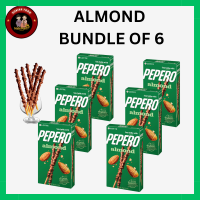
Lotte Pepero Biscuit Coated Chocolate 7 available flavor
₱385.00₱540.00
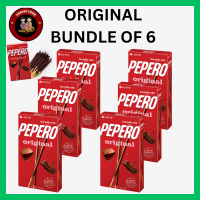
Lotte Pepero Biscuit Coated Chocolate 7 available flavor
₱399.00₱699.00
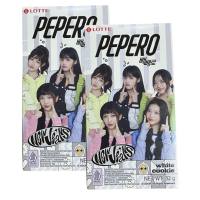
Pepero White Cookie Chocolate Covered Biscuits 32g - Pack of 2
₱122.50₱125.00
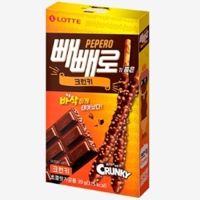
LOTTE PEPERO CHOCOLATE BISCUITS 37G KOREAN SNACK
₱50.00
Buy on Lazada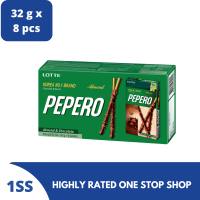
Lotte Pepero Almond & Chocolate 32g x 8
₱499.00
Buy on Lazada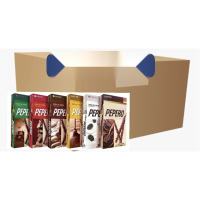
lotte pepero (box of 40 pcs) made in korea
₱1,658.00
Buy on Lazada![Lotte pepero [Almond & chocolate white chocolate choco cookie filled with chocolate]](https://ph-live.slatic.net/p/1a0343549660b4b3b8322443068973ee.jpg_200x200q80.jpg)
Lotte pepero [Almond & chocolate white chocolate choco cookie filled with chocolate]
₱55.00₱60.00
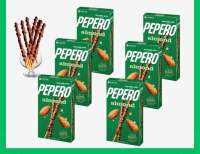
6pcs Lotte Pepero Biscuit Coated Chocolate 7 available flavor
₱369.00₱649.00
About Pepero
Pepero (Korean: 빼빼로, romanized Ppaeppaero) is a South Korean snack brand owned and produced by LOTTE Wellfood. It is best known for its thin, crunchy biscuit sticks coated in chocolate or other flavored coatings. First introduced in 1983 by Lotte Confectionery, the predecessor of today’s LOTTE Wellfood, the brand has grown from a domestic product into one of LOTTE’s major international food brands over four decades.
In the Philippines, Pepero has established significant popularity as part of the broader interest in Korean popular culture. The brand is widely available through local supermarkets, convenience stores, and specialty retailers. Its resemblance to familiar chocolate biscuit-stick snacks makes it accessible to Filipino consumers, while Pepero Day provides a distinct cultural association that resonates with younger demographics.
Brand information
| Category | Information |
|---|---|
| Brand | Pepero |
| Korean name | 빼빼로 |
| Industry | Confectionery / snacks |
| Origin | South Korea 🇰🇷 |
| Introduced | April 1983 |
| Original producer | Lotte Confectionery |
| Current company | LOTTE Wellfood |
| Parent group | LOTTE |
| Main product | Chocolate-coated biscuit sticks |
| Signature event | Pepero Day, November 11 |
| Major market | South Korea |
| International presence | Exported to numerous overseas markets |
| Major competitors | Pocky and other chocolate-coated biscuit-stick products |
LOTTE describes Pepero as long, thin cookies coated with different kinds of chocolate. Corporate materials also identify Pepero Friends as characters representing different Pepero flavors.
History
Origins: 1983
Pepero was launched by Lotte Confectionery in April 1983. The original product consisted of a long, thin biscuit stick covered with chocolate, a distinctive shape that immediately differentiated it from conventional Korean confectionery at the time. According to LOTTE, the name Pepero was inspired by the product’s thin, elongated form.
The product achieved rapid commercial success. LOTTE reports that Pepero generated approximately ₩4.4 billion in sales during its first year, rising to about ₩9.4 billion in 1984, which prompted an expansion of production capacity. This growth established Pepero as one of Lotte’s major confectionery brands.
The Pepero concept
At its core, Pepero consists of a biscuit stick combined with a chocolate or flavored coating. The biscuit provides a crunchy base while the coating supplies the principal flavor. This format facilitates packaging, sharing, and gift-giving.
Over time, LOTTE expanded the concept beyond the original chocolate version to include numerous variations and limited editions. Examples have included Almond, Strawberry, Choco Cookie, Crunchy, Crunky, Snowy Almond, and Choco-filled, among others 1. The precise lineup varies by country and period. This variety allows Pepero to function simultaneously as an everyday snack, a novelty product, a seasonal gift, and a collectible brand.
Pepero Day
Pepero Day is celebrated annually on November 11 (11/11), primarily in South Korea but increasingly recognized internationally. The date was chosen because the four numeral 1s resemble four Pepero sticks standing next to each other. The occasion has developed into a tradition where friends, couples, classmates, coworkers, and family members exchange Pepero as gifts, often drawing comparisons to Valentine’s Day due to its focus on affection.
Origins
The exact origin of Pepero Day is not completely certain. One widely circulated story traces the tradition to schoolgirls who exchanged Pepero on November 11 with the wish of becoming tall and thin like the sticks. Other accounts emphasize the visual resemblance between 11/11 and the snack rather than a single originating event.
What is established is that the custom emerged organically in the 1990s and was subsequently developed and promoted by Lotte. LOTTE’s historical materials describe the spontaneous emergence of “PP-Day” in the 1990s and the later use of “Day marketing” as a key growth driver. By the 2000s, Pepero Day had become one of South Korea’s most recognizable examples of commercial holiday marketing.
Cultural significance
Pepero’s significance extends beyond the product itself by connecting three elements: a distinctive physical shape, a memorable date (11/11), and the social gesture of gift-giving. Rather than simply advertising consumption, the brand became associated with the idea of giving Pepero to someone as an expression of care. LOTTE explicitly describes Pepero as a means of communicating good wishes, with Pepero Friends characters serving as messengers of those sentiments.
Pepero Friends
Pepero Friends is a group of characters based on different Pepero varieties, introduced to make the products more emotionally engaging. Characters include Pero, Mondi, Chockie, Bekki, Runchy, and Noodie/Nook, each associated with specific tastes and characteristics. This system helped move the brand beyond conventional snack advertising into character branding and design.
The Pepero Friends identity has received international recognition, including a 2019 Red Dot Award and a 2020 iF Design Award for brand communication.
Product varieties
Pepero has expanded substantially from the original chocolate flavor. Notable varieties include:
- Original Chocolate – the classic chocolate-coated biscuit
- Almond – chocolate coating with almond pieces
- Strawberry – strawberry-flavored coating
- Choco Cookie – chocolate coating combined with cookie pieces
- Snowy Almond – white coating with almond
- Choco-filled – chocolate-filled biscuit sticks
- Crunchy / Crunky – varieties emphasizing additional texture
- Seasonal and regional editions – products developed for particular markets or campaigns
Available flavors are not identical worldwide; some varieties are exclusive to specific markets, and LOTTE periodically introduces limited-edition products 1.
Relationship with Pocky
Pepero is frequently compared with Pocky, the Japanese chocolate-coated biscuit stick made by Ezaki Glico. Pocky predates Pepero, having been introduced in Japan in 1966, whereas Pepero appeared in South Korea in 1983 1. While both share the fundamental concept of a coated biscuit stick, Pepero developed its own identity through Pepero Day, extensive flavor lineups, character branding, and association with Korean gift-giving culture. Consequently, Pepero’s cultural identity remains strongly tied to South Korea and November 11.
Marketing strategy
Pepero’s success relies on several strategic pillars beyond taste:
- Shape-based branding: The stick shape provides instant recognition and a natural connection to 11/11.
- Occasion marketing: LOTTE transformed November 11 into a major annual opportunity by encouraging consumers to associate Pepero with friendship, romance, and appreciation.
- Limited editions: New flavors and seasonal packaging drive purchases beyond ordinary snacking.
- Character marketing: Pepero Friends provide recognizable personalities for packaging and campaigns.
- Celebrity collaborations: LOTTE uses entertainment personalities to position Pepero as a contemporary lifestyle brand, such as the Pepero × NewJeans campaign centered on the slogan “Show your love with PEPERO.”
Global expansion
Although Pepero originated as a Korean snack, LOTTE positions it as a global Korean brand with the objective of making it the world’s leading stick-shaped chocolate snack. Overseas sales have become increasingly important; in the first half of 2024, overseas sales reportedly reached approximately ₩32.5 billion, slightly exceeding domestic sales of about ₩31.5 billion for that period 2. LOTTE has also expanded production outside Korea, including establishing a base in India 2.
Presence in the Philippines
The Philippines is listed among the international markets where Pepero has established popularity 1. Its appeal in the country is supported by strong consumer interest in Korean popular culture and wide availability in retail channels. As a product resembling familiar chocolate biscuit sticks, it is easily understood by local consumers, while Pepero Day offers a marketable cultural touchpoint for younger generations. This reflects the broader phenomenon of Korean food brands benefiting from the international popularity of K-culture.
Sales and growth
Pepero has experienced substantial long-term growth. Annual sales increased from roughly ₩5.9 billion in 1983 to approximately ₩202.2 billion in 2024, illustrating the increasing contribution of overseas markets. This trajectory marks a transformation from a new Korean snack in 1983 to a major national brand in the 2010s, and finally to an increasingly international Korean food brand in the 2020s.
Corporate ownership
Pepero was originally produced by Lotte Confectionery. Following the restructuring of LOTTE’s food businesses, the confectionery division became part of LOTTE Wellfood, which is currently responsible for the production and development of Pepero. LOTTE is a major South Korean business group with operations spanning food, retail, tourism, chemicals, and construction.
Brand identity
Pepero’s identity encompasses five major concepts:
- Sweetness: Chocolate and flavored coatings form the core sensory identity.
- Crunch: The thin baked biscuit provides characteristic texture.
- Sharing: The product is frequently purchased as a gift rather than solely for personal consumption.
- Affection: Pepero Day connects the brand with friendship and romance.
- Korean culture: Pepero is an internationally recognizable symbol of modern Korean consumer culture.
Comparison with Pocky
| Feature | Pepero | Pocky |
|---|---|---|
| Origin | South Korea 🇰🇷 | Japan 🇯🇵 |
| Company | LOTTE Wellfood | Ezaki Glico |
| Launch | 1983 | 1966 |
| Basic product | Coated biscuit stick | Coated biscuit stick |
| Major cultural association | Pepero Day, Nov. 11 | No equivalent holiday of comparable importance |
| Major identity | Korean snack + gifting culture | Japanese snack + global confectionery |
| Major character branding | Pepero Friends | Pocky-related characters/campaigns |
| Main competitors | Pocky and similar products | Pepero and similar products |
The key distinction lies in cultural positioning: Pocky is an internationally recognized Japanese snack, while Pepero has built a strong connection between its product, Korean culture, and an annual gifting occasion.
Timeline
- 1966 — Pocky is introduced in Japan, establishing an early version of the chocolate-coated biscuit-stick format 1.
- 1983 — Lotte launches Pepero in South Korea.
- 1984 — Rapidly growing sales lead Lotte to expand production capacity.
- 1990s — Pepero Day emerges as an informal cultural phenomenon.
- Late 1990s–2000s — Lotte increasingly commercializes Pepero Day through dedicated marketing.
- 2010s — Pepero expands its international presence and develops character branding.
- 2019 — Pepero Friends receives a Red Dot Award.
- 2020 — Pepero Friends receives an iF Design Award.
- 2023 — Pepero reaches its 40th anniversary; LOTTE reiterates its goal of becoming the global No. 1 stick-shaped chocolate snack brand.
- 2024 — LOTTE records approximately ₩202.2 billion in Pepero sales, showing the growing importance of overseas markets.
- 2024 — Overseas Pepero sales exceed domestic sales during the first half of the year for the first time 2.
- 2025 onward — LOTTE continues positioning Pepero as a global Korean food brand and promoting Pepero Day internationally.