Shop on Lazada
Peppa Pig products
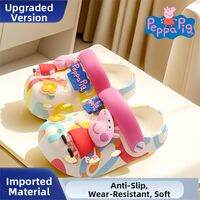
Peppa Pig | Multi-purpose Soft Soled Clogs for Summer
₱578.99
Buy on Lazada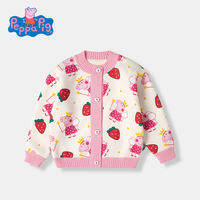
Peppa Pig | Girls Autumn Knit Cardigan
₱592.00
Buy on Lazada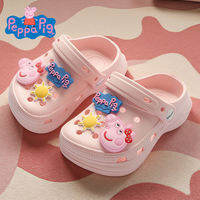
Peppa Pig | Official Cartoon Summer Slipper For Children Anti-slip Soft Sole
₱367.75
Buy on Lazada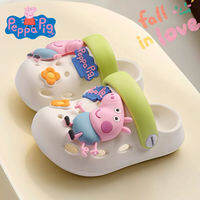
Peppa Pig | Non-slip Children Indoor Shoes
₱362.81
Buy on LazadaPeppa Pig | Girl Anti-Slip Childrens Sandals
₱584.78
Buy on Lazada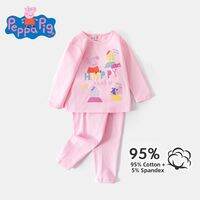
Peppa Pig | Cotton Girls Autumn Sleepwear Set
₱1,086.55
Buy on Lazada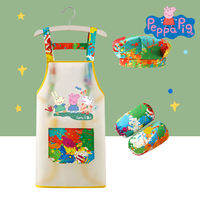
Peppa Pig | Waterproof Drawing Protection Apron
₱518.13
Buy on Lazada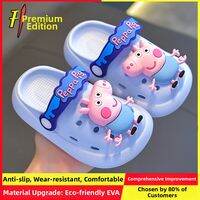
Peppa Pig | Anti-Slip Children Slippers
₱631.00
Buy on LazadaAbout Peppa Pig
Peppa Pig is a British preschool entertainment franchise centred on Peppa, an anthropomorphic piglet, alongside her family, friends, and community. The franchise originated with the animated television series Peppa Pig, which premiered in the United Kingdom in May 2004. It was created by British animators and writers Neville Astley and Mark Baker, and was initially developed and produced through their company, Astley Baker Davies.1
Today, Peppa Pig ranks among the world’s most recognised preschool brands, encompassing television, toys, books, music, games, live entertainment, attractions, clothing, food-related licensing, and other consumer products. The brand is owned by Hasbro, which acquired Entertainment One (eOne), the then-owner of Peppa Pig, in 2019.2
Brand overview
| Category | Information |
|---|---|
| Brand | Peppa Pig |
| Origin | United Kingdom |
| Debut | 2004 |
| Creators | Neville Astley, Mark Baker |
| Original production company | Astley Baker Davies |
| Former major owner | Entertainment One (eOne) |
| Current parent company | Hasbro |
| Target audience | Preschool children and families |
| Main character | Peppa Pig |
| Television format | Preschool animated series |
| Original UK broadcaster | Channel 5 |
| International reach | Broadcast in more than 180 countries |
| Primary language/origin | British English |
| Typical original episode length | About 5 minutes |
The series employs a deliberately simple format. Short stories typically depict Peppa and her family engaging in ordinary childhood activities such as attending school, visiting friends, playing games, travelling, celebrating holidays, or learning about the world around them.
History
Origins
Peppa Pig was created by Neville Astley and Mark Baker, who developed the series’ distinctive visual and storytelling style through their animation company Astley Baker Davies.
The concept was designed specifically for preschool audiences rather than older children. Instead of relying on complicated fantasy plots, the creators built stories around experiences recognisable to young children: family life, friendships, school, play, curiosity, and small everyday adventures.
The first Peppa Pig episodes were broadcast in the UK in 2004. The programme initially appeared on Channel 5 and subsequently became a major preschool property in Britain and internationally.
Expansion
Following its British launch, Peppa Pig expanded internationally through television distribution, licensing, and merchandising. Entertainment One became a significant force behind the franchise’s global development.
Hasbro later described Peppa Pig as eOne’s principal children’s brand, noting that the franchise generated substantial historical revenue through licensing and merchandising across multiple retail categories.3
Hasbro ownership
A major turning point occurred in 2019, when Hasbro announced its intention to acquire Entertainment One.
Hasbro announced the deal on August 22, 2019, describing Peppa Pig and PJ Masks as major global preschool brands that would expand Hasbro’s existing portfolio.
The acquisition was completed on December 30, 2019. Hasbro reported an aggregate acquisition cost of approximately US$4.6 billion, including cash consideration and the assumption or redemption of certain eOne financing obligations.4
The acquisition was strategically significant because it transformed Peppa Pig from primarily an entertainment property into an integral part of Hasbro’s broader toy, entertainment, licensing, and franchise ecosystem.
Hasbro has specifically identified Peppa Pig as a key franchise with opportunities spanning entertainment and consumer products.
The television series
The original Peppa Pig television series serves as the foundation of the entire brand.
It follows Peppa, her younger brother George, and their parents Mummy Pig and Daddy Pig. The wider cast consists of anthropomorphic animals representing different species and personalities.
Storytelling is usually episodic and self-contained. A typical episode begins with a relatively ordinary situation and turns it into a small adventure.
Recurring subjects in the show include:
- Family activities
- Preschool and education
- Friendships
- Playing outdoors
- Holidays
- Travel
- Weather
- Food
- Animals
- Community life
- Imagination and pretend play
- Learning basic social behaviours
Episodes are generally around five minutes long, making the format particularly suitable for preschool viewing.
The series has subsequently expanded through numerous seasons, specials, and other forms of Peppa Pig content. As of 2025, the ninth series had begun broadcasting.
Main characters
Peppa Pig
Peppa is the central character and namesake of the franchise.
She is a young pig who enjoys playing, jumping in muddy puddles, spending time with her family, and going on adventures with her friends.
Peppa is intentionally written as a recognisable preschool child rather than a conventional superhero or fantasy protagonist.
Her personality is generally:
- Energetic
- Curious
- Playful
- Confident
- Social
- Sometimes bossy
- Occasionally mischievous
Her ordinary-child personality is a major component of the brand’s appeal.
George Pig
George is Peppa’s younger brother.
He is particularly associated with his toy dinosaur, Mr. Dinosaur, and is often quieter and more hesitant than Peppa.
George provides the series with a familiar sibling dynamic and features in many stories oriented towards younger children.
Mummy Pig
Mummy Pig is Peppa and George’s mother.
She is portrayed as intelligent, capable, and caring, and frequently participates in the family’s activities.
Daddy Pig
Daddy Pig is Peppa and George’s father.
He is one of the show’s major comic characters. His stories often involve his confidence, occasional clumsiness, love of food, and humorous misunderstandings.
Peppa’s friends
Peppa’s social circle consists of children from different animal families.
Important recurring characters include:
- Suzy Sheep
- Rebecca Rabbit
- Pedro Pony
- Gerald Giraffe
- Emily Elephant
- Candy Cat
- Danny Dog
- Zoe Zebra
- Freddy Fox
Each character has a recognisable animal identity and personality, allowing the show to create a diverse preschool social environment without making the characters visually complicated.
For example, Rebecca Rabbit is associated with the Rabbit family, Pedro Pony with the Pony family, and Suzy Sheep with the Sheep family.
The world of Peppa Pig
One of the defining characteristics of Peppa Pig is its relatively ordinary fictional world.
Although the characters are animals, they live in a society that resembles the everyday human world. They:
- Go to school
- Drive cars
- Visit supermarkets
- Go on vacations
- Work at jobs
- Visit doctors
- Celebrate birthdays
- Use telephones and computers
- Visit museums and parks
- Travel by train, aeroplane, and boat
This combination of anthropomorphic animals and familiar human society makes the world easy for young children to understand.
At the same time, the series occasionally embraces playful cartoon logic. Animals retain characteristics associated with their species, and certain jokes depend on animal behaviour.
Visual style
Peppa Pig possesses one of the most recognisable visual styles in children’s animation.
The characters are intentionally drawn using very simple shapes and lines.
Common characteristics include:
- Flat colours
- Minimal shading
- Simple backgrounds
- Distinctive oval or circular heads
- Thin limbs
- Simple facial features
- Bright colour palettes
- Limited visual complexity
This style remains extremely recognisable even when the character is represented outside the television series.
The simplicity also makes the characters particularly suitable for:
- Toys
- Clothing
- Books
- Stationery
- Packaging
- Games
- Theme-park attractions
- Digital media
The famous muddy puddles
One of Peppa’s most recognisable recurring activities is jumping in muddy puddles.
“Muddy puddles” became an important part of the franchise’s identity because they perfectly represent the show’s approach to childhood: an ordinary activity becomes an exciting adventure.
The concept is also highly marketable because it connects Peppa to a simple, memorable visual image:
Peppa + rain boots + muddy puddle = Peppa Pig.
This exemplifies how the series’ everyday storytelling has helped create recognisable brand symbols.
Themes and educational qualities
Peppa Pig is primarily entertainment rather than a formal educational curriculum, but its stories frequently explore preschool-level social and emotional concepts.
Recurring themes include:
Family
Peppa’s relationship with Mummy Pig, Daddy Pig, and George is central to the series.
Friendship
Many stories focus on Peppa interacting with her classmates and learning how to cooperate with others.
Independence
Peppa and her friends frequently attempt activities themselves, sometimes making mistakes along the way.
Problem-solving
Simple conflicts are often resolved through communication, cooperation, or adult guidance.
Emotional development
The characters experience excitement, jealousy, embarrassment, disappointment, fear, and happiness.
Everyday learning
The series introduces young viewers to concepts associated with school, nature, transportation, occupations, and community life.
Humour
Although Peppa Pig is designed for preschoolers, it contains humour that can also appeal to parents.
A large portion of the comedy derives from character personality rather than complicated jokes.
Daddy Pig, for example, is frequently portrayed as confident even when he is obviously wrong or has gotten himself into a silly situation.
Other recurring humour comes from:
- Animal characteristics
- Repetition
- Exaggerated reactions
- Children’s misunderstandings
- Adult behaviour seen from a child’s perspective
- Running jokes
- Physical comedy
This gives the show a two-level appeal: very young children can understand the immediate action while adults can recognise additional jokes and family dynamics.
Music and sound
Music is another important element of the Peppa Pig identity.
The series uses a distinctive theme and simple musical arrangements appropriate for preschool audiences. The show’s sound design is similarly straightforward and recognisable.
The franchise has also expanded into:
- Children’s songs
- Albums
- Musical recordings
- Sing-along content
- Stage productions
This allows Peppa Pig to function as more than a television property.
Merchandising
Merchandising is one of the most important aspects of the Peppa Pig business.
Hasbro’s corporate filings specifically identify Peppa Pig as a preschool property whose historical revenue was heavily connected to licensing and merchandising.2
Products associated with the brand have included:
Toys
- Figures
- Playsets
- Vehicles
- Dolls
- Plush toys
- Pretend-play products
Books
- Storybooks
- Picture books
- Activity books
- Colouring books
- Educational books
Clothing
- Pyjamas
- Dresses
- T-shirts
- Shoes
- Accessories
School products
- Backpacks
- Lunch boxes
- Stationery
- Pencil cases
Home and lifestyle
- Bedding
- Towels
- Tableware
- Household products
The simplicity and recognisability of Peppa’s design make the character especially adaptable to consumer products.
Licensing
Peppa Pig operates as a global licensing brand.
Rather than Hasbro producing every Peppa Pig product itself, the company and its licensing partners authorise different manufacturers and retailers to produce products using the brand.
This model allows Peppa Pig to appear across many categories simultaneously.
The brand therefore operates as an ecosystem:
Television → Characters → Recognition → Licensing → Merchandise → Retail → New audiences
This structure is one reason Peppa Pig has remained commercially significant for so long.
International popularity
Peppa Pig began as a distinctly British children’s programme but developed into an international franchise.
According to available series information, the series has been broadcast in more than 180 countries.3
International versions are commonly adapted through:
- Dubbing
- Voice replacement
- Localised titles
- Translated books
- Local consumer products
- Region-specific broadcasters
- Local marketing
Despite localisation, the central concept remains essentially the same: a young pig experiencing everyday childhood with her family and friends.
Why Peppa Pig became so successful
Several factors help explain the brand’s longevity.
1. Extremely recognisable characters
Peppa’s silhouette and pink colour make her immediately identifiable.
2. Simple stories
Children do not need extensive knowledge of the fictional universe to understand an episode.
3. Short episodes
The approximately five-minute format fits preschool attention spans and television scheduling.
4. Family appeal
Parents can recognise ordinary family situations within the stories.
5. Strong character relationships
Peppa, George, and their parents provide a stable central family.
6. Global adaptability
The basic stories can be understood across cultures.
7. Excellent merchandising potential
The characters translate naturally into toys, books, clothing, and other products.
8. Consistent visual identity
The brand can be recognised instantly even outside the television show.
Peppa Pig as a brand rather than just a TV show
It is important to distinguish Peppa Pig the character, Peppa Pig the television series, and Peppa Pig the commercial franchise.
They are related but not identical.
Peppa Pig (character)
→ The fictional piglet who serves as the mascot and protagonist.
Peppa Pig (TV series)
→ The animated programme that introduced and developed the characters.
Peppa Pig (franchise/brand)
→ The larger intellectual property encompassing television, licensing, merchandise, publishing, music, live entertainment, and other experiences.
This distinction is particularly important following Hasbro’s acquisition of eOne, because Peppa Pig became part of a much larger global brand portfolio.2
Corporate structure
The franchise’s ownership history can be simplified as follows:
Neville Astley + Mark Baker
↓
Astley Baker Davies — original creative/production company
↓
Entertainment One (eOne) — major rights holder, producer/distributor, and global commercial developer
↓
Hasbro — acquired eOne in 2019
↓
Hasbro Entertainment / Peppa Pig franchise
Hasbro’s acquisition was completed on December 30, 2019.4
Relationship with Hasbro’s other brands
Peppa Pig occupies a somewhat unusual position within Hasbro.
Hasbro historically became famous for toy and game brands such as Transformers, NERF, Monopoly, Play-Doh, and My Little Pony. Peppa Pig, by contrast, originated primarily as a television and character franchise.
Its importance to Hasbro therefore comes from combining:
Entertainment + Characters + Toys + Licensing + Family products
Hasbro explicitly described the acquisition of eOne as a way to expand its storytelling capabilities while adding major preschool properties such as Peppa Pig.2
Cultural impact
Peppa Pig has become recognisable far beyond its original British television audience.
The character’s image, voice, catchphrases, family relationships, and distinctive visual design have become part of international preschool culture.
The franchise has also generated:
- International fan communities
- Books and educational products
- Stage shows
- Theme-park experiences
- YouTube and digital content
- Music
- Toys and collectibles
- Promotional partnerships
- Branded attractions
Its success demonstrates how a relatively small animated children’s programme can develop into a global character brand.
Brand identity
At its core, Peppa Pig’s identity can be summarised through five concepts:
Childhood
Everyday experiences are viewed from a child’s perspective.
Family
Peppa’s family provides the emotional centre of the franchise.
Friendship
Peppa’s relationships with other children drive many stories.
Play
Ordinary situations become opportunities for imagination.
Humour
The franchise uses gentle comedy rather than complicated narratives.
That combination gives Peppa Pig a particularly broad emotional appeal: it is recognisable to children while remaining familiar to parents.
Legacy
More than two decades after its 2004 debut, Peppa Pig remains an important global preschool property. The series has survived changes in production companies, broadcasters, voice performers, and corporate ownership while retaining its central characters and recognisable visual identity.1
Its transformation from a British animated series into a worldwide franchise is arguably its most significant achievement.
In short, Peppa Pig is not merely a cartoon about a pig. It is a global preschool entertainment brand built around a very simple proposition: familiar childhood experiences can become funny, imaginative little adventures.
Official / further reading
- Hasbro — Peppa Pig / corporate information
- Hasbro — Entertainment One acquisition announcement