Shop on Lazada
Phyto products
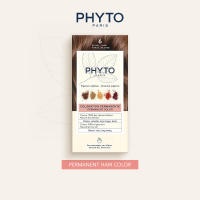
Phyto Phytocolor Hair Color Kit 6 - Dark Blonde for Long-lasting Hair Color
₱855.00₱950.00
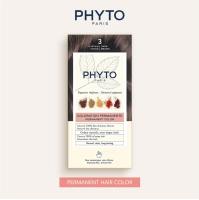
Phyto Phytocolor Hair Color Kit 3 - Dark Brown for Long-lasting Hair Color
₱855.00₱950.00
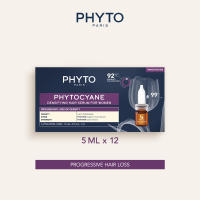
Phyto Phytocyane Densifying Hair Serum 5mL for Women | For Progressive Hair Loss
₱3,700.00
Buy on Lazada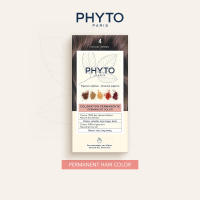
Phyto Phytocolor Hair Color Kit 4 - Brown for Long-lasting Hair Color
₱855.00₱950.00
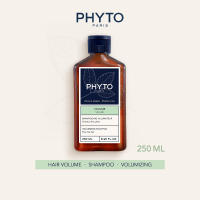
Phyto Volume Volumizing Shampoo for Fine Flat hair 250ml
₱855.00₱950.00
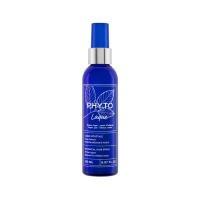
Phyto Phytolaque Botanical Hairspray - Medium to Strong Hold 150ml
₱1,300.00
Buy on Lazada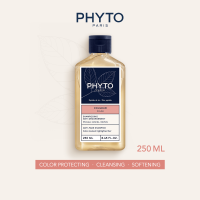
Phyto Color Protect Anti-Fade Shampoo 250mL for Color-Treated Highlighted Hair
₱855.00₱950.00
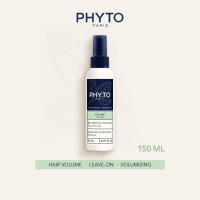
Phyto Volume Volumizing Styling Spray 150mL for Fine Flat Hair
₱1,300.00
Buy on LazadaAbout Phyto
Overview
PHYTO, often styled as PHYTO Paris, is a French haircare brand built on the philosophy of using botanical ingredients and scientific research to care for hair and scalp health. Founded by renowned French hairstylist Patrick Alès, the brand pioneered modern blow-drying techniques and developed a plant-based approach to haircare decades before “clean” and botanical beauty became mainstream trends.
Today, PHYTO is recognized internationally for its comprehensive range of products, including shampoos, conditioners, masks, treatments, styling products, scalp care solutions, hair-color products, anti-hair-loss treatments, dietary supplements, and specialized lines for curly, coily, and textured hair.
Basic Information
| Category | Details |
|---|---|
| Brand Name | PHYTO / PHYTO Paris |
| Country of Origin | France |
| Founder | Patrick Alès |
| Industry | Haircare and Beauty |
| Core Philosophy | Botanical/plant-based hair and scalp care combined with scientific research |
| Key Laboratory Milestone | Laboratoires Phytosolba established in 1969 |
| Signature Concept | Phytothérapie capillaire — haircare through plants |
| Best Known For | Botanical hair treatments, PHYTO 7, Phytocyane, Phytophanère, Phytoplage, Phytospecific |
| Main Categories | Haircare, scalp care, styling, coloring, hair-loss care, supplements |
| Market Presence | International |
PHYTO’s official history describes the brand as originating from Patrick Alès’s vision of combining his two primary passions: hair and plants.
The Founder: Patrick Alès
The narrative of PHYTO is inseparable from that of Patrick Alès. Working as a hairstylist in Paris during the 1950s and 1960s, Alès observed the detrimental effects that aggressive chemical products had on both client hair and the hands of salon professionals. His guiding principle was encapsulated by the Latin phrase “primum non nocere” — “first, do no harm.”
Alès was also a significant figure in the evolution of hairstyling itself. PHYTO credits him with pioneering the brushing/blow-dry technique in the 1960s. His salon attracted high-profile clients, including Jackie Kennedy and Catherine Deneuve.1
This background is crucial to understanding the brand’s identity: PHYTO did not begin as a conventional cosmetics company but emerged from the professional hairdressing world, where Alès sought better methods to maintain hair health and appearance.
Meaning of the Name “PHYTO”
The name derives from Greek-rooted terminology associated with the brand’s concept of phytotherapy for hair:
- phyto → plants
- thera → care/treatment
- trix/trichos → hair
PHYTO refers to this concept as “phytothérathrie”, representing its philosophy of treating and caring for hair through plants.2 Historically, the brand has positioned itself not merely as a “natural cosmetics” label, but as an entity attempting to combine botany, formulation science, and professional haircare.
History and Key Milestones
PHYTO’s international materials sometimes present slightly different dates, distinguishing between the development of Alès’s techniques, the public emergence of the brand, and the formal establishment of its laboratory organization. A useful chronology includes:
1950s
Patrick Alès begins his career as a hairstylist in Paris, developing an interest in the relationship between harsh hair products, hair health, and the wellbeing of hairdressers.
Mid-1960s
Alès develops his professional blow-drying/brushing technique and begins creating botanical hair treatments. Official sites cite 1964, 1965, or 1966 for various milestones during this period.
1967
The creation of phytothérathrie, the brand’s plant-based haircare philosophy, is identified as a major foundational milestone.3
1968
PHYTO 7 is introduced. Positioned as a daily hair cream containing seven plant extracts, it became one of the brand’s signature products. PHYTO describes it as the first daily hair cream designed specifically for hair.
1969
Laboratoires Phytosolba is established, providing the brand with a stronger scientific and laboratory foundation for researching plant ingredients and developing hair products.
1974
PHYTO launches Phytoplage, a hair oil designed to protect hair exposed to sun, salt, and chlorine. It remains one of the company’s iconic products.4
1979
The brand introduces Phytolaque, a hairspray notable for being formulated without propellant gas.5
1980
Phytophanère, a dietary supplement for hair and nails, is launched and subsequently becomes one of PHYTO’s best-known products.
1992
Phytocyane, a treatment aimed at thinning hair and improving density, is introduced.
1998
PHYTO launches PHYTO SPECIFIC, a specialized range designed for curly, coily, textured, and relaxed hair.
Core Philosophy
PHYTO’s central ethos can be summarized as: Haircare inspired by plants, developed through scientific research.
The brand historically positioned itself against the notion that botanical ingredients and scientific formulation were mutually exclusive. Instead, its approach follows a specific pipeline:
Plant → botanical research → extraction/formulation → scientific evaluation → targeted hair treatment
Consequently, the brand emphasizes terms such as botanical extracts, plant actives, phytotherapy, scalp health, hair-fiber care, botanical science, and targeted treatments. This distinguishes PHYTO from purely “natural beauty” brands.
Professional Origins
PHYTO’s DNA stems from hairstyling rather than traditional skincare. Because Patrick Alès was already working professionally with hair before developing the brand, PHYTO’s philosophy remains strongly connected to the practical problems encountered by stylists, such as dryness, damage, frizz, lack of volume, scalp issues, thinning hair, and styling damage.
Centrality of Botanical Ingredients
Plants are not merely occasional marketing elements for PHYTO; they form the foundation of the brand’s identity. PHYTO describes its approach as combining botanical research, scientific expertise, and professional standards. The brand occupies a niche between traditional herbal knowledge and modern cosmetic formulation.
Focus on Scalp Health
Modern PHYTO places considerable emphasis on the scalp, viewing it as integral to hair health rather than seeing hair purely as a cosmetic fiber. Its current Scalp Solution category addresses issues including dandruff, oily scalp, sensitive or irritated scalp, itching, and general scalp balance. The range includes purifying, soothing, anti-dandruff, and oil-control products. This reflects the broader philosophy that a healthy scalp leads to healthier-looking hair.
Major Product Families
PHYTO has developed a broad portfolio over its history. Key families include:
PHYTO 7
One of the most historically important products, PHYTO 7 is a leave-in/day cream based on botanical extracts. Its launch in 1968 helped establish the concept of treating hair daily, analogous to skincare routines. The concept has since expanded into PHYTO 7 ELIXIR, which includes Universal Day Cream and Universal Enhancing Oil.6
Phytophanère
A well-known nutritional product, Phytophanère is positioned as a dietary supplement for hair and nails, with claims related to strength, growth, and volume. It represents PHYTO’s belief that hair beauty is not achieved exclusively through topical shampoos and conditioners.
Phytocyane
A major treatment family focused on thinning hair, hair loss, and density. Current offerings include treatments for women and men, with distinct positioning for progressive versus reactional hair loss.
Phytoplage
Launched in 1974, Phytoplage is a historic icon of the brand. Originally a hair-protection product for exposure to sun, salt, and chlorine, the modern collection continues this positioning with protective oils, after-sun shampoo, and rehydrating products.
Phytospecific
PHYTO’s specialist line for curly, coily, textured, and relaxed hair. Launched in 1998, it marked an important expansion beyond the brand’s original mainstream European audience. Today, PHYTO’s assortment also includes dedicated products for wavy, curly, and coily hair types.
Phytocolor
PHYTO’s hair-coloring category incorporates botanical ingredients and pigments. The current permanent color range is described as ammonia-free and silicone-free, utilizing botanical pigments with varying proportions depending on the shade.
Phytoprogenium
A range historically associated with gentle cleansing and scalp balance, fitting into PHYTO’s philosophy of maintaining the scalp’s natural ecosystem rather than treating shampoo simply as a detergent.
Phytokeratine
A repair-oriented range built around botanical keratin concepts, designed for damaged or weakened hair. PHYTO lists repair as a major current need, offering repairing shampoos, conditioners, masks, and heat-protection products.
Current Product Universe
The modern PHYTO portfolio extends significantly beyond its original botanical-treatment range. The official catalog includes categories such as:
Haircare
- Shampoo
- Conditioner
- Masks
- Leave-in treatments
- Oils
- Detanglers
Hair Concerns
- Dry hair
- Damaged hair
- Fine hair
- Colored hair
- Blonde/grey hair
- Dandruff
- Oily hair
- Sensitive scalp
- Thinning hair
Styling
- Hairspray
- Styling products
- Straightening products
- Curl products
- Heat protection
Scalp Care
- Anti-dandruff
- Soothing
- Oil-control
- Purifying
- Balancing treatments
Hair Loss Solutions
- Phytocyane
- Phytophanère
- Targeted treatments
Color
- Permanent hair color
- Color-maintenance products
- Blonde/grey care
Supplements
- Hair-and-nail supplements
The current catalog also features eco-refills, jumbo formats, and travel sizes, reflecting the brand’s adaptation to contemporary consumer expectations.
PHYTO SPECIFIC and Textured Hair
A notable aspect of PHYTO’s history is its early investment in products for textured hair. PHYTO SPECIFIC was launched in 1998 as a specialist range for curly, coily, textured, and relaxed hair. The company states that the range was developed through collaboration between Patrick Alès and scientific expertise provided by Dr. Fatou Batchily-Plat.
The philosophy recognizes that highly textured hair has unique needs regarding moisture, elasticity, breakage resistance, curl definition, scalp care, conditioning, and shine. This makes PHYTO SPECIFIC a significant sub-brand within the larger PHYTO universe.
Brand Positioning
PHYTO’s positioning combines four key identities:
- French: Rooted in Parisian professional hairstyling and French beauty culture.
- Botanical: Plants and botanical extracts are fundamental to its identity.
- Scientific: Emphasizes laboratory research and scientific evaluation rather than presenting itself solely as an herbal brand.
- Professional: Founded by a hairstylist, with heritage strongly connected to salon expertise.
Conceptually, PHYTO represents French hairdressing + botanical science + treatment-oriented haircare.
Historical Innovations
Several products and ideas have helped establish the brand’s reputation:
| Period | Innovation |
|---|---|
| 1960s | Patrick Alès’s pioneering blow-dry/brushing technique |
| 1967 | Phytothérathrie — plant-based haircare philosophy |
| 1968 | PHYTO 7 daily hair cream |
| 1969 | Establishment of Laboratoires Phytosolba |
| 1974 | Phytoplage sun-protective hair oil |
| 1979 | Phytolaque hairspray (no propellant) |
| 1980 | Phytophanère supplement |
| 1992 | Phytocyane thinning-hair treatment |
| 1998 | PHYTO SPECIFIC textured-hair range |
| 2004 | Phytocolor botanical-oriented hair color |
| 2010 | Phytokeratine repair range |
PHYTO presents these milestones as part of its long history of botanical haircare innovation.7
Corporate Structure
Historically, PHYTO was part of the business created around Laboratoires Phytosolba by Patrick Alès. The wider corporate entity eventually became known as Alès Groupe, whose portfolio included PHYTO and other beauty brands.8 Older literature may refer to Laboratoires Phytosolba, Alès Groupe, Phyto-Lierac, or Alès when discussing the brand. In essence, PHYTO is the consumer-facing haircare brand, while Phytosolba/Alès refers to the corporate and laboratory history surrounding it.
Modern Context and Clean Beauty
PHYTO predates the modern clean-beauty movement by decades. Its botanical philosophy dates back to the 1960s, when the mainstream cosmetics industry was heavily associated with synthetic chemistry. PHYTO’s official history explicitly describes its early positioning as an alternative approach based on plants.
Its historical proposition is better described as botanical ingredients + extraction technology + cosmetic science, rather than a strict adherence to all-natural formulations. This distinction is important when evaluating the brand today.
Significance in the Beauty Industry
From an industry perspective, PHYTO anticipated several trends that later gained popularity:
- 1960s: Botanical haircare
- 1970s–80s: Specialized hair treatments
- 1990s: Targeted textured-hair care
- 2000s: Botanical repair/color products
- 2010s–2020s: Scalp health, clean beauty, plant-based formulations, and personalized routines
In this sense, PHYTO is viewed as one of the early pioneers of botanical haircare, rather than a brand that adopted the trend after it became fashionable.
Summary
PHYTO is a French botanical haircare pioneer founded by hairstylist Patrick Alès. Its defining idea is that plants can be used therapeutically and cosmetically for the hair and scalp when combined with scientific research and professional formulation. Beginning in the 1960s, it developed products such as PHYTO 7, Phytoplage, Phytophanère, and Phytocyane, eventually expanding into scalp care, hair loss, coloring, styling, and specialized textured-hair care.
The core of PHYTO’s identity is not simply “natural haircare,” but rather “botanical science for hair”—a positioning established long before botanical and clean beauty became major cosmetic trends.