Shop on Lazada
PING products
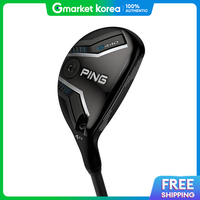
PING | Ping G440 Hybrid Utility Ua3840571
₱20,524.86₱29,647.03
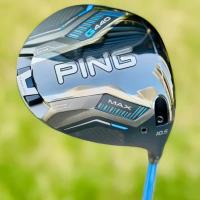
2025 Branded Golf Clubs G440 MAX Golf Driver with 9.0 10.5 Degree Graphite R/S/SR Flex Shaft for Right Handed Include Headcovers
₱8,603.00₱12,903.00
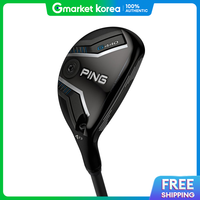
PING | G440 Hybrid Utility 5
₱21,114.27₱30,498.39
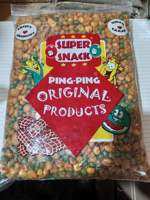
Mix corn seeds and nuts kutkutin direct supplier (available 1kg 500grms 250grms)
₱180.00₱300.00
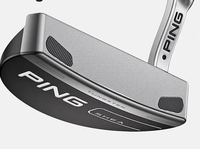
High Fault Tolerance Low Center Gravity Alignment Line Golf Putter
₱2,688.00
Buy on Lazada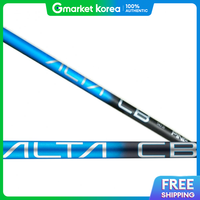
PING | G440 Driver Stock Shaft Tour 2.0 Chrome Black Alta Blue Black Quick Tensei 1K G430 425 Compatible
₱9,678.82₱13,980.52
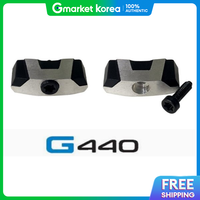
PING | Ping G440 Driver Swingweight Adjustable Weight Xa3547977
₱1,470.36₱2,123.86
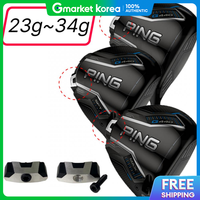
PING | G440K G440 Max Lst Sft All Model Compatible Driver Weight Swing Weight Adjustment
₱1,628.52₱2,352.31
About PING
PING is an American manufacturer of golf equipment renowned for its technologically advanced clubs, particularly its putters and irons. Established by engineer Karsten Solheim in 1959, the company evolved from a single-person garage workshop into a leading global brand while remaining a privately held, family-owned enterprise. Its headquarters and primary manufacturing facilities are located in Phoenix, Arizona.1
The identity of PING is deeply rooted in engineering, custom fitting, forgiveness, precision manufacturing, and innovation. The company has been instrumental in developing perimeter weighting, heel-toe weighting, cavity-back irons, and systematic club fitting—concepts that have become foundational to modern golf club design.2
Basic information
| Brand | PING |
| Company | Karsten Manufacturing Corporation / PING |
| Industry | Golf equipment and sporting goods |
| Founded | 1959 |
| Founder | Karsten Solheim |
| Headquarters | Phoenix, Arizona, United States |
| Ownership | Privately held, family-owned |
| Current CEO & President | John K. Solheim |
| Main products | Drivers, fairway woods, hybrids, irons, wedges, putters, golf bags, apparel and accessories |
| Core philosophy | Engineering, innovation, custom fitting and performance |
| Official site | PING.com |
Corporate history describes PING as a family-oriented organisation built upon the values of family, integrity, innovation, loyalty, and giving back.3
Origins: Karsten Solheim
The history of PING begins with Karsten Solheim, a Norwegian-American engineer employed by General Electric. Although an avid golfer, Solheim was dissatisfied with conventional putters. Rather than accepting the limitations of existing equipment, he approached the issue from an engineering perspective, questioning whether redistributing weight could make a club more stable and user-friendly.
In 1959, he began experimenting with putter designs in his garage in Redwood City, California. This led to the creation of the PING 1-A, an unconventional putter that shifted significant mass toward the perimeter and featured a distinctive shaft and hosel arrangement.4 When striking the ball, the club produced a unique metallic “ping” sound, which ultimately inspired the company’s name.5 Notably, the name was not originally conceived as a marketing term but derived directly from the acoustic properties of Solheim’s invention.
The 1-A and early design philosophy
The PING 1-A was significant beyond its unusual appearance. Solheim applied engineering principles to an area of golf equipment that had traditionally relied on conventional shapes and trial-and-error methods. A central concept was heel-toe weighting, where mass was distributed toward the heel and toe of the putter head rather than concentrated in the centre. This increased resistance to twisting on off-centre strikes, forming the basis of PING’s enduring design philosophy: using engineering and physics to make golf equipment more forgiving and predictable.6
Transition to commercial manufacturing
Initially operating on a small scale, the business eventually outgrew Solheim’s garage as demand increased. The Solheim family relocated to Arizona in the early 1960s, and Karsten left General Electric to focus entirely on golf equipment. In 1967, he established Karsten Manufacturing Corporation (KMC) in Phoenix, laying the corporate foundation for the modern PING business.7 This transition marked the evolution of PING from an engineer’s personal project into an industrial-scale manufacturer.
The Anser putter
While the 1-A established the company, the Anser putter cemented its status as a golf industry institution. In 1966, Karsten Solheim sketched a new design on the sleeve of a 78-rpm record due to a lack of paper. The design featured an offset hosel and carefully distributed mass.8 His wife, Louise, suggested the name “Answer” as it was intended to solve common putting problems. As “Answer” was too long to fit comfortably on the clubhead, it was shortened to “Anser.”9
The Anser became one of the most influential putter designs in history. Its characteristics—including heel-toe weighting, perimeter weighting, offset, blade-style construction, and a cavity behind the face—were widely adopted across the industry. The patent for the Anser was granted on March 21, 1967.10
Professional golf validation
PING’s credibility grew rapidly through adoption by professional golfers. A major milestone occurred when George Archer won the 1969 Masters using a PING Anser putter, becoming the first player to win a men’s major championship with a PING club.11 The company states that its Gold Putter Vault at the Phoenix headquarters contains more than 3,200 winning gold-plated putters, documenting numerous professional victories.31 This connection to the professional tour reinforces the brand’s identity: equipment designed for ordinary golfers but validated at the highest level of competition.
Innovation in iron design
PING’s influence extends well beyond putters. In the 1960s, Solheim applied weight distribution principles to irons, moving mass toward the perimeter of the clubhead to increase stability on off-centre hits. This innovation laid the groundwork for modern perimeter-weighted and cavity-back irons.12 While these designs are now standard, deliberately redistributing mass around the clubhead represented a significant departure from traditional iron construction at the time.
The Eye2 era
One of PING’s most notable iron families was the PING Eye2, introduced in the early 1980s. The Eye2 achieved extraordinary commercial success and dominance on professional tours, becoming PING’s best-selling iron model.13 It also became central to a major equipment rule controversy regarding square-groove design, illustrating how PING’s engineering innovations sometimes advanced technology faster than regulations could adapt.
Custom fitting systems
A defining feature of PING is its pioneering work in custom fitting. The company was among the first to systematically fit clubs to individual golfers rather than assuming a single standard specification would suffice. Its Color Code system categorised iron lie angles using different colours, allowing golfers to be fitted based on body dimensions and swing characteristics.14 This approach acknowledged that golfers of the same height can vary significantly in arm length, posture, hand position, and swing dynamics. PING’s philosophy holds that golfers should be fitted to their equipment rather than forced to adapt to standard specifications, a concept now integral to premium golf retail.
Manufacturing philosophy
PING places exceptional emphasis on custom building. At its Phoenix headquarters, clubs are assembled and calibrated to individual specifications. The company states that its drivers, fairway woods, hybrids, irons, wedges, and putters can be custom built, with additional facilities in England, Japan, and Korea supporting global production.15 This approach is summarised in three stages:
Custom engineered
Products are designed around specific performance objectives.
Custom fitted
Golfer characteristics are measured to determine appropriate specifications.
Custom built
Clubs are assembled to those precise specifications.
This “Custom Fit. Custom Built.” philosophy remains a primary differentiator for the PING brand.16
Product portfolio
While primarily a golf equipment company, PING’s product range has expanded significantly.
Golf clubs
Principal categories include drivers, fairway woods, hybrids, irons, wedges, and putters. The modern lineup encompasses highly forgiving game-improvement equipment as well as models designed for accomplished players and tour professionals.17
Putters
Putters remain central to PING’s identity. Current offerings include several families, such as the premium PLD program and various other lines, building on the heritage of the 1-A and Anser.19
Bags and accessories
PING is also recognised for its golf bags, including the long-running Hoofer family. The broader product range includes apparel, caps, gloves, towels, headcovers, grips, travel equipment, and other accessories.29 The current catalogue is organised into clubs, apparel, bags, gear, grips/components, juniors, and PLD products.18
Key technologies and design concepts
PING’s historical significance stems from several recurring engineering concepts:
- Perimeter weighting: Moving mass toward the outside of the clubhead to increase stability and forgiveness; arguably Karsten Solheim’s most important contribution.19
- Heel-toe weighting: Concentrating weight toward the heel and toe, particularly influential in putter design.
- Cavity-back irons: Removing material from the centre/back of an iron to redistribute weight toward the perimeter.
- Custom fitting: Systematic methodologies including the Color Code system.20
- Forgiveness: Designing clubs to produce predictable results on off-centre strikes.
- MOI: Extensive use of moment of inertia principles to control twisting and improve stability.
- Data-driven design: Combining engineering, fitting science, computer modelling, testing, and player feedback rather than relying solely on traditional techniques.21
Modern product philosophy
Unlike brands focused primarily on maximum distance or fashion, PING emphasises performance, engineering, fitting, and consistency. The company describes its design philosophy as helping golfers “Play Your Best,” employing engineers and specialists from multiple disciplines to translate equipment specifications into measurable performance improvements.22
Contemporary developments
As of 2026, PING remains a family-owned company with John K. Solheim serving as CEO and President.23 Product development continues actively; in 2026, the company introduced the i540 irons, featuring tungsten sole weighting, a forged maraging-steel face, and inR-AIR technology.12 The Scottsdale TEC putter family was also launched in 2026, incorporating eye-tracking research into its alignment approach.14 Despite its traditional heritage, PING continues to develop new technologies and product categories.
Professional tour presence
PING maintains a strong presence on professional tours, routinely developing or customising equipment for elite players. The PLD program, for example, provides highly customised putter development for tour professionals.24 In June 2026, Wyndham Clark signed an agreement to exclusively play a PING Scottsdale TEC putter.15 This relationship serves dual purposes: validating equipment under demanding conditions and providing feedback that influences future consumer products.
The Solheim family
PING is distinctive among major manufacturers for its close intertwinement with one family across generations:
- Karsten Solheim: Founder and chief engineer behind early innovations.
- Louise Solheim: Karsten’s wife, who played a vital role in the early business and suggested the name “Anser.”25
- John Solheim: Karsten’s son, who led the company’s expansion.
- John K. Solheim: Third-generation leader and current CEO and President.26
The company retains a strong family-business culture despite its global scale.
The Solheim Cup
The family’s legacy extends to professional women’s golf through the Solheim Cup, the biennial team competition between Europe and the United States. Karsten Solheim was instrumental in establishing this event, which serves as the women’s equivalent of the Ryder Cup. This contribution highlights that the family’s impact on golf transcends equipment manufacturing.27
Brand positioning and significance
PING is generally perceived as a premium, engineering-driven golf brand. While it competes alongside Titleist, Callaway, TaylorMade, and Mizuno in the premium market, its identity is uniquely tied to fitting, forgiveness, and precision engineering. Even when selling apparel and accessories, its brand equity derives fundamentally from equipment and engineering rather than lifestyle fashion.
PING’s importance to golf exceeds its market share alone. Concepts now considered commonplace—including perimeter weighting, heel-toe weighting, cavity-back irons, systematic fitting, and engineering-based putter design—can be traced directly to the company’s innovations. The PGA of America has noted that Solheim’s work helped move golf club manufacturing into a new technological era.28 Ultimately, PING did not merely create golf clubs; it fundamentally changed how they are designed.30
References
- History of PING | PING
- PING – National Golf Foundation
- Discover PING | PING
- History, Heritage and Legacy | PING PLD
- PINGゴルフの歴史|革新的な製品を生んだ歩み | ピンゴルフジャパン公式サイト
- Ping (golf)
- Discover PING | PING
- CUSTOM FIT. CUSTOM BUILT.
- PING Putters | PING
- Shop All Products | PING
- Golf Apparel | PING
- i540 irons deliver speed, precision and stopping power
- Tour-winning s259 wedges deliver more spin and control
- New Scottsdale TEC Putters employ eye-tracking research to advance alignment technology
- PING signs Wyndham Clark to Scottsdale TEC putter agreement
- G Le4 family offers premium performance for women
- New Scottsdale putters offer feel, forgiveness and custom fitting
- PING advances Prodi G junior clubs; introduces junior custom-fitting app
- PING Putter line expands with six new premium models
- Episode 33: John K. Solheim
- Episode 27: In the Archives (Feat. Rob Griffin)
- CUSTOM FIT. CUSTOM BUILT.
- CUSTOM FIT. CUSTOM BUILT.
- Campus Tours | PING
- Adaptive Fitting | PING
- Careers | PING
- CUSTOM FIT. CUSTOM BUILT.
- Search Results | PING
- Golf Gear | PING
- Shop All Products | PING
- THE PING GOLD PUTTER VAULT